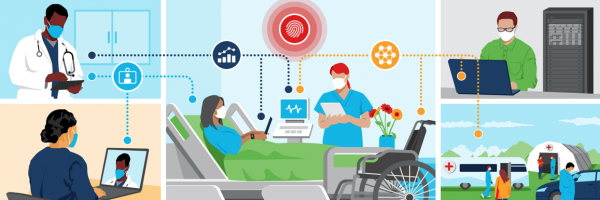
From improving the end-user digital experience to helping healthcare providers protect personally identifiable information (PII) and protected health information (PHI), Cisco Full-Stack Observability is improving healthcare outcomes.
Healthcare IT is using Cisco SD-Access to address changing network requirements in a dynamic industry facing pandemic disruptions, privacy regulations, and the need for secure remote telemedicine.
Today’s patients expect their experiences to be enabled by technology. This includes remote consultations, connectivity, and location-aware mobile services. Today’s staff require a secure, digital environment that makes it possible to be more
To heal. That is why doctors, nurses, and other clinicians get into healthcare. Technology’s role is to make their jobs easier, more effective, and more efficient – but that isn’t...
As new tools to power patient care are developed, healthcare organizations are tempted to jump in and take advantage of the new technology as quickly as possible - especially in today's hyper-competitive environment.
At Parkview Medical Center in Pueblo, Colo., nurses spend less time on documentation—one hour less per nurse—and more time with their patients. CIO Steve Shirley shares how.
This is an exciting day for healthcare IT leaders who’ve been working to integrate information technology into care delivery. Today, HIMSS Analytics announced its new Infrastructure Adoption Model or INFRAM....
One of the most dramatic changes in healthcare over the past 15 years has been the integration of information technology into care delivery. These innovations in clinical applications are great,...
Electronic health records (EHR) are critical applications for many healthcare organizations. But having an EHR is one thing, making sure your EHRs work for your healthcare organization is another.