

Many nonprofits know they need to embrace AI, and most are already feeling the pressure to move faster than their resources allow. AI is advancing at a speed that’s hard for them to keep pace with, let alone adopt responsibly. For mission-driven organizations with lean teams and limited resources, the question isn’t just how to implement AI. It’s how to do it ethically and in ways that support the long-term wellbeing of the communities they serve.
At Cisco, we believe that technological expertise, deployed with purpose, is one of the most powerful resources we can offer our nonprofit partners. Beyond financial investment and access to technology, what many nonprofits need is direct access to people who understand this AI moment deeply and can help them translate that knowledge into practice.
That conviction shaped our first annual Tech for Social Good Hackathon. In early 2026, more than 160 Cisco experts volunteered to form 27 teams and spent one week building AI-powered solutions for seven Cisco and Cisco Foundation nonprofit partners working across climate resilience and economic opportunity. Each team started with an actual problem statement submitted by the nonprofit organization and a mandate to solve the problem responsibly.
Inside the build to develop ethical AI solutions for nonprofit partners
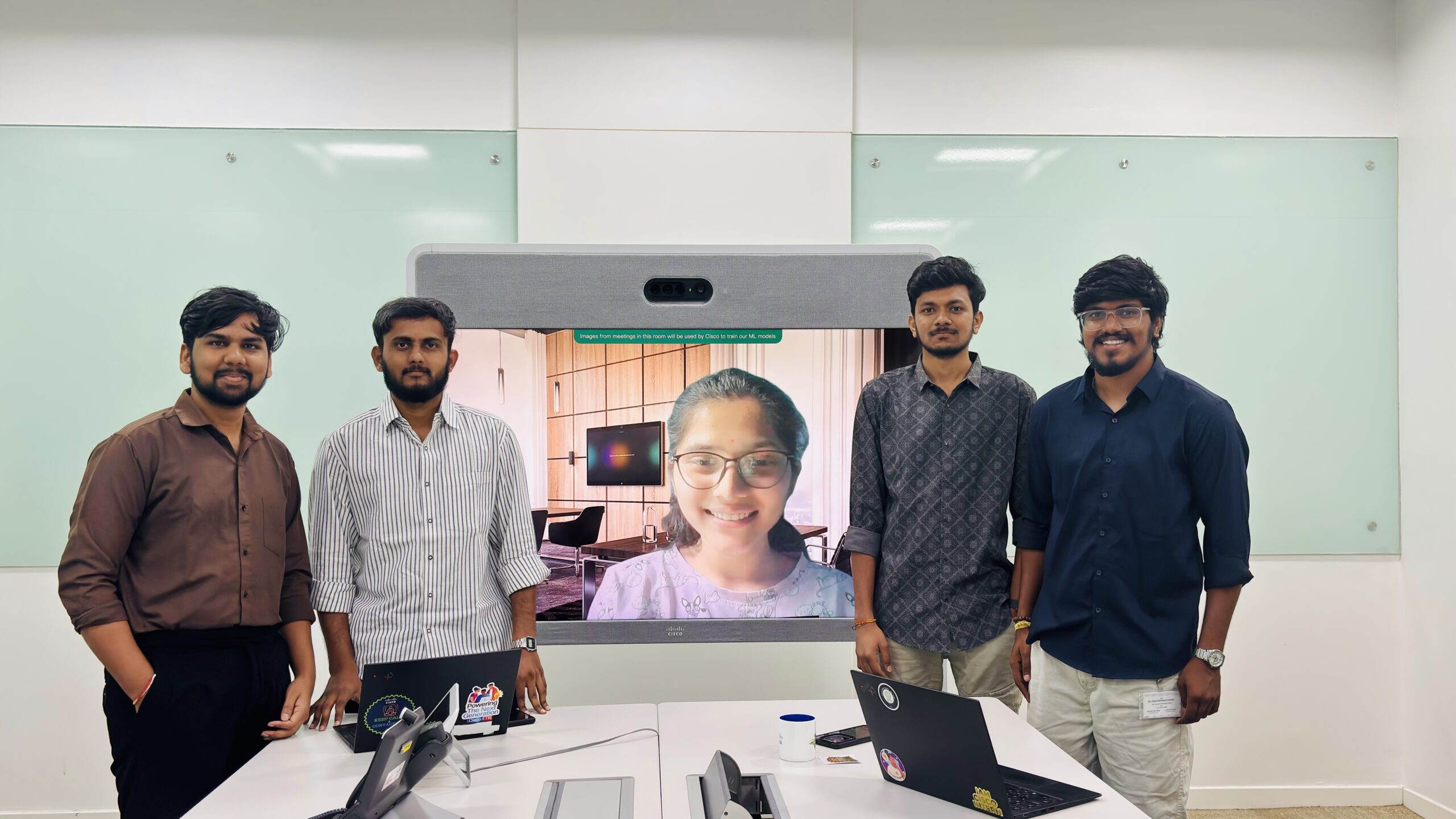
Across all 27 teams, the most effective solutions shared something in common: they were built by volunteers who thought as much about the people implementing the tools as the problems the tools were solving. As Venkata Naga Rajesh Badveti, a Cisco engineer who designed a workflow solution for Generation’s curriculum development team, which creates lessons for thousands of learners worldwide, put it: “AI is a multiplier, not a standalone solution. It works best when it amplifies human expertise rather than replacing it.”
That mindset extended to how teams thought about the communities their solutions would ultimately serve. Sathwik Kothapalli worked with Farmers for Forests on an AI tool to automate the verification of handwritten documents in multiple regional languages, a prerequisite for farmers joining the nonprofit’s reforestation program in India. His team built for speed without sacrificing accuracy, embedding human review at every step with a clear-eyed understanding of what was at stake for each person in the process. “Knowing that a farmer in rural Maharashtra could get verified faster and join a reforestation program sooner because of code I wrote made this the most meaningful project of my career,” Sathwik shared.
“The Tech for Social Good Hackathon reminded me that the skills we hone and develop every day at Cisco can be genuinely life-changing for communities that have never had access to them.”
– Sathwik Kothapalli, Cisco engineer
Abhishek Kumar, who helped build a donor prospect platform for Opportunity International, brought both hands-on engineering depth and the systems-level thinking that comes from managing technical teams. “These are the kinds of operational bottlenecks I help my own teams solve every day, and seeing that same pattern at a nonprofit reinforced how transferable our skills really are.” More than the technical output, though, he saw the Hackathon as a symbol of what partnership with Cisco looks like: “An event like the Hackathon signals that we see our partners as organizations with real operational challenges that deserve the same caliber of engineering we bring to our customers.”
“Financial contributions and corporate donations matter, but building a working AI solution that a nonprofit can actually deploy — that’s a fundamentally different kind of partnership.”
– Abhishek Kumar, Cisco engineer
For Cisco volunteers, the experience was meaningful. They deepened their AI expertise, collaborated across teams, and saw immediate impact from their work, all of which strengthened both individual skill and organizational culture.
Deployable tools, lasting impact
The feedback from participating organizations was equally consistent: the volunteers came ready to listen and offer tailored solutions, and left their partners energized about what else was possible. “You not only found great one-stop-shop solutions for multiple issues we’re trying to solve,” says Maja Cimpric, Digital Product Lead at Generation. “This entire experience is also triggering great follow-up conversations on our team about our workflows and other potential for automations, which we are confident will lead to more exciting projects down the road.”
That pattern, a solution that solves the problem and reframes what’s possible, showed up across organizations. Jennifer Wolford, Operation Hope‘s Chief Innovation Officer, reflected: “Working with Cisco’s team made it clear how quickly the right technical expertise can turn ideas into real, usable solutions that improve how we serve our clients. That kind of collaboration is what allows us to adopt emerging technology in a way that actually scales impact.”
For some nonprofits, the Hackathon represented something more fundamental: a chance to move past the manual, resource-intensive ways of working that have historically limited their reach. Jessica White, Director of Data Analytics and Systems Integrations at Opportunity International, described it in concrete terms: “They took a process that was previously inconsistent and hard to scale and turned it into something actionable. That shift from manual effort to strategic action has real potential to increase fundraising and expand our impact for the clients we serve.”
The case for skills-based volunteering as a social impact strategy
Cisco has long invested in its nonprofit partners by providing funding and technology, but skills-based volunteering, at this level of rigor and technical depth, represents something additive: an opportunity for the kind of engaged, purposeful expertise that helps organizations build real AI capability from the inside out.
“As we are living and evolving in the AI era, we at Cisco have a unique opportunity to make an immediate impact with nonprofits through our state-of-the-art technology,” said Tim Barnes, Cisco engineer who worked with NESsT. “Imagine if we did this for all of society’s challenges? We could streamline and upgrade nonprofit operations, freeing funds for them to lengthen reach, widen scope, and enable them to better help those in need.”
The Tech for Social Good program will keep growing. We are bringing more volunteers and partners into this model — our next cohort will expand into Crisis Response and Education sectors — because the results suggest it’s worth scaling. In a moment when AI fluency is becoming a prerequisite for nonprofit effectiveness, this is one more way Cisco can help close the gap.