

Aluminum is essential to modern life; from the cars we drive to the packaging that protects our daily goods. Yet, bauxite, the raw material, is often hidden in remote locations. One of the world’s largest operations is Alcoa’s Juruti mine, located 900 kilometers inland along the Amazon River in Brazil, which produces 7.5 million metric tons of bauxite annually.
Getting that ore to the global supply chain is a 24/7 logistical puzzle. Alcoa operates a 50-kilometer private railroad to move ore to its port in Pará, where massive stackers, reclaimers, and ship loaders transfer material onto a $200 million fleet of cargo vessels. Maintaining these operations requires advanced digital tools, but Alcoa faced a critical challenge: the wireless network supporting their heavy machinery frequently dropped, causing costly disruptions.
When a three-second glitch costs nine hours
In a highly automated environment, network stability is a safety requirement. For Alcoa, a connectivity gap of just three seconds was enough to trigger safety protocols, automatically shutting down the entire ore conveyor system.
“The system disarms and stops running all the ore in the conveyor chain if we have more than three seconds of interruption to the network,” explains Bethania Carvalho, Telecom Analyst at Alcoa. “At that point, port operations are blind.”
These sudden drops were an operational nightmare. Restarting and recalibrating the control systems could take 15 to 30 minutes, causing cascading issues: ore would spill, conveyors would clog, and shipping lanes would back up. When the network glitched, Alcoa’s massive transport ships were left idling at the docks for up to nine hours. The team needed a network that could survive interference and constant movement while delivering near-zero latency.
Building Network Resilience with Multipath Operations
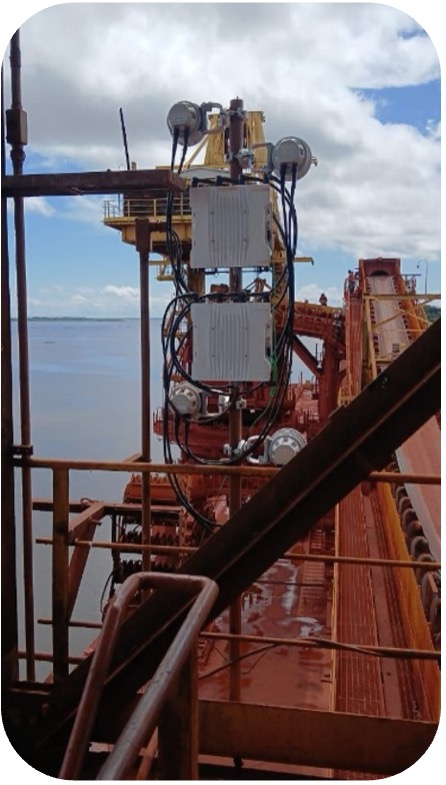
In an environment dominated by steel cranes and moving machinery, traditional Wi-Fi handoffs were too slow, often taking up to 15 seconds. Because Alcoa’s production control system automatically triggers a safety shutdown after just three seconds of network interruption, these gaps were causing frequent, costly production halts.
To bridge this gap, Alcoa teamed up with TecWise, a Brazilian technology integrator specializing in mission-critical deployments, to replace the legacy architecture with Cisco Ultra-Reliable Wireless Backhaul (URWB).
The key to their success is URWB’s Multipath Operations (MPO) technology. By maintaining multiple simultaneous data paths, the system ensures that if one signal is obstructed by heavy steel machinery, data flows instantly through another. This creates a deterministic, low-latency connection that keeps the production control system stable, even in environments with high physical interference.
The right tech for the harsh environment
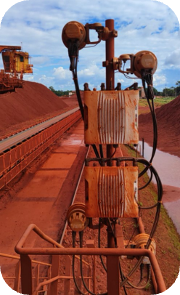
Besides a dependable wireless technology, reliability in the Amazon requires hardware that can survive the elements. The port of Pará is an environment defined by blistering heat, high humidity, pervasive bauxite ore dust, and constant mechanical vibrations. Standard networking equipment could fail here, which is why the team selected Cisco Catalyst IW9167E Heavy Duty Access Points. These IP67-rated, ruggedized units are built to withstand the environmental realities of the site, ensuring the network backbone remains physically intact.
The architectural design was equally important. By utilizing redundant access points across ship loaders, stackers, and the shore, the team eliminated single points of failure. The system operates without a centralized controller, ensuring the “brain” of the plant always has a clear view of operations.
As Bethânia notes, “This is an efficiency issue, but connectivity is also a critical safety issue. We have hundreds of workers on site. We need to know exactly what each machine is doing.”
Clear skies and an invisible network
Since kicking off the upgrade, the impact on operations has been transformative.
Alcoa’s supply chain is moving smoothly, and ships are loaded cleanly without costly multi-hour delays. Best of all, the plant’s production control system never goes blind. The operations team now has total remote visibility into asset performance and safety KPIs.
In reality, people only care about connectivity when the network is down,” Carvalho notes with a smile. “Now that the network is invisible due to its reliability, we can be confident in our plans to deploy new digital workflows.”
With a dependable wireless backbone finally locked in place, Alcoa is looking toward the horizon. The team is already working on scaling up their IoT sensor array and expanding high-definition security camera streams.
Dig deeper into Industrial Wireless
Want to see how ultra-reliable connectivity is transforming mining, logistics and port operations worldwide? Read the full story, explore our portfolio of Cisco Industrial Wireless Solutions or learn more about URWB.