


When we first implemented Splunk, we gained visibility into our data. Now, by integrating new data streams, we revealed hidden operational inefficiencies and unlocked real-time correlation capabilities. This evolution fundamentally changed how we operate and serve customers.
The Cisco Store doesn’t just sell company-branded merchandise and exclusive sports apparel. It serves as a vital testing ground for the newest Cisco technology. With an ever-evolving tech stack, we continue to provide customers with online-level experiences in physical retail spaces.
From reactive monitoring to predictive intelligence
Our initial Splunk implementation gave us visibility. But visibility alone wasn’t the breakthrough — correlation was. By integrating additional data streams from Meraki sensors, customer analytics, and POS transactions, we moved beyond seeing what was happening to predicting what would happen next.
For the first time, we could answer questions like: “How does footfall in a specific zone correlate with conversions?” or “What factors are impacting checkout efficiency?” This integration of previously siloed data streams unlocked new predictive insights that drove material outcomes:
- Enhanced efficiency and cost savings: By consolidating 30+ dashboards and 20+ telemetry streams into Splunk, we identified operational inefficiencies. We reduced energy costs by 66% without sacrificing performance — even during peak traffic and live events.
- Customer engagement: By correlating footfall patterns with demographic insights and sales activity, we reimagined store layouts and created targeted, data-driven experiences — driving a 20-30% increase in dwell time in high-interest zones.
- Operational agility: End-to-end visibility across our sales, network, and environmental data reduced point-of-sale (POS) and network resolution times from hours to minutes, minimizing the business disruption.
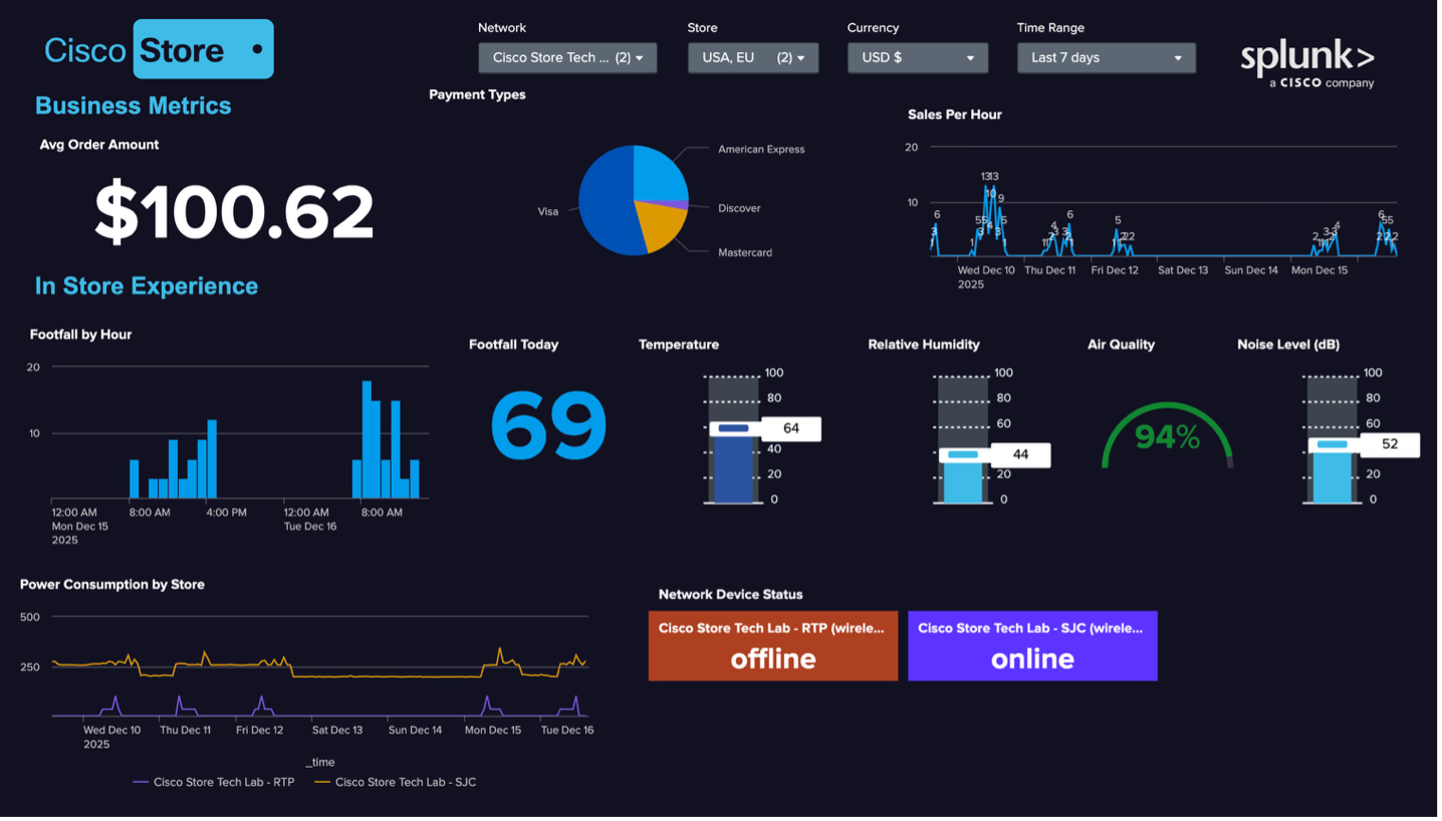
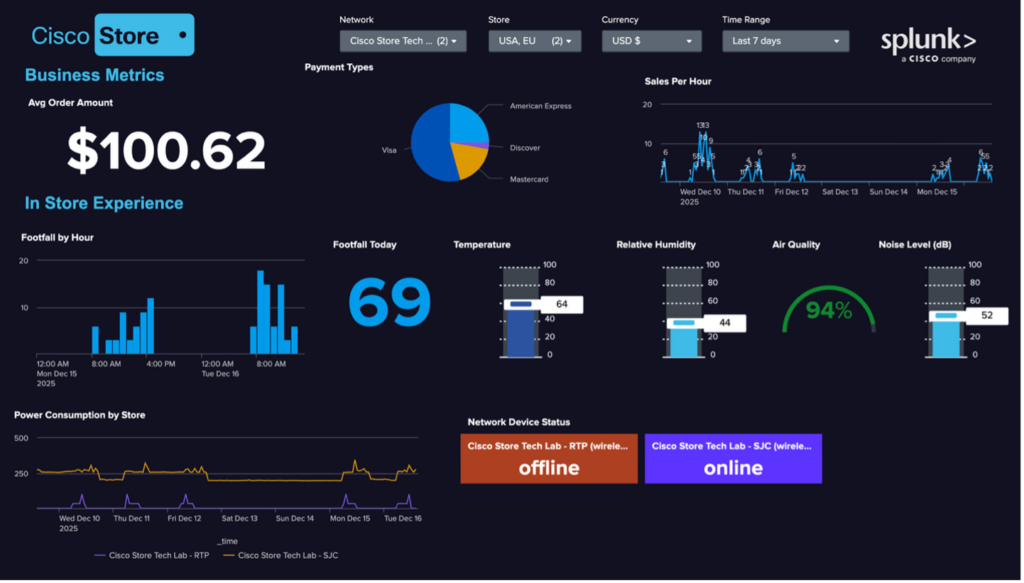
Splunk unifies POS and Meraki device metrics, enabling real-time cross-analysis of sales activity and network performance.
Harnessing real-time intelligence
Splunk Enterprise powers a unified data ecosystem, enabling us to integrate Cisco and partner solutions for proactive, cross-location problem-solving. These integrations transform how we operate:
- Meraki sensors (MT40, MT11, MT20, MT30, and MT15): By correlating real-time data on power usage, networking, and environmental conditions into Splunk, we can optimize operational costs.
- Meraki Access Points: Live Wi-Fi telemetry reveals network bottlenecks that impact customer experience. By identifying and resolving connectivity issues in real-time, we maintain seamless checkout and digital kiosk experiences.
- Meraki MV Smart Cameras and Video Intelligence, plus EVERYANGLE (Cisco technology partner): This provides demographics, preferences, and footfall insights that transform in-store marketing strategies.
- Shopify POS: Integrating transaction data into Splunk creates a real-time bridge between sales activity and operational data. This correlation reveals patterns — such as checkout slowdowns during peak traffic or inventory mismatches — enabling faster decision-making and smarter inventory allocation across store locations.
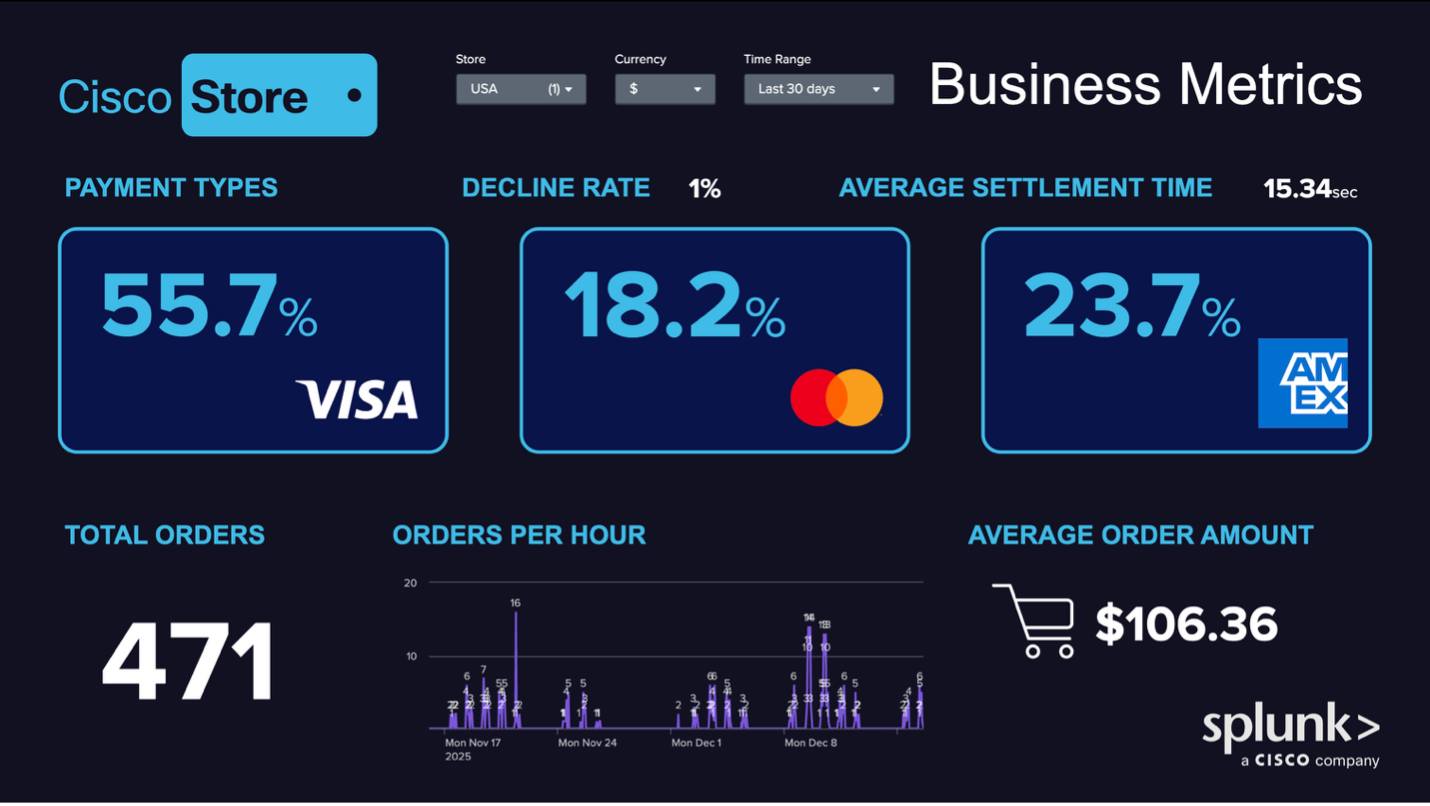
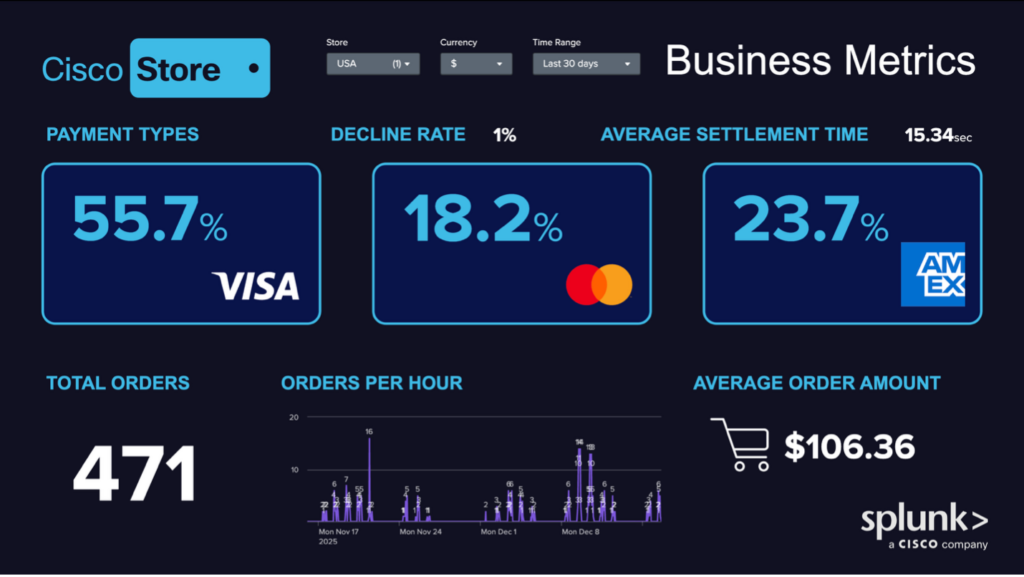
Double-clicking into our data ensures frictionless customer experience and operational efficiency.
Innovations on the horizon
These Splunk integrations proved that unified data drives smarter decisions. Building on this foundation, we’re expanding our capabilities this year: interactive geolocation experiences with Cisco Spaces will personalize customer engagement, widely-deployed Wi-Fi 7 will eliminate connectivity bottlenecks, and Splunk Security Essentials and Splunk Enterprise Security will streamline threat detection, investigation, and response.
We remain committed to piloting, refining, and showcasing Cisco’s latest solutions.
Learn more:
- Cisco Store transforms data into retail success with Splunk
- Success Story: Cisco Store redefines retail success, brings online-level analytics to physical stores
- Cisco Store redefines retail success, brings online-level analytics to physical stores
- When retail AI meets the Store Floor
- More Cisco on Cisco stories


