Avatar

Have you heard of Vector Packet Processing? You know, VPP?

If you haven’t, you will soon, because this particular technology allows networks to move information much faster than they’ve been able to up until now.

I know, I know—the network is always getting faster. Making it faster is our job. But sometimes it gets faster in small increments, and sometimes it gets faster in big ‘ol leaps.

VPP is one of the things that feels like it will deliver a leap.

And luckily, this week we were able to get two of the Cisco engineers behind this revolutionary technology on the show to explain it. Dave Barach is a Cisco Fellow—which is a pretty darn exclusive club, considering there are only about a dozen of them—and Ed Warnicke is a former physicist that’s now a Distinguished Consulting Engineer. During our discussion, they explain:

  • What VPP is and how it works
  • Why VPP is so interesting to service providers
  • Which products and use cases VPP is likely to start turning up in (and is already in)
  • What FD.io is all about
  • The things that make open source communities succeed or fail

See the video podcast on our YouTube page, or listen to the audio version on SoundCloud. And if you like what you hear, we invite you to subscribe to our channel so you don’t miss any of the other exciting podcasts we have scheduled over the next several months.

Authors

Ali Amagasu

Marketing Communications Manager

Avatar

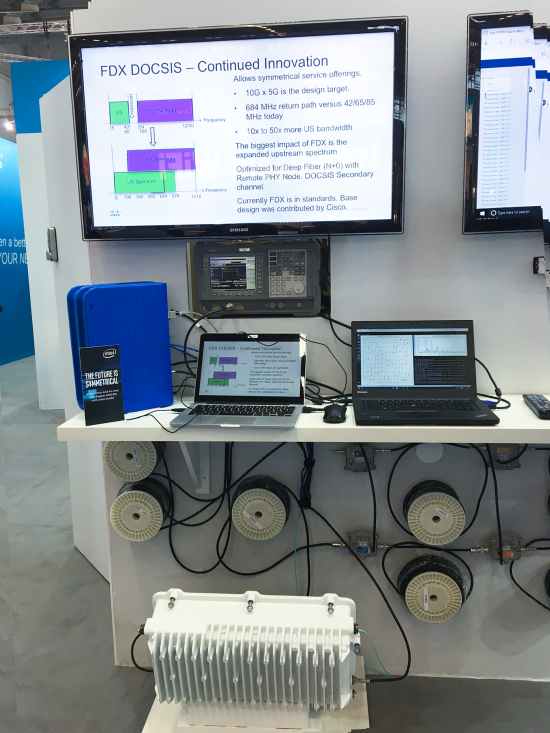
In just a few weeks, we’ll be at the 2017 CableLabs Summer Conference in Keystone, Colorado to demonstrate DOCSIS FDX. The agenda for this year’s conference has some fantastic keynote speakers and sessions featuring the latest technical developments in the industry. To find out more, visit the CableLabs page.

See the Groundbreaking DOCSIS FDX Demo

Make sure you stop by and see us. We’ll be demonstrating our next-gen cable access platform with DOCSIS Full-Duplex and we’ll show you how our new Cisco RPHY technology provides a foundation for FDX.

Cisco Full Duplex DOCSIS 3.1 Demo

Cisco Infinite Broadband

We’d also welcome the opportunity to explain how Cisco’s commitment and leadership in next generation cable and our vision for evolving your cable access network can help you to drive down network complexity and operating costs; unlock profitable growth by delivering a broader mix of services; and, bring innovative, differentiated new experiences to your customers faster.

We look forward to seeing you @CableLabs Summer Conference in Keystone Colorado on August 6. Have questions and comments, Tweet us @CiscoSP360.

Authors

Alison Izard

Marketing Manager

Avatar

News flash.

We had some big news recently. You’ve probably seen it. The launch of The Network. Intuitive. A new era of networking is here. One that is constantly learning, adapting, and protecting. One that evolves with business demands.

That’s great, right? But what does it mean to your marketing practice?

Well for starters, it’s an opportunity. We’re rebuilding the network from the ground up. Now it helps you make decisions faster, mitigate security threats, and manage connected devices and services easily.

Most of today’s networks can’t handle the digital demand of the future. It was time to reinvent networking. And it’s time to change our marketing to match.

Your marketing. Successful.

Is your marketing working for you now? Will the same approach work next year? In three years? Experts predict major shifts in how to capture mind and wallet share. All indications are that a digital, omnichannel marketing approach is essential. So even if traditional marketing tactics are working now, they will need to evolve fast. Are you ready? We can help you go digital with your marketing.


Here’s how to begin…


Find your customers and follow them

Get to where your customers are. Find out who influences them. If you’re having a hard time understanding who to target, try developing personas. We have some available to get you started. You can check them out here. This will help you create personalized content that gets to customers at key decision points. Make it even more impactful by tailoring that content for the specific vehicles your customers use most, whether that’s a paid banner ad on a channel publication or a tweet or both.

Keep doing what works

Analyze the impact of your content strategy – what works and what doesn’t. We’ve launched Shared Analytics in Partner Marketing Central to help you measure the effect of your marketing journeys.

By embedding code into your site, you can see which prospects are clicking on the content. This gives you intelligence and insight to market more effectively – crucial if you’re going after a new audience. At the bottom of this blog, you’ll find detailed instructions on how to get started with the Shared Analytics feature.

Take a closer look at what’s behind The Network. Intuitive.

There’s new content in PMC to help you get familiar with the new era of networking. Regional campaigns are in the works and coming soon. We can help you tell the story of the new network. How it’s founded on Cisco DNA. And why it matters that it’s automated, secure, software-driven, and provides analytics to predict issues before they happen. So you’ll be able to offer your customers the foundation for their digital future.

Believe in what you do

It was our mantra at Marketing Velocity, “There’s never been a better time to become a digital believer.” If we don’t adopt digital marketing, we won’t succeed. It does mean changing how we operate.

But be a believer! We’re in this together. We’ve got the best technology in the industry, the ecosystem to help each other build solutions, and the marketing training and content to reach customers with messages that drive demand. Fuel your marketing efforts with the new era of networking.

Download and share new creative assets about the new network.

  1. Visit Partner Marketing Central
  2. Search for “New Era of Networking.”

We’ve got resources ranging from videos to infographics, so you can share what works for you where it works best for your customers.


Getting Started with Shared Analytics

  1. Log in to PMC and add the PMC Web Analytics embed code to your website. Instructions here.
  2. Once prospects “reveals” themselves (form submission, email open, email click, landing page view, landing page click, ad landing page view, etc.), the Web Analytics code in PMC will track prospects’ marketing engagement, building a complete profile for sales and future marketing activity.
  3. All customer tracking is located in the PMC Contacts tab.

If you need additional support, please reach out to your partner marketing manager or contact support@ziftsolutions.com.

Avatar

Have you ever flown to Sydney, Australia?

I haven’t, so I took a moment to look up average flight times from my own home airport (LAX), as well as a few others, and all I can say is “Wow.”

Australia is far away. I may not have appreciated just how far previous to this brief little research effort, but now I do. Best case for me coming from Los Angeles is a non-stop flight with 15 hours of travel. If you’re coming from New York City you’re in for at least one stopover and 22.5 hours of flight time. And lest you think I’m being provincial, it’s 23 hours from Paris. Twenty-two from Tokyo. Twenty-seven from Oslo.

This isn’t to say that having the Summit in Sydney is a bad thing. I think it’s a great thing. OpenStack adoption as been growing faster internationally than it has in the U.S. according to the latest user survey (61% of users and 74% of deployments are outside the U.S.), and it’s hardly fair to drag the whole world to North America every six months when we can just as easily hop on a plane and go to a new place. And that’s without even getting into the fact that it’s nice to add a little adventure to an otherwise rote exercise (if you go to the Summit on a regular basis). So there we go—for the sake of fairness and adventure, I think we can all agree that Sydney is a good thing.

That said, if you’re going to travel that far to get to a Summit, you’ve got a vested interest in making that travel worth it. You want to leave knowing that you didn’t spend a minimum of 30 hours round trip folded up like human origami in coach so you could sit in sessions that were not useful. (A double negative seems to have slipped into that sentence, but you know what I mean.) You want to climb back into your narrow, minimally padded airline seat at the end of the week knowing that it was a great investment of your time.

With that in mind, I argue that it is more important than ever for you to take an active part in setting the Summit agenda. I’m only going to list the proposed Cisco sessions below, because I work for Cisco and love Cisco and want to get the word out about all the cool things we’re doing with OpenStack, but please note that this is not an all-inclusive list. In fact, it’s a tiny fraction of the hundreds of talks that have been proposed. So if you don’t find what you like in this list, click here, visit the official Summit site, and do a search for the topics that interest you. Then vote. Today. The polls close in just one week!

Here’s hoping we meet up in Sydney.

Telecom and NFV

Turbocharing OpenStack for NFV Workloads, Vinay Rao, Ian Wells, Ajay Simha (Red Hat)

It’s a Mutlicloud World After All, Abishek Subramanian, Vinay Rao, Hareesh Puthalath

Achieving NFV Network Services in OpenStack, Ian Wells, Bin Hu (AT&T), Sukhdev (Juniper)

Compostable Atomic Virtual Network Functions (VNFa) as Hypermedia Objects, Juan Ramon Acosta

The Business Case and Strategy for Using Kubernetes on OpenStack, Ernest De Leon, Zhi Bing Wang

Cloud and OpenStack 101

OpenStack for Marketers (and Anyone Else Needing a Quick and Dirty Overview), Ali Amagasu, Anne Bertucio (OpenStack Foundation), Kent Wimmer (SUSE), John Dickinson (SwiftStack)

Heat Orchestration Using Ansible, Aman Sinha, Nagendra Kumar, Sachin Joshi

OpenStack Administration Essentials for Beginners, Veena Lingadahalli, Mohankumar Navaneethan (Cavium Networks), MD NADEEM (Red Hat)

A Way to Manage Logs in OpenStack Deployments, Marga Millet

Hands-on Workshops

Encryption Workshop: Using Encryption to Secure Your Cloud, Dave McCowan, Ade Lee (Red Hat), Juan Antonio Osorio Robles (Red Hat), Kaitlin Farr (JH-APL)

Business and Strategy

Continuously Improve Your Multicloud Environment, Enrico Fuiano

Community and Leadership

Combining Open Source with Open Standards, Charles Eckel

Selling OpenStack! Secrets from the User Groups, Gary Kevorkian, John Studarus (OpenStack San Diego UG), Beth Cohen (Women of OpenStack), Lisa-Marie Namphy (OpenStack Bay Area UG), Jessica Field (OpenStack UG Australia)

Architecture and Operations

OpenDaylight as a Platform for Network Programmability, Charles Eckel

Brownfielding OpenStack: From Bare Metal to Containerized Control Plane, David Lapsley, Chet Burgess, Nicolas Simonds

OpenStack Upgrade: Our Journey from Liberty to Ocata, Ajay Kalambur, Shail Bhargava, Richard Winters

Delivering a Highly Scalable Cloud with Neutron and OpFlexSharmin Choksey, Ajay Kalambur, John Wu

Artemis: Machine Learning Based Approach to Proactive Cloud Monitoring, Ajay Kalambur, Pradeep Chandrasekar, Vinod Pandarinathan

Hands-on Lab: CloudBurst, Multi-cloud Test Manager on Kubernetes, Ajay Kalambur, Pradeep Chandrasekar, Vinod Pandarinathan

Hands-on Containerized Deployment of OpenStack, Charles Eckel

Hands-On Lessons in Deploying Versatile Storage Arrays as Cinder Multi-Backends in OpenStack, Al Lau, Yuming Ma

Using HTTPS to Secure OpenStack Services, Dave McCowan, Juan Antonio Osorio Robles (Red Hat)

Multi-Region Cloud Front-End Layer, Thin or Thick?, Liping Mao, Ian Zhang

Learn How to Use VPP and ML2 networking-vpp to Get the Best Network Performance, Ian Wells and Naveen Joy

Et cetera, Et cetera, etcd – Yul Brynner in Your Datacenter, Britt Houser, Chris Ricker, Josh Lothian

Kolla-Kubernetes Installation Workshop, Serguei Bezverkhi, Vikram Hosakote, Rich Wellum (Lenovo)

The Ins and Outs of Penetration Testing an OpenStack Cloud, Sebastian Jeuk, Deepika Gupta, Brian O’Neill (Rapid7)

Enhancing Openstack API Security with Layered Authentication, Aman Sinha, Nagendra Kumar, Sachin Joshi

Security Challenges in an NFV Deployment, Sebastian Jeuk, Deepika Gupta

Taking OpenStack from Open Source to Open for Business: A Case Study, Vinod Pandarinathan, Chandra Gangly, Danny Choi

Dynamic Security Orchestration Using DPI and Machine Learning, Aman Sinha, Meenakshi Sundaram Lakshmanan, Nagendra Kumar

Best Practices of Tuning Container Datapath Performance with Kuryr-libnetwork Upon OpenStack, Liping Mao, Ian Zhang

A Use-Case Driven Introduction to NFVi Characteristics, Their Benefits, and Impacts on vNFs, Sebastian Jeuk, Deepika Gupta

Dynamic Service Chaining – DynaScale, Vinay Rao, Marga Millet, Yichen Wang

NFVi Data Plane Performance Measurements and Optimizations on OpenStack, Alec Hothan, Yichen Wang

Monitoring for Service Assurance in NFV Private Clouds, Hareesh Puthalathm Abishek Subramanian, Michael Shannon (Zenoss)

Containers and Cloud-Native Apps

Designing Cloud Native Applications with Microservices and Containers Over OpenStack, Hector Morales

CI/CD for Containerized OpenStack Services, John Wu, Pradeep Chandrasekar, Sharmin Choksey

OpenStack Images That Fit Your Imagination – Deep Dive Into Container Images in Kolla, Vikram Hosakote, Michał Jastrzębski (Intel), Rich Wellum (Lenovo)

Logging Diver Agnostic Container Logs, Seanna Vien, Nick Hayward, Ralf Rantzau

Cisco IT – Application Centric Cloud with Mitaka OpenStack and Cisco ACI Networks, William Bloom, Sagar Gattepally

Poke-a-Pike – Upgrading OpenStack with Kolla, Vikram Hosakote, Duong Ha-Quang (Fujitsu), Michał Jastrzębski (Intel)

Containers with Embedded Intelligence for Optimal Deployment of Virtual Network Function, Juan Ramon Acosta

Building and Deploying a Kubernetes Microservices Platform on OpenStack, Ernest De Leon, Zhi Bing Wang

Contribution and Upstream Development

Contributing to OpenStack, Ying Zuo

Building Your Own Horizon, Ying Zuo

Taking Openstack From Open Source to Open for Business, A Case Study, Vinod Pandarinathan, Chandra Ganguly, Danny Choi

Project Updates

Barbican: Project Update, Dave McCowan

Kolla-Kubernetes from Boston to Sydney, Pushing for 1.0, Serguei Bezverkhi


Authors

Ali Amagasu

Marketing Communications Manager

Avatar

Like the Internet and the Internet of Things (IoT), blockchain transformation will be a multi-year journey. We’re now at the beginning of that journey—an exciting time, when innovators from across industries are experimenting with new ways to harness blockchain technology in applications that range from enabling real estate transactions to securing energy grids and autonomous vehicles.

But to unlock the value of blockchains and to ensure their widespread adoption, the industry needs to drive technology standardization and interoperability. To this end, Cisco is joining forces with the blockchain ecosystem in key forums. Between this week and last, we’ve announced our investment and expanded engagement in two major industry consortia:

  • Enterprise Ethereum Alliance (EEA): To be taken seriously blockchain needs enterprise-ready capabilities. That is the focus of EEA. “Enterprise-class blockchain technologies have a potential to redefine how organizations transact value,” said Maciej Kranz, vice president of Strategic Innovation at Cisco. “Cisco sees great potential in the EEA’s work—its ecosystem efforts complement other industry initiatives that are exploring blockchain as a potential foundation for enterprise technology solutions.”
  • Hyperledger: Cisco is a founding member of the Hyperledger project created in the Linux Foundation in December 2015. This forum is recognized as a foundational open source initiative that will define how enterprises should respond to blockchain growth opportunities. Today, we announced further investment as a premier member. In this expanded position, Cisco will be able to take a greater leadership role in defining modular architectural approaches within the blockchain ecoysystem.

In addition, Cisco is leading in the formation of the Trusted IoT Alliance, along with Bosch, Bank of New York Mellon, Foxconn, Gemalto and several of the most innovative blockchain startups. The Alliance is focused on ensuring blockchain interoperability in IoT applications, regardless of underlying blockchain platform. This effort will help accelerate the adoption of blockchain solutions in IoT—ranging from managing and reporting mining site data, manufacturing supply chain, transportation data security, oil and gas operations, and energy production – all the way to insurance risk management. These types of applications are often disrupting decades-old business processes and technical workflows. And they all have to work together to maximize value. By leading the Trusted IoT Alliance, Cisco will help to bridge these investment areas and allow customers and partners to take advantage of economies of scale across various ecosystems.

For the blockchain industry to thrive, users need to have a strong assurance that their multi-stakeholder blockchain transactions remain trustworthy as they interact with multiple networks. Cisco’s internet-critical infrastructure perspective and approach will provide guidance for secure and trusted value delivery.

We are thrilled about the promise blockchain holds for all areas of IoT and proud to lead efforts in network infrastructure and protocol interoperability. It’s critical that the industry works together to realize its full growth potential.

Watch this space for more developments as industry momentum in blockchain continues to accelerate. Please comment below. We’d love to hear what has you excited about blockchain and all its possibilities.


Authors

Avatar

Everyone knows the story by now. We have siloed groups of people working on various parts of our data center infrastructures. There’s a lot of red-tape, a lot of disparate ideas on who should do what and when they should do it. That’s why public cloud is so appealing to people in our organizations who just want to deploy applications. It’s hard to blame them, applications are the reason IT teams are relevant. They are the bread and butter of our businesses. So, what if we could change the way we deployed apps? What if we could scale our on-premises infrastructure, just like we can in the public cloud, but retain better costs, ROIs, and security? With Cisco HyperFlex, we can.


Cloud-Like On-Premises Infrastructure

We’re actually able to deploy most HyperFlex clusters in around a half hour. We need only fill in a few questions from the deployment GUI, things like naming conventions and IP addresses, and from there service profiles with VLAN information, IP information, and everything needed will be automatically assigned within the cluster. Now we can deploy VMs like we would in any virtualized environment, using things like thin provisioning to add to storage savings if desired.

If we want to add more nodes to our clusters, it becomes even easier. We can literally click a button, as shown in the accompanying video demo.

Flexibility in Scale

While I’ve seen some unique benefits to HyperFlex, one that stands out is the flexibility in which we can scale resources. One complaint I’ve often heard from customers considering HCI is that when they run out of one particular resource like storage they need to buy a whole new node to add to the cluster, which adds to their compute and networking resources as well…even if it’s not necessary. Now this wouldn’t be a big deal, but there’s an actual cost associated with these nodes and they’re not necessarily inexpensive. Because the HX Data Platform (HXDP) was built from the ground up and because we’re working with an already converged networking and compute system like UCS, we can be a lot more flexible with HyperFlex.

For example, if we want to add more flash we could simply add more SSDs to a node. We can do the same with memory. Now if we need to add a lot of compute resources, we can actually utilize a UCS server we already have, install a hypervisor, an SCVM, and the IO Visor (all things common to an HX node), and now even if we don’t have storage on this particular server we can increase compute performance for our cluster and manage it all from the same HX GUI. There are a few business implications here:

  1. We can now more easily migrate from our current UCS infrastructure to a HyperFlex HCI
  2. We can utilize current equipment and avoid any forklift upgrades
  3. If a certain application is only certified on UCS, for example, we can still run that application in our HyperFlex environment


The possibilities don’t end there, especially when we consider that we can do the same thing with actual storage arrays. If we’re already running a Pure array, for example in our data center, we can add this storage to our HX clusters as well!

There are so many other benefits and when put this together with other orchestration solutions, like Cloud Center and UCS Director, or SDN solutions like ACI, we get a full private cloud solution making our automated networks policy and intent driven. Check out the demo video above and visit cisco.com/go/hyperflex for even more information.

Avatar

Chicago in August is known for film and food festivals, music events and many more fun stuff.  And this fall season, we have the F5 Agility event further adding a sizzle to the conference scene at the Hilton Chicago. From a Cisco standpoint, F5 Agility 2017 prominently features Cisco ACI and Tetration Analytics joint solutions with F5, so join us at the event to learn about the future of application delivery, share best-practices with influential decision-makers, connect with technology leaders, and have some fun at the Agility closing gala at the House of Blues.

During July 31 – Aug 3, we are going to hear F5’s leaders, customers, and partners share how the latest solutions from F5 are transforming what’s possible for today’s organizations. In about three years, Cisco ACI, Tetration Analytics and F5 partnership has demonstrated significant success in our joint solution momentum and customer adoption. I am pleased to invite you all to attend this premier industry event and get insights on how F5 and Cisco are bringing the power of cloud, security, data centers, converged systems, and as-a-Service together to enable fast, efficient, and secure application delivery in today’s challenging hybrid environments.

First things first – What’s new in 2017:

  • Increased hands-on lab offering by Cisco & F5
  • Broader technology topics that go beyond F5 products
  • Increased technical community access in F5 Lounge

This year we have a galaxy of accomplished keynote speakers. F5’s CEO Francois Locoh-Donou kick-starts the event with his keynote. Following Francois on keynotes include Tech futurist Pablos Holman, Gigaom research analyst David Linthicum, Emmy nominated and self-professed wonderjunkie Jason Silva, F5’s EVP of Worldwide Sales, John DiLullo, F5 Calvin Rowland, SVP of Business development at F5, and many more.

Cisco Technical Breakouts:

And now let’s segue to Cisco Sponsor breakouts. Cisco a Platinum sponsor, has a big presence this year at F5 Agility with technical breakouts, hands-on Lab sessions and world of solution demos. Cisco ACI Expert and Product Manager Ahmed Dessouki and F5’s Vincent Ng are co-hosting a breakout session titled “Tetration Analytics and F5 Cloud Technologies” Aug 2, 2.10 PM local time.  What’s unique about this Breakout Session?  They will talk about how the joint integrated solution brings unprecedented value to customers in the emerging analytics‐driven security space by taking advantage of the L4‐7 analytics in F5 BIG‐IP and Cisco Tetration Analytics to deliver application dependency mapping, security policy enforcement, application segmentation, and more. Attend this session to learn how we deliver a comprehensive full‐stack network analytics, application delivery, security solutions to segment and secure application flows across the Data Center.

This year, Cisco has a second breakout session hosted by the popular pair, Insieme Product Manager Ahmed Dessouki and F5’s Vincent Ng, Aug 2, 1 PM local time. The session titled “DC Automation with Cisco ACI and F5 iWorkflow” takes attendees on a tour of how businesses are increasingly under pressure to deliver value to their customers fast with the lowest TCO, and how an agile infrastructure is paramount in addressing this requirement. F5 and Cisco have collaborated to create an F5 private cloud solution for Cisco ACI or NX-OS networking, which provides customers choice and flexible deployment options for diverse use cases. Attend this session to learn how F5 private cloud package with Cisco provides a pre-validated, risk-minimized solution for deploying your applications in newly managed, traditional, or standalone modes, while providing a seamless experience in transitioning from legacy networks to a policy-based, software-defined architecture.

Sounds great, doesn’t it?

Cisco-F5 Led Labs

Cisco and F5 are also offering two 4 hour, joint hands-on Lab session featuring Cisco ACI and F5 iWorkflow, one led by F5 and one led by Cisco  The F5 led Labs occurs on July 31, 8 am Local time, and deals with  topic “Deploy F5 using iApps using Cisco ACI”. This Lab session will give attendees hands-on experience integrating F5 BIG-IP into Cisco ACI architecture—you’ll deploy applications using F5 iApps and dynamic device package. We will step through the end-to-end workflow that includes: application template creation; generation of dynamic device package; creation of logical device cluster; creation of service graph based on application template; assigning service graph to End Point Groups (EPGs); and deploying iApps based Virtual Server.

The Cisco led Labs occurs on Aug 1, 1 PM local time. This Lab session wil help you take the next steps from the “Deploy F5 using iApps in Cisco ACI” lab, learn how programmability constructs offered by both Cisco APIC and F5 BIG-IP/iWorkflow automate end-to end L4-L7 service insertion process on Cisco APIC.  Get hands on experience on using Ansible as the DevOps tool to create APIC tenants, bridge domains, End Point Groups (EPG’s), application profiles, service graphs, as well as iWorkflow tasks such as upload iApps, create templates and download the device package.  Attending “Deploy F5 using iApps in Cisco ACI” lab on Monday is recommended but not a requirement.

Both the F5 led and Cisco led Labs are taught by Ahmed Dessouki (Cisco) and Vincent Ng (F5).

Demos at Solutions Expo:

That is not all. Cisco ACI and Tetration Analytics brings you additional customer engagement opportunity in the solutions expo hall. We are featuring cool demos showcasing our joint solutions Cisco ACI and Cisco Tetration Analytics with F5 iWorkflow, on both Aug 1 and 2, during the duration of the expo hours. Stop by the Cisco booth where our product experts are available to engage in white-board sessions and to compliment the demos, we also do whiteboard illustrations in the Cisco theatre at periodic intervals. Should you desire, we are happy to meet you in 1-1 meetings, so let us know how we can enrich your experience at the event.

For all the hard work we all do at the event, there is plenty F5 offers to let us relax and enjoy. This year we are taking over the House of Blues in Chicago. Agility 2017’s closing celebration features a spectacular mix of comedy, rock, and electronic dance music.

Entertainment includes:

Jay Mohr Comedian, actor, radio host and best-selling author, Jay Mohr has been performing standup comedy since he was sixteen years old. With a career that has spanned over three decades, Jay has always pushed himself to be more than just a comic.

L. A Vation Based in Los Angeles, California, the entertainment capital of the world, L.A.vation derives its name from the hit song “Elevation”, the third single released from U2’s 2000 album, All That You Can’t Leave Behind. L.A.vation has faithfully crafted an amazingly accurate show, incorporating memorable stage elements from past U2 concerts with spot-on musical execution, while emphasizing the pride and passion of the four lads from Dublin.

D Js From Mars DJs From Mars bring the mash-up attitude into Electronic Dance Music. Their style is a 360° blend of every kind of musical genre, with the addition of their “Alien” basslines and beats. They started remixing pop and rock hits for their own gigs, just for fun, and soon they were recognized as one of the biggest names in the bootleg scene.

Their videos on YouTube reached over 70 million views and the hype is still growing…
I am eager to see you all in Chicago next week. There are some useful links for you to check out before your visit on how Cisco ACI, Cisco Tetration Analytics and F5 work together on the innovation front.

For more information, Visit www.cisco.com/go/acif5,

www.cisco.com/go/tetration


Authors

Ravi Balakrishnan

Senior Product Marketing Manager

Datacenter Solutions

Avatar

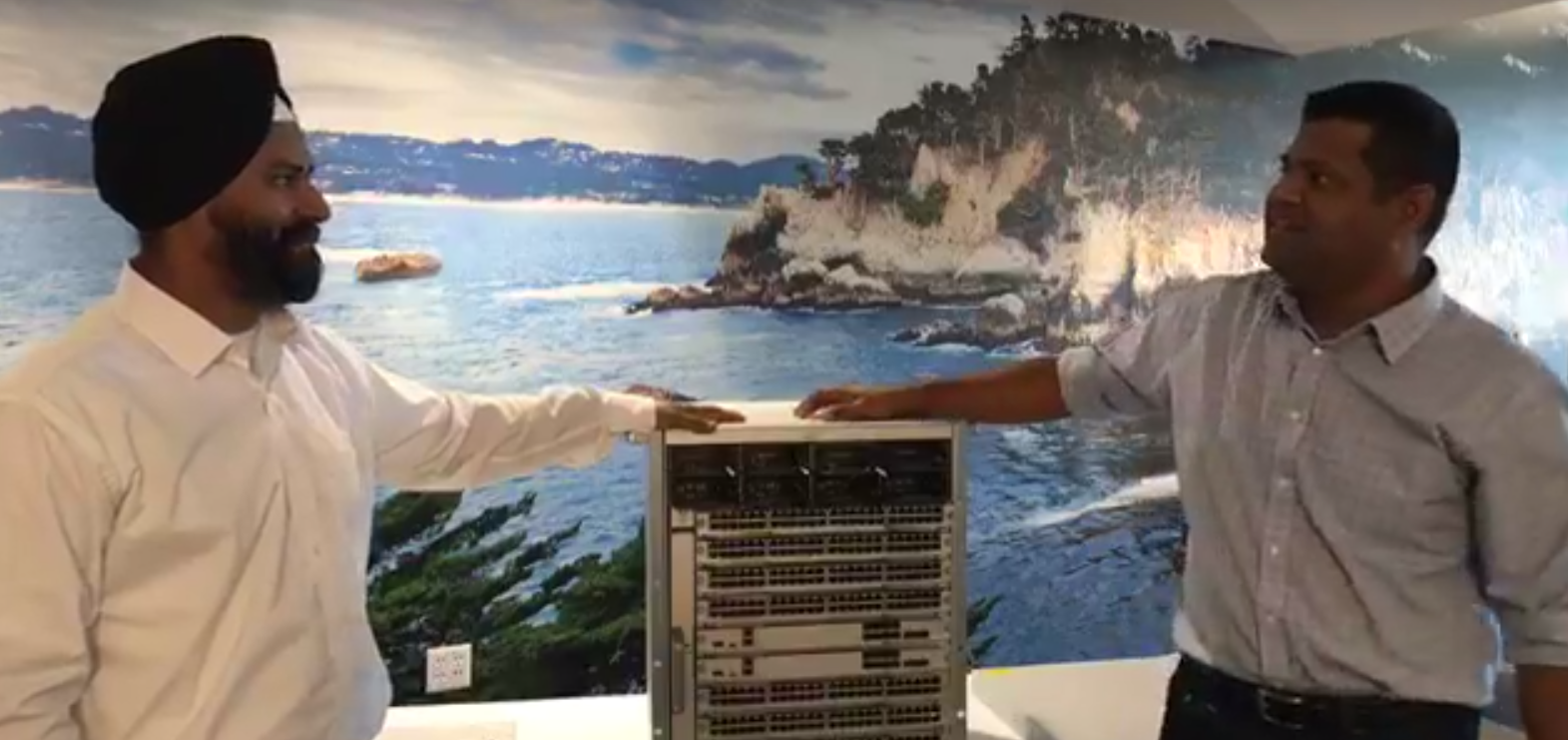
When you’ve got big, exciting news, sharing the story simply won’t do. You need to do a show-and-tell. And with the launch of the Catalyst 9000 line, our latest, greatest network switches, that means a lot of showing and a lot of telling.

That’s exactly why our latest #CiscoChat was held on Facebook Live, and featured Muninder Sambi and myself, the “Switching Dudes.” We walked through a live unboxing of the 9300, 9400, and 9500 series models and explained all the ways the Catalyst 9000 solutions help bring the business into a new era of networking, ever ready to adapt and evolve to solve shifting challenges. We also discussed how the switches simplify mobility management, meet IoT and cloud requirements, and look great while doing it — thanks to its user-centric design created with Pininfarina engineers, the same engineers behind the design of Ferrari’s iconic cars.

If you haven’t already, check out the live unboxing video yourself. Or, you can follow along here with our highlight reel of responses to #CiscoChat viewer questions.  

  1. What’s the superior switch: the Catalyst 9300, 9400, or 9500? 

There’s not a bad choice in the bunch. But if the Switching Dudes had to choose? Muninder’s pick is the 9400. And mine is the 9300 — a bit simpler and easier. Still, all Catalyst switches are part of the same family, running on the same operating system with the same design.

  1. So far, are there any exciting use cases for these switches? 

Muninder explained how the switches were launched with a new architecture called Software-Defined Access. This technology allows hundreds of Catalyst to operate as one fabric, for faster, more secure network access.

Then, I discussed the magic of Encrypted Traffic Analytics, an innovation that can detect malware-encrypted flows without decrypting the flow. Yes, you read that correctly. It is possible! 

  1. How did Sachin and Muninder contribute to the creation of the Catalyst series switches? 

We were both instrumental in bringing the Catalyst 9000 series switches to life. Hundreds of thousands of people were also involved in the project — and more than 200 patents were secured in the process.

As Muninder summarized in closing, the Catalyst 9000 “preserves all the excellence of the past, and is built for the next decade.” We couldn’t have said it any better.

To find out more, visit the new digital home of the Catalyst 9000, and click here to find out if your network is ready for digital transformation. Make sure to tune into future #CiscoChats!


Authors

Sachin Gupta

Senior Vice President, Product Management

Cisco Intent-Based Networking Group

Avatar

We met when I was a senior in college at a New Year’s Eve party at the Outrigger Canoe Club in Honolulu. We were introduced through mutual friends, and three years later Terry and I had our wedding reception at that same club in Hawaii.

It may not be uncommon to look back on the major events in your life and confidently say, “We have been through it all together” with your husband (or wife) in mind. From getting married, moving across the country, and having kids – you know, just some of those little moments that really shape your life – we’ve seen a lot in our days together, and most expect that when marriage comes in to play. You’re truly partners in life!

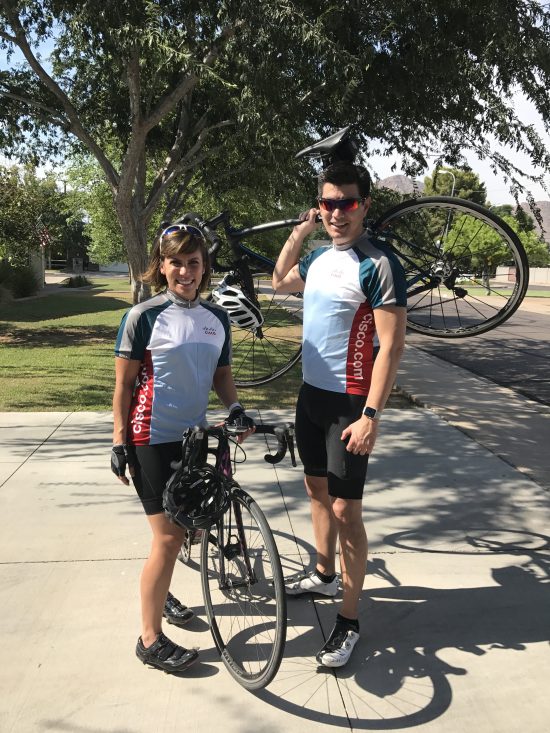
What you may consider uncommon, however, is that Cisco has been an integral part of all those incredible moments as well. Terry and I will celebrate 11 years of marriage this year, and for nearly that entire time, we’ve worked out of the same office at Cisco.

That’s right! We’re a Cisco couple!

The thought of working with your spouse might “scare” you, but for us it is one of the things that make us love where we work even more! Cisco has such a fantastic culture that is made even more rewarding because we get to share it together – from finding a work/life balance that truly works for us to the annual holiday shut down (which is a company-wide shut down in the US the last week of December) – there are so many benefits we can enjoy together because of Cisco.

Being a Cisco couple has its advantages and disadvantages, but I’m only grateful for what we’ve gone through together over the last 11 years.  I like to think that we’ve found a good balance in keeping our personal and work life pretty separate. The biggest advantage to working together is that we never feel alone in any challenge we’re facing at work. I know I can bounce anything off him if I need an “outside” perspective, without having to explain every little detail – he just gets it.

We also understand the pressures we face during the more stressful times of the year. That greater sense of understanding and acceptance helps us support each other in a really meaningful way. At the same time, there are times when we have to mindfully keep work out of our conversations – which is pretty easy to do considering we are raising two active kiddos and two crazy rescue dogs.


But we aren’t the only couple at Cisco – there are many others out there! Here’s a couple more Cisco Couples:


  1. Matt and Rachel – Matt is PAM, and Rachel is an Enterprise Account Manager. Both live and work in Florida.

How did you meet?

We met at a beach bar in Ocean City, MD called Macky’s. We’ve since named our dog Macky.

What do you like most about working at Cisco?

We love that Cisco is so family orientated!

What do you like most about working with your spouse?

We are both very competitive. We love sharing ideas and helping to make on another better with each day at Cisco.

Why does this help you to #LoveWhereYouWork?

We understand how each other’s days are spent, and we can share and learn from each other throughout the day as well – it’s one of the best ways to #LoveWhereYouWork!


  1. Ryan and Sarah – Ryan is a Virtual Sales Account Manager on Cisco’s Service Provider Team and Sarah is a Virtual Sales Account Manager on the Services Team.

How did you meet?

Through mutual friends in Raleigh, NC.

What do you like most about working with your spouse?

It’s great to bounce ideas off of each other and learn about different parts of the company from what we each do. It’s also nice to be able to travel together to GSX in Las Vegas.

Why does this help you to #LoveWhereYouWork?

Cisco is a great company to work for, so it’s really nice to be able to share some of the same work experiences with your spouse.


No matter what your job is, no matter where you work, I’m a strong believer in the importance of having a trusted confidante at work. As a people leader at Cisco, I put a lot of pressure on myself to create a fun, collaborative environment focused on individual and team success. I lead a team of Partner Account Managers in Southern California and the Southwest. Since 88% of Cisco is sold through our Partners, we have tremendous responsibility to continuously grow and develop our Partners as Cisco accelerates innovation. I’m very fortunate that my trusted confidante is also my best friend and husband. He helps me be a better manager, wife, and mom – and I’m so happy to be sharing these experiences with him.

Are you a Cisco couple? What’s your favorite benefit of working together? Share with us in the comments below!


Want to join a company that encourages work/life balance? We’re hiring!


Authors

Isabella Yani

Chief of Staff

Global Sales