As we look to the future, it’s easy to imagine how the Internet of Things (IoT) might transform the world. But it would be a mistake to try to start with a huge world-transforming implementation.
As I’ve already discussed in my recipe for IoT success, IoT is a multi-year journey, not a one-time event. You need to make sure the first step on that journey is successful—or it will be a very short journey indeed.
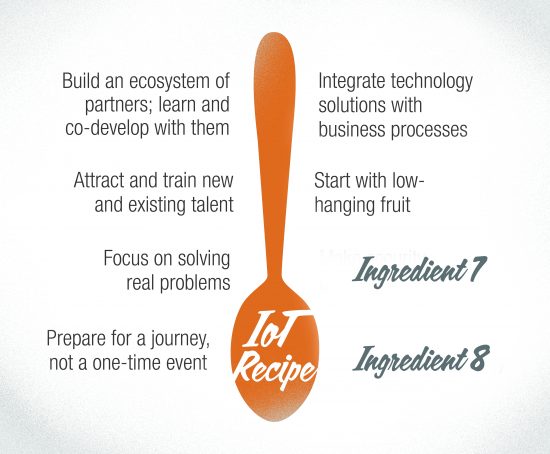
That is why, like a farmer trying to rush his harvest to market, you should start by picking the low-hanging fruit—the quick wins that can pave the way to more ambitious projects.
Think of your first IoT project as a proving ground. To ensure success, you’ll need to manage costs and reduce risks. Identify a small IoT project that solves a worthwhile problem in one plant, store, or refinery to demonstrate that IoT can make a significant impact in your organization. For example, Cisco deployed a network of 1500 sensors and energy analytics capabilities in just one manufacturing plant in Malaysia. By identifying and replacing inefficient equipment, we were able to reduce overall energy consumption in that one plant by 15 to 20 percent. That success provided the impetus to go further. The team is now pushing toward 30 percent energy savings and expanding the energy-cutting improvements to more than 20 other factories across the globe.
As with any major change in “the way you’ve always done it,” there will be naysayers you will need to win over. So build a coalition of the willing (and not-so-willing!) to develop a common vision. Bring in key stakeholders within your organization and company, and identify external partners that can help complete your solution. Focus on the goals everyone can agree on—like improved productivity, or reduced OpEx—which can mitigate some of the issues that might cause dissent.
If you start small, you’ll have a low-risk way to test the right approaches and processes, and to identify best practices for future projects. Figure out where the kinks are—who can slow you down, who will resist change, and why. That way you’ll be able to develop strategies to work out the kinks and address the change issues as you go along.
That first project should provide you with ROI and total-cost-of-ownership data that will aid you in developing the business case for the next phase of your IoT journey. And remember that technology and a business case are just a small part of your overall challenge. As you grow your IoT implementation, you’ll be dealing with huge organizational and cultural issues, so starting small and getting quick wins will help you build credibility, convert at least some of the skeptics, and position you for the success of the larger transformational journey.
Where to start? As I have talked with dozens of companies in every industry, I have identified four fast paths to IoT payback that have been tried and proven by thousands of your peers all over the world: connected operations, remote operations, predictive analytics, and predictive maintenance. So unless you have a compelling reason to start elsewhere, choose one of these. If you pick connected operations, implement it first on just one assembly line, or in one plant. If you pick remote operations, pick one specific yet impactful use case. Whatever you choose, make it a small, specific, measurable implementation.
Starting small does not necessarily mean the impact will be small. Consider mining giant Rio Tinto, which operates large open mines with a fleet of massive autonomous hauling vehicles. It costs the company $2 million each day one of those vehicles is out of service. If it breaks down at the bottom of the mine, another vehicle will be needed to pull the damaged vehicle out of the pit—doubling the cost of downtime. Rio Tinto has deployed a predictive maintenance IoT solution to prevent unexpected breakdowns, initially in one mine, saving the company $2 million per vehicle per day each time a breakdown is avoided.
“Start with low-hanging fruit” is one of the key ingredients in my recipe for IoT success in my new book, Building the Internet of Things: Implement New Business Models, Disrupt Competitors, and Transform Your Industry. If yours is a large or midsize company, the low-hanging fruit is ready and ripe for the picking. Tens of thousands of enterprises have started on their IoT journeys, focusing initially on cost savings, efficiencies, and productivity improvements. If you’re not one of them, it’s time to craft your vision, figure out a pilot project, and build some success and knowledge.
If yours is a small company, pick a proven use case and try it. Many integrators and service providers are eager to help you deploy the most mature, standardized, easy-to-implement, and cost-effective solutions.
The journey to transformation begins with one small step. Take that small step, build on your success, and soon you may find your company and your industry transformed by IoT.
Next week, I’ll step away from my recipe for IoT success with an excerpt from my book looking at the role of government in IoT.
For the last two years, this office has finished as the second best place to work in the region. It’s a hugely diverse location with Cisco employees from around the world of all nationalities (even me! I’m British!) Which Cisco site am I talking about? It’s Cisco Singapore, and it’s where I hang my hat each day!
Whether you are paying us a visit, stopping by for an interview or getting ready to come in as a new employee, here’s everything you need to know about the Cisco office I love.
Some of my colleagues on the telepresence screens in the offices.
What to wear.
As I mentioned, The Singapore office has an extremely diverse group of nationalities and this is reflected in the clothes we wear. The office is generally smart-casual but you’ll often find us wearing brightly colored clothes for annual festivities or rocking our Cisco T-shirts. (We love Cisco t-shirts.)
Getting around.
Once you arrive, you have to know your way around. No problem here! To navigate easily check out the maps outside our lift/stairs; each one is like a metro-line map and each room/Telepresence room is named after a Singapore Station.
Coffee gets us going!
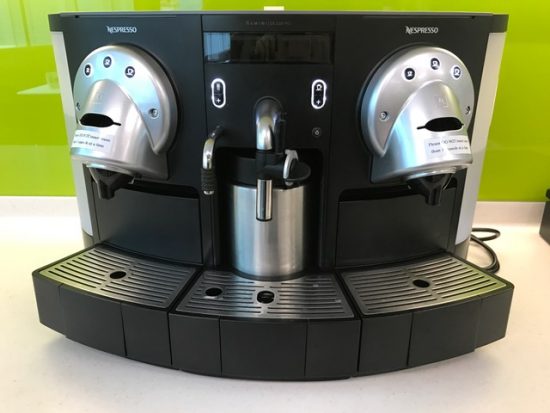
If you’re starting your morning, we have the best coffee (in my opinion.) In every work area there are coffee machines, with plenty of choices to make your perfect latte, espresso or cappuccino.
High tech coffee!
Working together.
One of my personal favorite spots is on Level 6, where we have these brightly colored “pod” that are perfect for collaborating with your team, or just bumping into other colleagues to share ideas and inspiration.
Have a seat! I love these “pod” areas.
Fueling up.
Sometimes employees here bring their lunch, because you can sit with fellow Cisconians at the E-Cafes on every level, or take it outside on the balconies to enjoy the Singapore sunshine. If you want an excuse for local cuisine, there’s 100 places (I mean that!) within a short walk of the office.
Singapore has a brilliantly diverse mix of cuisines, and our office sits right in the middle of all of them. You can try food from North and South India, or Filipino, Chinese, Japanese or Korean. You are really spoiled for choice here, and it’s hard to resist getting lunch out. I highly recommend the nearby Vietnamese restaurant called Wrap and Roll – I always get the Pho Chicken Noodle Soup.
A favorite “bring-your-lunch” spot to eat.
Working it off.
Okay, after you eat your fill at lunch, you might want to consider a way to get moving later in the day. Singapore’s office has lots of options for you. I suggest you join our football team (that’s soccer for our friends in the US.) There’s also a run club, a dance club; lots of ways to keep fit. If you’re looking for a gym, there’s a popular one in the opposite tower to our building that has classes for the early risers and classes during the day.
Take in the city
If you want to play tourist, or just enjoy your own city a bit if you live in Singapore, I think you should visit the rooftop bar and restaurant at the iconic Marina Bay Sands. It’s a must for first timers and any-timers. It has some of the best views of the brilliant Singapore skyline you’ll get.
Get some zzzzzz’s
There are so many options in Singapore to stay in great hotels. You can choose to stay just 20 meters away from the office in the Park Avenue Changi or if you want to be in the heart of the city you can stay at the very popular Mandarin Oriental.
Okay, who wants to come visit us now? Look me up when you’re here and say hi!
It is all about security, isn’t it? Take every other customer survey and ‘security’ bubbles up at the very top of most respondents’ concerns. One of the latest data points I can share is part of an IDC cloud study in which security was cited as an important concern. In fact, 48% of respondents are characterizing security as an important inhibitor to cloud deployments (if you want to learn more about the study you can find the details in my previous blog).
Security Versus Risk Management
As always, under the word ‘security’ most organizations we talk to include a lot more than just security. In fact, if you begin to discuss the topic, additional connotations do surface including and not limited to industry or state laws and regulations such as data sovereignty. Other organizations are quite concerned about data privacy and data leak protection. It would appear that cloud can only amplify these concerns while increasing complexity. And the scope goes well beyond the cloud to include edge and IoT solutions, which dramatically expand the ‘attack surface’ and overall risk.
If we step back, ultimately senior business and IT decision makers seek to minimize ‘business risk’ – while driving the business forward – and security is part of that. Business risk includes all of the above plus business continuity, contingency plans, guaranteed SLAs from cloud service providers, vendor selection risk mitigation strategies and more.
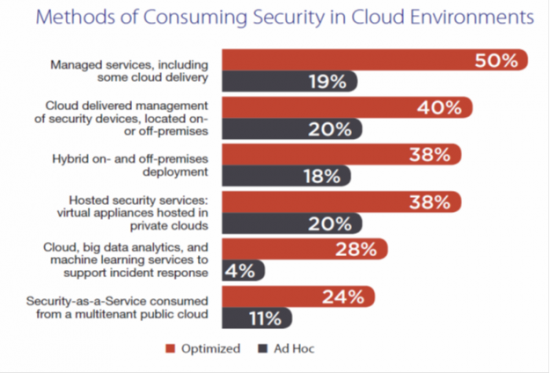
In light of all of this, what seems counterintuitive is a good level of positive correlation between cloud ‘maturity’ and the ability of organizations to consume cloud-based security services. In fact, the IDC study revealed that one approach favored by mature cloud organizations is to consume security services ‘from the cloud’, through methods such as cloud-delivered management of security services, and hosted security services (see chart above).
Many of our customers want to consistently enforce security policies where services and applications are deployed, beyond the data center to include multicloud environments and the edge. This is why we talk about Security Everywhere. With our growing security portfolio we can offer security solutions for the cloud and from the cloud. We focus on three major areas:
Helping you keep valuable data more secure- Extend data center performance to increase uptime. Control access to your data center, and limit how data is handled. Protect your resources: physical, virtual, and cloud.
Protecting apps and data in the cloud – Integrate security across all cloud deployments. Deploy security solutions easily across all environments. Gain consistent protection, removing vulnerable coverage gaps.
Promoting secure access anywhere – Connect new users and devices quickly with the right access. Maintain protection of remote users and devices automatically. See into user behavior and device status.
Cisco Umbrella
For example, many of our customers use Cisco Umbrella: a cloud security platform that provides the first line of defense against threats on the internet. Because Umbrella is delivered from the cloud, it provides the easiest way to protect all of your users in minutes. One of the capabilities we offer is the ability to leverage cloud-based insights on a global scale to prevent security attacks instead of just responding to them. By implementing a cloud-delivered security service possessing predictive capabilities, you can block phishing attempts, bespoke malware, and other evolving threats from the moment attackers start spinning up their attack infrastructure.
Cisco CloudLock
Another solution deployed by over 700 organizations worldwide is CloudLock. There are simple questions we hear from our customers every day:
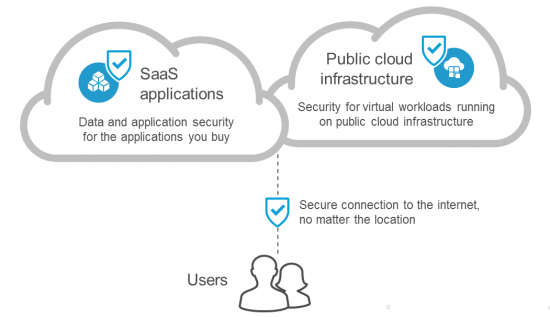
How do I protect the application and infrastructure that I buy?
How do I protect the applications that I build?
How do I leverage security solutions that I’ve already purchased?
Protecting any cloud application and platform, CloudLock secures SaaS, IaaS, and PaaS environments, and provides unparalleled coverage of cloud traffic, including on- and off-network, retroactively and in-real time. Watch this fun video for real life examples.
Cloud Lock consists of the following three key components:
Cloud Data Security & Compliance – CloudLock protects organizations against data breaches in any cloud environment through a highly-configurable Cloud Data Loss Prevention (DLP) engine providing excellent coverage of cloud traffic.
Cloud User Security – CloudLock defends against account compromises with cross-platform User and Entity Behavior Analytics (UEBA) for SaaS, IaaS, PaaS, and IDaaS environments. CloudLock uses advanced machine learning to detect anomalies in account usage, in addition to identifying activities outside of whitelisted countries and actions across distances in an impossible amount of time.
Cloud Application Security – The CloudLock Apps Firewall discovers and controls malicious cloud applications connected to your corporate environment, and provides the world’s largest crowd-sourced security solution to identify individual application risk, using our Community Trust Rating.
In summary, when it comes to security you can see how cloud-native security solutions delivered from the cloud can indeed lower your overall business risk. Security is a real concern, but you can take steps to mitigate risks across a number of dimensions.
To learn more about our capabilities to deliver security solutions for the cloud and from the cloud you can refer to the list of resources that I included below.
History regularly repeats itself. Sometimes it’s exciting and other times not so much. A current market transition I’m excited about happens to be occurring across the entire data center touching compute, storage, and networking. It’s the shift to shared nothing architectures and it takes me back to my studies on high performance computing and how far technology has evolved, yet stayed the same.
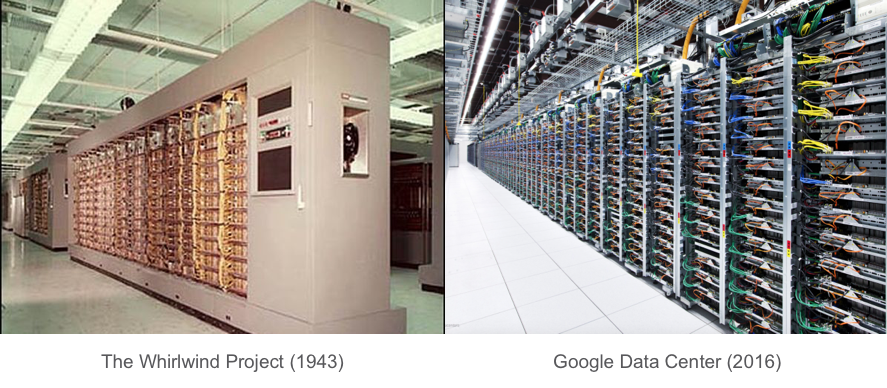
In Silicon Valley’s early stages computing was dominated by integrated systems called mainframes which, due to the massive size of the equipment, were often stored in warehouses. Mainframes evolved quickly to meet the rapid growth of new users by leveraging early virtualization and multi-tenancy technologies to create time-shared services. This is similar to cloud computing services that are available today and are also coincidentally housed in warehouses due to the massive amount of equipment needed to provide those services.
The problem with these early “big iron” systems was that even with advancements in technology they could not create economies of scale for those consuming their services. They were limited by the physical resources available within their sheet metal; i.e. finite amounts of compute, memory and storage, available for users to reserve.
When expansion was necessary, “big iron” also didn’t scale incrementally with user demand and was extremely complex to setup and maintain making them cost prohibitive. Further, there were no alternatives as everything top to bottom was a closed system designed and built to work together by a single vendor who controlled architecture, performance optimization and the cost premiums they carried.
This was the first time the technology industry created a user community ripe for dissent. The shift away from mainframes came with the advent of x86 system architectures which scaled incrementally, were much lower cost, and commonly available through a new ecosystem of hardware suppliers. But success in this technology transition was only achieved through some form of software abstraction like Unix, FreeBSD, and Linux operating systems to empower the user to take advantage of this new system architecture. When technology was democratized in this era it was the more user friendly operating systems like those offered commercially from Microsoft along with various middleware software solutions for distributed computing created a lethal combination that challenged the status quo.
Fast forward to the 1990s when servers were more open and the Moore’s Law prediction of costs coming down was proving true. At that time the components by themselves were a performance bottleneck when it came to executing very specific functions within a data center. The need to accelerate certain functions went beyond what was commonly available so uncommon returned shifting back to “big iron” systems architectures. This resulted in a wave of new startups in networking, storage and security all aimed at building appliances; each with purpose built functionality and centralized scale up performance.
The appliance model required interoperability and reference architectures to dictate terms for how to play nice in a multi-vendor environment with each vendor optimizing for their functional role. While the server industry at this time was open for new software development, storage, networking and security were not. There was no ecosystem of software abstraction to democratize the functions they provided or remove their inherent complexity which only the original designing engineers understood.
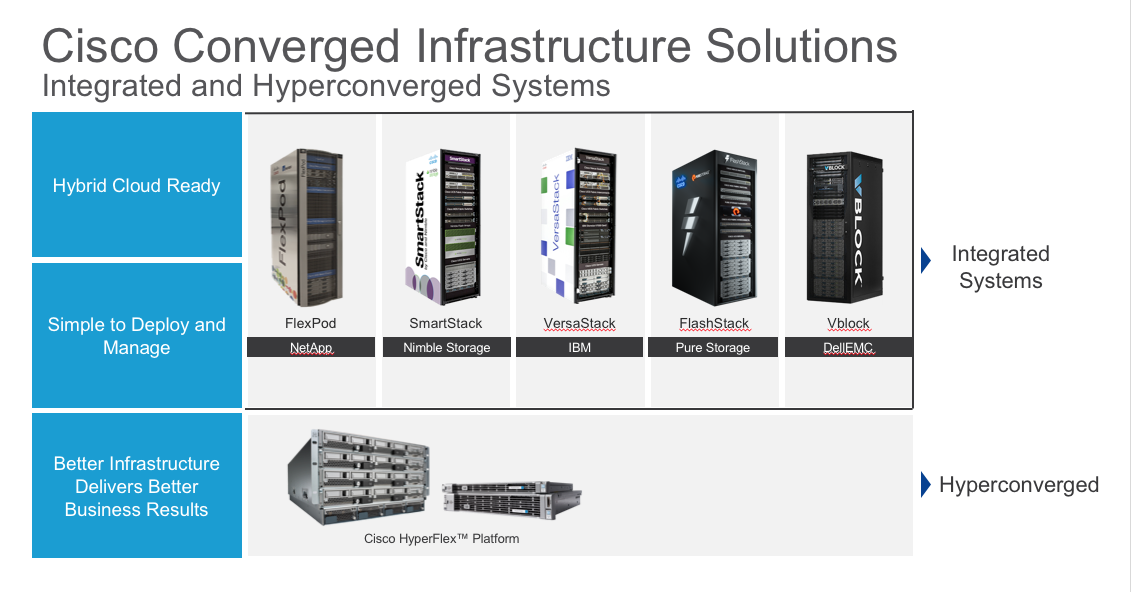
Even if these appliances were democratized; planning, designing and delivering on multi-vendor products and solutions was not for everyone. Commonly we see businesses preferring the simplicity of single sourcing equipment to simplify procurement, deployment and ongoing support knowing everything works together as designed. It’s even better when you combine best of breed appliances into a single solution to create a better overall experience. This is where converged systems come into play creating prepackaged solutions between industry leading vendors to solve customer operational deficiencies and provide the horsepower to scale up and support the most intensive mission critical workloads.
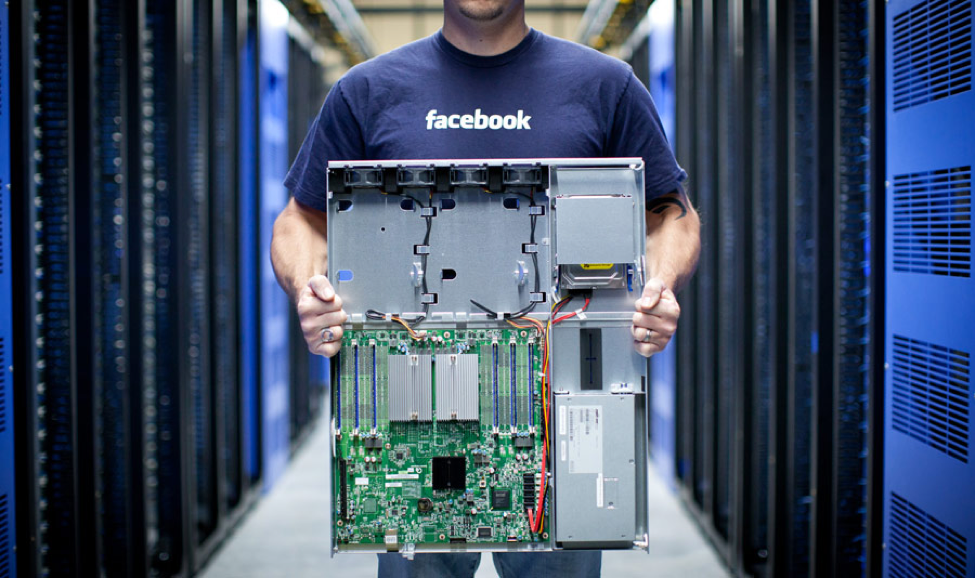
The changing tide came when new web scale applications emerged forcing the need to scale out quickly and cost effectively to meet user growth. This is where history repeats itself creating an opportunity for an entirely new approach to designing infrastructure to meet the demands of these new data intensive workloads.
The dissent this time came from web 2.0 companies and cloud service providers who found new ways to support their explosive user demands on infrastructure. The seismic shift they triggered was moving from centralized systems architectures to distributed systems architectures with a shared-nothing software abstraction layer pooling the physical compute and storage resources. Even the network architecture changed from a rigid 3-tier hierarchical design to highly scalable IP Clos architectures borrowed from high performance computing practices.
What this new model delivered in terms of end user value is scalability, deterministic performance, fault tolerance and high availability. For an always-on world fueled by instant gratification this shift is paramount. Forbes wrote a great article about this topic but you can also learn more from this informative white paper by Gina Langoria and Jimmy Pike of Moor Insights.
However, none of this signals the death knell for the appliance model no matter what noise is coming from eager infrastructure startups or pundits alike. History has shown even mainframes are still alive and certain workloads simply run better on them or are too difficult to migrate to another system. The major difference is that many of these Web 2.0 companies are built from the ground up supporting homogenous applications and have no legacy applications environments to maintain or interoperate with. They don’t have the same problems the rest of the world has to deal with. This is where the new ecosystem of startups offering solutions on shared nothing architectures comes into play.
While Cisco is not a storage vendor, we are a data center systems and solutions provider. We partner with storage and all-flash array vendors to offer turn-key converged systems for scale up workloads. We also offer our own Cisco HyperFlex solution as the world’s only “complete” hyperconverged system that scales compute and storage independently depending on your workload requirements.
All of these systems are designed, engineered and fully tested to work together and perform optimally with service and support you can trust. And most importantly, Cisco UCS and Cisco HyperFlex are still the industries only complete solutions that fully integrate compute, storage and networking for rack and roll simplicity. It’s really the same reason that some people decide to become an “all Apple” household. It’s about simplicity and ease of use that Apple offers in making various products work together seamlessly. This is what our ASAP Data Center strategy is about and you can learn more about it in this white paper from IDC’s Brad Casemore.
In the new shared nothing storage architecture, I mentioned a new ecosystem of startups have emerged. In this ecosystem, there are many similarities between the hyperconverged and software defined storage players. The main technical differentiation is whether you are running workloads or are simply creating a pool of shared storage accessed similarly to a traditional NAS or SAN. Regardless of the use-case, they all leverage industry standard x86 system architecture to scale incrementally while lowering cost at the same time. Each solution utilizes a distributed abstraction layer to create virtual pool of storage or storage fabric. They differentiate themselves though unique innovations in performance, scalability, fault tolerance, data redundancy and techniques for compression and deduplication to efficiently store large amounts of data.
For customers who choose to pick their own building blocks and tailor their solutions to their unique business, Cisco has built an ecosystem of software defined storage partners. It’s important to us that our customers know that we offer choice. If you do not prefer our integrated systems approach you can choose whatever software you want to achieve your goals. We will make sure these solutions are certified as compatible with our hardware through our Interoperability Verification Testing (IVT) program and work closely with our solution partners to deliver a great experience while doing business together.
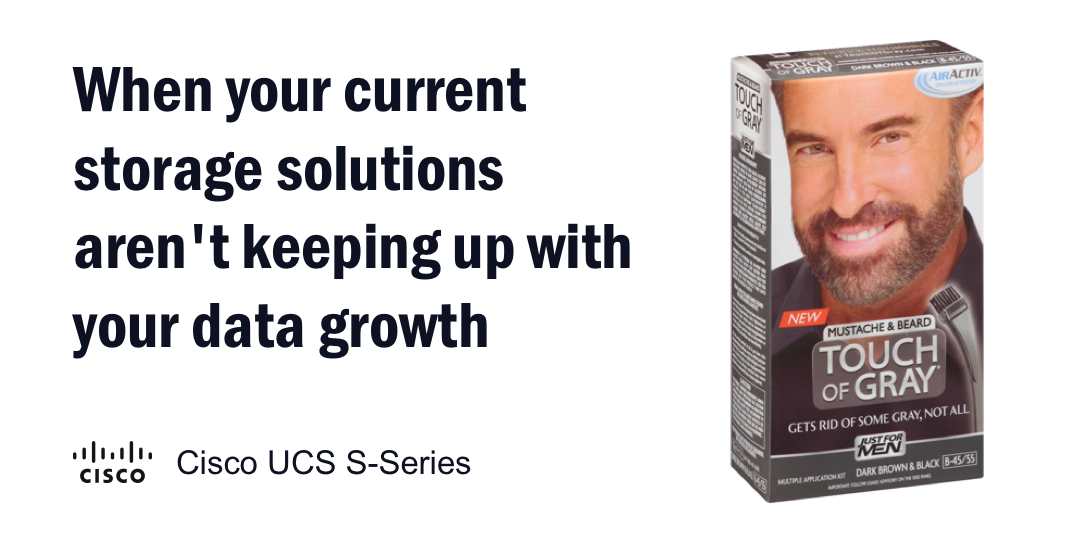
Our partners know that running their software on the Cisco Unified Computing System provides the best total cost of ownership over any other server vendor by fully integrating compute, storage and networking into a single management framework. The value we bring as a systems company is not just in the sheet metal but instead the embedded software we designed from scratch to manage the server infrastructure at scale like UCS Director. Now we are extending that same value from compute to storage so you old school storage grey beards should really dig this! Our recent announcement of the UCS S-Series storage server rounds out our UCS family offering high capacity storage that is plug-and-play with existing UCS environments and offers the lowest $/GB. Put that together with one of our storage solution partners and you’re ready to go from Terabytes to Petabytes in no time!
Customers who want choice can confidently count on the Cisco Solution Partner Program to not only enable them to solve their data intensive workload challenges. But also to make it a lot easier to do business with us and our partners. For example, we are getting great traction with the S-Series for handling large data sets in Big Data environments, storing and archiving video surveillance data for digital retail and smart city initiatives, and of course more common things like hosting your user data for business applications like Microsoft Exchange.
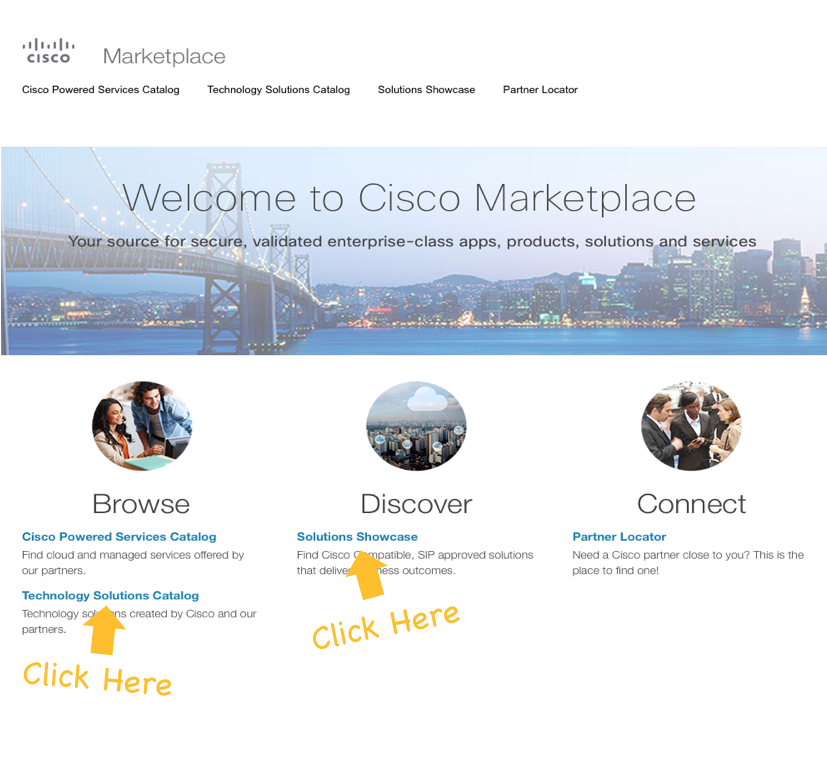
Check out our Cisco Marketplace, where you can search for solutions that best meet your needs. We have 1,422 joint solutions in our Technology Solutions Catalog and 111 joint solutions in our Solutions Showcase. Also be sure to check out our Design Zone, which contains reference architectures and Cisco Validated Designs for just about every solution you may be interested in.
If you liked this blog please stay tuned for more on data center storage solutions at Cisco and be sure to follow me on Twitter..
Locky has been a devastating force for the last year in the spam and ransomware landscape. The Locky variant of ransomware has been responsible for huge amounts of spam messages being sent on a daily basis. The main driver behind this traffic is the Necurs botnet. This botnet is responsible for the majority of Locky and Dridex activity. Periodically Necurs goes offline and during these periods we typically see Locky activity decrease drastically. One of these periods is currently ongoing.
We are continuing to see incredible customer adoption and interest in technical aspects of HyperFlex. I often get asked on usability of the platform, especially around deployment automation and impact on daily operations. So in this blog I will point you to some cool demos that dig into variety of key aspects of our platform.
End-to-End Deployment And Expansion Including Network Configuration
Here’s a look at the HyperFlex Installer. Using a simple and intuitive wizard, the entire process takes minutes to complete and uses UCS Manager service profile templates that are optimized for hyperconverged environments.
The key to this process is that both server and network configurations are integral part of the flow and the policies automate the configuration – eliminating manual and error-prone issues that often arise in hyperconverged solutions that are limited to only compute & storage.
https://www.youtube.com/watch?v=a4e6lZPIOVg
Intuitive Provisioning And Management
In this video you will get a chance to see our vSphere integration – all daily operations can be done using this familiar interface.
Key cluster information is displayed in a single tab. The environment is always optimized using dedupe and compression and savings figures are displayed in a single tab along with information about the state of the cluster.
Instant Clones and Snapshots Without Performance Impact
In these videos you can learn more about the common operations of clones and snapshots.
Clones are offloaded to the HX Data Platform. Our native clones are instant and space-efficient, and the wizard allows to create a one or multiple clones in a single operation. The demo shows creation of a 100 clones in a minute, demonstrating how simple and quick this operation is for admins.
Similarly, snapshots are offloaded to the HX Data Platform. You can continue using the same snapshot manager and either take a single snapshot or set an hourly, daily or weekly schedule. Since we do not use redo logs, admins eliminate performance impact and challenges at scale.
Monitoring and Alerts
Monitoring the HyperFlex environment is extremely easy and flexible. On top of basic monitoring in the summary tab, this demo shows how to customize detailed information for various time intervals. You will also see how our platform proactively alerts admins on various types of hardware, software and system utilization events.
These vulnerabilities were discovered by Aleksandar Nikolic of Cisco Talos.
Summary
Oracle’s Outside In Technology (OIT) is a set of SDKs that software developers can use to perform various actions against a large number of different file formats. According to the OIT website: “Outside In Technology is a suite of software development kits (SDKs) that provides developers with a comprehensive solution to extract, normalize, scrub, convert and view the contents of 600 unstructured file formats.” Talos recently discovered vulnerabilities in the RTF and PDF parsers used by OIT that can be used to achieve arbitrary code execution on affected systems. Specially crafted files that leverage these parsers can be used to create conditions that could be leveraged by an attacker to obtain the ability to execute arbitrary code on affected systems.
Cisco continues to lead the industry in performance for Big Data systems, this time smashing the previous TPCx-HS benchmark world record by over 14% while simultaneously reducing cost by 5%.
The TPC developed the TPCx-HS benchmark several years ago as Big Data systems grew from a curiosity to one of the fastest growing segments in IT. This industry-standard benchmark evaluates both raw performance and cost. It is a vendor-neutral way to evaluate the performance and price-to-performance ratio of different solutions.
At the 3-TB scale factor, Cisco’s new benchmark configuration achieves 13.47 HSph and US$41,830.67 / HSph. This is a 14.5% increase in performance over the previous record and a 5% improvement in price-performance.
These results leverage the architecture, scalability, and performance of the Cisco UCS Integrated Infrastructure for Big Data and Analytics. Working with our strategic partners, Intel and Cloudera, we addressed the three primary sources of performance bottlenecks: networking, I/O bandwidth and processing power:
We upgraded to the latest generation of Cisco UCS fabric interconnects, increasing the bandwidth from 10 Gbps to 40 Gbps
We replaced traditional spinning disks with state-of-the-art Solid State Disks (SSDs) from Intel
We incorporated the latest generation of Intel Xeon processors
The performance of any big data system is directly affected by the underlying infrastructure, including computing, networking and storage: all three must be addressed in a holistic way. With our new SSD-based configuration, we are addressing these sources of performance bottlenecks.
In addition to our leading performance, our solution consumes 26% less power. This translates in real savings in energy and cooling costs.
Cisco UCS® Integrated Infrastructure for Big Data and Analytics harnessing the power of Intel® solid-state disks (SSDs), Intel Xeon processors and 40-Gbps network bandwidth delivers the best results on the TPC Express Benchmark HS (TPCx-HS) at the 3-TB scale factor.
Cisco is committed to more than just raw performance. We are interested in solutions that create value for your business, too. The results reported here were achieved using the Cisco UCS Integrated Infrastructure for Big Data and Analytics. This integrated infrastructure combines the network, storage and computing into a unified, fabric-based architecture optimized for Big Data workloads.
You can quickly deploy and cost-effectively expand this efficient, scalable, high- performance solution. You can start small, yet scale to thousands of servers hundreds of petabytes of storage, all controlled from a single pane with Cisco UCS management offerings. Widely adopted across industry vertical markets, our solution affords you a proven, fast, and simple way to deploy Big Data environments, accelerate data analysis, and quickly deliver results to users.
When it comes to visions of the future, what’s the one aspect that’s the same for anyone discussing that topic? From Gene Roddenberry to Isaac Asimov to George Jetson, the one constant is that life becomes easier the more mobile and more automated it is. Well, welcome to the future, courtesy of Cisco.
Cisco Digital Network Architecture (DNA) automates your network while specializing in its mobility. In short, it is a solution that will change the way you deploy and manage your network for the digital era. Cisco DNA is a software-driven architecture focused on automation, security, and analytics.
How does Cisco DNA make things simpler? This question is best answered by looking at the three pillars of Cisco DNA:
Lower Cost and Complexity. This is the key component of automation and assurance, as Cisco DNA simplifies deployment and streamlines operations with better user experiences and confidence.How does automation and mobility work together? Cisco DNA provides an always-on, always-ready infrastructure that self-optimizes to deliver optimal performance in a dynamic environment. For example, when Wi-Fi demand increases, the network will automatically increase capacity. The network also automatically uses optimized roaming, which connects the mobile device to the optimal access point without impacting the end user.This optimization is further augmented on Apple mobile devices resulting in eight times faster roaming—Cisco is the only network provider to jointly deliver this functionality with Apple. Optimal network performance for critical apps can be ensured at all times. This is done through the Apple partnership for iOS applications as well as through application visibility and control.
Higher Compliance and Lower Risk. Wireless is your first line of defense and Cisco DNA takes care of your security and compliance needs. According to the white paper: “High Powered Network Edge 2016” published by ZK Research, 80% of security breaches occurring inside the perimeter, Cisco DNA prevents unauthorized access. It also limits the impact of incidents, logically segments your network with granular policies and protects the airwaves from: rogues, wireless attacks and interference.Cisco Identity Service Engine is the brains behind Cisco DNA security. It includes device profiling which encompasses user, device, and app-specific policies to enforce role based access control. It also allows for the ability to intelligently segment the network for users, guests, and IoT device traffic to limit the threat surface and track anomalous behavior.
This means:
Greater control of policy segmentation for consistent policy and enforcement end-to-end.
Quickly identifying and quarantining infected hosts, thus preventing attacks from propagating.
Protecting all devices including less capable IoT and legacy devices, that do not support 802.1x.
Securing the edge by Identifying rogue access points and devices to protect against wireless attacks and malware.
Faster Innovation. With insights and experiences provided by Cisco DNA, you will make better business decisions and drive user engagement.You tell Cisco DNA what you want to learn from your network and the solution provides you with easy-to-understand analytics. Built-in features such as Cisco Connected Mobile Experiences (CMX) give you the network insights to make faster business decisions based on customer behavior or what your employees are doing.
You know that when it comes to a network it isn’t just about connecting devices and then calling it a day. Mobility is much too important for that, 56% of Line of Businesses say a mobility strategy is very or extremely important to their objectives. This translates into a demand for the network to have high reliability, conquer overall complexity and still be cost-effective.
What does this all mean though? Customers that have deployed the Cisco DNA solutions have seen key improvements such as:
A five-Year ROI of 402% and a nine-month payback period with an average of $48K annual benefits (per 100 users)
42% faster WAN branch deployments
17% faster delivery of applications
28% more efficient IT networking staff teams
Still not convinced you’re a step away from the future? Check out this table comparing Cisco to our competition, you’ll see that we truly have the DNA in us.


 Starting small does not necessarily mean the impact will be small. Consider mining giant Rio Tinto, which operates large open mines with a fleet of massive autonomous hauling vehicles. It costs the company $2 million each day one of those vehicles is out of service. If it breaks down at the bottom of the mine, another vehicle will be needed to pull the damaged vehicle out of the pit—doubling the cost of downtime. Rio Tinto has deployed a predictive maintenance IoT solution to prevent unexpected breakdowns, initially in one mine, saving the company $2 million per vehicle per day each time a breakdown is avoided.













 Cisco continues to lead the industry in performance for Big Data systems, this time smashing the previous TPCx-HS benchmark world record by over 14% while simultaneously reducing cost by 5%.