Avatar

Today we hear about “transforming the customer experience,” but for developers and IT staffers, what does this really mean? Join us in Las Vegas at Cisco Live on June 25-29, where you’ll learn how your store, hotel, and entertainment operation can use today’s digital technologies to deepen customer relationships, differentiate products, and outperform the competition.

Studies show that more engaging and effective experiences will help your organization achieve better business growth and insight into data. You’ll also improve your career options, maximize your skills, and increase your contribution to the company.  Register today for Cisco Live!

Attend our Retail Sessions at the IoT and Industry District Theater:

Cisco Digital Network Architecture (DNA) for Retail: Your Foundation for Digital Transformation

Monday, Jun 26, 1:15 p.m. – 1:30 p.m. | Wednesday, Jun 28, 3:30 p.m. – 3:45 p.m.

Cisco Digital Network Architecture (DNA) for Retail is revolutionizing how retailers design, build, and manage the business network. This includes enabling faster innovation with actionable insights by utilizing network and location analytics; this allows you to create personalized customer experiences, increase workforce productivity, and optimize store layouts.

DNA also provides lower complexity and costs via automation by rolling out and updating retail and corporate networks more quickly; and reducing day-to-day management costs with automation, central management, and assurance. Finally, it reduces risks with security everywhere with continuous, faster threat detection and protection with security embedded network-wide.

Schedule Session

Mobile Experiences: Deliver the Engaging, Secure Shopping Experience Your Customers Demand

Tuesday, Jun 27, 6:00 p.m. – 6:15 p.m.

Today’s retailers need to provide better, more engaging, and profitable shopper experiences. Cisco Customer Mobile Experience (CMX) solutions offer secure, connected, and more customized and contextual experiences for shoppers that drive business growth. Learn how Cisco CMX delivers digital capabilities that allow retailers to support customer acquisition and securely recognize and engage customers. It also supports proximity marketing by targeting location-aware and context-relevant information in real time, integrated with CRM and loyalty programs.

Cisco CMX also enables way-finding to gain insight into store paths and customer behavior; and helps you to safeguard customer and employee data across multiple channels.

Schedule Session

IoT and Industry District in the World of Solutions

Deep Dive Into Digital Retail Demos

Cisco DNA for Retail

Take an in-depth look at the Cisco Digital Network Architecture (Cisco DNA) for Retail, the platform that enables digital transformation of your stores and corporate offices. Supporting comprehensive network automation, assurance, and security, this solution simplifies managing store and corporate networks while protecting customer and business data, reducing TCO, and providing deeper business insights.

Cisco Customer Mobile Experience

Cisco Customer Mobile Experience solutions give users immediate access to Wi-Fi connectivity and more customized and contextual experiences. Your shoppers just walk into the store to be invisibly connected! See how primary digital capabilities from customer acquisition, omnichannel engagement, and proximity selling to wayfinding, real-time sales assistance, and more.

https://youtu.be/FrJj4_6ChlA

Cisco Vision Dynamic Signage

Cisco Vision for Retail is a dazzling HD digital display platform that enhances customer experiences and fuels revenue growth. These oversize screens engage directly with your shoppers’ smartphones, providing an entirely new type of on-site experience. Learn how you can use these contextual and dynamic experiences to engage with guests, gather data insights, and help close the sale.

https://youtu.be/ktf39UxWDCA

If you haven’t registered yet for Cisco Live, you can do so here. Other contact information:

We look forward to seeing you in Las Vegas!

Authors

Mary Freeman

No Longer with Cisco

Avatar

I’m excited to announce the Podcast Domain – a podcasting space at Cisco Live! This is a place where Cisco Live attendees can come to record their podcast with some of our best and brightest Cisco experts as guests. If you have a podcast and would like to be considered for a slot leave a note below (and how to contact you, duh) or fill out a nifty form.  Below, a few topics our experts have offered up and a few I made up and (further below) some of the logistics.

  • APIs – The New Currency?
  • May the Application be With You
  • Adventures in Securing Ad-hoc Networks (During Disasters)
  • Automating the Network
  • [SECRET]
  • High Availability And YOU
  • (Yet Another) YANG Development Kit
  • Programmable HW enabling [REDACTED]
  • The Evolution of Physical Infrastructure
  • Sneaky Tricks to De-Risk Migration
  • Something, Something, Data Center, ?, Profit!
  • Can you activate people by sprinkling them with Catalyst dust?* (I made this one up after an episode of Cisco Champions Radio)

Sticker Exchange:  If your podcast has a sticker, stop by to share yours or pick up one of the awesome ones at the booth. This will be a great way to share and meet folks!

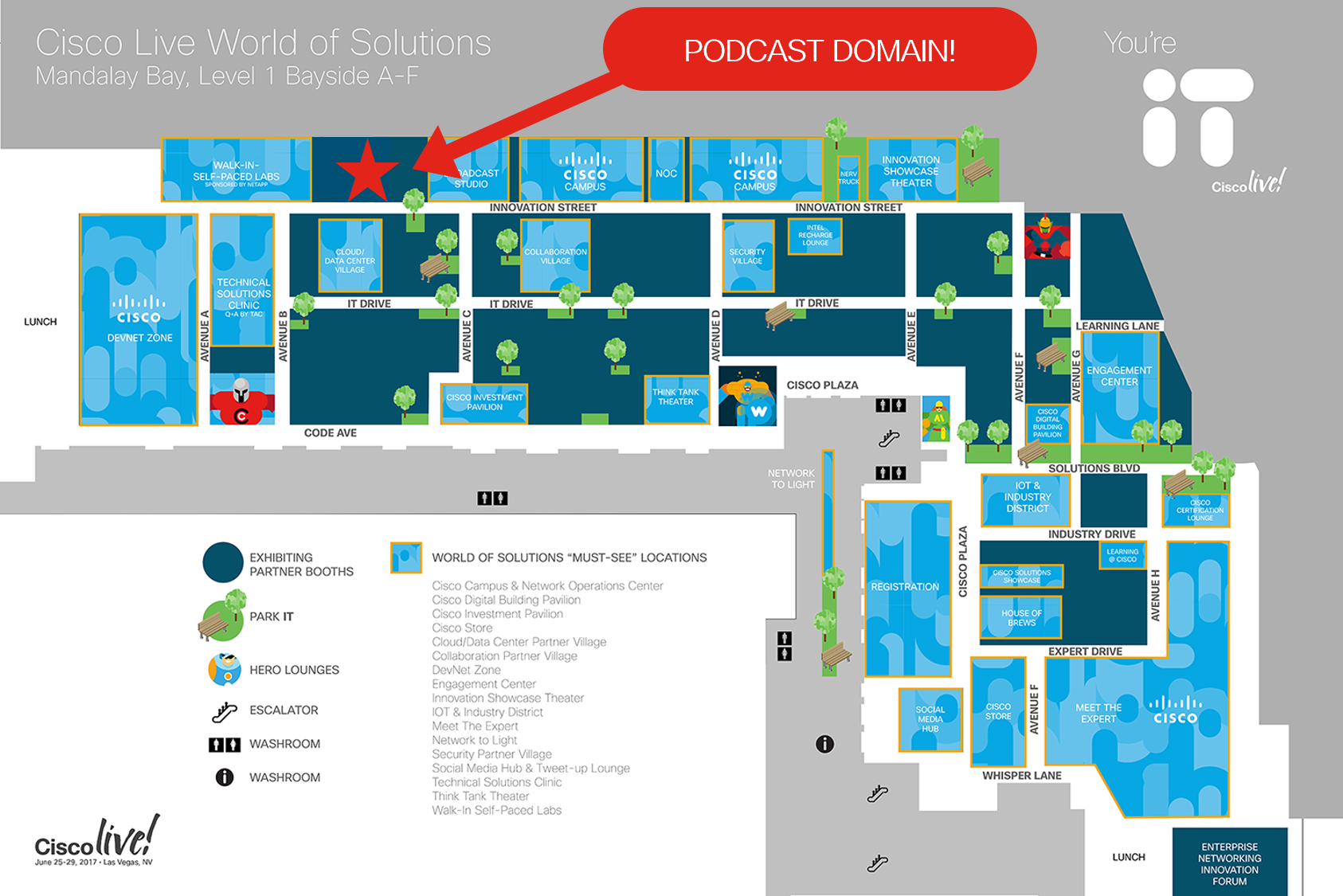
Layout: The Podcast Domain is in World of Solutions, right next to the Broadcast Studio. We’ve got a semi-quiet space (it might look like a fishbowl) and quality audio equipment.  If folks want to listen in we’ll be broadcasting right outside the fishbowl where we have some cubes and charging tables so you can get your brain and electronics juiced up!

Click to enlarge

Where Will It Be Posted:  As soon as you wrap your session our audio experts will hand you a thumbdrive with your file – it will be up to you to post to your feed when you’re ready.

Any questions? Leave a note in the comments below or ping me on the Twitters. And don’t forget to sign up!

And if this doesn’t bring joy to your day, a few other cool things to note happening at CLUS: Annual Tweetup, Kilt Monday, Tech Field Day (which you can watch in your underwear…. but in private, please), and a bunch of sekret things with Cisco Champions!

Authors

Lauren Friedman

Marketing Manager

Enterprise Networks

Avatar

Hello all,

Big news as we announced today three new models join the Cisco Small Business Portfolio.

The new the Cisco WAP125 Wireless-AC Dual Band Desktop Access Point with PoE is an entry-level, business-class desktop access point offering cost-effective 802.11ac connectivity for 2.4-GHz and 5-GHz clients. Delivering speeds up to 867 Mbps, this model has a single Power-over-Ethernet (PoE) Gigabit Ethernet port. The WAP125 is a do-it-yourself access point; delivering business-class features such as a captive portal for secure guest access, wireless access and control, and robust security to help safeguard business data and users. The Cisco WAP125 comes with a limited lifetime warranty.

This new 100 Series model is sure to be a hit. A nice blend of performance, range, and value. Simple to configure and deploy, this is a model to stop and take a serious look.

Contact your local Cisco Partner for more details.


There are two new Cisco VPN Routers that have joined the RV Series Portfolio.

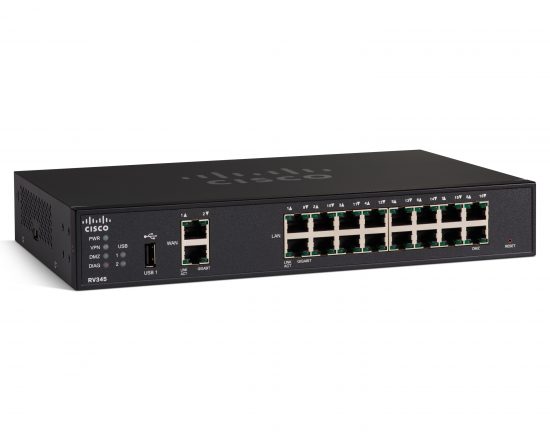
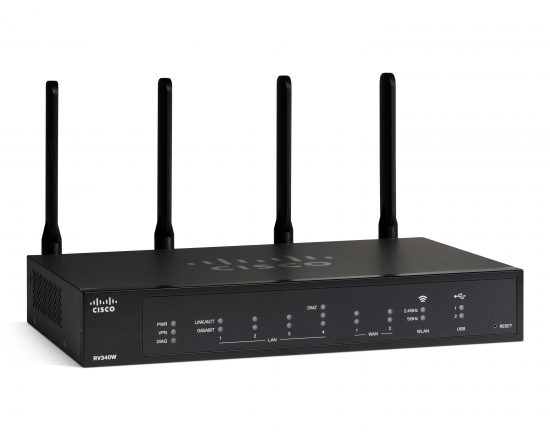
We have added two new models to our RV34x series routers. These RV340W and the RV345P join the RV340 and RV345 that were announced earlier this year. These four models make up the Cisco RV340 Series. These models are perfect for any small and medium-sized business requiring performance, security, reliability and outstanding value.

The Cisco RV345P Dual WAN VPN Router offers two RJ45 WAN ports and 16 LAN ports in which 8 of the ports are PoE enabled with max power support (30w). All ports are Gigabit Ethernet. This model can be rack-mounted and includes all necessary hardware.

The Cisco RV340W Wireless-AC Dual WAN VPN Router offers Dual WAN ports, four LAN ports, and 802.11ac wave 2 wireless technology. This model is the perfect choice for any small business requiring a wireless all-in-one model providing the optimum in performance, security, and reliability in one enclosure.

Cisco RV340 Series Features and Benefits:

  • High-Performance Models
  • Wired, PoE and Wireless Versions
  • Dual WAN GbE RJ45 ports for Load Balancing and Failover
  • Cisco AnyConnect® Secure Mobility Client support
  • IPsec and PPTP VPN
  • Dynamic Web Security
  • Stateful Packet Inspection Firewall
  • User Datagram Protocol (UDP)
  • Application visibility and policies
  • 900-Mbps throughput (TCP, UDP)
  • 600-Mbps throughput (IPSec)
  • USB LTE failover
  • Support for separate virtual networks and wireless guest access
  • Intuitive, browser-based user interface
  • RJ45 Console Port

This new Series is

Important Information for Partners: Cisco Sales Connect.

An important note: these new access points and routers are supported by Cisco FindIT Network Management Platform. Take a look for more information.

Again, please contact your favorite Cisco Partner for information, pricing and availability.

Thank you for your time!

Marc and Team

Authors

Marc Nagao

Product Manager

Small Business RV Series Routers

Avatar

Almost two years ago, I wrote The Modernization of Network Software, a perspective published in Software Magazine intended to foreshadow changes underway within networking infrastructure (routing, switching, wireless, etc.) with the transition to software-based models.  While I encourage you to read the original article, in summary it covered four topics:

  • Networking software becomes independent of hardware
  • Software consumption increasingly moves to the cloud
  • Emergence of new licensing models, like subscription and enterprise agreements
  • Transition to controller-based architectures with open APIs

While the article was written from an industry perspective, it actually outlined the blueprint for Cisco’s journey to modernize our network business strategy.

For example, a little over 2 years ago, we released Cisco ONE Software, a suite-based approach for Cisco’s infrastructure software.  These suites can be purchased separately from the underlying hardware, and offer customers Cisco’s advanced technologies.  Over time, we’ve expanded the innovation within Cisco ONE, with additions like ACI Fabric, Stealthwatch, and Tetration.  Over 18,000 companies are now Cisco ONE Software customers, including 95% of the Fortune 100.

Recently, we launched the Cisco Enterprise Agreement (EA), making it even easier for customers to gain access to the full Cisco software portfolio across their entire infrastructure.  Traditionally, customers would purchase individual licenses for our Collaboration, Security, and Infrastructure software in a transaction model.  For example, a customer buying five ISR 4000s would purchase five licenses of Cisco ONE Foundation for WAN for those devices.  But what if that customer wanted Cisco ONE across all of their routers?

While customers can still purchase individual licenses device-by-device, we’ve made it easier and more attractive using the Cisco EA.  With a single contract, customers can access the software for all devices in their environment.  The Cisco EA is modular, so a customer could use it for WAN, Access, Data Center, Collaboration, Security, or any combination of these.  The Cisco EA also provides attractive financial benefits, like a 20% growth allowance and an industry-leading true-forward provision that unlike typical “true up” provisions, doesn’t penalize customers for growth.  Mark Hill’s blog does an excellent job covering these benefits.

So what’s next?  We have efforts underway on cloud delivery, software subscriptions, controller-based applications, and bringing more analytics into the network.  That will have to wait for my next blog!

All the best,
Dan

Authors

Dan Lohmeyer

Vice President

Product Management

Avatar

This post authored by Marcin Noga with contributions from Nick Biasini

Introduction

Talos discovers and releases software vulnerabilities on a regular basis. We don’t always publish a deep technical analysis of how the vulnerability was discovered or its potential impact. This blog will cover these technical aspects including discovery and exploitation. Before we deep dive into the technical aspects of exploitation, let’s start with an introduction to Lexmark Perceptive Document Filters and MarkLogic. Specifically, how these products are connected and what their purpose is. There are articles across the Internet discussing these products and their purposes. Additionally, you can read the Perceptive Documents Filters product description directly.

In general Perceptive Document Filters are used in Big Data, eDiscovery, DLP, email archival, content management, business intelligence, and intelligent capture. There are 3 major companies with product offerings in this space. Lexmark is one of them with Oracle and HP being the other two.

Read More >>

Authors

Talos Group

Talos Security Intelligence & Research Group

Avatar

When it comes to setting up a Customer Success practice, any organization will face no shortage of complex stumbling blocks, from establishing an effective framework, to identifying the right people, processes and tools to provide a strong foundation. However, where many organizations hit a wall is not so much in the early planning stages, but in the “selling” of Customer Success to their internal stakeholders. In fact, anyone tasked with championing the cause should come prepared to meet resistance.

Watch the On-Demand Webinar: Making the Case for Customer Success

Building the Case for Customer Success

The value of investing in Customer Success can be difficult for some organizations to envision, particularly those that run lean or are still tied to legacy transactional business models. Because the results aren’t easy to immediately quantify, some stakeholders may perceive it as a risky investment. Furthermore, with the responsibility for Customer Success spanning disciplines and departments – from sales and marketing, to support, engineering and more – it won’t be easy to get complete cross-functional buy in. But you’ll need it, because for your Customer Success practice to be truly effective, your charter must be embraced by the entire organization.

When making your case for Customer Success, your argument will be more powerful when you communicate the tangible value that can be realized for your organization and for your customers as a result of the transformation. Justify the shift towards a customer-centric business model by focusing on the competitive benefits (accelerating customer time to value and outcomes with your solutions) while also presenting the economic rewards (reducing costs and securing more recurring and untapped revenue streams).

5 Points to Keep in Mind When Getting Buy-In for Customer Success:

  1. Define what customer success means to your organization. Identify the business’ strengths and weaknesses, and consider the expertise or technology that you’ll need to acquire.
  2. What will an investment in customer success cost and from which departments will you draw your budgets? Understand that the goal should be a customer success practice with C-level support.
  3. What is the potential value (revenue) related to customer success? What are your benchmarks (in the near- and long-term) and measurement metrics?
  4. What are the existing departments, data and processes that can best influence customer success? What technologies will you use to integrate these silos and deliver a unified customer experience? How will you make these tools extensible to customers?
  5. Identify the risks of doing nothing to transform customer engagement, and the factors, both internal and external, that can influence your success.

Be sure to also address the impact of rising customer expectations and the changes brought on by today’s consumption-driven economy. These market forces have made it critical to tie everything to the business outcomes of our customers. Customer retention is optimized when value realization occurs for customers – not just once, but consistently throughout the relationship lifecycle – and that’s why standing up a customer success practice is so important today.

Learn More About Selling Customer Success Within Your Organization

To hear more about building a convincing case for implementing a customer success practice within your organization, watch an on-demand recording of the SuccessTalk webinar, Making the Case for Customer Success.

Authors

Scott Brown

Senior Vice President

Global Virtual Sales & Customer Success

Avatar

When I think “bleeding edge,” in regards to technology I become anxious. Maybe I should get excited, but really, the feeling is one of vague panic. I think of products that I am probably not ready for and product engineers that are going to be frustrated with my inability to instantly grasp the full impact of those technologies. I think of salespeople trying to convince me that I must have it, competitors that already have it, and what’s going to happen to my company if I don’t get my hands on it–fast.

And that’s what makes Ken Owens so interesting. He is most certainly a man who lives out on the bleeding edge of cloud technologiy, and yet he’s one of the friendliest, most approachable people you’d ever want to run into. Totally gets the tech. Totally gets the need to help others get it too. And he’s just really good at breaking complex ideas into easily consumable tidbits.

With that in mind, I invite you to sit back and listen to (or watch) this week’s episode of Cloud Unfiltered, where Ken talks about:

  • What “cloud native” really means
  • What the Cloud Native Computing Foundation does
  • The reasons that containers have rapidly become so popular
  • Whether OpenStack is still relevant now that Kubernetes is on the scene
  • The importance of closing the divide between infrastructure and application teams
  • What Cisco DevNet is for
  • How enterprises can painlessly take on new technologies

See the video podcast on our YouTube page, or listen to the audio version on iTunes. And if you like what you hear, we invite you to check out our archive of past episodes and subscribe to our channel so you don’t miss any of the other exciting podcasts we have scheduled over the next several months.

Authors

Ali Amagasu

Marketing Communications Manager

Avatar

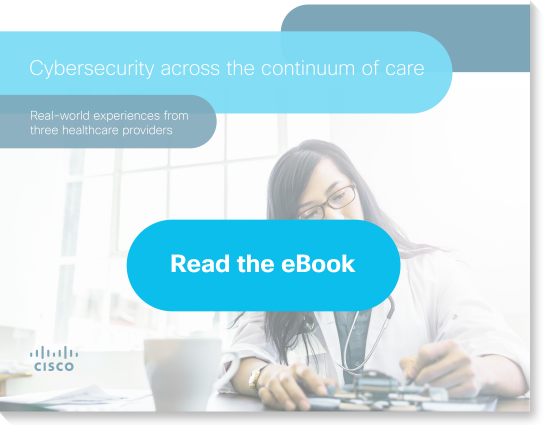
Healthcare is the number-one industry targeted by cyber attackers. The average cost of a healthcare data breach is $355 per record—more than double the cost for other industries.[1] With nearly 16.5 million healthcare records exposed in the U.S. in 2016 alone, the economic impact of cyber attacks is staggering.[2]

And financial cost isn’t the only thing at risk. Breaches can tarnish an institution’s reputation and erode patient trust. Beyond patient loyalty, concern about security can impede care. According to a study from Dartmouth and the University of Wisconsin-Milwaukee, 13% of patients withhold information from their healthcare providers due to privacy or security concerns.[3]

So what can you do to protect your institution’s network, connected medical devices, and patient data from threats? Check out our new e-book to see how Cisco is helping three healthcare providers enable cybersecurity across the care continuum.

Sources:

[1] Ponemon Institute, Cost of a Data Breach: Global Analysis, 2016 https://www-01.ibm.com/common/ssi/cgi-bin/ssialias?htmlfid=SEL03094WWEN

[2] HIPAA Journal, Largest Healthcare Breaches of 2016, 2017 http://www.hipaajournal.com/largest-healthcare-data-breaches-of-2016-8631/

[3] Dartmouth College and University of Wisconsin-Milwaukee, The double-edged sword of electronic health records, 2015 https://www.ncbi.nlm.nih.gov/pubmed/25059953

Authors

Sarah Struble

No Longer at Cisco

Avatar

“Did you get my email? The really urgent one? About funding for your new project?” “Maybe. I can’t tell. My inbox is full of spam and I am busy scrutinizing every email and domain name to make sure the sender is a valid person that I actually know and the attachment is a valid… Oh wait, now my screen is locked and someone wants bitcoins to reopen all my files.”

Far-fetched, perhaps, but it would be close to the truth without effective email security. Malicious email messages are the leading way in which attackers gain access to company networks and a critical point of vulnerability for organizations of all sizes. Ransomware is a billion-dollar industry and one of the fastest growing markets for attackers – and email is the most common delivery mechanism for it. Data breaches resulting from phishing attacks – also known as Business Email Compromise – are daily headlines. And spam, which had been at all-time lows for several years, is roaring back in astronomical volumes – and more spam messages are now malicious. In fact, without email security, for every 100 emails in your inbox, 65 would be spam, and five would contain malicious content. Which five are malicious? That’s where email security comes in.

Given the importance of email in running your business, the need for effective email security has never been greater. And fortunately, Cisco Email Security makes tackling each of these challenges easy. In a recent test by Opus One, Cisco Email Security was shown to have the best spam effectiveness and the lowest false positive rate against 5 other vendors. It can also be deployed with Cisco Advanced Malware Protection (AMP), our industry-leading solution that has been a leader in NSS testing for the past three years – detecting 100% of malware with the fastest time to detection in the most recent test. That’s a powerful combination – a one-two punch if you will – that helps you not just cut down spam, but drastically reduce risks from malware, spear phishing, ransomware and other sophisticated attacks. And Cisco Email Security is vastly more effective because it is part of our overall architecture and benefits from Talos, Cisco’s threat research team that continually incorporates up-to-date intelligence into all products and solutions in the portfolio.

Clearly, not all email security is created equal and “good enough” is no longer, well, good enough. So, of course, we decided to make ours even better. With our latest release of Cisco Email Security, we are improving an already threat-centric product, and adding features that offer even greater visibility into inbound and outbound threats, geo-location control over protection, and greater security for administrative access to meet today’s access policy requirements. Below is a quick overview of some of the new features that can help your organization gain more control and better protect against the latest email threats.

Better Protect Against Cyber Crime with Geolocation Based Filtering

When you have no business relationships with a given region and your email volume from that location suddenly spikes, you can be relatively certain that the content is malicious, possibly even targeted cyberespionage. When your CFO gets persistent emails from a geography known to produce sophisticated spearphishing attacks, the ability to quickly control email content based on the location of the sender better protects your executives against compromise.

With Geolocation Based Filtering, Cisco Email Security now enables organizations of all sizes to scan and block malicious content according to policies set for the country from which the emails originated. Emails can be whitelisted/blacklisted by country or, at a more granular level, content and message filter policy can be set to block, quarantine or filter emails based on the location of the sender.

Provide Strong Outbound Protection with Advanced Malware Protection (AMP)

Not only do organizations have to worry about the damage done by incoming malware, you can also face a loss of IP or domain reputation if malicious content leaves your organization via email. This can result in potential downtime, additional costs and creates additional work for already busy IT teams. Now with the same license, you can enable AMP to monitor both inbound and outbound emails.

But the value of AMP doesn’t stop there. AMP continuously monitors and analyzes all file activity, processes, and communications from the moment it hits your network until it leaves. If a file starts behaving maliciously at any point in time, AMP will detect it and retrospectively provide tracking and analysis to show where it’s been and what actions it’s taken, so that your security team can quickly and surgically remediate any issues. Only Cisco offers Advanced Malware Protection across the network, endpoints, and into the cloud, giving administrators the visibility and control needed to more quickly locate end users sending malicious files and remediate any issues.

Stronger Access Control with Two-Factor Authentication

Attackers often abuse privileged accounts to access critical data, stage breaches and create additional points of vulnerability and it is a risk that must be addressed by compliance teams in many industries. Cisco Email Security now offers Two Factor Authentication for access to Email Security Appliance (ESA), Cloud Email Security (CES) and Security Management Appliance (SMA), enabling a dynamic second factor for role-based access that can be enforced using a token or One Time Password (OTP).

To achieve more effective security, speed matters. So, Cisco Email Security now offers Engine Rollback, so that admins can rollback current engine and signature updates to previous versions. This gives IT teams the control they need to quickly take action and helps reduce the time it takes to detect and remediate problems.

With this release, Cisco also adds the most effective Data Loss Prevention feature ever to ensure you keep your sensitive data where it should be. The new Cisco DLP solution delivers high-performance, comprehensive data loss prevention – helping organizations of all sizes prevent leaks, enforce compliance, and protect their brand and reputation.

How many emails did you get since you started reading this? How many spam messages and phishing attacks did your email security keep at bay, so you could find the emails your colleagues have sent with critical business content? With email and spam volumes continuing to rise, effective email security will remain a key priority for all organizations, regardless of size or industry. Look out for more blogs on this critical topic including information about federal certifications. In the meantime, is it OK if I have someone send you an email with more details?

To learn more about how Cisco Email Security helps provide the visibility and control needed to protect against the latest threats, visit www.cisco.com/go/emailsecurity.

Authors

Beth Barach

Senior Manager, Product Marketing, Email Security