Cisco’s commitment to making the world a better place is paying off; on February 5, 2016, Cisco sent two representatives to accept the Golden Peacock Award for Corporate Social Responsibility. This is the second year Cisco has received recognition from this organization, and the first time we’ve won an award in the global category.
The Golden Peacock awards were set up by the Institute of Directors (IOD) in 1991 to bring out the best in companies in the areas of CSR, human resources, quality and leadership, health and safety, environment, innovation, and corporate governance. The Peacock Awards are now widely recognized as one of the highest awards for excellence in these categories.
(Pictured left to right: Lt. Gen. J. S. Ahluwalia, President, Institute of Directors, India; Praveen Vasudeva, Workplace Resources, Cisco; Mrs. Pankaja Gopinathrao Munde, Minister of Rural Development and Water Conservation; Archana Sahay, Community Relations, Cisco; and Mr. Vijay Karia, Chairman & Managing Director, Ravin Group)
Cisco was selected to receive this award based on our supply chain management, energy, water, and carbon management practices, social innovations, human rights performance, and other corporate social responsibility policies. As a major global IT company, we have a unique opportunity to reduce our impact on the planet and help our customers, suppliers, and partners to reduce theirs as well.
Introduction
The proliferation of a containers, public and private clouds and orchestration applications like Kubernetes and Apache Mesos have helped to ratify the use of microservices in production environments. Pini Reznik wrote a great blog summarizing the history here. However, experience shows that more time is being spent deploying, managing and debugging the infrastructure than on the business’s application or service. Mantl is a product which builds upon these orchestration systems and adds infrastructure provisioning, application deployment and a full suite of monitoring applications; for example the ELK stack. The idea is to provide an end-to-end stack of deployment tools to take bare metal infrastructure and turn it into an environment capable of hosting applications of any size.
Today I am proud to announce that Mantl is now Release 1
Key features
Mantl is able to provision both infrastructure and software as code. This allows users to deploy their services and applications in a programmable, repeatable manner.
It can deploy to a range of cloud providers: AWS, Azure, CloudStack, DigitalOcean, Google Cloud Platform, etc. Alternatively, private clouds can be provisioned: OpenStack, VMWare, bare metal or any set of systems running CentOS.
Multi-data centre configurations are supported using a WAN.
Many services are available to use, out of the box (more added daily): software defined networks, software defined storage, DNS support, databases, monitoring tools, service discovery, logging, security. For example, the ELK stack.
The user’s entire project stack, from infrastructure to application configuration, can be placed under version control.
Automated testing. The Mantl project is automatically tested against a range of cloud providers to ensure quality.
Since Mantl 0.6, it is possible to perform blue/green testing as a part of the upgrade process.
Background
Mantl is capable of installing a huge range of components to enable your application. But Mantl is built upon two key pieces of software. Infrastructure provisioning is provided by Terraform . Terraform is a dedicated infrastructure provisioning tool. It takes a configuration file and connects to various infrastructure providers to allocate resources. The delegation of infrastructure provisioning to Terraform means users are able to utilize a range of infrastructure providers using a tool that is already established within the community.
The second tool is Ansible . Ansible is another provisioning tool which is being used to provision software. YAML based application definitions are fed into Ansible. Ansible then deploys the specified software on the previously provisioned infrastructure.
Architecture
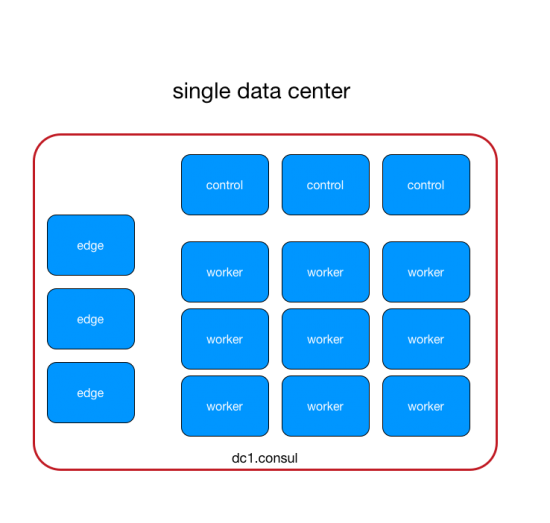
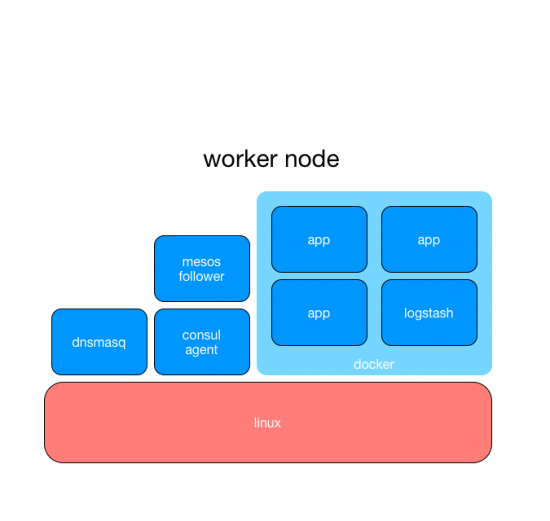
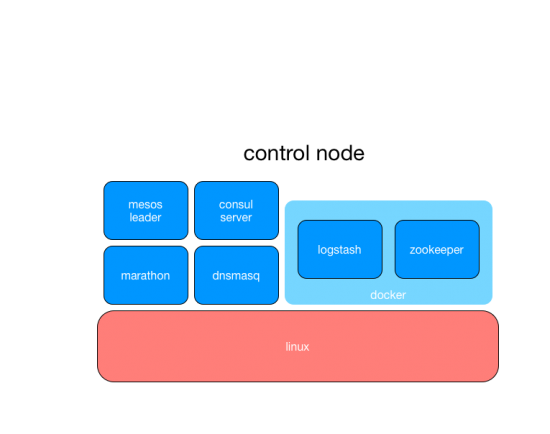
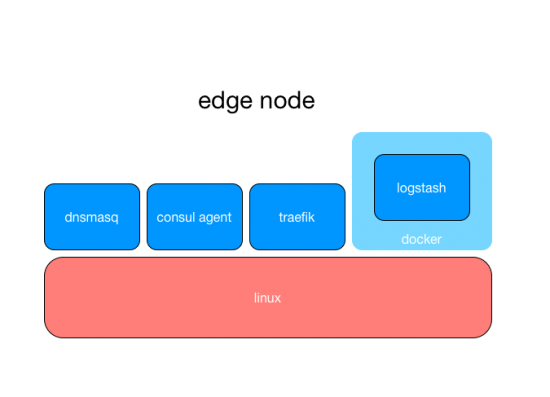
Mantl has three core types of nodes: control, edge and worker.
Worker nodes – launch containers that run your microservices and other workloads. These provide the horsepower that run Mantl’s and the users’ applications.
Control nodes – responsible for the state of the rest of the cluster. If a machine becomes unavailable, it is the control node’s responsibility to inform the rest of the cluster of the loss. On the control nodes there may also be applications that have a similar role and are required by the rest of the cluster. For example Consul, Zookeeper, Mesos, etc.
Edge nodes – edge services exposed to the internet, whereas the Worker and Control nodes are on a private network. This is to allow public access to a service and is typically running as a proxy to an internal application.
Getting Started with Mantl
Mantl’s ethos is to focus a community around an end to end solution, not around an individual component; designed to solve business and team challenges, one glue, improved by the community, tested everywhere. Mantl provides all the components you need to deploy your microservices platform. We have chosen industry standard components and made them work well together, so you don’t have to write any glue code. You can focus on your application instead. Our vision is to enable you to focus on the application code and business agility, not infrastructure APIs. We have put together an easy to follow getting started video.
Mantl components
A component is the term given to a particular piece of software to be installed by Mantl. Typically they are provided out of the box by Mantl by commenting in and out various applications, but users can easily add their own components. Components are then installed and configured by editing the yml configuration files files. A full list of components are available in the documentation. Components are being added all the time.
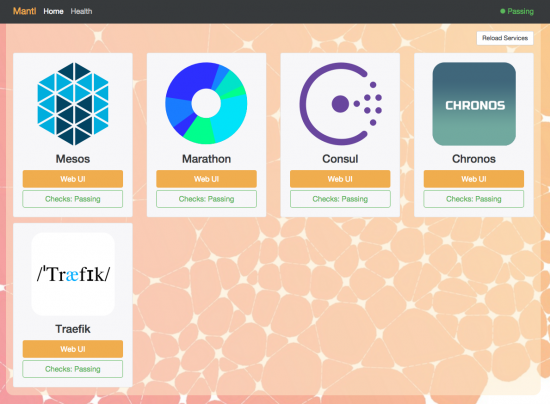
Some of the most important components include Mesos, Marathon and Consul. Mesos is the backbone of Mantl. It places a layer of abstraction on resources (cpu, ram, ports, etc.) and is able to allocate work over a cluster of machines. Marathon is a simple orchestration tool to start microservices. A service definition would specify the resources required which is then submitted to Mesos for allocation, via Marathon. Marathon then ensures that the service is healthy and restart the service if it ever fails. Consul is a service discovery mechanism. Mesos tasks are automatically given a consul endpoint based upon their name. So to connect to zookeeper, for example, it is as simple as addressing zookeeper.service.consul.
The most important configuration file is the playbook. This defines what will and will not be installed at a high level. For example, the following code defines the software that is installed on a host that has been defined with the role of “control”. On all of the nodes with the role of control, they will also be given the roles of vault, zookeeper, mesos, marathon, chronos and mantlui. These refer to the components that are going to be installed, which are defined elsewhere in the project.
“`
– hosts: role=control
gather_facts: no
vars:
consul_dns_domain: consul
consul_servers_group: role=control
mesos_leaders_group: role=control
mesos_mode: leader
zookeeper_server_group: role=control
roles:
– vault
– zookeeper
– mesos
– marathon
– chronos
– mantlui
“`
There is a sample here
Take the mantlui role as an example. This will call an Ansible role shown below. The role pull’s a docker image, creates a service file (which is a wrapper for the `docker run` command) and starts the service. The result is a fully functioning web application that links to all the other Mantl components.
“`
—
– name: ensure nginx-mantlui docker image is present
sudo: yes
command: /usr/bin/docker pull {{ mantlui_nginx_image }}:{{ mantlui_nginx_image_tag }}
tags:
– mantlui
– bootstrap
– include: distributive.yml
“`
There is a sample here.
A definition like this could be described as a little verbose. But this drawback is negligible when compared to the definition’s readability. Users, on their first day, would be able to contribute to a project because the application definitions are so easy to understand. A user’s entire application could be deployed in this way and any new services would only take a simple, version controlled addition to a role.
Security
Security is one of Mantl’s top priorities. A significant investment has been made to ensure that all securable services are secure, everything exists on private networks and components have an audit trail that ends at open source code. Most of all, the process has been simplified, to the point where all security is enabled out of the box. By default, the security module will:
Use SSH key-based authentication
Enable ip table rules
Admin based HTTP authentication on Mesos/Marathon/Consul/etc.
Optional private docker registry
Mesos authorization
Marathon authorization
Consul authorization, SSL and ACLs
Zookeeper ACLs
Vault for secret storage
All a user has to do is run the `security-setup` script and pass the security settings to Ansible: `ansible-playbook –extra-vars=@security.yml your_playbook.yml`. For more information, look here.
Deployment
Software provisioning is controlled by Ansible. After a user has configured their playbook, they are ready to provision the hosts created by Terraform. The scripts will read your Terraform state file to establish the location and credentials to connect to your infrastructure. The provisioning process is as simple as running the command `ansible-playbook –extra-vars=@security.yml your_playbook.yml`. After a few minutes, all of the software will have been provisioned and applications should be running. You can even include tasks to run tests to ensure that applications are running as expected.
Role development
Initial installations of Mantl won’t have any need to provide custom roles. But as soon as a project begins to grow in size, some role development will be necessary.
Roles consist of several folders inside the roles directory.
“`
$ ls -l roles/mesos
total 8
-rw-r–r– 1 phil-mac staff 3629 2 Feb 10:56 README.rst
drwxr-xr-x 3 phil-mac staff 102 2 Feb 10:56 defaults
drwxr-xr-x 5 phil-mac staff 170 2 Feb 10:41 files
drwxr-xr-x 3 phil-mac staff 102 2 Feb 10:56 handlers
drwxr-xr-x 3 phil-mac staff 102 2 Feb 10:41 meta
drwxr-xr-x 6 phil-mac staff 204 2 Feb 10:56 tasks
drwxr-xr-x 12 phil-mac staff 408 2 Feb 10:56 templates
“`
The first file is the README which informs users how to use the role. The other directories are all used by Ansible. The only required directory is `tasks`. Inside here a `main.yml` file defines the steps required to provision the software. Templates can be used to populate custom information in the mustache format. For example if an application has a version number it is possible to provide a default in the `defaults` folder and use the variable in a template with `{{ version_number }}`. This is very useful when creating marathon json files. The `files` folder holds any static content that is referenced by the main task. Handlers are callbacks. Inside here the main task, or other tasks can call a handler to perform an action. Typical handlers are start stop and restart. Finally, inside the `meta` folder it is possible to define role dependencies. For more information visit here.
Summary
Mantl is a product that unifies the provisioning of both hardware and software. But the ease of use and simplicity beguiles the fact that it provides game-changing programmable services. The entire project is able to go under version control. No external dependencies, no unknown requirements. This provides a single view of truth of the service being deployed. Developers are able to test and deploy with the comfort that their test environment is exactly the same as production. It democratises the use of cloud providers. Developers can choose to switch from AWS to GCE to Vagrant to Private cloud, all with a simple configuration change. New features provided by new services are easy to integrate. Simply add a new role, connect your services and deploy. New developers can easily observe the state of the infrastructure and the application as a whole, reducing integration mistakes.
Put simply, Mantl provides a new way of taking all the benefits of a bottom-up approach to development, using microservices, and applies a simple, scalable, programmable top-down architectural overview. Entire business products can be represented through configuration, but still be understandable for everyone to read.
More information
To find out more about Mantl, please visit the Mantl landing page and the GitHub community pages. Comprehensive documentation is available here. Finally, Twitter users can follow progress @usemantl
Matthew Packer is a Product Manager at Cisco for the CSR 1000v.
As you may or may not be aware the Cisco Cloud Services Router (CSR) 1000v is now available on Microsoft Azure. This is the virtualized version of the world’s most popular enterprise networking platform (ASR 1000, ISR 4000) available on Microsoft’s public cloud. Now that the CSR 1000v is available on Azure we are continually working to improve the available solution’s performance and functionality.
How do you launch the CSR 1000v on Azure?
To launch the CSR 1000v on Azure there is a pre-built solution available to you. The solution is based on templates we created to ease the deployment of the CSR 1000v on Azure. The templates allow the solution to deploy different resources at the same time to fully support a CSR 1000v deployment. The solution details are as follows:
Enable Digital Business with the Industry’s First Fully Integrated, Threat-Focused NGFW
Today’s world is undergoing digital disruption that will spark more connectivity than ever before, as consumers, businesses and governments leverage digitization to drive innovation forward. Yet, the more connected we become, the more opportunities we create for cybercriminals. In order for enterprises to operate effectively in today’s environment, they have to focus their security efforts on stopping advanced threats in the current dynamic threat landscape.
IT teams have been asked to manage security using a patchwork of siloed point products, starting with legacy next-generation firewalls (NGFW), which were created with a focus on application and bolted on best effort threat protection. As such, these legacy NGFWs are unable to provide an enterprise with the contextual information, automation, and prioritization that they need to handle today’s modern threats. Operators are thus unable to realize the promise of platform consolidation and complexity reduction with legacy NGFWs. Additionally, they are forced to deploy dedicated threat platforms or to take telemetry from the legacy NGFWs and push it into other systems for contextualization and non-real time analysis. This “franken-structure” approach to security, with disparate technology silos tied to a multitude of different consoles places undue pressure on budgets, propagates complexity, and ultimately leaves organizations vulnerable to attacks.
[This post was written by Pavan Reddy, Customer Solutions Director, Cisco Security Services]
You’ve read the stats: by the end of the decade, the Internet of Everything will result in 50 billion networked connections of people, process data and things. You don’t need to look far to see it come to life in your own organization. With increased digitization comes an exploding number of devices and applications gaining access to your network, creating more data to secure and new attack vectors for malicious actors to exploit.
At the same time, you are increasingly required to demonstrate to organization stakeholders and board members what you’re doing to protect your organization from pervasive, innovative cyber threats. In this year’s Annual Security Report, 92% of the respondents agreed that regulators and investors will expect companies to provide more information on cybersecurity risk exposure in the future. Business leaders are also anticipating that investors and regulators will ask tougher questions about security processes, just as they ask questions about other business functions.
Already you may be required to meet audit requirements for protecting and isolating sensitive and personally identifiable information, like Payment Card Industry Data Security Standard (PCI DSS) and Health Insurance Portability and Accountability Act (HIPAA). Or your organization may be pursuing a business strategy that requires an increased numbers of suppliers, partners and third parties to access your networks. What is your plan to ensure only those with the right credentials and identity can have access to the right assets and at the right time?
Much is being written about companies that have become digital businesses, including Gartner Group analysts, McKinsey consultants, and book writers. In Leading Digital: Turning Technology into Business Transformation, early in the book, the authors talk about Digital Masters, the companies that are succeeding in the becoming digital, saying “the masters are 26 percent more profitable that their average industry competitors.” Digital Masters make “digital technologies work for them even though the technologies keep changing.”
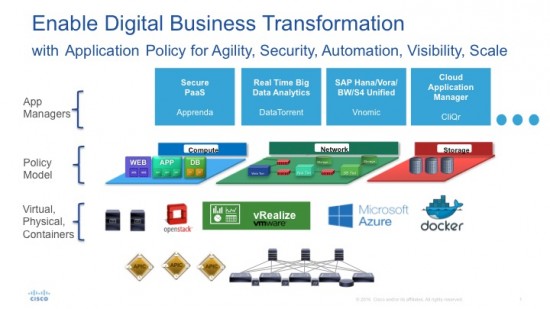
Many of Cisco’s valuable customers are well underway to becoming digital and I think they have taken a strategic approach to making digital technologies work for them by adopting a powerful policy-driven framework, ACI, for integrating multiple digital technologies to achieve agility, security, scale, and performance.
In this second blog on our ACI Application partners, I want to share how Apprenda is helping to enable customers to transform into agile digital enterprises. You will find additional blogs on more ACI solution partners appearing here in the coming weeks.
What do idyllic beaches, a breathtaking harbor, iconic opera house, efficient agriculture, smart transportation – and the Internet of Things – all have in common?
Answer: Sydney, Australia. Now, one of the world’s most vibrant communities and tourist locations is rapidly becoming another kind of global hub – a showcase to incubate and bring IoT ideas to commercial reality.
Announcement of Innovation Central Sydney
This innovation revolution – locally and globally – was sparked by today’s announcementon the establishment of Innovation Central in Sydney. This now puts Sydney on the IoT global map for innovation.
Innovation Central in Sydney
Innovation Central in Sydney is a Cisco-led, state-of-the-art “connected community” of customers, industry partners, research organizations, startups, accelerators, government and universities. The new Sydney center will synergize IoT solutions with Cisco’s established center in Perth, in addition to eight other Cisco Innovation Centers in Rio de Janeiro, Toronto, Songdo, Berlin, Barcelona, Tokyo, London and Paris.
Sydney now is poised to make a huge splash in the IoT tidal wave sweeping worldwide right now. Anyone who follows IoT knows that it is the engine behind the mass digitization of society and business. More data has been generated in the last two years than in all of prior history, and successful organizations are leveraging it along with analytics to improve productivity, profits, revenues and – most importantly – overall quality of life. Continue reading “IoT in Action: Innovation in Sydney Gains Traction”
I blogged back in November 2015 when Cisco participated at the AnsibleFest in San Francisco and the response from the attendees has ranged from “wow you support Ansible” to “how does it work and show me use case.”
Regardless of where you are in your expertise as a DevOps or network IT admin, I highly recommend this eBook that walks you in details how to program and automate your Nexus data center infrastructure. In addition, we have sample playbooks based on Ansible 1.9 on GitHub as well as a provisioning demo on GitHub. And in this demo we walk through automation of Day 0, 1, 2 operations.
For more scripts and getting started, visit our DevNet site
We’re back at #AnsibleFest London Feb 18, 2016. At the same time Cisco Live Berlin Feb 15-19 is in full swing. So whether you’re in London or Berlin we got you covered!
If you plan to attend AnsibleFest in London, check out Cisco’s session on “Managing Your Datacenter Network with Ansible” by Fabrizio Maccioni. As a DevOps admin, you’ll learn how reliable provisioning and management can be automated to accelerate innovation in your business environment.
What comes to mind when you hear the term Network Functions Virtualization(NFV)? Until recently, at least in my mind, the answers were ‘Service Providers’, ‘vCPE’, ‘Cloud’. If you don’t know what NFV is, read this blog post first and come back.
But why does NFV have to be exclusively for service providers? At the end of the day, the vCPE resides in the enterprise and so the enterprise is the consumer of NFV. Do we have to sit and wait for service providers to give it to us?
Why NFV?
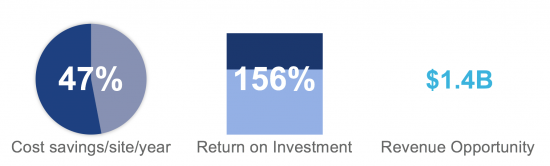
Before we go into NFV for enterprises, let’s look at why NFV in the first place. Why are large service providers looking at NFV? For SPs, NFV is estimated to bring 47% cost savings per site per year and to offer an ROI of 156%[1]. It will increase their revenue by 1.4 billion USD by upselling and cross-selling existing and new SDN-based services.





 Key features