Avatar

I believe I can speak for the Cisco Enterprise Networks team that today’s announcement of Best of Interop finalists is a proud moment for all the product managers and engineers that have invested years of man-hours to bring the Cisco DNA Architecture to life . We have made some great inroads with Cisco DNA with a very positive reception from press and analysts. The further validation by the Best of Interop judges is the icing on the cake. We are seeing many competitors mimic the DNA end-to-end strategy, but at the end of the day execution is key.  And, Cisco Enterprise is firing on all cylinders as a finalist for not one, not two, but three nominations across SDN, Mobility and Networking categories. Here’s the summary on each nomination. Check them out and learn how each can benefit your organization!


SDN Finalist: Cisco DNA Controller – APIC EMAPIC-EM Visual
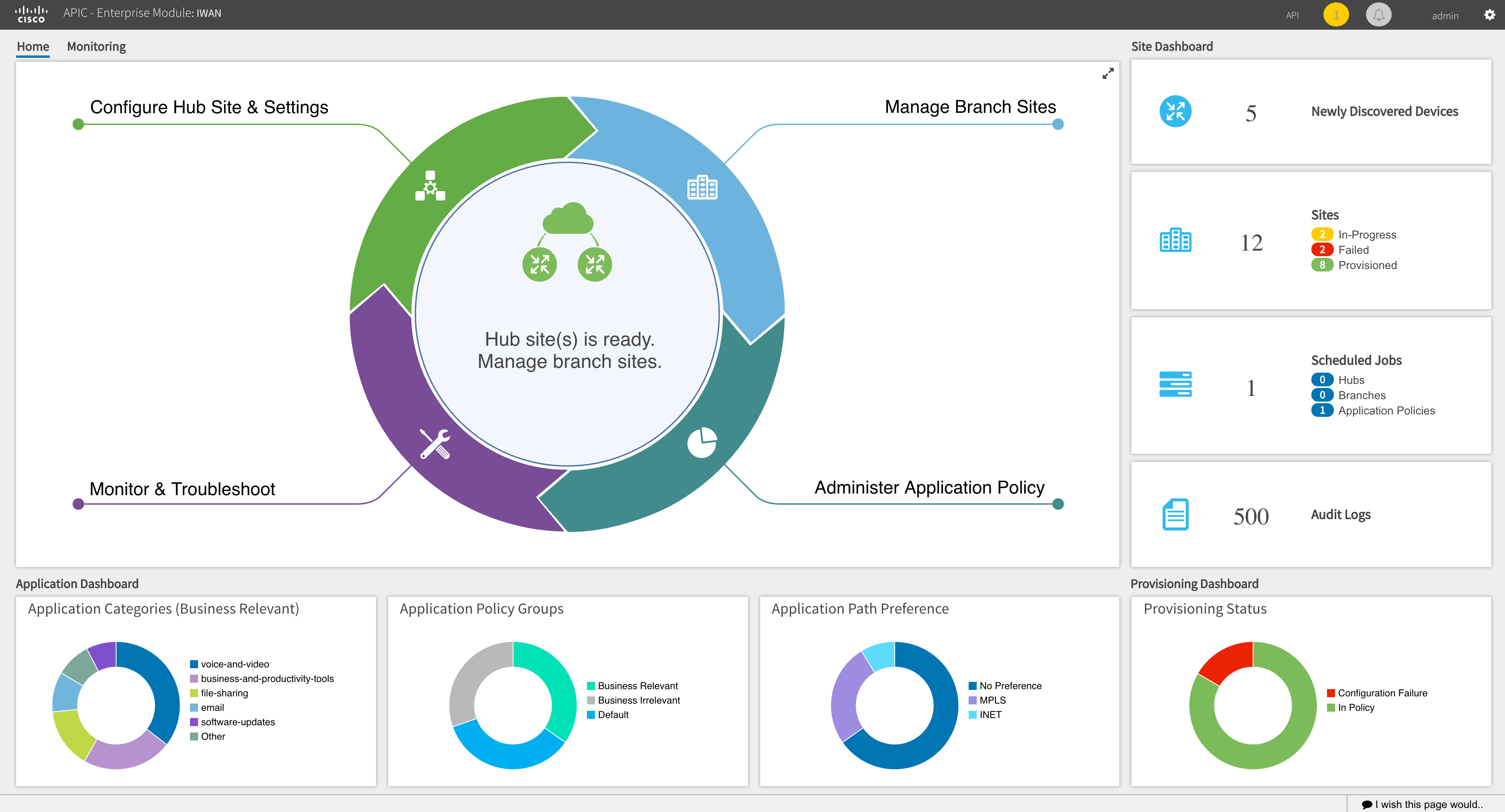
APIC-EM is Cisco’s SDN Controller for Enterprise Networks and delivers on the premise of automation and innovation for legacy, current and future network elements in the WAN and Access domains. Support for legacy elements is of vital importance to avoid a critical hurdle to wider-spread SDN adoption; Cisco has over 100 deployments scaling up to 4000 devices today. APIC-EM provides automation when it comes to provisioning both physical and virtual network functions and advanced network features contained within those. It thereby eliminates the need for repetitive, manual configuration for Day 0, Day 1 and Day2 operations, and frees up time for IT innovation via programmability through intuitive, easy to consume RESTful APIs. Here are some capabilities that can benefit your organization today:

  • Plug and Play (PnP) application provides zero-touch deployment, eliminating the need for centralized staging and truck rolls that reduces installation costs up to 78%.
  • EasyQoS automates QoS dynamically end-to-end based on application policy, eliminating hours of updates while providing a great user experience.
  • Intelligent WAN (IWAN) simplifies remote branch roll out with validated designs, replacing 1000 CLI instructions with 10 GUI clicks.
  • Enterprise Services Automation (ESA) provides design and management of new network services and branches on any platform, physical or virtual.
  • Path Application helps resolve trouble tickets associated with connectivity issues in minutes rather than the average one-hour.

APIC-EM is available for free download to everybody with an account on developer.cisco.com.


Networking Finalist: Cisco Enterprise Network Functions Virtualization (Enterprise NFV)
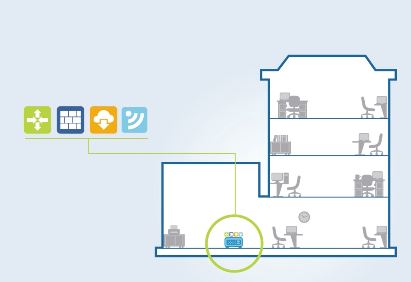
nfvEnterprise NFV decouples software from hardware to enable customers to deploy network services in minutes, on any platform.  It is the first NFV solution designed, built and available in the market with enterprise customers in mind versus service providers.  It transforms how customers design, provision and manage network services including routing, security and WAN optimization services traditionally served by a physical, dedicated hardware.

Cisco Enterprise NFV advances the state of the art by:

  • Quickly roll out new services through policy-based automation using best practice templates that can be a mix of physical and virtual services for remote locations.
  • Simplify day to day operations by
    • deploying new services (VNFs) using a graphical user interface, leveraging programmable,
    • providing open APIs (REST, NETCONF) that allow enhanced applications such as plug-and-play (PnP) application to automatically connect to the central orchestration controller,
    • supporting lifecycle management capabilities to manage and monitor VNFs and their performance, and
    • enabling Service Chaining with Elastic service insertion and multiple independent service paths based on applications or user profiles
  • Flexible deployment options with
    • Software – virtual network functions such as virtual router, firewall, WAN optimization, wireless LAN controller will be available to be deployed, and is also open to 3rd party VNFs for deployment flexibility.
    • Hardware – freedom to choose any hardware platform including Cisco ISR with x86 blade (UCS E-Series), Cisco x86 (UCS C-Series) or 3rd party x86.


Mobility Finalist: Flexible Radio AssignmentCisco_FlexibleRadio_Blog1-04-550x550
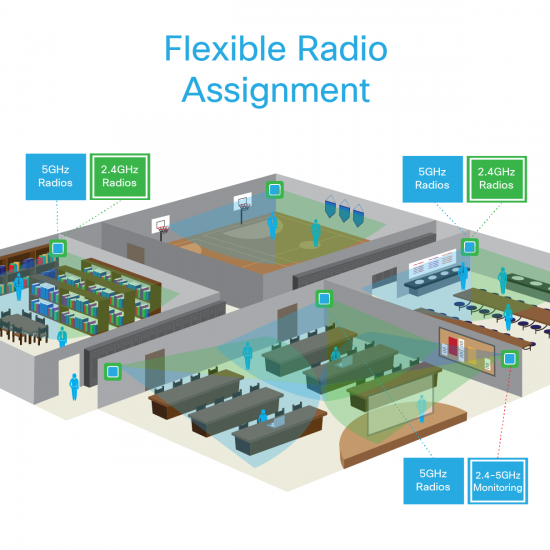
Flexible Radio Assignment is an early example of how Cisco is automating the network by building intelligence into the network to understand changes and then adapting to meet those changes in demand. Flexible Radio Assignment allows the access points to uses a 5GHz. radio and a second radio that can run in 2.4GHz. or 5GHz. band enabling the access point to adapt to the environment. For example if a flash crowd or gathering occurs in a given footprint, such as a common area, the access points will identify the increase in wireless demand and can automatically change the second radio from 2.4Ghz. to 5GHz. to boost capacity in that area. This delivers a better experience and minimizes the impact of device density.

  • Flexible Radio Assignment optimizes your wireless network for high-density conditions in real-time
  • Dual 5GHz. support offers 2X the scale of 5GHz. mobile devices so you gain a significant increase in performance
  • Available on Cisco Aironet 2800 and 3800 Access Points for best of class wireless access


Authors

Prashanth Shenoy

Vice President of Marketing

Enterprise Networking and Mobility

Avatar

Like any enterprise, universities have to demonstrate strong leadership and a clear strategy for grappling with the challenges and opportunities around digital.

When looking at digitization, its essential for universities to consider the impact on student experience and how, as an organization, they can capture the value around efficiencies, improve productivity and continuously innovate.

Watch this video to learn more about how universities are leveraging digital technologies to transform higher education around the world, and visit cs.co/digitalcampusanz to see more. 

https://www.youtube.com/watch?v=q8lNisqbuSg

Campus footage courtesy of the University of New South Wales.

Authors

Reg Johnson

General Manager, Education

Cisco Australia and New Zealand

Avatar

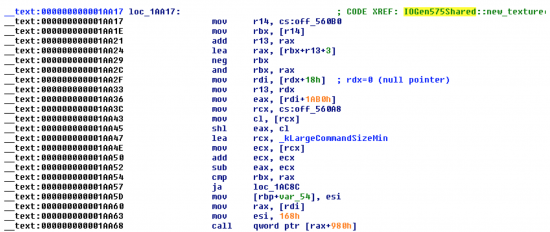
Cisco Talos vulnerability researcher Piotr Bania recently discovered a vulnerability in the Apple Intel HD 3000 Graphics driver, which we blogged about here. In this post we are going to take a deeper dive into this research and look into the details of the vulnerability as well as the KASLR bypass and kernel exploitation that could lead to arbitrary local code execution. These techniques could be leveraged by malware authors to bypass software sandbox technologies, which can simply be within the software program (browser or application sandbox) or at the kernel level.

In the course of conducting our research, Talos found that Apple OSX computers with Intel HD Graphics 3000 GPU units possess a null pointer dereference vulnerability (in version 10.0.0) as presented below:

1

Read More

Authors

Talos Group

Talos Security Intelligence & Research Group

Avatar

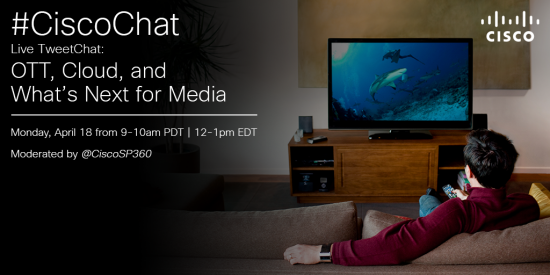
The National Association of Broadcasters (NAB) Show this year will be showcasing content in all of its forms, from broadcast and print media to videos and live streaming, to virtual and augmented reality, and much more. It will be held from April 16 to April 21 at the Las Vegas Convention Center. And on Monday, April 18, from 9 – 10am PT before the show begins, we’ll be bringing you a live #CiscoChat, directly from our NAB booth, Upper South Hall, #8502.

CIS_218_CiscoChat_Video_Twitter_Final

During the chat, we’ll explore the rise of OTT (over-the-top) and how content providers can take advantage of the opportunity to deliver directly to the consumer, and what some of the challenges of this environment are. We will talk about how cloud-based services offer low cost, low risk OTT solutions to content providers, and more tools to understand consumer behavior. We will also discuss how media companies are optimizing the lifecycle of entertainment video to thrive in this new environment by producing and distributing more content to more destinations with media optimized IP infrastructure.

Joining us for this special #CiscoChat discussion will be Multichannel News tech columnist Leslie Ellis (@LeslieEllisEdit), Infinite Video Product Marketing Manager Adam Davies (@DaviesTheTech), Senior Business Development and Digital Media Strategist Tom Ohanian (@tomohanian), and Cisco’s own Senior Director of Cloud Solutions, Rajeev Raman (@rajeevrcisco). With their insight leading the discussion, we’ll explore some of the implications for media companies of the growing transition from traditional platforms to OTT viewing, and how it relates to the NAB Show and beyond.

To participate in the chat:

  • Make sure you’re logged into your Twitter account.
  • Search for the #CiscoChat hashtag, and click on the “Live” tab.
  • Follow chat moderator @CiscoSP360. We will begin welcoming guests at 9am PT (12pm ET), and posting questions for discussion shortly after.

Be sure to bring your own questions to the discussion as well. See you at NAB in a couple of short weeks!

Authors

George Tupy

Market Manager

Service Provider, Video Solutions

Avatar

Have you ever stood impatiently on a New York City street corner on a hot day in July waiting for the pedestrian signal to change to “walk,” as you held your breath to avoid inhaling the sweet, moldering aroma coming from the nearby trash bin? Chances are you have, whether in New York or any other city on the planet.

The United States alone produces 33% of the world’s solid waste but accounts for just 4.6% of the global population. In fact, 80% of U.S. products are used once and thrown away despite tremendous advancements in recycling. New York City alone produces over fourteen tons of trash each day, which is enough to fill the Empire State Building. Imagine the view from the top of that trash pile!

Trash Collection Turns to Technology for Answers

Removing this much trash daily requires tremendous logistics. But it’s not just a question of curbing bad aromas; it’s an issue of public health and sanitation. Historically, trash removal was a brute force exercise. Today, automation and analytics are being used to reinvent trash collection. Think of it as digital transformation at the street level.

For example, solar-powered sensors attached to trash receptacles can automatically transmit data about the capacity status of a specific container via a wireless network created by device placement on utility poles or other nearby public infrastructure. Once the data is transmitted and received at the central trash collection station, a truck can be dispatched to empty a full trash container. Instant analytics at the network’s edge results in instant pick-up.

SB_India_572x286A solution like this isn’t just for highly developed countries with a mature public infrastructure. In India, my birthplace, waste management is an essential part of Swachh Bharat, the country’s national cleanliness campaign. The government is carefully evaluating the installation of a digitally powered solution like the example I described.


Everything’s Up To Date in Kansas City

As cities around the world become smarter through their use of digital technologies, one urban locale that is helping set a great example of how to effect change is here in the United States. Kansas City, Missouri has created a Living Lab to promote citizen engagement and act on ways to implement digital transformation to improve the city’s “Livability Index.”

At 319 square miles in size, Kansas City’s transformation will be far reaching. Central to the change is the city’s 93,000 street lights, which are being used as pillars to weave together a high bandwidth, low latency wireless sensor network that can move large amounts of data, while also providing Wi-Fi access to both citizens and public servants.

One way the City plans to turn these connections into solutions is through use of the Cisco Enterprise Mobility Services Platform (EMSP). The software platform helps bring together infrastructure, mobile applications and cloud services to allow citizens to take ownership of decisions anywhere within their city to report issues, protect or revitalize their community.

Further, using context-aware data and location-based services, EMSP opens up possibilities for local businesses to promote personalized offers to citizens in the immediate vicinity of their place of business. For example, on a sweltering summer’s day in Missouri, a refreshment vendor might promote a special offer on iced lemonade or frozen snacks as you walk by their location. EMSP can also show the way to create more engaging experiences for those attending a Kansas City Royals baseball game or an event at the downtown conference center.

The possibilities are virtually endless, which is why the Living Lab is encouraging new ideas by combining Cisco expertise with industry, citizen and government leadership to build smart city solutions together. Plans are already underway for better parking and traffic control, automated energy management, improved public safety, proactive infrastructure maintenance, theft prevention, and public transit accident avoidance among other ideas.

One Platform. Three Different Constituents. Unlimited Benefits.

All city data can be captured in an info portal powered by EMSP. Users can enter or access information via mobile devices or kiosks enabled by the infrastructure. Using one mobility software platform can help smart cities such as Kansas City tap into three major benefit areas:

  1. City Benefits: More efficient traffic flows, lower pollution, less environmental impact, improved infrastructure investments and greater budget efficiency.
  2. Citizen Benefits: Less traffic congestion, fewer frustrations, a better commute experience, safer roads and improved quality of life.
  3. Business Benefits: Real-time traffic monitoring, incident detection and analysis, added revenue opportunities using city infrastructure, and a new platform for business innovation.

But these benefits are just the beginning. Like many of the cities such as Barcelona, Spain and Songdo, South Korea participating in the Cisco Smart+Connected Communities initiative and that are accelerating digital transformation with the advent of the Internet of Things (IoT), the Kansas City Living Lab is open for new thinking. Seek them out if you have an idea or an application. Or, if your city is starting down the path to digitization, have your local government reach out to Kansas City for input.

What’s your city’s digital IQ when it comes to enhancing the way its citizens live, work, play and learn? I would love to hear from you. And, if you think your local government would like to learn more about what other cities are doing, forward them a copy of this blog to help them think about how to start down their own road to digital transformation. Time to take digital to the streets!

Authors

Mala Anand

No Longer with Cisco

Avatar

RanjitKodali

It is not a surprise to anyone when you hear that Cisco is a global company. From our headquarters in San Jose to where I am in Bangalore, India – in almost every major city across our globe you can find someone living the Cisco Life.

In 2008, my journey of digital transformation started. This isn’t something that happened overnight, of course, but through the process of interviewing via telepresence to now – as I am a Network Consulting Engineer in Advanced Services team – I have come to realize that Cisco is the place for me.

Spread across Asia, Europe & Africa, my current role requires me to work closely with delivery teams in these locations. Through three different time zones, and with five different nationalities – our team always gets the job done. It is our cast of interesting personalities and diverse backgrounds that allows me to feel confident in our work, and really love what we do together for Cisco.

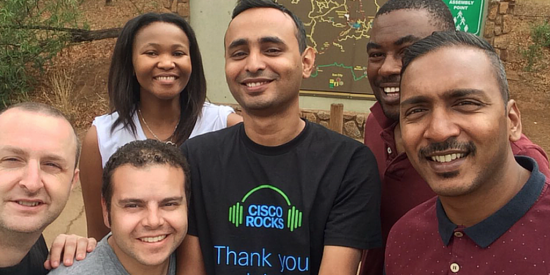
Matteo Cardelli is our Delivery Manager, based in London. 13,260km away in Johannesburg, South Africa is where the Delivery Team is located – comprised of a very diversified group with a young and vibrant Project Manager, Kamva Makabane; a Nigerian engineer, Eustace Orukpe; a 5th generation South African of Indian origin, Rodney Moodley; and a Portuguese national, Mauro Nave. Another 6,920km to the East is where I am at in India.

3 different time zones, 5 different nationalities – all to support Vodafone across Africa. So what makes us so successful here at Cisco?


There are several important aspects of being successful at Cisco, especially when your team is spread out. Here is how it works for us:

1.Inclusion & Diversity – Just as we are a diversified group, so too are our roles within the team. While Kamva is responsible for project discipline, and Matteo provides thought leadership to help steer the team in the right direction – everyone on our team is equally empowered and responsible to do the right thing for themselves, the customer, and Cisco.

The fact that our leadership and Cisco entrusts us to do the right thing is very powerful and motivating. It encourages us to do our best work.

2.Innovation – Rodney & I are responsible for driving customer innovation and seeking new opportunities. Vodafone has been the leading technology provider in Africa and we have supported them in launching new services like 4G, Connected Stadium Experience, and Wifi-3G offload.  The affordable solutions and products that we develop for Vodafone are usually seen as industry benchmark.

In our role as technology leaders for Vodafone accounts, we are responsible for engaging the planning & design teams for developing new solutions. Technology can be an enabler for development across multiple aspects of life and nowhere is this more evident than in emerging market like Africa. This has resulted in increased revenue and market share year-over-year!

3.Customer Experience – Eustace is closely aligned with the customer on premise – often answering questions and troubleshooting technical problems. As a support engineer for Vodacom, he advises on how a Cisco product might fit in to a Vodacom products needs to achieve the desired business outcomes. Eustace says of his role, “Everything that I do while interacting with a customer helps strengthen Cisco’s relationship with Vodacom, and every interaction counts.”

4.Collaboration – Regularly, we make use of Cisco collaboration tools – both internally and with our customers. It was extremely challenging at the beginning to tear down the virtual walls but over period of time, we learned to understand each other & support one another. Being able to collaborate in these ways, and find new ways for us to communicate is a key to our success.


Beyond our day to day activities, we also had our first offsite to a National Park where we had a ‘Master Chef’ barbecue contest! Mauro was born with a physical disability and he is an Inclusion & Diversity champion for South Africa. He has currently working on a charity initiative: ‘Hike for Charity’ for the next team-building event that we are all excited to participate in and support. The funds generated from the event will be donated to a charity organization recognized by Cisco.

As a team, we are intensely focused on our customers on daily basis. The team rarely gets time to know each other at a personal level so the offsite was a great opportunity for each of us to discuss the importance of caring, understanding each other’s needs, embracing differences and helping my colleagues experience their significance.  This exercise of  gathering emotional intelligence means learning what defines the strengths and capabilities of your team –  the real assets that each member brings to the table, an opportunity to introspect, and skills that yet to be developed.

I believe that this team is truly changing the way we live, work, play & learn. Such diversity in the team has contributed to the team’s success, and has only helped to make us stronger and more effective. This is reflected in our customer engagements and feedback, and we are very proud to be employees of this great company.


Want to join our global team? We’re hiring!

Authors

Ranjit Kodali

Network Consulting Engineer

Cisco Advanced Services

Avatar

Author:  Dan O’Malley, Senior Product Manager, Cisco Internet of Things Group

Your existing radios and voice system do more, with Cisco.

If your agency uses Cisco Unified Communications as well as PTT radio communications, you can make both more valuable by adding Cisco Instant Connect.

instantconnect blog3

Hundreds of public safety agencies around the world already use Cisco Instant Connect to make radio dispatch operations simpler. Instant Connect improves incident response because personnel can join PTT talk groups using just about any device. That includes land-mobile radios, smartphones, IP phones, PCs and laptops, and even traditional phones.

Control Smartphones as if they were radios

With Cisco Instant Connect, personnel can join PTT sessions using an Android device, iPhone, or a Cisco Unified Wireless IP Phone. Smartphones can connect over Wi-Fi, 3G, 4G/LTE, or satellite networks. In addition, Cisco sells a Sonim phone which can connect over a carrier networks today and includes Band 14 support for future use with FirstNet. What’s nice about the Sonim phone is that it is very rugged and can be used in the operational environments like manufacturing, oil and gas, hospitals, manufacturing, utilities, and even public safety.

Public safety agencies are reminded that use of Band 14 spectrum is limited to FirstNet, and any current use of Band 14 must be pre-approved by FirstNet and the US Federal Communications Commission. Future use of Sonim phones as FirstNet endpoints is subject to FirstNet authorization and interoperability requirements.

Wearable convenience for push to talk

Cisco works with wearable device manufacturers to integrated a better push to talk experience into the day-to-day operational environments. Rollts, a Cisco Instant Connect ecosystem partner, makes a product called the Domino a wearable Bluetooth speaker and microphone with a push to talk button. What’s nice about the Domino is that it can transmit on 900 MHz channels for a peer-to-peer communications. Rollts Video


School Bus Connect

Cisco is working with a partner called Technuf. They have a really great application that uses the Cisco technology for schools. They track which students get on or off the bus and provide the school with real time awareness of where busses and students are on a web interface over their cloud.. School bus Connect Video.


Cisco partners with Parallel Wireless for tactical LTE coverage

Some agencies and customers are buying tactical LTE or Wi-Fi coverage for their operations. This allows them to operate in a tactical communications bubble with multiple back haul connections using a small portable router. The router can use a carrier connection for backhaul or they can use satellite radios to connect vehicles or teams to the Internet. Customers can turn their vehicle into a Wi-Fi hotspot or (if appropriate approvals from FirstNet are first obtained) into a LTE Band 14 bubble. Please note – Use of Band 14 requires FirstNet pre-approval and a “special temporary license” from the US Federal Communications Commission. Once the FirstNet RFP is awarded, the use of Band 14 by state and local agencies, and the process for temporarily requesting permission to use Band 14, is expected to be interrupted and to undergo significant change, due to interference and interoperability issues. Cisco was showing a Band Class 14 system in the box in our booth. Parallel Wireless Video.

Authors

Kacey Carpenter

Senior Manager

Global Government and Public Sector Marketing

Avatar

It’s late in the day, and the Chief Information Security Officer walks over to you. She asks you a single question: “How do you think about cybersecurity?”

The question catches you by surprise. How do I think about cybersecurity?

So many things run through your mind at once: Do I think about it in terms of the vast numbers of security products on the market? In terms of the sheer complexity of the cybersecurity challenge and how hard it is to defend against today’s sophisticated attackers? And what about all of the various analyst viewpoints?

Somehow you answer her question, but you’re not really satisfied with what you said. To you, it sounded disorganized and, well, basically all over the place. She considers your answer for a moment, glances away, and then continues silently to her office. You’re left to wonder what she thought of your answer.

Managing cybersecurity risks against today’s advanced threats is a challenge for the largest government organization down to the smallest school district. There’s certainly no 30-second answer. It’s a complex subject with so much to consider. Many professionals are left to wonder: Where do we start?

This is a key reason why I’m so passionate about the latest best practices publication from the National Institute of Standards and Technology (NIST). They have deep cybersecurity expertise and published comprehensive guidelines on pretty much everything from system classification, security control selection, implementation, assessment, authorization, and continuous monitoring. NIST makes everything freely available on its Computer Security Resource Center site (csrc.nist.gov).

Managing cybersecurity risks against today’s advanced threats is a challenge for the largest government organization down to the smallest school district.

The NIST Cybersecurity Framework is their latest best practices publication. It’s perhaps the simplest and most straightforward approach toward managing cybersecurity risks that I’ve ever seen. It’s the result of NIST’s extensive work with both public and private sector to determine which security controls are the most effective today, and outlines a process that helps you laser-focus on those controls that will have the most impact in your organization.

Another great part? The clear terminology they use to communicate the framework. Everything boils down to one of five core functions: Identify, Protect, Detect, Respond, and Recover. Firewalls? Think the Protect function. Intrusion Prevention Systems? Think the Detect function. Computer Forensics? Think the Respond function. You get the gist. Everything in cybersecurity — people, process, and technology — can be categorized in this way.

So let’s wind back the clock a moment and answer your CISO a different way: “I think about cybersecurity in terms of the NIST Cybersecurity Framework’s core functions: The cybersecurity controls that enable our organization to Identify, Protect, Detect, Respond and Recover – efficiently and effectively managing cybersecurity risk.”

Want to learn more? We’ve included a session at Cisco Security Week on the NIST Cybersecurity Framework so that your organization can learn and apply it today. And there’s more! At Cisco Security Week, you can also expect to:

  • Learn about Cisco’s security strategy, and how our advanced solutions protect your organization and manage cybersecurity risks
  • Hear about the latest cybersecurity threats from Cisco Talos Security Intelligence and Research Group, and how their industry-leading threat intelligence helps secure your organization
  • Connect and engage with industry visionaries, peers, as well as Cisco’s security leaders and solution experts

Register here and join us at the next Cisco Security Week in your area!

Authors

Steve Caimi

Industry Solutions Specialist

US Public Sector Cybersecurity

Avatar

The main reason we set up the We’re Listening blog series was to tell you what we’re doing to improve based on the feedback you give us. Once in a while, we also like to check in on the ways that we ask for your feedback – are we using the right channels? Asking the right questions? And most importantly, are we making it as easy as possible for you to tell us what you think? I’ve invited Jane Riad, who heads up our Customer Experience Listening team, to share some of the changes we’re making to our biggest surveys and feedback tools. Read below and let us know whether these are the right changes! I’m particularly curious what you think about the option to provide feedback via video – comment below, or you can email ciscolistens@cisco.com.


janeriad By Guest Author Jane Riad

We strive to listen very closely to you, our customers, every day and in many different ways. One way we do this is by asking you to respond to our Global Customer Satisfaction survey, which goes out to thousands of customers every year.  The feedback we receive from this survey is incredibly valuable to us. Not only does it allow us to know what matters to you and your company, but it also gives us important insights into where we need to focus, improve, and innovate. Continue reading “The We’re Listening Blog Series: We’re Listening Better! Shorter CSAT, Fewer Surveys, Feedback Loops, New Wa …”

Authors

Curt Hill

Senior Vice President

Customer Assurance