Avatar

WYSDImageWorldYouthSkillsDay

We are living in an era of an increasingly connected economy and a business landscape that constantly has to keep pace for organizations to remain relevant and competitive. Thanks in part to the expansion of the Internet of Everything (IoE) (and the millions of connective touch points it supports), heightened cyber security needs, emerging technologies like SD WANs and the growth of STEM-based jobs, people with technical “know-how” are in extremely high-demand.

Despite this need for tech talent, at current rates, the number of available technical-related positions in the future will far outweigh the number individuals qualified enough to fulfill them.

As a result, in the last couple of years, the headlines have become increasingly intense and a critical question is echoing through the halls of technology C-suites.

Where is all of the tech talent?

Continue reading “#CiscoChat: UN World Youth Skills Day Drives New Conversation on IT Skills Shortage”

Authors

Eric Chu

Leader

Global Communications

Avatar

When I speak to customers across different market segments they want the ability to deploy services at speed, at scale, at the lowest cost possible. They care about openness to drive rapid innovations in their environment. They want the ability to automate and drive operations cost down and transform to cloud economics. They want to scale their architecture in an open multi-vendor environment that can be managed at velocity in a simplified agile manner without any compromise on security or compliance. They want to be able to provision and apply policies across the entire infrastructure without the cumbersome or possible errors that may jeopardize security and business uptime. And as they run physical and virtual workloads, they want an infrastructure that is transparent and enable these workloads to reside anywhere without restrictions on movements.

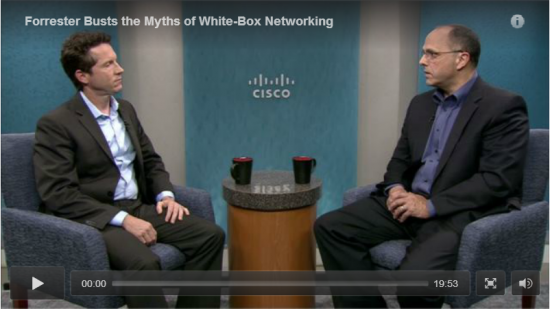
Does whitebox switch model help these customers in that journey? Cisco’s Frank D’Agostino sat down with Forrester Andre Kindness to discuss this topic.FrankD_AndreaK_Whitebox June2015

In addition, Forrester issued a report “Myth of White-Box Network Switches” that breaks down the math of whitebox and hidden costs associated with it.Forrester_BustsMythsOfWhitbox July 2015

Authors

Rami Rammaha

Sr. Marketing Manager

IDS

Avatar

As an omnichannel retailer, you are probably offering your products to shoppers both online and in brick-and-mortar stores. And, like most retailers, you are no doubt collecting online data and running detailed website analytics that help you track preferred products, pricing, shopper behavior, ratings, and so on.

But are you able to gather these same detailed metrics in your physical store, telling you why shoppers choose your store over your competitor’s? How to create a better experience on the floor? Or optimize staffing? Most importantly, are they helping you increase sales?

Until now, the answer to these questions has been “No,” simply because the technologies to gather such metrics weren’t available. It hasn’t been until now, the era of the Internet of Everything, when edge computing is available to gather and analyze the data that gives you a 360-degree view of your store.

Studies show that in-store analytics is a key area of innovation, which may allow retailers to gain up to 11 percent in value. Today’s in-store analytics tools should be able to do three things:

  • Integrate data from multiple services
  • Automate data collection processes
  • Analyze data to identify actionable insights

With these capabilities available, you can use the power of your investments in mobile technology, social media, and in-store applications to collect – and understand – more and more customer information.

Join us for an hour on Tuesday, July 14 at 10:00 am PT/1:00 pm ET for a webcast on “How to Make Your Data Meaningful: New Strategies for Improving In-Store Shopping Experiences and Retail Operations.” This free one-hour session will discuss:

  • Which in-store metrics generate real-time recommendations to boost operational efficiency
  • How analytics can help you offer hyper-relevant shopper experiences and forge enduring customer relationships
  • Use cases that demonstrate the outcomes of connecting data to decision making

Register Today. We’ll see you there!

Authors

Dianne Lamendola

Senior Practice Advisor

Avatar

Every July, we celebrate on the 4th to commemorate the Continental Congress’ approval of the Declaration of Independence.  This year, the patriotic occasion reminded me of an event held last month when, together with United States Congresswoman Jackie Speier and the president of Sonim Technologies, Bob Plaschke, I announced a partnership with Sonim for the digital transformation of the communications systems supporting the U.S. Army training center in Fort Irwin (California).

Continue reading “U.S. Army Builds Internet of Everything Infrastructure for the Fighting Force of Tomorrow”

Authors

Mala Anand

No Longer with Cisco

Avatar

CEWN Header

Anuja SinghGuest Blog and Interview by Anuja Singh 

Welcome to our July edition of the monthly CEWN segment about role models. We all make resolutions and set goals to improve ourselves– but somewhere along the way, life interrupts our plans, we find ourselves juggling different priorities and invariably things get dropped. What you will find in this segment are experiences of some ordinary people who went on to achieve extraordinary results. Everyone featured in this series has faced challenges and opportunities that the rest of us can identify with. Let’s draw inspiration from the choices they made and aspire to the outcomes they created.

Milagros Bussi Millie is the Program Manager for the Cisco NYC Customer Experience Center.
Milagros Bussi
Millie is the Program Manager for the Cisco NYC Customer Experience Center.

Cisco Empowered Women’s Network (CEWN): Millie – I was fortunate to hear you tell your story, and it gave me goose bumps. Can you please share some of the early influences that shaped your life’s journey? Continue reading “Carpe Diem – Seize the day! Inspiration from July’s Everyday Heroes of CiscoEWN”

Authors

Rehana Rehman

No Longer with Cisco

Avatar

Throughout the next couple of months, I’ve decided to blog about the great technology Passpoint™ Wi-Fi and how CMX Connect can help. Since this is a series of blogs I’d like to focus this first installment primarily on what Passpoint Wi-Fi is. First thing to understand about Passpoint is that it is an industry standard that allows devices to connect to hotspots effortlessly and securely. Because of this, it’s a technology that businesses (and its customers) have long been waiting for.

The following charts depict top barriers for wider adoption, implementation and usage of Guest Wi-Fi. As you can see the seamless authentication is the top barrier.

Passpoint1

I’m personally excited about Passpoint because of the seamless authentication and security it provides. For example, today’s mobile banking apps have become so easy to use that desktop versions seem difficult to use in comparison. My bank’s app even allows me to take a photo of a check and directly deposit the funds to my account within a matter of seconds. However, I’m only comfortable with mobile banking when using my home or office Wi-Fi because I know they’re WPA2 encrypted. Accessing private financial information is definitely not something I’m comfortable with within a public venue, using an unknown Wi-Fi portal.

So while the idea of providing guests with Wi-Fi is a generous one, using it can actually put personal information and devices at risk. Guest Wi-Fi is almost always open and rarely secured at Layer 2 due to the fact that deployment and operation is difficult when username/password or certificates are required. Furthermore, if a business uses username/password to secure their guest Wi-Fi they’re left with the challenge of knowing how to smoothly create and distribute user credentials without losing the guests’ attention.

The process of accessing Guest Wi-Fi for me, and many out there, is less than appealing because of these security issues and the lengthy process they require before allowing access the Internet. To combat this, businesses need to provide guests with a no-hassle way to maintain and distribute credentials to the guests using Layer 2 secured Guest Wi-Fi. This is where Passpoint comes into play.

According to the Wi-Fi Alliance, “Wi-Fi CERTIFIED Passpoint will transform the way users connect to Wi-Fi hotspot networks by making the process of finding and getting access to the right network seamless…when you are in a Passpoint-enabled hotspot, you’ll discover a newly smooth connectivity experience.” Continue reading “Passpoint™ Wi-Fi and CMX Connect – Seamless and Secure”

Authors

Reddy Babu Adarapu

Techinal Leader

Avatar

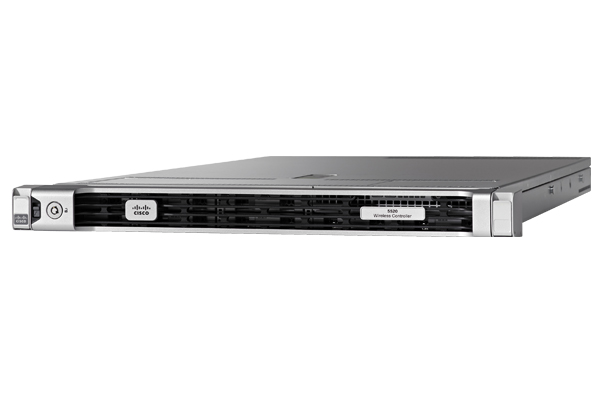
5520 wireless controller1

Cisco 5520 Wireless Controller

5520 wireless controller2

Cisco 8540 Wireless Controller

Recent trends suggest that unless upgrades are made to current wireless infrastructures, these networks are going to get bogged down in the coming years. By 2019, the way people use their devices are expected to change as more devices—which will all be incrementally faster—will enter the workplace. In addition to the overall number of devices increasing, the tasks that they perform will also evolve. Video streaming usage is expected to increase 13-fold and take up to 74% of total mobile data traffic, according to the 2015 Cisco Visual Networking Index Mobile Forecast Study (CMFS).

And while bandwidth intensive applications, such as video, will be the main culprits that chew up your wireless infrastructure, there are other factors that will slow down your networks too. The CMFS reports that by 2019, 53% of fixed IP traffic will be Wi-Fi, which means that wireless will be exceeding wired traffic by 21%. Couple that with an estimated 85% of enterprises implementing some sort of Bring Your Own Device (BYOD) policy by the end of the decade—perhaps tripling the amount of devices on your workplace LAN—and increased video isn’t the only thing you will be worried about.

But it’s all not just extra laptops, mobile devices and streaming videos, the Internet of Everything (IoE) and Machine-to-Machine (M2M) traffic will be vying for your wireless network too. The CMFS study says that 28% of device connections will be from M2M traffic. Continue reading “Cisco 5520 and 8540 Wireless Controllers – Powering Next-Generation Wireless Networks”

Authors

Palani Karuppan

Product Manager

Cisco Wireless Networking

Avatar

So you thought that cloud was the fad of the day. But it stuck. Now you hear all the fuss about hybrid cloud. Even the die-hard cloud fanatics who believed that the only cloud had to be in the public cloud, have conceded that folks need hybrid cloud – a seamless application environment across on-premise and off-premise infrastructure that can provide best of both worlds – speed, scale and economics of public cloud with control, security and data sovereignty of private cloud. Hybrid cloud allows this perfect balance and you don’t have to worry about walking on a fine rope or tripping over IT control or compliance while providing agile IT services.

abstract image of acrobat elaphant

Sounds great! But what exactly can you do with hybrid cloud? A couple of use cases come to mind:

Continue reading “Three Hybrid Cloud Applications That Make it Worth the Fuss…”

Authors

Rahul Tripathi

Senior Director of Product Management and Marketing

Cloud & Virtualization Group

Avatar

Cisco OpenStack Private Cloud delivers a true public cloud experience in a private cloud environment—on your premises, behind your firewall. We handle the engineering, setup, and ongoing operations, so you can focus on building and running your applications. It’s a core component of Cisco’s growing cloud portfolio.

Today we meet with one of the real people behind the scenes that make this solution possible: John Schofield

John, what is it that you do for Cisco as part of the Cisco OpenStack Private Cloud team?

My thing has always been Linux system administration. Mostly I’ve been working on proactive hardware monitoring. Lately I’ve been doing more OpenStack work around automating live migrations. And of course helping our customers with the issues they run into with OpenStack.

Proactive hardware monitoring? Can you explain? What is it and why does it matter in a cloud environment?

Every five minutes, we are asking our customers’ hardware “How ya doing?” Which really means, “How are your fans? How’s your hard drive? How are your RAID controllers?” And most of the time the response is “My fans are fine. My hard drive is humming along nicely. And my RAID controllers are working perfectly.”

Continue reading “Behind the cloud: Interview with Cisco engineer John Schofield”

Authors

Ali Amagasu

Marketing Communications Manager