Earlier this month fashion aficionados converged on Portland, Oregon to attend our city’s official Fashion Week. Like the famed New York Fashion Week show at Bryan Park, FashioNXT Portland 2015 set up camp in our hip Pearl District to showcase what’s next in fashion. Models representing extraordinary designers from around North America, and as far away as Colombia, the Philippines, and China, walked the runway.
Me and my sister Sarah, my very own personal fashion consultant, at FashioNXT.
While I definitely like to be stylish, my primary interest included the world’s first-ever wearable technology fashion competition. Not surprising, wearable technology is a market segment that Business Insider predicts will grow 35 percent each year for the next five years. While wearables are currently dominated by smartwatches and fitness bands, I attended FashioNXT Portland for a hintof what innovations are on horizon.
Fashion’s Limitless Opportunities
It’s exciting to see how the Internet of Things (IoT) is completely disrupting the way we work, live, play and learn. For the most part wearable technology is for fun. Of course, the Fitbit and Apple Watch come to mind.
But wearable technology is beginning to make gains in other areas as well. An IoT innovation that has the opportunity to make a significant impact is the iTBra. It’s basically a bra patch embedded with an IoE sensor to detect early breast cancer. Now that’s incredible.
At FashioNXT, I saw amazing ways to blend fashion and technology. Each of the competition’s three finalists were quite different—yet equally intriguing.
Cisco developed Next Generation Encryption (NGE) in 2011. NGE was created to define a widely accepted and consistent set of cryptographic algorithms that provide strong security and good performance for our customers. These are the best standards that can be implemented today to meet the security and scalability requirements for network security in the years to come; or to interoperate with the cryptography that will be deployed in that time frame. Most importantly, all of the NGE algorithms, parameters, and key-sizes are widely believed to be secure. No attacks against these algorithms have been demonstrated.
Recently there has been attention on Quantum-Computers (QC) and their potential impact on current cryptography standards. Quantum-computers and quantum algorithms is an area of active research and growing interest. Even though practical quantum-computers have not been demonstrated until now, if quantum-computers became a reality they would pose a threat to crypto standards for PKI (RSA, ECDSA), key exchange (DH, ECDH) and encryption (AES-128). These standards are also used in Cisco NGE.
An algorithm that would be secure even after a quantum-computer is built is said to have postquantum security or be quantum-computer resistant (QCR). AES-256, SHA-384 and SHA-512 are believed to be postquantum secure.
Did you know it pays to optimize your cloud strategy? (Literally)
A recent IDC/Cisco report shows that key business indicators (top-line revenues, strategic IT budget allocations, greater IT asset flexibility) all increased with a better cloud strategy.
You see this in the results. On average, companies who optimized their cloud experienced:
4% increase in revenue growth
200% improvement in strategic allocation of IT budgets
99% faster time to provision IT services
77% IT cost reduction
On the flip side, the same report noted that only a whopping 75% of companies have only an opportunistic, ad-hoc, or no cloud strategy at all. None! So what are they waiting for?
Take a ride in the fast lane with Cisco at SAP TechEd as you get ready to hit your destination at booth Cisco 156.
Start your journey by attending the Monday eveningKeynote, in which Cisco Executive Soni Jiandani will join SAP Global President Steve Lucas on main stage to announce a joint co-innovation around Cisco UCS, ACI, SAP HANA Vora and Hadoop, resulting in a platform that can automate the next generation HANA stack for the digital enterprise.
Visit Booth 156 to learn why Cisco UCS is the optimal platform for all your SAP Application needs. Make a pit stop at each of our demo areas to learn more about our Integrated Infrastructure, Big Data, and Internet of Things Solutions.
Start with our live Connected Train Demo to see a tangible use case of Internet of Things in transportation.
Next, take a seat in the booth theater to hear our Partners and Cisco Experts talk about our joint customer solutions. At the end of each presentation, two lucky winners will walk away with an AMEX gift card.
Attend our Breakout and Networking Sessions. Learn how Mohawk Industries boosts productivity and performance with SAP HANA running on Cisco UCS or take a deep dive into our Big Data and Cisco ACI solutions.
The Golden Gate Bridge. Cable cars. These images immediately come to mind when we think of San Francisco. If you’re in the IT industry, however, San Francisco is all about Oracle OpenWorld (#OOW15) which kicks off on Oct 25th. Whether you’re attending #OOW15 in person or not, you’ll have plenty of opportunities to learn how Cisco UCS delivers record-breaking performance and exceptional ROI for your Oracle workloads.
You won’t be able to miss the Cisco booth (#801) as you enter the Moscone South Hall. Apart from our prime location, we plan on standing out with a full schedule of tech talks in our theater, live video interviews with industry leaders and great conversation with Oracle experts from Cisco.
An excellent overview of some of the key topics that are top-of-mind for industry executives in both power utilities and oil and gas. Written by Maciej Kranz, Vice President, Corporate Technology Group, the blog covers many of the ‘essentials’ that are going to make the difference between success or failure for many companies in the future:
Business Relevance – how important is Line-of-Business (LoB)? What is Cisco doing to address the new buying centers?
IT/OT Convergence – IT techniques are increasingly used for OT (Operational Technologies). OT has critical needs that IT must take notice of. Is a coming together happening?
Open Standards – Cisco leads the charge here, but proprietary and legacy protocols still endure. How is the industry adapting?
Cross-industry Use Cases – All industries are different, or are they? Maciej talks about commonalities and the inefficiencies of learning from different industries.
Maciej talks about the number of connected “things” in the world that has skyrocketed from about a million in the early 1990s to 13 billion today. He adds that…
“As the Internet of Everything (IoE) gains momentum—digitizing business processes in every industry—we expect to see 50 billion connected devices by 2020. The technology connecting all these devices has become affordable and easy to integrate. But that is not the primary reason for this explosion in connected devices. I believe we are entering a “golden age” of digitization because of the confluence of the following factors”.
I know John Chambers and others are talking about there being 500bn devices connected by 2030, so the challenges and opportunities will grow exponentially.
It is those four elements mentioned above, combined with the “network effect,” which multiplies the value of connections as their number grows,which are are driving the rush to connect everything, Maciej concludes. At Cisco, we have thousands of customers who have already adopted IoT solutions—and every day there are more who see the evidence in their own businesses and industries that the time is now for IoT, he adds.
Recently, Cisco announced a very cool partnership with pasta maker and Italian foods provider Barilla Foods, ‘From the ground to the grocer, Barilla makes use of Cisco’s IoE to give consumers insight into the journey of their food’. This partnership is the result of working together across the food industry as well as Barilla’s vision to provide more transparency and visibility to their customers. In this age of well-publicized food contamination, fraud and other issues, the Internet of Things (IoT) can truly be a key enabler for strategic-thinking food, beverage and consumer packaged goods (CPG) companies. In addition, as Nic Villa writes in his blog The Internet of Food – Improving Lives, the “Bringing the Internet of Everything to life in the food sector makes our lives healthier and our choices easier. This new digital revolution merges technology, sustainability and well-being…”
The power of what Barilla is implementing is incredible for a few different reasons. Let me explain. Beyond just food safety, it is a savvy marketing strategy. Barilla can now improve their marketing to highlight the information that the millenials want – where did food come from, what did it go thru and were there any issues? This cool video from Barilla’s Parma, Italy factory shows the amazing processes that happen in the factory just to produce pasta:
Track and Trace Opportunities to Meet Regulatory Requirements
With track and trace technology, many customers will have the information at their fingertips as to where their food came from. Manufacturers can not only use this information for regulatory compliance but can now also add the information to enhance their Continue reading “IoT for Food Manufacturing: Beyond Food Safety to Savvy Marketing”
As somebody who avoids going into shops at every opportunity it was only natural that I reached for the laptop when we decided it was time to move to a new home. A mere 48 hours later an agent had visited our property, produced an advert which made us wonder why we were moving, leaving me to click a button (which I did on my phone whilst holidaying in the south of England) which put our house up for sale. Frictionless in every sense.
This new business model just ticked every one of my buyer motivations, or in this case perhaps I should say, seller motivations. I get to benefit from a quality 24/7 online sales system (where 70 percent of their sales activity occurs outside of traditional office hours when agents are closed), a fixed price sales fee which was one-third of a typical agent fee, and a speed to market which was, quite frankly, scary.
With our house up for sale we turned attention to our budget. We headed straight to our current lenders website to see how much we could borrow but where I expected to find a lending calculator, I instead found a number for the contact centre.
So I called (but I had to wait until the next day when they were open again) where I was asked when I’d like to book an appointment for? Immediately. This of course was not an option, by which time my wife was already looking at houses I was certain we couldn’t afford. Begrudgingly we joined the 4 day long queue to speak to a mortgage advisor and hoped those in front of us were more impatient.
With time to kill I picked up the laptop again and decided to visit an aggregator site to see what other mortgages were available. I knew we had a great deal from our current lender so I wasn’t particularly optimistic; after all, most people’s largest monthly expense is their mortgage and price is important to me. But I was wrong, very wrong.
To illustrate this, 45 seconds later I had completed a search* which returned 385 mortgage products from 32 different lenders. Impressive, but most of all was a price differential of only £39 per month between the first 100 products. To give that some context, of the 28 utilities companies who provide energy in our area, we could pay anything up to £46 a month more for exactly the same service depending on who we chose.
With price no longer a competing factor between so many products all regulated to perform in exactly the same way, it was time to choose a new lender who could see us at a time that suited us, not when it suited them.
This experience got me thinking about how each lender operates. On one hand you have a lender who has too much demand and is losing customers, on the other you have a lender who appears to have too much capacity which must be unnecessarily costing them. Neither feels like a good business model to me.
So where should they compromise? Well actually they shouldn’t. Today, lenders across the globe, like Nationwide Building Society is digitising the home buying process with huge reward.
No longer are their customers waiting four days (or more), neither are they employing a small army of under utilised mortgage advisors who lurk in branches waiting for the next customer to walk in. Instead, these innovative industry leaders are equipping their branches with a capability-rich high definition video solution that enables them to sell a mortgage in a single customer meeting. Achieved with a supporting shared service centre of highly productive mortgage advisors, who, with a touch of button are instantly connected to a customer irrespective of location and time.
This new digital operating model results in lenders dramatically improving customer satisfaction, increasing sales and reducing operating costs. Too good to be true? Definitely not.
Attend my session “Reinvisioning Mortgage Origination through Digitization” at NAMB National to learn how Cisco has helped financial institutions evolve their business model, leveraging Cisco’s analytics and technology capabilities, to optimize their mortgage origination process; increasing revenue and decreasing operating costs in record time.
Learn what you can do to get ready and start your digital transformation journey today.
* Sources: Search based on for £150,000 of borrowing on a property of £200,000 on a 5 year fixed rate product with a 25 year total term
Here’s the latest Cisco case study on BC Hydro. Sure, I wrote about BC Hydro a while ago here: BC Hydro, Cisco and Itron – a Powerhouse in Canada.What’s new? Well, now I can give you some ‘Where are they now’ facts – it’s a real business success for BC Hydro, their customers, and for Cisco and our partners.
https://www.youtube.com/watch?v=YN-_8aohpXA
Companies like BC Hydro are in the lead when it comes to embracing digital business to deliver reliable, high quality services for customers and to enable remote automation and monitoring to keep the service levels high. As the main British Columbia electric distributor, BC Hydro now provides 1.9 million residential, commercial, and industrial customers with energy. The hydro utility has now transformed to a digital business with Cisco connected networking, security, and smart grid solutions.
The power utilities industry is all about customer service, whilst maintaining safety and security within a strong regulatory environment. Sol Lancashire, senior telecom architect at BC Hydro, is quoted in the case study as stating “We needed a flexible, open architecture to support our evolving smart grid. Cisco provided an architecture, the necessary infrastructure, and ongoing support to bring the diverse elements together. The Connected Grid products are optimized for the electric utility industry and give us a reliable telecommunications foundation to be able to support increasingly challenging energy delivery requirements.”
Well, enough of the Cisco selling (though where would we be without it?!). What about results? Well, one of the key benefits has been the ability to restore power faster in an outage. This actually improves safety for customers (imagine the dangers at nighttime od unexpected lights out). The important thing is that the system not only detects outages and enables faster response, but isolates the outage to a smaller geographic area – so less customers are affected.
There are cost savings too. Meters now automatically send hourly interval usage data twice a day (the old manual system meant the majority of meter data was sent once every two months!). Customers get better usage visibility, and they too can lower their bills by looking at their own consumption and making economies.
BC Hydro has used Cisco security solutions for years, where Cisco ISE (Identity Services Engine) is used to secure the Wi-Fi in all offices, stations, remote substations, and line trucks in the field. The new integrated approach includes other parts of the infrastructure as Lancashire says:
“Now, using International Electrotechnical Commission (IEC) 61850-based digital relays, Cisco Ethernet switches, and fibre optic cables we can achieve high-speed fault protection, allowing us to significantly improve the power quality and reliability to the residents of the City of Vancouver,” says Lancashire.
The transformation to a digital business is a journey. BC Hydro plans to enhance and expand its Cisco RF mesh network to accommodate additional distribution automation devices. Other services under consideration or being planned include automated demand response, smart street lighting, and insightful analytics. “We’re laying the foundation for a common, secure network infrastructure to enable grid automation applications that will improve the safety and reliability of the power system for our customers,” says Lancashire.









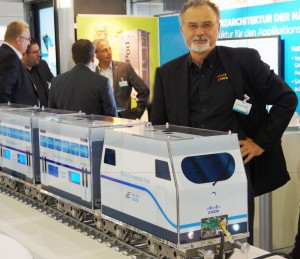 Visit Booth 156 to learn why Cisco UCS is the optimal platform for all your SAP Application needs. Make a pit stop at each of our demo areas to learn more about our Integrated Infrastructure, Big Data, and Internet of Things Solutions.






 With our house up for sale we turned attention to our budget. We headed straight to our current lenders website to see how much we could borrow but where I expected to find a lending calculator, I instead found a number for the contact centre.
 To illustrate this, 45 seconds later I had completed a search* which returned 385 mortgage products from 32 different lenders. Impressive, but most of all was a price differential of only £39 per month between the first 100 products. To give that some context, of the 28 utilities companies who provide energy in our area, we could pay anything up to £46 a month more for exactly the same service depending on who we chose.
 Well, enough of the Cisco selling (though where would we be without it?!). What about results? Well, one of the key benefits has been the ability to restore power faster in an outage. This actually improves safety for customers (imagine the dangers at nighttime od unexpected lights out). The important thing is that the system not only detects outages and enables faster response, but isolates the outage to a smaller geographic area – so less customers are affected.