Why is now the time to migrated from your proprietary RISC/UNIX platform to Cisco UCS with Red Hat Enterprise Linux. There are several reasons: Technology transitions are driving new demands on data center and IT infrastructure. These new applications and computing models have standardized on x86 architecture while aging RISC/UNIX infrastructure doesn’t provide the performance or the flexibility required to support the needs of the business. IT departments may also be experiencing the pain of RISC/UNIX maintenance and software licensing costs while their budgets are flat or shrinking. At the same time, overarching uncertainty about RISC/UNIX futures foreshadowed by rapidly declining market share combined with dropped hardware and software support. According to the most recent IDC Q42014 server tracker, RISC revenue has dropped 40% from 2012 to 2014 while Cisco UCS revenue has increased 80%.
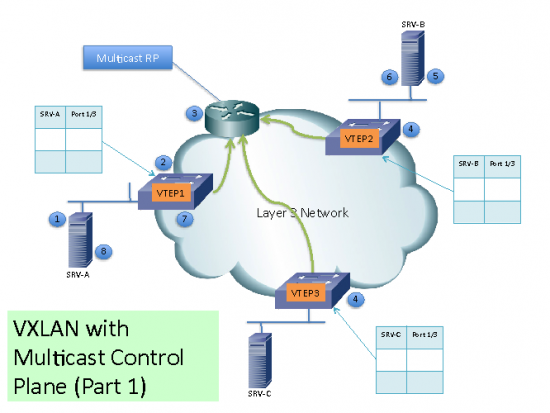
With the adoption of overlay networks as the standard deployment for multi-tenant network, Layer2 over Layer3 protocols have been the favorite among network engineers. One of the Layer2 over Layer3 (or Layer2 over UDP) protocols adopted by the industry is VXLAN. Now, as with any other overlay network protocol, its scalability is tied into how well it can handle the Broadcast, Unknown unicast and Multicast (BUM). That is where the evolution of VXLAN control plane comes into play.
The standard does not define a “standard” control plane for VXLAN. There are several drafts describing the use of different control planes. The most commonly use VXLAN control plane is multicast. It is implemented and supported by multiple vendors and it is even natively supported in server OS like the Linux Kernel.
This post tries to summarize the three (3) control planes currently supported by some of the Cisco NX-OS/IOS-XR. My focus is more towards the Nexus 7k, Nexus 9k, Nexus 1k and CSR1000v.
Each control plane may have a series of caveats in their own, but those are not covered by this blog entry. Let’s start with some VXLAN definitions:
(1) VXLAN Tunnel Endpoint (VTEP): Map tenants’ end devices to VXLAN segments. Used to perform VXLAN encapsulation/de-encapsulation.
(2) Virtual Network Identifier (VNI): identify a VXLAN segment. It hast up to 224 IDs theoretically giving us 16,777,216 segments. (Valid VNI values are from 4096 to 16777215). Each segment can transport 802.1q-encapsulated packets, theoretically giving us 212 or 4096 VLANs over a single VNI.
(3) Network Virtualization Endpoint or Network Virtualization Edge (NVE): overlay interface configured in Cisco devices to define a VTEP
Last month, I attended the International Association of Outsourcing Professionals (IAOP) Outourcing World Summit in Phoenix, Arizona. I had the chance to glean fresh insights from industry-leading practitioners and get a global view from sourcing executives.
Though there has been an evolution in the outsourcing industry, one thing has not changed: outsourcing is a winning strategy. In the recent study from IAOP & Information Services Group (ISG) Annual State of the Industry1 presented at the event, it stated that “Multi-sourcing as an outsourcing approach increased by 75% from last year’s percentage”. The predictions for 2015 also show continued growth: “51 percent of respondents in the survey said they expect to pursue more outsourcing opportunities during the year”.2
Multi-sourcing – where a customer uses several service providers to provide a single scope of outsourced services, is nowthe new norm in outsourcing. In today’s organizations, outsourcing is increasing and each additional outsourcing agreement makes it more difficult to holistically manage IT service & support.
A new way of thinking about SLA’s is required to make multi-sourcing effective
Service-level agreement (SLA) management is the process of negotiating, defining and managing the levels of IT service. SLA management is a key challenge that organizations face as part of outsourcing and it is becoming increasingly difficult with multi-sourcing.
Most organizations invest heavily to define SLAs. If you talk to the service tower owners themselves, fewer than half have know what SLA’s are actually in the contract. They also cannot recall all of the specific details that the increasing numbers of the agreements contain. So, there is a lot of work that goes into developing these structures but there is no framework established on how to govern them in an automated way.
As a result, most SLA management is reactive. Periodic reviews between buyer and vendors are based on summary performance data from the prior period. Data from vendors is typically inconsistent and inaccurate. I was speaking with a sourcing executive at a large financial services company a couple of months ago, and she reported that half of the meeting time spent with vendors on performance was used just to agree on what an accurate view of the data was. This hardly aligns to the dynamic nature of business today.
New Paradigm on Thinking about SLA’s
Imagine the ability to manage SLA’s with each of your providers in real-time with one service integration framework. In a workshop we held in New York with a number of large buyers and providers late last year, they highlighted that this would not only move the service management model from reactive to proactive, but would also enable a more collaborative working model – moving away from the “us vs. them” paradigm. In one multi-sourced organization we’ve implemented this model in, it has completely eliminated after-hours escalation calls and dramatically reduced resolution times. With an active SLA capability you can manage all of the multi-sourcing relationships from one “pane of glass” and get accurate service information in real-time, such as:
Overview of all your open cases per provider
Cases trending towards SLA violation that you can proactively take action on
Actual violations that require immediate attention
To be effective, this solution would need to be very easy to consume, showing only what really matters up front. Front-line managers don’t have time to browse hundreds of tickets when only looking for one affecting the SLA. This all sound promising but is it possible to achieve?
Transforming multi-sourcing with active SLA’s
We are pleased to announce the availability of Active SLA Management in the 7.0 release of Cisco ServiceGrid. With a highly innovative user experiences via a centralized dashboard and reporting capability for the connected multi-sourced ecosystem, you will gain real-time visibility & drill-down functionality for events trending toward or violating SLAs to enable a more proactive, end-to-end vendor management capability.
If you would like to know more, feel free to browse:
Retailers once had a pretty clear idea of who shopped where and how they did it. After all, there were not that many options available for shoppers. Consumers would see an ad or peruse a catalog, and then visit the physical store with the hope that their preferred item was in stock.
These days, retailers understand there is an entirely new kind of shopper. Indeed, since the advent of e-commerce, retail complexity has increased exponentially, and today’s digital consumer navigates a wide range of channels and potential shopping journeys.
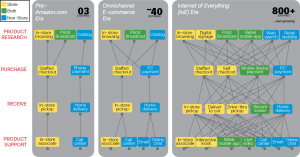
As a recent Cisco survey of retail trends discovered, e-commerce has added about 40 possible shopping options for a typical shopper. With the rise of the Internet of Everything (IoE) — the explosion in networked connections of people process, data, and things — potential shopping journeys will expand to 800 and beyond. Some of the new options coming into play could include mobile devices equipped for live Web engagements, checkout optimization, mobile payments, wearables, augmented reality, and drone delivery.
The variety of journeys available to shoppers is growing exponentially.
Source: Cisco Consulting Services, 2015
This sweeping digital transformation has dramatically altered the shopping behaviors of consumers, who now demand experiences that are contextual and hyper-relevant (enabling consumers to receive what they want, when and how they want it), whether in-store or out. As a result, retailers are reinventing their business models and rethinking much of what they once knew, including traditional customer segmentation.
Video: IoE in Retail: Hyper-Relevance through Consumer Context
Increasingly, we are entering a period that has been referred to as “post-demographic consumerism” in which consumption patterns are no longer defined by traditional demographic segments such as age, gender, location, income, family status, and the like. This presents a significant challenge to retailers already grappling with growing complexity in their operations.
For example, Cisco’s research reveals that Gen Y is far from monolithic. On one hand, Gen Y continues to accelerate the shift to online channels (faster than any other group): although 34 percent make more than half of all purchases online as they seek convenience and greater access to information, 54 percent would shop only in stores for the next month if they had to make a choice. Moreover, just as the physical store remains important to Gen Y, many seniors are shopping online or with mobile devices.
In short, consumer segments are increasingly fragmented and ephemeral. The sheer number of potential shopping journeys is growing exponentially, and the change is occurring faster than ever before. For an individual shopper, however, the journeys are also dynamic. Consumers are constantly shifting to other journeys as new innovations emerge — and faster than retailers can respond. Compounding this, the velocity of innovation is increasing as IoE dissolves traditional barriers (for example, through the low cost of app creation, the Kickstarter-style funding model, and so forth).
Since every retailer is unique, and there is enormous variation across categories, each retailer must define its own target segments, and then be prepared for the rapid evolution of new “microsegments.” Cisco is working with retailers to define target segments and prepare for the evolution of new ones.
To enable the customer outcomes that will determine the winners of the IoE era, most retailers understand that they need to know their customers as never before and, critically, possess the requisite business agility to adapt. Fortunately, IoE and consumer analytics technology provide the platform to truly understand, engage and respond to their customer.
Analytics is a key competitive frontier in the IoE era, enabling retailers to provide consumer experiences, offers, and interactions that are contextual, relevant, and timely. Moreover, analytics empowers the retailer to respond dynamically to constantly changing customer behavior.
To succeed in this area, retailers need a technology strategy that captures data at the “edge” of the network — from mobile devices, sensors, video cameras, and the like — and analyzes it locally, in real time, to respond to fast-moving opportunities. By leveraging analytics and other key elements of IoE such as video and mobility, retailers can drive greater efficiency in each customer journey, offer real-time savings, and create a more relevant customer engagement.
As shopper segmentation blurs, analytics is critical to understanding the new digital customer. Old or young, rich or poor, all customers have value and want to interact with retailers in new, hyper-relevant ways. IoE-driven solutions are the way to do it.
Complexity is easy. Simplicity is hard. Solving operational complexity has been one of the hardest challenges in data center and cloud build-outs. For customers, the challenge of interfacing with different infrastructure vendors and driving integration has been a significant hurdle in the past, slowing application rollouts. The success of the integrated Infrastructure approach has largely been due to focused efforts on behalf of multiple vendors to come together to solve this challenge, resulting in a new hyper-growth market category being created. According to IDC’s Q3CY2014 integrated infrastructure tracker, the integrated infrastructure market has grown to ~$5.5B annually and most analysts have this market growing at 30+ percent YoY.
A shining example of solving this huge challenge has been VCE’s Vblock offerings that have been on a stellar growth path. Nothing speaks better of this than customer success and market traction it enjoys –
VCE surpassed a $2 billion annualized demand run-rate for Vblock and Vblock-related products and services exiting Q3 2014.
Its sixth consecutive quarter of greater than 50% year-over-year demand growth.
Clear leader in integrated infrastructure systems according to Gartner and IDC
With its UCS Integrated Infrastructure solution approach Cisco has been literally in the midst of all of this action. Cisco UCS, Nexus and MDS switches have been key components of the integrated offering along with innovations from the other companies. Customers have loved the operational benefits as they scale their cloud build outs. Last October next-generation “ACI-ready” Vblocks were introduced allowing customers to further accelerate their journey to SDN and cloud.
And now it is time to raise the bar even further. As VCE introduces VxBlocks in addition to the flagship Vblock offering, as well as vScale architectures and VCE Vision 3.0, Cisco and VCE are together committed to build on the past success as we align our sights to the future –
VCE and Cisco are committed to drive open, future proof converged infrastructure solutions through the GA shipments of ACI-Ready Nexus 9K enabled Vblocks and Cisco UCS. We already have 100+ joint customers in production.
VxBlocks will be featuring Nexus 9K as their default networking platform to support all their different flavors of SDN within their integrated infrastructure, even as Cisco UCS will continue to be their default compute platform. As of Cisco’s last fiscal quarter, there were over 1700+ Nexus 9000 and Cisco ACI customers, making the Nexus 9000 one of the highest growth products within the company even as new Cisco APIC customers shot up to over 300+ within two quarters. Cisco UCS has been on a tear in terms of market share worldwide and has continued to set world record benchmarks.
The Vscale Fabric is ACI enabled and includes the Nexus 9000s as the networking component of the fabric. This allows customers to choose ACI and get the added benefits of such. If a customer chooses to deploy ACI in the fabric then the APIC would be a deployed as an add-on. The Vscale architecture also uses MDS as the SAN fabric enhancing the convergence capabilities.
What Cisco Application Centric Infrastructure (ACI) Brings to Vblocks and VxBlocks:
Cisco ACI is all about operational flexibility and choice. For example, customers can enjoy the benefits of the Nexus 9396 in a standalone mode, or deploy it as an ACI leaf configuration. This is called “ACI-ready”. They can also be “ACI-enabled”, which means the Nexus 9396s are ACI leafs connected to spines and APIC clusters all part (provisioned and supported) of a Vblock or VxBlock.
#CiscoChampion Radio is a podcast series by Cisco Champions as technologists. Today we’ll be talking about Collaboration and Cisco Unity Connection with Cisco Technical Marketing Engineers Chris Ward and Chris Barlow.
Highlights What is Cisco Unity Collaboration?
Unity Collaboration and Secure Messaging
Unity Connection and compatibility with existing solutions
Video greeting feature and media capabilities on Unity Connection
Benefits of Unity Connection over other solutions
Cisco native SRSV and Unity Connection
Connecting Dark Assets: An ongoing series on how the Internet of Everything is transforming the ways in which we live, work, play, and learn.
If you’re like me, you usually arrive at the airport for a business trip with no time to spare. Often, I find myself rushing to the airport from a meeting that ran late, or arriving at the crack of dawn after not getting enough sleep. So the last thing I want to deal with is trying to catch the shuttle from long-term parking — or even finding a space in the short-term lot. Some airports now offer valet service, but I’m always hesitant about picking up a scratch or dent when I give my keys to the parking attendant.
But if I were flying out of Düsseldorf, Germany, it would be a different story. This past summer, Düsseldorf introduced ParkingPLUS, which uses a valet robot called “Ray” to park your car safely and efficiently — with no risk to your paint job! Travelers just drive into the ParkingPLUS lot, and Ray takes it from there, measuring the vehicle and picking it up with a forklift-like mechanism. The robot transports the car to a back parking area, efficiently squeezing it into a tight space without trouble. And for travelers, the drop-off point is just a quick walk to the terminal.
Not only is Ray a very skilled parking attendant, it’s also a great example of how the Internet of Everything (IoE) “lights up” dark assets by connecting the previously unconnected. Because ParkingPLUS is connected to the airport’s flight data system, Ray knows how long you’ll be gone. This enables Ray to park your car in the best spot for easy retrieval. And if you change your return flight, you need only enter your new flight information into a mobile app to let Ray know when to have your car ready.
The Düsseldorf airport is the first real-world application of this technology from German company Serva Transport, which does not want to stop with airport parking. By installing its system into busy and congested urban parking garages, the company estimates it can increase parking capacity by 60 percent — saving time, energy, and aggravation as it reduces congestion and improves productivity.
But I’d be happy with the airport version, especially if it came to San Jose! With a connected robot valet, my travel days would be less stressful and more productive. The robot parking valet is just one more way IoE is lighting up dark assets — even dark parking garages.
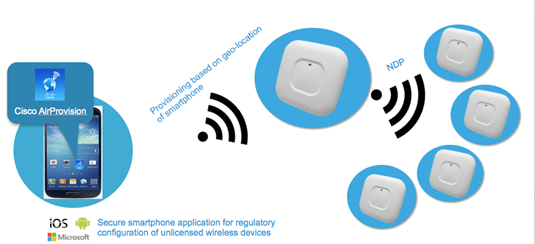
Cisco develops the highest quality Enterprise-class Aironet Access Point Series that are always fully compliant with local wireless regulatory laws and requirements, while maximizing performance (i.e., max Tx power available) and radio channel availability per the local regulatory domain. This is in contrast to the competitive landscape where other vendors tend to offer a “one size fits all” AP or WLC SKU or regulatory domain specifications, for example, which offers the “lowest common denominator” in terms of performance and channel availability for all countries, say, between Singapore and Brazil. And every regulatory domain from FCC (US) and ETSI (EU) to NOM (Mexico) and ANATEL (BRAZIL), to name but a few, gets its respective specs optimized on every Cisco AP. However, as more spectrum gets opened by many of these regulatory bodies, the complexity of how to allow these changes to be realized by users of these products and keeping the solution simple can actually become quite a complex task. There are many different ways to implement a solution, each with its respective limitations to adhere to the requirements as well as these changes. Furthermore there are many liberties other vendors take against the requirements. Our corporate compliance team however takes regulatory requirements very seriously and fully adheres to the letter of the law. Continue reading “Universal Citizen a.k.a. Universal AP: Regulatory Compliance Simplified”
Jyoti’s life journey thus far defines the word FEARLESS. Jyoti’s mother had a huge impact throughout her life beginning in early childhood. As a retired Dean of Mathematics from a University in India, she was a well-regarded Professor of Mathematics and contributing author to the Master of Mathematics curriculum in India. All of Jyoti’s mom’s accomplishments were achieved because she never took “no” for an answer, even when it felt overwhelming or unachievable. She opposed family traditions prohibiting women from attaining a higher education and subsequently earned that opportunity for herself and her sisters. She viewed education as the foundation for progress and not only for herself, her sisters, her own kids, but of course for complete strangers too by supporting and financing education for household help and in low-income communities. Her acts of selfless pursuit of knowledge inspired Jyoti from childhood and instilled an obligation to carry forward the legacy. Jyoti says “I will always be an advocate for education. It is a legacy I choose to carry”.
Jyoti joined Cisco in 2006 and is currently a Senior Manager in IT leading a strong, 44-person team responsible for managing IT Innovation, Strategy, and Planning. Within the first one and a half years of her job in Cisco, she realized an opportunity for IT to grow as an innovation partner for the company. Jyoti took a fearless risk and re-wrote her own job description, leaving behind all that she was comfortable with and blazed a trail into the unknown. She inherited a small lab with 2 servers and a few resources which became the genesis of an Innovation and Research organization that today supports many revolutionary campaigns across the company. She believes that companies of tomorrow will be built upon the democratization of knowledge, decisions and work. Today, Jyoti’s organization is thriving and making a bigger impact on the company because of her FEARLESS actions. You can read about her leadership philosophy here.
In addition to her day job, Jyoti actively mentors and volunteers her time to help women who are early in their career. She is an active partner for the community relations team supporting their US2020 goals by hosting STEM related workshops. She is on the leadership board of ICON ERO and is a partner to other EROs such as Connected Women and CONEXION. It’s also through these relationships that Jyoti reinforces the same passion and value for education and “challenging the norm” instilled from her mother. In her free time, Jyoti enjoys painting, sketching, reading, nature/outdoors, and traveling with her family. She affectionately refers to herself as “artist by heart, geek by profession.”
Have you registered for the Women of Impact Conference yet? For more conference details or registration information, click here:
Share with us with your stories and pictures how you can Be Fearless, tweet us @Cisco_WOI or find and Like us on Facebook on the Cisco Empowered Women’s Network Facebook page! Don’t forget to use the #WOI2015 hashtag!


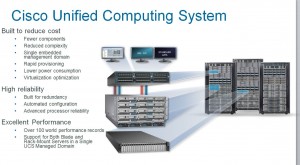 Enterprise Linux. There are several reasons: Technology transitions are driving new demands on data center and IT infrastructure. These new applications and computing models have standardized on x86 architecture while aging RISC/UNIX infrastructure doesn’t provide the performance or the flexibility required to support the needs of the business. IT departments may also be experiencing the pain of RISC/UNIX maintenance and software licensing costs while their budgets are flat or shrinking. At the same time, overarching uncertainty about RISC/UNIX futures foreshadowed by rapidly declining market share combined with dropped hardware and software support. According to the most recent IDC Q42014 server tracker, RISC revenue has dropped 40% from 2012 to 2014 while Cisco UCS revenue has increased 80%.






 #CiscoChampion Radio is a podcast series by


 Guest Blog and Interview by Christine Morgner