Avatar

Every single day, I’m reminded that a digital revolution is taking place—from researching local coffee places on the dashboard of my car to ordering coffee on my mobile device—it’s clear that our lives are becoming more digitized. This is also apparent for the businesses and industries that manufacture the goods that we use everyday. In order to compete today, manufacturers must respond to complex and constantly changing demands from their customers. That requires the agility, rapid innovation, and fast execution that only digital manufacturing can deliver. Too many manufacturers, however, still lack these critical capabilities and suffer from fragmented and siloed organizational structures.

This was reinforced by new research from Cisco on the current and future state of digital disruption in manufacturing. The study included economic analysis, interviews with manufacturing industry thought leaders, and a survey of more than 600 senior leaders from 13 countries, representing both industrial machine builders and end-user manufacturers.

Our research confirmed that manufacturers get it. They understand that a digital revolution is taking place, and they want to be part of it. Seventy-nine percent believe that digital disruption will drive a moderate to major impact at their companies in the next three years. Moreover, they see digital technologies such as cloud, IoT, and analytics as having the biggest impact on their production — not more manufacturing-centric technologies such as robotics and 3D printing.

However, in terms of driving new value, many are faltering. Their service strategies, for example, are seen as a key opportunity for new revenue, but they are not driving expected levels of growth.

Digital business transformation is the solution, but it can’t be done in a piecemeal fashion; it must be implemented across the entire organization and beyond, throughout the ecosystem. Analytics, cloud, machine-to-machine connections, and collaboration tools all enable new opportunities for sharing data insights. Getting those insights to the people (or machines) who need them most, on the other hand, can be challenging. In this context, silos — between IT and operational technology (OT), engineering and design, and so forth — are the enemy to progress.

Continue reading “As Manufacturers Go Digital, Customer Value Expands”

Authors

Chris White

Senior Vice President

IoT Global Sales

Avatar

Recently, I participated in the panel on Internet of Things (IoT) security as part of the Automation Perspectives media event hosted by Rockwell Automation, just prior to Automation Fair 2015 in Chicago. It is clear that the ability to deal effectively with security threats is the No. 1 make-or-break factor for IoT adoption. With this reluctance to implement IoT, companies will not benefit from the growing number of powerful IoT use cases that are emerging across all industries, which includes the digital revolution in manufacturing, where there is an identified 12.8 percent profit upside over three years for manufacturers that digitize.

IoT is now part of the very fabric of industry and the public infrastructure, including such essential services as transportation, the power grid, the water supply, and public safety. When these systems are compromised, the damage can go far beyond financial loss. Some examples in years following the Great Recession:

  • 2008 – A 14-year-old Polish boy hacked a local tram system, disrupting traffic, derailing trams, and injuring 12 passengers
  • 2009 – Due to a failure in the automated control system, a Washington D.C. Metrorail train struck the rear of a stopped train, resulting in death and injury
  • 2014 – An overflow of wastewater at a water treatment plant was due to suspected unauthorized employ access

In recent years, there have also been hacks on nuclear power plants, transportation systems, and connected cars. No one wants their company to show up on the front page of the paper as a cyberattack victim. In addition to the physical impacts, attack vectors on IoT security can cause losses that are less immediately perceptible—but very real and lasting—including downtime, brand damage, breach of trust, and theft of intellectual property.

Continue reading “Job One: Securing IoT”

Authors

Maciej Kranz

Vice President and General Manager

Corporate Strategic Innovation Group

Avatar
London Eye
London Eye

This past week I attended the 2015 Gartner Data Center Conference in London.  This is always a great conference to learn from, although it always pays to look out for some of the hype too. There were key note presentations from the sprinter Michael Johnson and from previous UK government Vince Cable, which presented a rather concerning potential scenario of how the economies of the UK and Europe could evolve over the next few years.  The IT topics covered ranges from Bi-modal IT to DevOps to Software Asset Management (SAM) to SDN to Cloud and IT Operations Management (ITOM).  Here are some of my key learnings, in this “part 1”, comprising a few observations, and a sceptical view of some of the hype that I came across.

Continue reading “Ten Learnings and Observations from the 2015 London Gartner Data Center Conference (Part 1)”

Authors

Stephen Speirs

No Longer at Cisco

Avatar

The Digital Economy is transforming the way that organizations operate. Deploying a secure, trustworthy infrastructure is no longer enough. Security must be designed into all facets of an enterprise’s network and its third party ecosystem. At the same time, enterprises of all sizes must shrink the attack surface. And, foster an open, security-aware culture, internally and throughout their value chain.

Given Cisco’s commitment to being trustworthy, transparent and accountable, I have been thinking quite a bit lately about the importance of collaboration.

Partnering for improved security

Ensuring that your value chain embraces security wholeheartedly requires a commitment to collaboration. Embracing that commitment can enhance and accelerate security innovation. A true partnership that focuses on security can also create opportunities for previously unexplored operational excellence. Continue reading “For Value Chain Security Collaboration, Use a Carrot With Your Stick”

Authors

Edna Conway

Chief Security Officer

Chief Security Officer, Global Value Chain

Avatar

Every day, we have the opportunity to make the world a better a place. Here at Cisco, we take that opportunity to heart and find ways to multiply the impact we can make. For the past 15 years, Cisco has helped raise more than $40 million and deliver nearly 160 million meals as part of its global hunger relief efforts. This year, we created a new employee giving program that empowers employees to provide direct aid to those with uncertain access to life’s necessities—to “Be the Bridge” for those in need.

As part of this more expansive initiative, we’ve set up partnerships with more than 400 nonprofit organizations in 99 cities and 33 countries around the world that provide not only food, but shelter, water access, nutrition, and emergency care to those most vulnerable, globally and locally. Employees can give to global organizations such as Doctors without Borders, Habitat for Humanity, Water for People, Red Cross International, or CARE; or give to a homeless shelter, food kitchen, or emergency care organization in their local communities, just to name a few. And Cisco is matching any donation of US$50 up to US$10,000 to double the impact.

Continue reading “Be the Bridge, Change a Life”

Authors

Tae Yoo

No Longer with Cisco

Avatar

We shared our vision for the future of networking over a year and a half ago.

Today, we continue to execute on our vision and strategy. Our customers and partners continue to derive the value of these innovations to the fullest potential.

We are extending our leadership in SDN with the most complete solution portfolio today, driving choice in automation and programmability for our customers. Solutions based on open APIs, standards and a broad ecosystem for three approaches: programmable networks, programmable fabrics and a turnkey approach with Cisco Application Centric Infrastructure (ACI).

Cisco ACI continues its focus on three primary areas: (1) automation through policy; (2) consistent support for physical, virtual and containers; and (3) open, standards-based with embedded security. Add a centralized pane of management, scale, and a broad and deep ecosystem, and you have 1100+ satisfied customers, and the 2015 Best of Interop in SDN category (my sales plug…).

The future of networking is here. We’ve created an infrastructure that is hypervisor agnostic, with the most advanced security enforcement capabilities on the market today. Manage your entire fabric with a familiar user interface. And manage policy across any endpoint group – physical, virtual, and containers with a consistent security posture.
https://instagram.com/p/-2QAJNNNqv/
Continue reading “Executing on Our Vision and Strategy: The Future of Networking for an Application Centric World”

Authors

Soni Jiandani

Senior Vice President

Marketing for the Insieme Business Unit at Cisco

Avatar

This is part of a series on the evolution of the Cisco Collaboration Cloud platform, exploring the technical and design principles behind its unique architecture.

So far in this series my colleagues have talked about various elements of our Cisco Collaboration Cloud platform. Rowan mentioned its origins and the problems we’re trying to solve. Jonathan discussed our approach to architecture for a platform that delivers innovative experiences for companies of all shapes, sizes, and deployments. And Jens hit home on user experience (no surprise from the guy who owns all of our user-facing apps).

My platform is about the platform itself. I believe that simple and open APIs unleash the power of a platform in ways that accelerate workflows and business processes, that result in driving user engagement.

I’m the new GM responsible for the Cisco cloud collaboration API strategy. My team cares most about three things when it comes to evolving our platforms for developers:

A Great Developer Experience: First and foremost, our goal is to make our APIs easy-to-learn and use. Developers want APIs to be comprehensive, yet simple so they can focus on their own applications rather than the complexity of a platform. We’ve gone to extreme lengths to make our APIs elegant, abstracting away the complexities of the underlying platform.

But even the smartest coders need help so our Tropo APIs are surrounded by handy quickstart guides, sample codes, and examples written by our support team, who are developers themselves. Our APIs are hosted on a free, open portal and enhanced by Cisco DevNet training and sandbox resources. Most important, we’re always available to chat. You can easily engage with us through a variety of channels including industry events and social media. Continue reading “Building a Developer Ecosystem”

Authors

Jason Goecke

Vice President & General Manager

Cognitive Collaboration & Cisco Spark Platform

Avatar
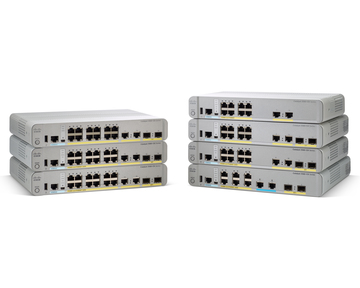
Catalyst 3560-CX switch

You’ve had an older Cisco switch working its magic in your data center for year. While it’s still doing an admirable job, in order for your network to move forward, you know that you’re going to have to upgrade sooner rather than later.

But where do you begin the upgrading process? With so many switch options, how does a clear path from what you have now to what you need manifest itself? There are a bonanza of Cisco switches to choose from, what makes sense for your organization?

You don’t have to travel down this path blindly. Cisco has mapped out the options for upgrading your old equipment to new switches. And we’re not going to give you just one choice, the new switches fall into two categories:

  1. Lead Switch – is a best-in-class switch that has a high-end differentiated set of features in a given category. This switch has the most unique features compared to the competitors in its category.
  2. Base Switch – is an entry-level switch in its category and is also known as foundation switch. It has a lower price and a limited feature set, but it’s still a better option than our competitors.

Campus Access Switches Upgrade Path Continue reading “Ready to Upgrade Your Campus Access and Campus Backbone Switches?”

Authors

Yan Ye

Business Development Manager

Enterprise Portfolio, Software, and Campus Switching

Avatar

Companies are embracing the idea of the digital enterprise as an “inevitable movement toward a ‘digital center’ in which business models, offerings and value chains are digitized to the maximum extent possible.” Digitization offers promising prospects for improved customer experience, closer employee engagement, and more agile IT and business operations. And software innovation is at the heart of what makes it all happen.

Just what is digitization? At its simplest level, digitization is about bringing together connected things and processes through automation and analytics to provide new insights and value. It can be offering a traditional service in a new online and interconnected way such as mobile banking. Or it can be offering an entirely new service based on unique insight harnessed from a network of devices, or from an active series of transactions, such as an early-warning fraud-alert service. As consumers, we experience the benefits of digitization every day in the many mobile and online apps we use.

And this trend is behind the emergence of new companies built on digitization that have quickly risen to multi-billion dollar valuations. Tom Goodwin of TechCrunch writes:

“Uber, the world’s largest taxi company, owns no vehicles. Facebook, the world’s most popular media owner, creates no content. Alibaba, the most valuable retailer, has no inventory. And Airbnb, the world’s largest accommodation provider, owns no real estate. Something interesting is happening.”

What all of these companies have in common is a digitized business model that allows them to deliver a new level of customer experience through innovation in software. Winning companies will delight and amaze their customers. Customer experience is the new competitive battlefield.

Through software, Cisco can help companies take advantage of these opportunities. Cisco Collaboration and Cisco ONE mobility software for example can help a retailer deliver an unparalleled customer experience. Let’s say a shopper is using her smartphone to browse a retailer’s web site. Cisco software innovation enables “Click to chat” with video capabilities so she can get personalized, live help in making a decision. And with Cisco Connected Mobile Experience (CMX), the retailer can better understand the shopper’s exact preferences and profile to help them locate the closest store that carries the item, generate promotions, etc.

Shopping is just one of the many areas in which winning businesses are continually blurring the physical and digital boundaries. Please join the discussion and let me know if there are areas in your business that you’ve digitized successfully, and if you have others in the works.

JB


Authors

John Brigden

Senior Vice President

Offer Monetization Office