


Edge computing has evolved from a back-end support function into a strategic priority that drives real-time decisions, reduces latency, and powers AI at the source of data. For years, many edge sites were treated as smaller, remote versions of the data center. There were a few applications, a few servers, limited local IT support, and a lot of operational compromises. That model worked when the edge was mainly about branch connectivity, local transactions, or a handful of business applications.
But older edge network models were never built for AI and other advanced, data-intensive applications. They lack the compute power, low latency, and real-time data processing that AI workloads demand.
The modern edge network platform has arrived and it’s called Nutanix Cloud Platform with Cisco Unified Edge. This AI-ready compute system simplifies distributed operations with edge-optimized hardware, centralized visibility, remote deployment, and full-stack lifecycle management.
Changing workloads, shifting requirements
AI inference, computer vision, real-time analytics, operational technology, and industry-specific applications are changing what enterprises need from edge locations. Retail, manufacturing, healthcare, and financial services industries all have emerging use cases where data is created locally, decisions need to happen quickly, and sensitive information cannot always be sent back to a central cloud.
The edge strategy is evolving, becoming the foundation for AI, operations, and infrastructure modernization—all at the same time.
The legacy edge network was designed around a narrow set of low-compute, latency-tolerant workloads—such as data collection, local caching, POS transactions, and basic industrial monitoring. It had to be reliable and manageable, but not necessarily powerful or cloud operated. It needed to be secure, but the operating model often depended on manual processes, long maintenance windows, and onsite intervention when something went wrong.
Modern edge environments have far different requirements (Figure 1). Three forces are driving this evolution: low latency, data sovereignty laws, and bandwidth costs. When an AI model is inspecting a product on a manufacturing line, detecting a safety issue, or triggering a fraud alert, milliseconds matter, so high latency is unacceptable. Many industries also need to keep data within specific sites, regions, or organizational boundaries to comply with data sovereignty regulations. And with edge locations generating large volumes of video, sensor data, and telemetry, moving all raw data upstream is expensive and often unnecessary.
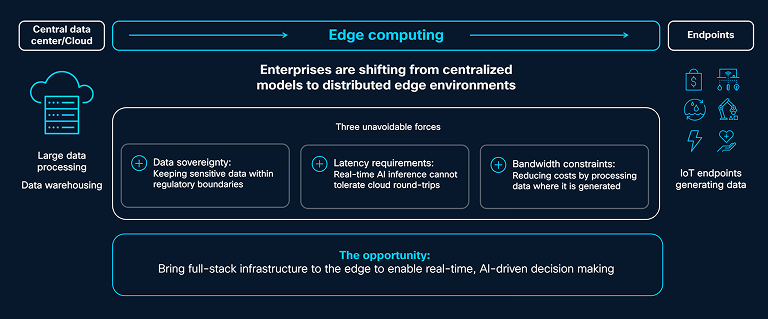
Figure 1. The new operational center of gravity—the edge
The edge network infrastructure must now be powerful enough for AI, simple enough for distributed operations, secure enough for exposed environments beyond the reach of centralized IT oversight, and flexible enough to support workloads that continue to evolve in scale and complexity.
Key constraints shaping the modern edge
Edge locations often come with constraints like limited space, power, and cooling; less controlled and secure physical environments; and little or no onsite IT expertise. These locations may be in retail stores, clinics, branch offices, warehouses, or remote operational environments versus traditional data centers.
IDC reports that 44% of organizations deploying AI-intensive workloads at the edge say they need more powerful servers, while 43% cited difficulty integrating systems as a top deployment challenge. IDC also found that one in three edge projects costs more than originally planned, often because inconsistent management practices can result in edge networks drifting out of configuration, falling behind on patches, and becoming prone to outages.
Enterprises need more than edge hardware. They need an edge operating model that integrates compute, storage, analytics, and security with centralized visibility, remote deployment, and full-stack lifecycle management.
It’s now all available with the introduction of Nutanix Cloud Platform with Cisco Unified Edge.
A full-stack platform for distributed workloads
Cisco Unified Edge with Nutanix brings together Cisco edge-optimized hardware, Cisco Intersight management, and the Nutanix Cloud Platform in a co-engineered system designed for distributed environments (Figure 2). Together, this integrated stack helps enterprises standardize edge deployment and operations across sites, with centralized visibility, lifecycle management, security, and support for both VM-based and AI/cloud-native workloads.
Edge-optimized hardware
Cisco Unified Edge includes purpose-built hardware for edge locations. The platform uses a compact 3RU chassis with support for up to five modules, front-serviceable components, redundant power and cooling, integrated high-speed internal networking, and physical security features such as a lockable bezel. Compute nodes are based on Intel Xeon 6 processors, with high memory capacity, Non-Volatile Memory Express (NVMe) storage, and GPU-ready configurations for AI inference.
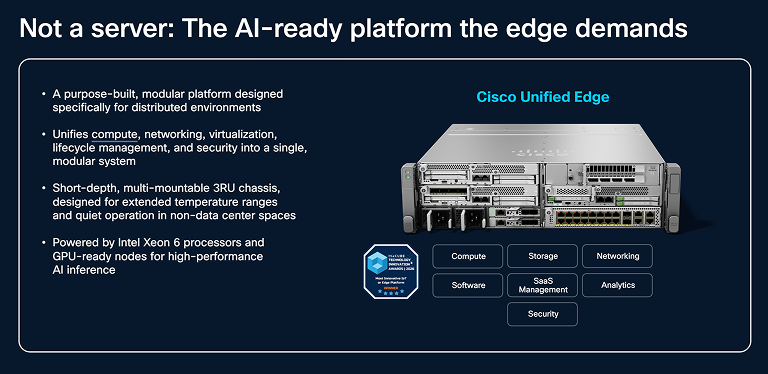
Figure 2. The new AI-ready platform for edge
Software-defined infrastructure from Nutanix
Nutanix provides a unified platform for running both virtual machine–based and containerized applications. Nutanix Acropolis Operating System (AOS) and Acropolis Hypervisor (AHV) deliver integrated compute, storage, virtualization, and management services, enabling organizations to deploy compact edge environments. For cloud-native workloads, Nutanix Kubernetes Platform (NKP) provides enterprise Kubernetes management and orchestration, while the broader Nutanix Cloud Platform supports a consistent operating model for traditional and modern applications across distributed edge locations.
Remote deployment and centralized visibility
Cisco Intersight and Nutanix Prism Central address one of the most persistent edge challenges: deployment and management without any onsite IT personnel. Systems can be shipped to sites with Nutanix AOS and AHV pre-installed from the factory and deployed remotely. Cisco Intersight delivers a unified operational view of Cisco hardware and the Nutanix software stack, helping IT teams monitor and optimize distributed edge and core infrastructure from a single interface. Nutanix Prism Central and Foundation Central simplify cluster deployment, management, and lifecycle operations.
Unified lifecycle management
The integration of Nutanix Life Cycle Manager with Cisco Intersight enables coordinated firmware and software upgrades, including rolling updates designed to reduce disruption (Figure 3). That matters because edge risk often accumulates without notice through missed patches, inconsistent firmware, configuration drift, security vulnerabilities, and unrecognized hardware compatibility issues. A unified lifecycle approach turns maintenance from a reactive exercise into a repeatable operating discipline.
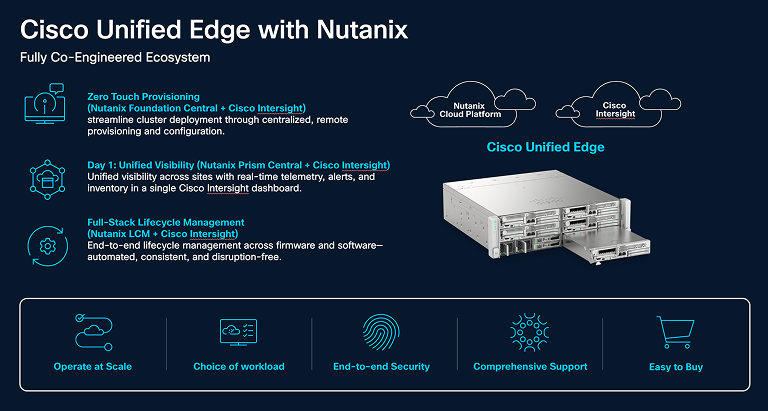
Figure 3. Fully co-engineered edge solution
Edge for AI and core enterprise workloads with built-in security
Nutanix Cloud Platform with Cisco Unified Edge brings AI-ready compute closer to where data is generated. GPU-ready nodes can support inferencing use cases such as computer vision, quality inspection, fraud detection, and operational analytics. NVMe storage supports local data processing, integrated internal networking keeps node-to-node traffic fast and local, and the modular chassis gives organizations flexibility to evolve configurations as workloads change.
Nutanix Cloud Platform with Cisco Unified Edge allows AI workloads to coexist with the traditional workloads that continue to run the business. This is crucial because many edge sites will not move to an AI-only architecture. They will run point-of-sale systems, local databases, virtualized applications, network services, analytics, and AI inference side by side. HCI is a strong fit because it reduces infrastructure sprawl and provides a consistent platform across workload types.
Cisco Unified Edge combined with Nutanix HCI provides security with a layered approach. Features like a lockable bezel, front-accessible components, tamper-aware and resilient hardware design help protect the physical system. Nutanix HCI provides cluster resiliency and high availability for edge workloads. Intersight helps central teams track advisories, field notices, inventory, role-based access, audit logs, and configuration consistency.
For organizations with strict data sovereignty or disconnected operations requirements, Cisco Intersight can also be deployed as a private virtual appliance. That flexibility matters because the edge is not one operating model. Some sites are cloud connected. Some are bandwidth constrained. Some are regulated. A practical edge platform like Cisco Unified Edge supports those different models through one platform, without the need for other specialized tools.
One platform. Every site. Zero compromises.
The edge is no longer a remote afterthought. It’s where AI runs, where data is generated, and where business decisions are made in real time. But realizing that potential requires more than powerful hardware. It requires a co-engineered, full-stack platform that is simple enough to deploy without onsite IT, secure enough for uncontrolled environments, and flexible enough to support workloads that will continue to evolve. Nutanix Cloud Platform with Cisco Unified Edge delivers exactly that—bringing together edge-optimized compute, software-defined infrastructure, centralized lifecycle management, and AI-ready configurations into a single, integrated system built for the way enterprises actually operate at the edge.
Read the IDC Edge Spotlight Report on unified edge infrastructure modernization and the Cisco partnership with Nutanix.
Additional resources:


