Imagine being responsible for 675 trillion euros worth of security transactions every single year. And on top of that, making sure that all involved accounts are secure and up to date. That’s the everyday job of a financial services customer of the UK-based Cisco partner, Metsi.
Around the world, thousands of institutions rely on this clearinghouse for their transfers. That’s because this industry giant handles the hard stuff behind transactions, like stock purchases and sales and other security settlements. And clients expect them to be fast and precise.
But that’s difficult to do when a lack of automation and disconnected backend systems are slowing things down. With so many vendors and systems at work, the financial services customer was in need of a way to optimize efficiency across the board.
Metsi says…
They brought in our team at Metsi for a four-month pilot. As a Cisco Integrator, we were ready to show them what we could do. We brought in the Cisco Process Orchestrator and open software APIs. That way, they could work within a single orchestration layer. And on the user end, the financial customer was then able to offer a new self-service enterprise portal for easy account access for their clients.
With faster integration, quicker network processes and cut IT costs, we were an easy choice for the financial powerhouse. After our pilot, they were ready to adopt and expand on our solutions—including ONE Enterprise Cloud Suite for the added security of a private cloud.
There is a poem by John Donne that I have always liked. It begins:
“No man is an island entire of itself; every man is a piece of the continent, a part of the main”
What I like about it is the compelling message that, as human beings, we are part of something bigger than ourselves, and that is humanity. I get the same feeling when talking about a community, and why is it important to be a part of one. The question here is what exactly is a community? The answer might seem simple, but it is not. Let me tell you my story and why I appreciate so much the community around Cisco DevNet.
I am a networking engineer by heart. I took my first steps in this area sixteen years ago as a student of the networking academy. It was love at first sight, although I always joke that it was my destiny becasue my grandfather held jobs as a firefighter and a telegraphist – so the obvious path was becoming a network engineer in charge of the communications and solving emergencies.
I was very pleased with my role as a networking engineer specialized in Cisco technologies and learning new stuff frequently. I loved the CLI and could not get enough of it. However, almost four years ago, I began a new adventure that took me into a (for me) unexplored area … software development.
It was not easy. I had to acquire a whole new set of skills, and it felt like an impossible task. In the beginning, I was alone, but thankfully I was able to participate in the first DevNet Zone in Cisco Live US 2014 in San Francisco. It was, without a doubt, the kind of help I needed.
It was my first encounter with the DevNet community, which at that moment was mainly Cisco employees explaining the new program and getting people involved. I got the guidance I needed from that team, and it made a tremendous difference in my new role as the lead networking developer at my company. However, after the event, I still felt alone. The experience during Cisco Live was excellent, and the new, developer-oriented web site – developer.cisco.com – was a great resource. But I needed the same guidance as in the event from the web page.
That whole year was a great learning experience for me. I spent a lot of time on the web site, reading new information. Fast forward a couple of years and the improvement in the web site was just astonishing, not only in the documentation but more importantly with new resources like the learning labs, learning tracks, and the DevNet sandbox. The same learning resources you had during huge events like Cisco Live, you could have in your home accessing the web page.
Still, something was missing. The thing I valued the most during the events was talking to the Cisco experts. They provided guidance, advice and shared experiences. That is information you do not get from a document. That is the human part you do not get from a pdf.
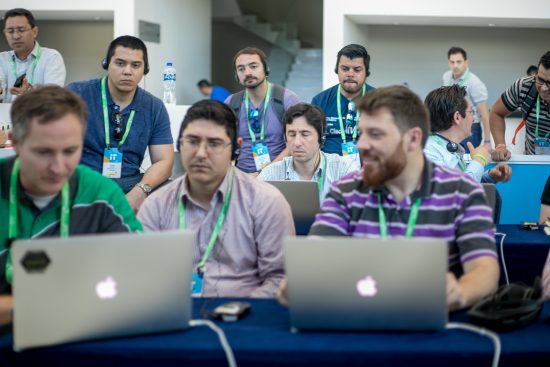
Hands-on, instructor-led learning with DevNet experts
Thankfully, a few months after Cisco Live US 2016 in Vegas, the DevNet team decided to create two Cisco Spark spaces to improve the collaboration with the people interested in the program, and for me, that was the turning point between a developer-oriented program to a developer community led by a Cisco team.
Now the great support and communication you had while at a Cisco Live event, you could have in your day-to-day activities by being a part of those Spark spaces. Some would say that it is not different from the forums or mail lists, but I definitively see a lot more value from a collaboration tool like Spark where you can have real-time feedback or different people talking about an issue and discussing ideas.
Before these spaces, I felt like it was a great program, with continuously improving documentation, labs and sandbox environments. All of that is highly valuable, but it is missing the human component and “No Man is an Island.” Now I can read a document, follow a lab and spin up a sandbox but as soon as I am facing a challenge or have a hard time understanding a concept, I can jump to the Spark space and ask for help. I can ask new questions about the subject or get recommendations of reference material I can study to advance my knowledge.
The role of the technical writers, developer relationship engineers, developer evangelist and all of the support personnel around the program is highly significant. It makes you feel welcome, and all of them are eager to hear your feedback and improve the areas where adjustment is needed.
For me, that is a community. A group of people that are there for you, to help you improve, to guide you and push you out of that challenge. That team that you know will be there for you when you have done your best but it has not been good enough, they will listen to you and help you or at least, let you know who can.
One of the things I like the most about this new developer group around Cisco technologies is that now you not only can expect help from the Cisco employees but also, from individuals that are part of the community and that makes it more sustainable, relevant, and vibrant.
Great Community Managers can make all the difference
One of the critical pieces for a successful community is the often undervalued role of community manager. The community manager is the one with the responsibility to keep the conversation going in every medium possible – live events, social media like Twitter, LinkedIn, and Facebook. They are the ones whose task is to help grow the community.
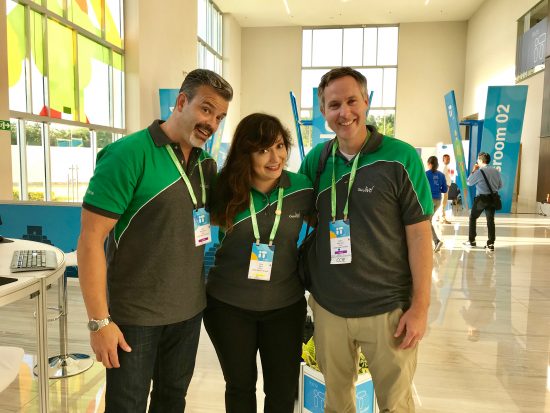
DevNet experts John McDonough and Vallard Benincosa
with DevNet Community Manager Silvia Spiva
They are always engaging. When everybody else is tired, they are still working trying to meet more people, help those that are shy and do not know how to get included. Even more crucial, they try to understand the needs of the community and make the appropriate introductions. Those connections can take the group from a functional help organization to a business building space.
The community manager toughest challenge is to keep the people interested in the program, to keep them engaged, to make sure that “No Man is an Island,” and give the group a human feeling. It is not always about business and technical challenges, sometimes (a lot of times) it is about you and me. Community managers are the ones that make sure those more informal conversations happen. They are the network builders, the ones that connect the individuals and make sure relationships grow.
Getting back to John Donne’s poem, it says:
[…] any man’s death diminishes me,
because I am involved in mankind.
That is precisely how I feel about the DevNet community. Every member that feels left out, or is not getting the right value out of it and resigns, diminishes me. If the group keeps growing, all of the members get more value out of it, and the community becomes more prosperous.
I have always admired the technical skills of the DevNet team. It is a very comprehensive and knowledgeable group of people. Extremely passionate about their work and genuinely committed to their goal of communicating the benefits of the Cisco APIs and SDKs strategies, as well as making the technology friendlier to those not used to software development.
Network engineers are facing new challenges in this software-defined world. Now that the DevNet team built a great community around their work, the network engineer’s journey is going to be a whole lot easier. It is without a doubt a great asset the DevNet team created, one that is going to bring a lot of benefits to the partners, developers, and Cisco.
There are wonderful spaces and community managers ready to help you, depending on your interests – NetAcad, DevNet, and Spark Ambassadors just to mention a few. If you are already a part of the community, thank you. It is better every day because of what you do. If you are not, join me, we definitively need you, just come in and say “hi.”
We’d love to hear what you think. Ask a question or leave a comment below.
And stay connected with Cisco DevNet on social!
Most of the people who work and receive care at Sentara Healthcare facilities in Virginia and North Carolina didn’t notice when the organization underwent a substantial technology infrastructure upgrade. And that’s just the way the system’s leadership wanted it.
To get the full story, you need to go back to the beginning. You see, like most healthcare organizations today, Sentara was concerned about cybersecurity. They saw the reports; they read the news stories and blog posts. They knew they had to act to protect their equipment, data, patients, and caregivers. They also wanted to be equipped to deliver seamless, innovative care services to keep up with a changing market. But with 300-plus sites, including 12 busy hospitals, this was no simple task.
The answer? Technology, of course.
Sentara started with a strong foundation of routers, switches, and wireless access points, forming a Digital Network Architecture (DNA) infrastructure that allows all of their sites to work together as one.
And then, to shore up their security defenses, they also implemented a robust suite of solutions designed to speed up network segmentation, improve visibility, and make sure the right people can access the right information at the right time.
Today, Sentara enjoys simplicity, automation, and best of all, the freedom to innovate. And, amazingly, all of this was done without any disruption to everyday operations. “The IT security upgrades have remained completely invisible to our patients, doctors, and medical teams,” said Chad Spiers, Director of Information Security at Sentara. “That’s exactly how it should be.”
I have had the pleasure of serving as an Individually elected member of the OpenStack Board of Directors during 2017. Prior to my current work, I served OpenStack to lead the development of and deliver innovative software building blocks for OpenStack in concert with over 28,000 other individuals involved with OpenStack.
As a result of the OpenStack community output over the past seven years, there has been massive technical software innovation in open infrastructure. While the level of innovation in OpenStack and other adjacent communities has been grand in scale, the increasing pace of software innovation has not been without cost. Integration of the hundreds of different open source projects both within OpenStack and within adjacent communities has created new challenges for operators of Open Source software projects. A challenge for operators is an opportunity for Open Source.
On November 5th, 2017, one day prior to the OpenStack Sydney summit, the OpenStack Board of Directors met with the Technical Committee and User Committee to define a refined strategic framework for improving the state of integration of various Open Source communities involved in open infrastructure development.
During the November 6th, 2017 OpenStack Sydney Summit keynote, Jonathan Bryce rolled out OpenStack’s Integration Strategy to Summit attendees. The strategy is focused on four key elements creating a recurrent theme:
The OpenStack Foundation required board support in order to roll out this integration strategy. The motion that was proposed after several hours of debate on the precise language and unanimously passed by the Board of Directors via vote was:
“Authorize the Foundation staff to incubate strategic focus areas, including pilotprojects, adjacent to the OpenStack Project. At the completion of incubation, astrategic focus area shall be subject to board approval.”
One may wonder why such a motion was needed. To better define the use cases, it was determined necessary to organize the community across problem domains called strategic focus areas:
Datacenter cloud infrastructure
Container infrastructure
Edge infrastructure
CI/CD infrastructure
In the future other drivers of infrastructure usage such as machine learning and AI
The key principles of each strategic focus area are:
Focus on user value when organizing a new Strategic Focus Area
Communities should have the ability to self-organize in the way that is most effective for their active contributors
Technical decisions should be made by technical people representative of the contributors
Overall governance should be representative and diverse, and should provide opportunities for new leaders to rise up and contributors of all types to participate
The result of board support of this integration strategy is a stronger connection between open source communities producing infrastructure software. I am super pleased to see what I had envisioned in 2016 becoming reality.
One minute and fifteen seconds and it’ll all be over. Two counts to breathe. Thousands of people watching. No second chances.
The Cisco Singers then take the field to sing the U.S. National Anthem at a Major League Baseball game. It’s a thrill, and it’s a moment I never thought I’d experience at, of all places, work!
I’ve been singing with the Cisco Singers for almost four years and (this might surprise you!) I find myself crossing over the skills I’ve learned as a singer to help be successful in my career at Cisco as an IT Analyst!
There are three major skills that keep me in harmony with work AND with my passions.
1. There’s sweet music in the details! When you sing a piece of music, there are a lot of details about how the song should be sung: volume, pitch, tone, changes in rhythm, and pronunciation are just a few. If you don’t memorize the musical details, the performance won’t be so great.
Just as the details are important in music, it is the same at work for a presentation, product demo, service review, or even general conversation. Knowing the details of your work is key to communicating with others about what you do and how it impacts them. You have to know the details of your work in order to be ready to dive into the details to clarify.
Plus, confidence comes from being well-informed, at work and in a song. At Cisco, that gets you recognized as well!
However, it’s also key (pun intended) that everyone knows their parts, so skill two is . . . .
2. Working Together! To sound good as a small chorus, we all must be singing the right notes, the right way, at the right time; together. In order for the audience to hear a harmonious chord, everyone must be singing one of the notes in the chord as intended.
If any part is too quiet, the full chord won’t be heard. But you also can’t drown each other out either. Everyone must sing their part properly for the harmony to come through!
The same is true on any team at Cisco; everyone has their own work, but we must work together to get big stuff done.
Being a part of IT, I cannot single handedly, ‘bring the future of IT into the now’. What I can do is build an Anaplan dashboard for a Cisco Sales Agent to view their accounts. To do my work I need help from a Business Analyst to document the Sales Agent’s requirements, a Data Engineer to import and configure the data, a QA Tester to prove it is all working correctly, and a Scrum master to keep the entire team on task and on time.
By working together our team is delivering data insights with speed and security which contribute to the bigger picture. If we are all contributing to the overarching strategies, we can keep Cisco harmonious.
But where would we all be without direction? Thus, my last piece of advice is . . .
3. Follow the Leader!For a chorus, the director is key. They keep the rhythm and keep us together on parts of the song that are up for interpretation. The sheet music can be marked to have notes sung an indefinite amount of time or show that particular sections need to be ‘faster’. The director decides and communicates when enough is enough on the indefinite notes and how fast ‘faster’ really is.
At Cisco, “We securely connect everything to make anything possible.” It’s a big, bold statement that can be hard to interpret. That’s why it is key to have strong leaders who can break down the strategy so it is deliverable and measurable.
Our ELT breaks it down into goals for each function. My VP sums it up into goals for our group, Customer Engagement. Then my manager builds our team’s portfolio of work to meet these goals. In the end I can easily align my work to these goals and with their direction, I know my work is helping to drive Cisco’s ultimate strategy.
If we all know our part, work together, and look to our leaders for direction, our work will ring out in perfect harmony. #WeAreCisco!
Does Cisco sound like the right note for you? We’re hiring!
Cisco Networking Academy has been changing worlds for 20 years. To celebrate this milestone, we are spotlighting some of the 7.8 million students worldwide who have benefited from this IT education and career building program.
Arturo Javier Navarro Luna
City: San Luis Potosí, Mexico
Current occupation: Applications Developer/ Vulnerabilities Analyst
Networking Academy coursework: CCNA, CCNA CyberOps
One word to describe his Networking Academy experience: Life-changing
Arturo was in college and selling hardware in a computer supply store when he grew interested in the networking products he was selling. That was when his university teacher told him about the Networking Academy. “I was very excited,” he says. “I wanted a deeper knowledge of why people were buying the hardware.”
Before starting, he boned-up on binary operations, studying every moment he could. “I was like, ‘This is going to be really, really hard,'” he says. “But, my teacher was wonderful. She encouraged me to take the second module and the third module and the fourth module.”
After three years, Arturo is still in touch with his teacher. “Actually, I saw her yesterday. She gave me a new certification.” In the future, Arturo wants to get more involved with cybersecurity. “There are a lot of, of criminals out there with ransomware and phishing.”
Cisco Networking Academy has been changing worlds for 20 years. To celebrate this milestone, we are spotlighting some of the 7.8 million students worldwide who have benefited from this IT education and career building program.
Dr. Fred Mpala
London, United Kingdom
Current occupation: Director, Information Security
Networking Academy coursework: CCNA 1-4 and CCNP Advanced Routing
One word to describe his Networking Academy experience: Community
The Networking Academy was an integral part of Fred’s college program. His regular classes gave him a solid academic foundation, but Networking Academy allowed him to reach beyond the books.
Puzzling through a networking system was “quite nerve-racking” at first for Fred, but his instructors eased him in and his confidence grew. In fact, at his first job, Fred was “confident enough to go ahead and solve problems or recommend solutions from the practical experience” he’d picked up in his classes.
Fred’s well-rounded education also means he can talk to anyone in his field. His academic background lets him speak the language of business, while Networking Academy grounds him the technology space. “Being able to communicate with people across the spectrum is a skill set I tie firmly back to that solid grounding and foundation I got as part of the [Networking] Academy,” he says.
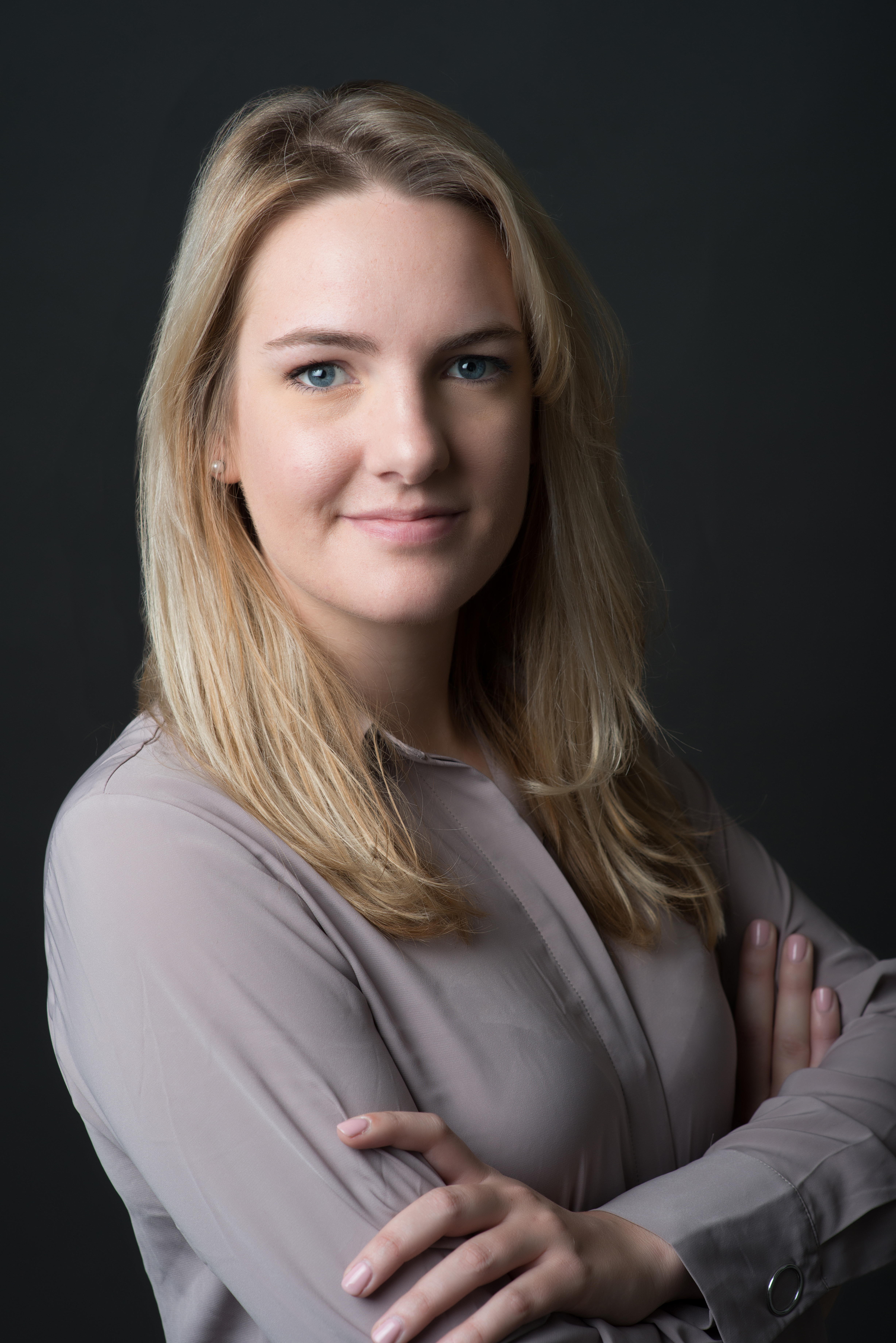
This blog was guest-written by Mary Elizabeth McCulloch, social entrepreneur and founder of Project Vive. She’ll be guest-speaking during the “Social Entrepreneurs Using Tech to Solve Global Problems” session of the Women Rock-IT series on November 16th.
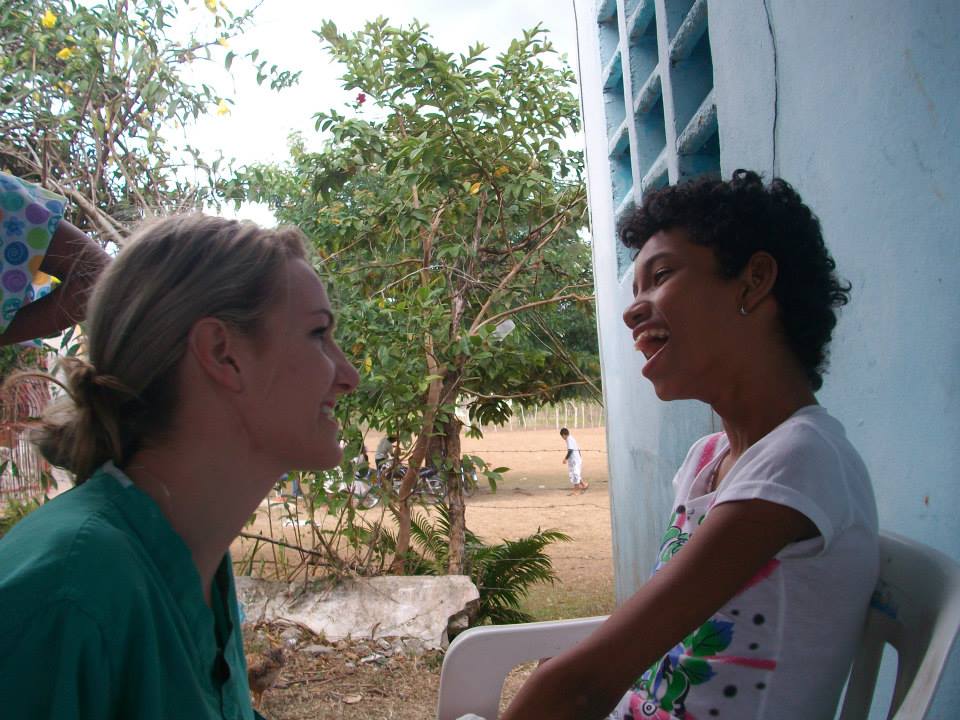
When I was 18 years old, I spent a year in Ecuador through the Rotary Youth Exchange program. A few months into my trip, I decided to volunteer at an orphanage in the Andes mountains in a village called Racar. This orphanage was specifically for children and adults with disabilities. I quickly noticed that the residents with cerebral palsy were quietly sitting by the windows.
With little experience dealing with cerebral palsy and complex communication needs (CCNs), I started asking them questions about what they liked. Getting no verbal response, I worked to establish ‘yes’ or ‘no’ answers using their vocalizations, facial expressions, and movements. I then asked binary response questions, prompting them to respond through their own unique way of communicating ‘yes’ and ‘no.’
And then it hit me hard. I realized that these people, in this remote town outside of Cuenca, were trapped inside bodies that wouldn’t allow them to communicate what their brains wanted to say. They each had likes and dislikes, dreams and nightmares; but no one had taken the time to ask them. The workers rotated on eight-hour shifts; while the residents were fed, taken to the bathroom, and washed, no one had established a reliable form of communication for the residents.
I was confused; why were people reluctant to help them communicate? Why were they seemingly forgotten in this society? Why were so many people with disabilities in orphanages? I was heartbroken.
Six years later, I realized there is a lot I did not understand about disabilities and the stigma that comes with them. In our world, 4.6 million people have cerebral palsy or ALS and cannot speak. Many people believe that if a person cannot talk, they cannot understand conversation, and therefore are unable to participate in society. This stigma exists in places like the Dominican Republic, India, Sri Lanka, and even here in the U.S.
It’s no surprise, then, that people with disabilities experience adverse socioeconomic outcomes, from low education rates and poor health outcomes to unemployment and higher poverty rates.
I recently spoke with Howard Mwagomba, a speech therapist at Sandi Rehabilitation in Malawi, who explained that people with disabilities are just not expected to be able to speak and are left by themselves to pass their days. Dr. Nimisha Muttiah, a senior lecturer of Speech & Language Pathology at the University of Kelaniya in Sri Lanka, mentioned that parents don’t understand why they should spend money on a child with disabilities when it can be used to help their non-disabled children.
These factors are multiplied when children with disabilities live in resource-constrained settings and low-income communities. In many places, because they lack any other option, these children are abandoned on church doorsteps and taken in by local orphanages.
When I returned from Ecuador, I began studying Biomedical Engineering at Penn State. I focused on developing a solution for people with disabilities to communicate, and learned about the field of Assistive Technology (AT). AT is any piece of technology that can be used to increase the functional capabilities of a person with disabilities. Devices currently taking advantage of AT range from wheelchairs to computers outfitted with advanced eye recognition software.
I knew I needed something that was low-cost, durable, and wearable to ensure independent communication. At the time, many solutions on the market were high-cost and high-maintenance, making them completely inaccessible to people in low-income communities.
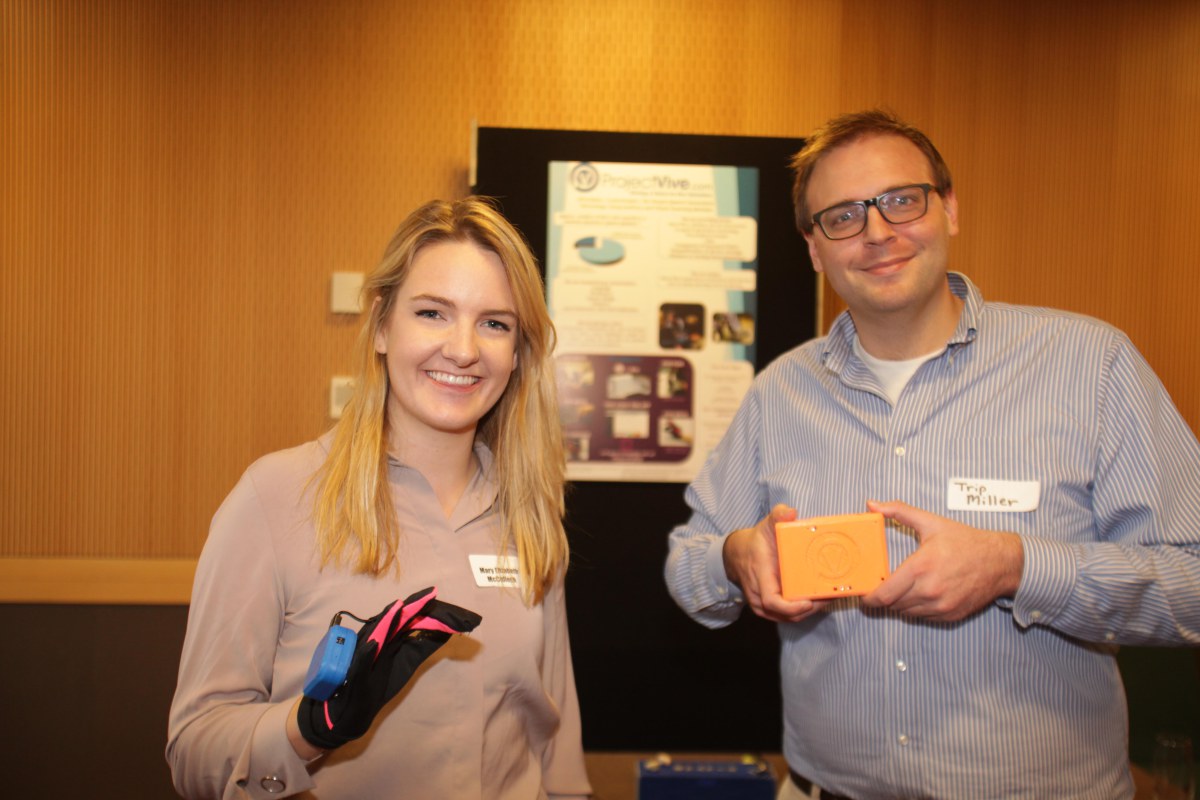
And so my team, Project Vive, and I created the Voz Box, an affordable, durable speech-generating device (SGD) that takes advantage of digitization. The multilingual Voz Box system has two parts—a sensor and a device, which can be visually based, auditory based, or both.
We created sensors to fit the breadth of abilities people with neuromuscular conditions possess, including Bluetooth sensors that detect low-motor control movement in the finger, elbow, knee, foot, and eye. Our mission is to use the Voz Box to give access to the Internet of Things (IoT) to those who need it most—people with disabilities.
How can the Voz Box really help people with disabilities? The World Bank concludes that lack of access to technology creates barriers to participation by people with disabilities in economic, civic, and community life.
We believe that people with disabilities are natural born problem solvers. Arlyn Edelstein is a 71-year-old woman with cerebral palsy who shared her poetry for the first time out loud using the Voz Box last fall. In front of a crowd in downtown State College, Pennsylvania, she shared a poem she wrote titled ‘Unlocking Doors:’
Handicapped. All my life. I learned to get things done for myself. Over years of lots of thought. I gracefully arrived at the best ways possible. It isn’t easy setting my VCR programmer with my foot. Rather than using my hands. But when I hear that most people. Even those with high-paying jobs. Cannot master setting their VCR. I do feel fortunate. Being handicapped is not cause for me to feel sorry for myself. I just must take time. To solve the puzzle. Of how best to get things done.
Yes, that came from a powerful woman whose lack of a voice has created barriers for her to seek employment. Even with an English degree from Edinboro University, Arlyn struggled to find employment.
She is an amazing writer and has helped us with the Voz Box design; far beyond testing, much of our current beta comes from her feedback and helpful information she concisely wrote and sent to us using a computer and a handmade stick.
Research suggests that diversity will help us solve difficult societal problems. People with unique life experiences, different perspectives, and special abilities can help us tackle some of the world’s most pressing challenges.
What would the world look like if people with disabilities could contribute, advocate, and take advantage of the opportunities in our digital economy? We are in a new age of digitization that allows people with disabilities to participate in ways never before possible.
Just think; it is now possible to order a Starbucks coffee on your phone! That’s what these people want, to participate and be treated like people because they are people! Disability is natural. It always was and always will be a part of our world.
The Voz box will be able to empower this untapped population of natural global problem solvers. And we believe it all starts with a voice.
Take your first step in joining us by registering today for our session in the Women Rock-IT Cisco TV series, “Social Entrepreneurs Using Tech to Solve Global Problems.”








 Hands-on, instructor-led learning with DevNet experts
 DevNet experts John McDonough and Vallard Benincosa

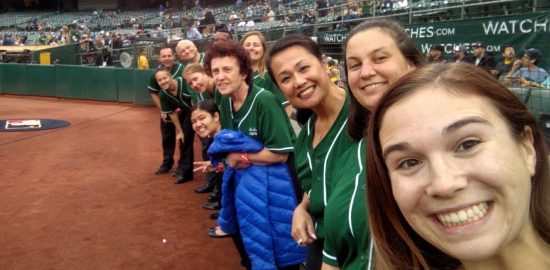
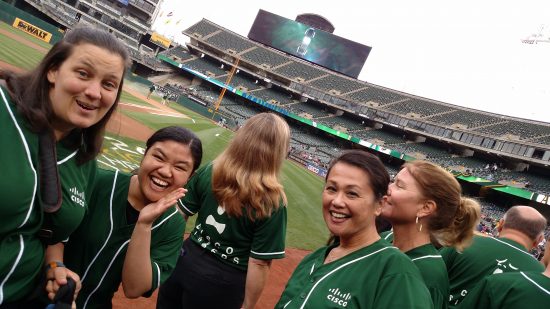 If any part is too quiet, the full chord won’t be heard. But you also can’t drown each other out either. Everyone must sing their part properly for the harmony to come through!
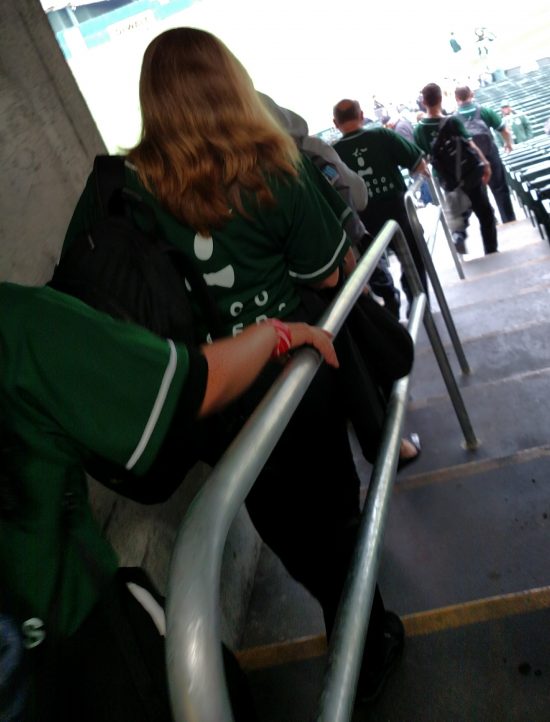 3. Follow the Leader! For a chorus, the director is key. They keep the rhythm and keep us together on parts of the song that are up for interpretation. The sheet music can be marked to have notes sung an indefinite amount of time or show that particular sections need to be ‘faster’. The director decides and communicates when enough is enough on the indefinite notes and how fast ‘faster’ really is.