Avatar

CDO and CIO: Partners in Digital Transformation

Kevin Bandy, SVP and Chief Digital Officer, Cisco

We recently hosted the largest Cisco Live! ever, with more than 28,000 attendees on hand in Las Vegas. The theme was digital transformation. We focused on how Cisco’s latest innovations and acquisitions help customers use the network to reimagine how work gets done. The rules of business are being re-written from the network out, touching everything companies do.

To meet the demands of the digital era, Cisco is transforming from a company that primarily sold hardware products to one that allows customers to choose how they consume the breadth of our integrated offerings. This transformation requires alignment across the business, including sales, finance, service, engineering, and operations in all regions.

As I met with leaders from Cisco’s largest customers, I was asked a question I get routinely: Who owns digital transformation, the CIO or the CDO? IT does the technical work from the network architecture to the applications, so should the CIO own it? Or, should the CIO focus on the enabling digital technologies, leaving “transformation” to the CDO?

My experience tells me the answer isn’t the CIO or the CDO – it’s both working in unison toward a common digitization goal. I truly believe the partnership I have with our CIO, Guillermo Diaz, is a model that can benefit other organizations.

As CDO, I listen to the market to understand how Cisco needs to evolve its business to meet the changing demands of our customers. Partnering with executive leadership across the company, I am fundamentally reengineering our business processes, policies, and nearly every aspect of our business to execute in a timely manner. Guillermo, as our CIO, decides the best way to adapt Cisco’s enterprise IT architecture, technology strategy, and IT services to support the new business strategy. Neither Guillermo nor I can drive digital transformation alone.

This partnership simplifies what could be a very messy and complicated process, allowing Cisco to move quickly and stay ahead of market demands and capitalize on emerging opportunities. I encourage other companies to follow our lead.

How is your company organized to achieve your digital transformation goals? Let me know your thoughts.


Keywords: CIO, IT, CDO, chief digital officer, Cisco Digitization Office, digital, digitization, transformation, digital transformation, network, business process, Cisco Live!

Authors

Kevin Bandy

No Longer with Cisco

Avatar

CFOs, and their technical counterparts, are leading board-room level strategic information security decisions. This isn’t a surprise. A recent Accenture study noted that 75 percent of CFOs are “getting in the driver seat” regarding technology investment decisions.

Flexibility, in regards to both financial and technical considerations, is critical to a successful security strategy.  CFOs are keenly aware that security today is no longer simply a risk mitigation subject. It is also critical for enabling their organizations’ digital transformations and long-term business success.  Without agile, effective security, the new digital-oriented business models that organizations depend on cannot be executed.

What exactly are CFOs facing? Cyber adversaries are often highly-organized – some even have help desks to help you pay for ransomware attack relief. Security is the fastest growing part of most IT budgets, and subject to close scrutiny. As detailed in the Cisco 2016 Midyear Cybersecurity Report, poor security strategy produces ineffective threat defense, a greater risk of unplanned breach remediation expenses, and spiraling IT integration costs. The average Fortune 500 organization works with more than 100 security vendors. These customers universally tell us that this vendor proliferation is unmanageable, wasteful, and ineffective.

Security-savvy CFOs are thus consulting the playbooks they’ve already used to successfully lower capital expense through cloud services. They are working with their colleagues – CIOs, CISOs, and IT directors – to understand how an architectural approach to security, with fewer vendors, improves threat defense while lowering cost. Additionally, they are analyzing if, in their organization, it makes sense to leverage flexible financing arrangements for network security, such as those offered by Cisco Capital. Such arrangements can further reduce capital expenditures and facilitate the latest and greatest security solution and regular adoption of threat defense innovation.

Accompanying strategies for financial flexibility is a comparable emphasis on technical agility. Network security solutions, for instance, must enable rapid security provisioning. Cisco Firepower 4100 Series and Firepower 9300 security platforms, built for high performance environments, data centers, and service providers, work seamlessly with Cisco’s virtualized firewalls. This ensures, regardless of where data is sent, i.e., between physical, virtual, and off-premises cloud environments, that consistent security policy follows workloads, with centralized management. This approach meets compliance and broader organizational threat defense requirements, and steers clear of the type of brittle architecture that is costly and time consuming to re-provision.

Our customers regularly remind us that they must do more with less, and that they have been underserved by piecemeal security solutions. In response, we are delivering a new way forward: tightly integrated, threat-focused, and best-of-breed security solutions addressing the entire attack continuum, before, during, and after attacks. To further enable flexibility and agility, only Cisco enables an organization to start their security journey with a best-in-class portfolio that, over time, can be further leveraged as part of a dynamic security architecture that lowers ongoing cost and complexity. Cisco even empowers organizations that have invested in our switching and routing infrastructure to leverage those investments to further make the network itself a security sensor and enforcer.

Developing an Integrated and Threat-Centric Security Approach

Digital transformation demands that organizations adopt a dynamic, nimble approach to information security, financing and upgrading their security infrastructure to mitigate risk and keep up with the evolving threat landscape. As such, it is crucial to work with vendors equipped to handle the entire spectrum of threats in today’s dynamic threat landscape.

Finance & Lease to Stay Current

Organizations, often for cash flow management reasons, take a short-term approach regarding security software licensing contracts. Financing arrangements can be a prudent way to ensure longer-term security coverage that also avoids large upfront costs. Organizations also maximize licensing discounts by committing to multiple years of coverage, which includes regular security threat intelligence updates and ensures that they have the best security solution at all times.

Another, often under-rated, advantage is matching the payment term to the solution’s useful life which reduces operational hassle for the organization’s procurement teams as annual contract renewals create unnecessary costs for the customer and vendor.

Staying Ahead of the Game

Ultimately, the criminal enterprises that are leading cyber adversaries are growing ever more sophisticated, requiring organizations to stay ahead by upgrading systems and technology. Helping your organization achieve its digital transformation goals can become far less challenging when an effective security architecture and flexible financing come together.

Authors

Sanjay Kumar

Senior Director, Global Business Development and Sales Strategy

Cisco Capital

Avatar

Vulnerabilities discovered by Tyler Bohan & Marcin Noga of Cisco Talos.

Talos are today releasing three new vulnerabilities discovered within the Lexmark Perceptive Document Filters library. TALOS-2016-0172, TALOS-2016-0173 and TALOS-2016-0183 allow for a remote code execution using specifically crafted files.

These vulnerabilities are present in the Lexmark Document filter parsing engine which is used across a wide range of services such as eDiscovery, DLP, big data, content management and others. The library is commonly used across these services to allow for the deep inspection of a multitude of file formats to offer conversion capabilities such as from Microsoft document formats into other formats. Lexmark make this library available to compete against other third party and open source libraries used for such activities.

Document conversion represents an important aspect of many businesses as they attempt to move from an unstructured data solution to a more workable structured data solution in order to improve business efficiency.

The three vulnerabilities disclosed today allow for remote code execution using specifically crafted files such as XLS, Bzip2 & Compound Binary File Format (MS-CFB). This can provide an attacker with the capability to perform remote code execution within your environment and potentially offers the adversary full control of the attacked resource.

Read More >>

Authors

Talos Group

Talos Security Intelligence & Research Group

Avatar

As adoption in technology areas such as Software Defined Networking, Analytics, Cloud, and the Internet of Things continue to move forward, Cisco and Intel have joined together in several related fields to deliver services and solutions that help developers to innovate.  While Cisco and Intel have products and services for many different markets or verticals, massive infrastructure technology areas like the Internet of Things are inherently too large for a single company to address.  Therefore, companies need to work together to tackle…… Click Here to Read Full Blog.

Authors

Jaishree Subramania

No Longer with Cisco

Avatar

My two sons registered for school, and for the first time, I am a bit anxious in what the year will bring. Not because they are not capable, but like many parents, I fear I may not be.

Many of us didn’t grow up with the technology available to our children inside and outside of their classrooms, and while we realize how integral technology is for learning, as parents, we may no longer feel confident in our ability to engage in this new environment. Yet we know we must prepare our children for the future and enable them to make the connections to our world.

Dr. Martin Luther King Jr. said, “You don’t have to see the whole staircase, just take the first step.” And while we may not know or even understand this technology path, taking those first steps, together with our children and their teachers, is critical, now more than ever.

Studies have shown that when parents play an active role in their child’s education, the child achieves greater success regardless of socioeconomic status, ethnic/racial background or the parents’ own level of education, as published in a statement issued by the National Science Teachers Association.

(Monkey Business Images4)Shutterstock (1)
Photo from Shutterstock

This heightened level of interaction will definitely require a shift in parental mindset in how to provide the support and space needed for our children to become active agents of their own learning. We can begin by creating a home environment where our children, using their phones, tablets and/or computers create a bridge from their classrooms, fostering learning and memorable experiences.

The first steps are often the hardest, but worth taking:

  1. Give our children ownership of their learning. Empower our children to use technology as part of the learning process with online tools, tutorials and video.
  2. Make the topics compelling and real. Determine how to make subjects exciting outside the classroom; find a way through real-life situations or through examples around the world.
  3. Engage. Resist the urge to provide the answers. Seek to understand. Ask questions and start a conversation.
  4. Leverage your community. There are only 24 hours in a day, and we can’t do it alone. Find a parent group or family that could assist in this technology transition.

The 2016 National Education Plan released by the U.S. Department of Education states, “when carefully designed and thoughtfully applied, technology has the potential to accelerate, amplify and expand the impact of learning.”

While every school, campus, district and the families they serve are not connected equally, one parent, one community, one step at a time, can make a tremendous difference in empowering our children and preparing them for the future. Let’s take that first step together!

Authors

Lyanne Paustenbach

No Longer with Cisco

Avatar

For most of us, it is the dog days of summer where we will be coming back from vacation or holiday relaxed and refreshed. That little break we take every year allows us the opportunity for reflection while starting fresh as we approach the upcoming months.

If you are just getting back from a break and you haven’t visited the Cisco Wireless web page, you are in for a surprise. While some have been out on break, our team has been diligently working to refresh our wireless web pages. When you visit http://www.cisco.com/go/wireless you will see some significant changes.

In order to deliver a modern and improved experience, we have combined the cisco.com/ go/wireless page with the cisco.com/go/mobility page. This change allows a better journey that highlights both Cisco’s wireless products and mobility solutions.

And we didn’t stop there. We have added a wireless product comparison tool that you can use to determine the best Access Point and Wireless LAN Controller for your network. We also added improvements to several of our solution pages such as BYOD and 802.11ac.

With all of these changes, your journey to get current information all of Cisco’s Wireless Products and solutions is now much easier.

Now that you are back from vacation, start your journey by viewing this video about The Wizard of Wi-Fi.

https://www.youtube.com/watch?v=yuyax2qEblY

Authors

Bill Rubino

Product Marketing Manager

Enterprise Networking and Cloud Marketing

Avatar

Digital transformation.

For Cisco and our partners, what lies behind those two words is immensely powerful.

Today’s digital transformation is in motion to revolutionize how we work, live, play, and learn. And together, with the right combination of partnerships and technology, we opened the door to endless opportunities.

Our first example is Connected Conservation. This is our joint initiative with Dimension Data, aimed at reducing the number of rhinos being poached in South Africa.


Watch this replay of CNN’s African Voices to learn more about Connected Conservation.


We’re proud of Connected Conservation for several reasons. Not only are we using technology to improve the world, it shows how we’re working side-by-side with partners to drive innovation and respond to challenges in this new digital era.


Putting cutting-edge technology in action

Using technology to save a species isn’t much different than using technology to improve healthcare, finance, government, manufacturing, and or any other industry. It’s all about understanding the problem or opportunity, defining the goal and impact, then aligning the right technology.

With the rhinos we wanted to proactively intervene and stop potential poachers entering the reserve illegally. We knew to accomplish this we’d have to do things differently and take a proactive approach to tracking and monitoring the people in the reserve. All of this needed to happen without physically touching the animals.

Working with Dimension Data we established a secure, reliable network that operates 24 hours daily across the entire game reserve. We enabled people on the ground to collaborate in real-time, securely. Staff can collect data on people and vehicles entering the game reserve, monitor their activity, and report suspicious activity to a national database. Next up we’ll use sensors and imaging to protect the rhinos with valuable insights, transparency and visibility.

Collaborating anywhere, anytime, with anyone. Monitoring and tracking activity. Using data and sensors to make better decisions. Seeing everything that’s going on. All over a secure network. Sound familiar? That’s digital transformation.


Your digital transformation story

The rhino species is millions of years old, and our solution protects them using the most advanced technology to date. Whether you want to save a species or address your industries’ business outcomes, we can help you make it happen.  Join us and discover how the best partnerships and technology are the foundation for how we connect people and devices in meaningful and secure ways.

In the meantime, watch the replay of CNN’s African Voices to hear from Bruce Watson, Dimension Data’s Group Executive, Global Cisco Alliance, on our commitment to this initiative.

And get involved in the conversation about protecting the rhino, use the hashtag #ConnectedConservation on your social channels.


Avatar

Last November, I was proud to represent Cisco as we joined with five other founding companies and academic organizations to form the OpenFog Consortium. We knew the time was right to accelerate the deployment of fog technologies in the Internet of Things (IoT).

The time was right indeed. We caught a groundswell of interest, and are picking up steam.

Already, we have more than 40 members—well on track to meet our goal of 50 members in the first year. GE Digital and Schneider Electric have joined our Board of Directors. Toshiba became our first member from Japan and is participating, along with SAKURA Internet, Fujitsu, NTT Communications, and several other organizations, in our first country team focused on regional initiatives.

And momentum continues to build. Just this month we welcomed several new members, including AT&T and five companies from Japan and Taiwan.

Why this early success? I think it has to do with our unique approach, from two perspectives:

The first element is embedded in our very name: Open. We have deliberately adopted an open, collaborative working style as we cooperate with other industry groups working on fog architectures, standards, and frameworks. We do not want to compete with existing organizations, or duplicate their efforts. We’re taking a synergistic approach that both leverages the work of other consortia and contributes our work back to them. We have formed a liaison agreement with the OPC Foundation and are in discussions with many others. It’s actually very easy to tie in with these other organizations because many of our members are also involved in these other bodies. And we have affiliations with the Barcelona Supercomputing Center and the Institute of Electrical and Electronics Engineers (IEEE). IEEE has a representative on our Board to work with us on standards that might arise from our open fog architectural framework.

The second important element is our open horizontal architectural approach. Most existing consortia and standards bodies focus on specific vertical or technical aspects of fog computing—IIC has an industrial IoT focus, and Mobile Edge Computing targets devices at the edge, for example. Our aim is to provide a broad, multi-vertical, cloud-to-thing perspective that connects and aligns with the work of other groups. The OpenFog Consortium has several working groups that are focusing on pieces that overlap and interact with the work of other groups. We want to bring together all of this good work and fill in the gap to create a flexible and modular end-to-end architectural framework.

Figure 1. OpenFog Consortium takes a broad, holistic view of the cloud-to-thing continuum.

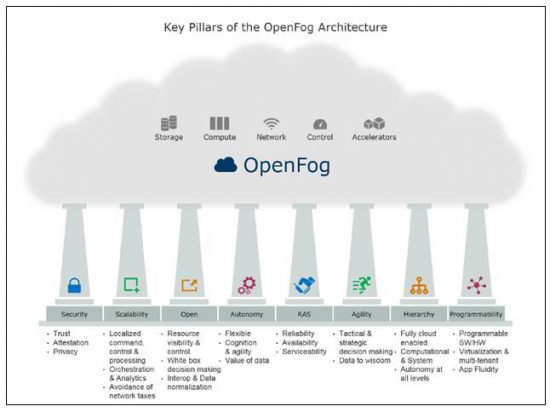
OpenFog Architecture

As Chair of the OpenFog Consortium, I am extremely pleased to see how this work is coming together, and how it is being embraced by major industry players, startups, and academic institutions alike. We are working to release our first OpenFog Reference Architecture in September, just in time for our next members’ meeting in Austin, September 27-28. We now have a global footprint that has validated the growing market confidence in the necessity of a fog computing approach. We will continue to grow and expand as IoT deployments become more dependent on integrated cloud to fog capabilities. If your organization is working in complex or mission-critical IoT, artificial intelligence, autonomous vehicles, or other advanced digital scenarios, I invite you to be part of this effort.

I hope to see you in Austin!


Authors

Helder Antunes

Senior Director

Corporate Strategic Innovations Group

Avatar

Earlier this year when I told you our acquisition of Acano was complete I said fasten your seatbelts… I meant it! The newly combined team is on fire and today we’re announcing the availability of our first product to come of this incredible meeting of the minds. And it is pretty awesome.

I have always believed deeply that technology should solve the world’s hardest problems—it shouldn’t cause problems. But frankly, collaboration technology has been causing some big problems for people who are just trying to connect and get their best work done. That’s why I came to Cisco—to radically reinvent business communications for the 21st century.

Cisco Meeting Server helps to fix these problems. Specifically, it fixes problems created by certain vendors (I mean you, Microsoft) whose technology hasn’t always played well with others (like Cisco’s industry-leading video portfolio).

“Can we Skype?” “Can you get to a telepresence room?” “Will you be on your iPhone or in front of your laptop?” Cisco Meeting Server makes such questions a thing of the past as it lets whoever you’re meeting join with whatever they choose. And it scales—whether you have just a few users meeting occasionally or you have tens of thousands of users who need to be able to meet with others at any time.

Don’t take those seatbelts off yet—we’re moving fast and I can’t wait to tell you about what’s next.

Stay tuned, and let me know what you think @rowantrollope.

Authors

Rowan Trollope

Senior Vice President and General Manager

IoT and Collaboration Technology Group