Manufacturing is undergoing radical advancements, much like the ones we’ve seen in healthcare and education, thanks to the Internet of Everything (IoE) and all of the people, data, processes and things it connects.
By 2020, it’s estimated that there will be 50 billion devices and objects connected to the Internet, including many of the devices in the manufacturing world. “Smart” factories where machines “talk” to one another, fleet vehicles such as trucks and forklifts with sensors that monitor their movements, and even wireless inventory tracking devices are all in play at manufacturers across the globe. Manufacturers are embracing a new generation of Machine-to-Machine (M2M) and Person-To-Machine (P2M) systems, as well as mobile applications and cloud-based services that drive efficiency and innovation across their value chain.
One of the most enduring characters introduced in 1960’ television vas the venerable “Mr. Spock” of Star Trek fame. Leonard Nimoy played Spock after having only modest acting success before being cast as the half-human, half-Vulcan in 1964.
Among the many attributes Spock had, two relate to the modern contact center and customer experience paradigm.
Spock Logic
First, Spock’s primary attribute was an extreme affinity for logic. No matter how far off the handle Captain Kirk had gone, he could always be counted on for a logical response to any situation His almost robotic responses were cold, even if they were effective.
The tides are shifting in the contact center world in this regard. Companies are revisiting the notion of scripted and tightly controlled customer conversations with contact center agents. Since most of the calls, chats, and texts come into contact centers as exceptions after customers have attempted other business processes, it is imperative agents use positive language and more conversational approaches. This is critical with customers who may be as “off the handle” as Captain Kirk could become!
Last month we had the honor of hosting the first session of Networking Field Day 10. For the unitiated, the Tech Field Day folks bring independent bloggers, speakers, and podcasters to vendors for deep-dives. The 12 delegates of #NFD10 stopped by to discuss Cisco’s approach to SD-WAN. This was a great session as SD-WAN, while pretty hot right now, is also a pretty great solution to branch automation.
Jeff Reed, VP of Network Transformation, kicked off Networking Field Day 10 to introduce Cisco’s approach to Software Defined WAN (SD-WAN) for the Enterprises to the 12 delegates who attended.
Next, Sumanth Kakaraparthi, Product Manager for Platform Routing and Pedro Leonardo, Product Manager in Network Transformation for Enterprise Management and Controller started the sessions by explaining the Zero Touch Deployment model. They showcased how no physical user interaction with the device is required other than connecting the necessary cables. Continue reading “Networking Field Day 10 Recap – Introduction to SD-WAN and Zero Touch Deployment”
It doesn’t matter whether you’re running the IT department for a small operation or a multi-national conglomerate; you’re going to share similar worries. Whether it’s securing your network or keeping it up-to-date, both large and small companies are feeling the effects of the growing need to support wireless devices and maybe more importantly the growing impact of their applications. The difference is, the bigger company usually has the money and the resources to address those issues while building for the future. The little company? Not so much.
Until now.
As part of Cisco’s Mobility Express solution announcement on Tuesday, September 15, the Cisco Aironet 1830 Access Point (AP) was released. This access point joins the Cisco Aironet 1850 Series Access Point—released in June—in helping smaller and medium-sized business keep up with the big companies.
Please join us Thursday Sept 24, 2015 11:00AM ET for a WindowsITPro virtual event.
We have an information packed agenda planned for you encompassing:
The cloud, the hybrid cloud, and the private cloud.
Software-defined networking and policy-based automation.
The idea of application policy in next generation networking technologies and how they differ from the networks of today.
How Next-Generation SDN is impacting the cloud, your applications, and the
data center.
Join us to learn about how policy helps companies make “bi modal IT” a continuum for IT organizations to support both traditional and cloud native applications on a common infrastructure. Learn how to reduce TCO, achieve greater agility for the entire IT organization, enhance security for compliance and governance needs and simplify operations when infrastructure itself helps support and enable applications.
Policy Driven Infrastructure to Transform Your Microsoft Cloud, Apps, and Operations delivered by yours truly and a distinguished executive panel including:
Michael Michael, Senior Director of Product Management at Apprenda, responsible for the vision and product direction of Apprenda’s Platform As A Service (PaaS) solution.
Scott Napolitan, a Senior Program Manager with Microsoft’s Cloud and Datacenter Management Organization focused on Network and Fabric Management.
Jeremy Oakey, VP Strategic Alliances at CliQr for their application-defined cloud management platform for modeling, deploying, and managing clouds, applications, and users.
Evolving Your Data Center to the Next Level delivered by Michael Otey, senior contributing editor for Windows IT Pro and SQL Server Pro.
Cisco UCS Integrated Infrastructure for Microsoft Solutions presented by Tim Cerling, Technical Marketing Engineer with Cisco’s Datacenter Group, focusing on delivering customer-driven solutions on Microsoft Hyper-V and System Center products.
Understanding Next-Generation SDN: The Complete Integration of your Data Center presented by Bill Kleyman, VP of Strategy and Innovation at MTM Technologies.
The Path Forward: Charting a Course to the Networks of Tomorrow presented by Frank Ohlhorst, an award-winning technology journalist, professional speaker, and IT business consultant with over 25 years of experience in the enterprise technology arena.
The virtual event will include an exhibition with demonstrations, presentations, videos, and engaging subject matter experts who’ll be glad to chat with you, answer questions, and provide you with access to even richer educational information. I hope you will register now and join us next week!
Related Information on ACI and Microsoft Cloud Platform
We blogged about the alpha launch of Shipped back in June, but today I want to talk about the service it relies on: Mantl.
Mantl’s goal is to provide a fully functional, instrumented, and portable container based PaaS for your business at the push of a button. It’s an opinionated set of services, configurations and tools that provide a standard interface for you to operate your container-based applications and infrastructure. Typically companies write a lot of unnecessarily repeated, similar-looking glue code to deploy, inspect and manage their services and the infrastructure they run on. This code is difficult to effectively version control and is seldom the same between teams. Mantl is an attempt to turn these glued together pieces into an easy to use complete solution for managing your services.
The user experience that addresses this glue is called “Shipped” and it provides an integrated Build, Deploy, and Run experience. The Build experience is integrated to the developers existing tools, frameworks, and development languages (so there are no changes to how you develop your application). Deploy has become very complex over the last several years as cloud services and providers require you to refactor or rewrite your application for their environment. We do not believe this is the right approach.
Mantl’s design is to enable you to deploy your application across any internal, private, public, or hybrid combinations of environments and technologies. You get the benefit of not being locked in and the reduced complexity of having a consistent deployment process. Finally, to support any deployment, the Run experience is very key. The goal of the Run experience is to be able to support your application across deployment locations in a CI/CD & Application Intent Framework focused on business objectives and not technologies. Continue reading “Building Cisco’s IoE PaaS with Mantl”
#CiscoChampion Radio is a podcast series by Cisco Champions as technologists. Today we’re talking about the latest in IWAN with Cisco Technical Marketing Engineer Jake Sacharok.
Get the Podcast Listen to this episode Download this episode (right-click on the episode’s download button) View this episode in iTunes
Cisco SME Jake Sacharok, Cisco Technical Marketing Engineer
Cisco Champion Guest Hosts Bill Carter, @ccie5022, Senior Business Communications Analyst
Eric Perkins, @perk_zilla,Principal Solutions Architect
Highlights Overview of IWAN CVD and SD-WAN Solutions
Benefits of the IoS Authority Certificate Solution
Cisco Prime and monitoring IWAN network
Why no IWAN question is too small for Cisco customers and partners
Industry wish list for IWAN Solution
APIC and IWAN integration
Behind the scenes with CVDs
This week we kicked off our presence at some exciting events to discuss ongoing issues facing city, country, public safety, and defense leaders across the globe.
We are at a unique point in the evolution of our world and industry. Each of us is becoming more reliant on digital technologies, unleashing new and exciting opportunities for change, yet creating an ever-growing critical need for heightened safety for communities and countries, and locked-down security for data and cyber networks.
Going digital at #dsei2015 and #SmartCitiesWeekDC
In this week’s special edition post, our digital citizen has had the unique opportunity to join important discussions at Defense and Security Equipment International (DSEI) and Smart Cities Week.
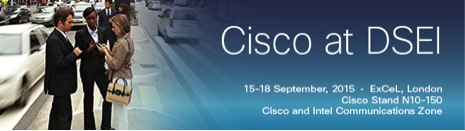
First, our citizen will touch down in London to visit DSEI and the joint Cisco and Intel booth (N10-150) that is anchoring the newly launched Communications Zone.
Our citizen’s first days at the show were a mix of discussions with customer delegations, strategic partners, and analyst groups that focused in on the secure communications and innovative technologies that underpin all public safety, national security, and defense operations at home and abroad. Our citizen is able to visit with partners like Forfusion to talk about mission-critical communications, in particular gaining key insight to the CTO’s unique perspective. Stopping by any of the Cisco plus partner demonstrations and theater sessions in the Communications Zone is gleaning awareness and understanding to digitally enabled defense network and communications capabilities.
A quick hop to the other side of the pond, and our digital citizen is now at the Washington DC hosted Smart Cities Week.
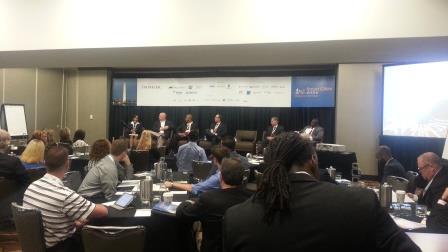
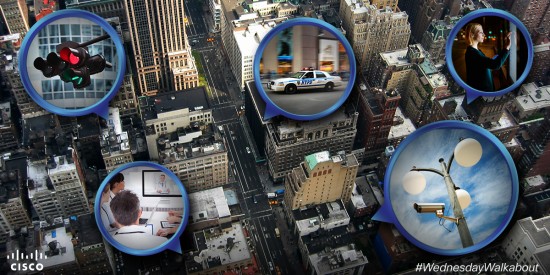
The Smart+Connected Communities conversation is attracting a lot of event goer traffic, showing the possibilities for end-to-end connectivity across city cyber and physical environments. Our citizen was able to stop for a quick (or not-so-quick) chat with a city manager, touching on the rapid change of community culture impacting the importance of local governments and city leaders in adopting technology strategies. Meaning that elected leaders really must begin to watch trends to remain relevant and to be reelected. Also, in summary, with each year comes a new generation of voters that dramatically changes the conversation from “what if” to “why not.” The millennial generation has grown up as a group of digital natives and has different expectations in terms of what’s possible and what is needed, pushing the boundaries of traditional government.
Many of the conversation trends picked up on the show floor focused on the importance of how technology can enable better communication and collaboration with citizens to make communities and countries safer. Emphasizing, of course, how technology will not replace officers or military, but rather, enable agencies to more effectively use personnel where it’s needed most. In both cases, city and country leaders are discussing strategies for using innovative technologies to improve outcomes across safety and security, like reducing crime and minimizing danger when disaster strikes.
Capping off the week in London will bring you theater presentations on Connected Defense, Military at the Connected Edge, Cisco and Partner solution demos, and much more. And in Washington, D.C., Cisco’s Cliff Thomas will be telling the story of Barcelona’s digital transformation and talk about how technology convergence is driving digitzation that enables new efficiencies, revenue streams, and engages citizens in unique ways.
Next Stop
Stay tuned for next Wednesday’s post to discover more on human health and wellness in the digital world. And be sure to check back each week as we explore new themes, challenges and observations.
Additionally, you can click here and register now to get answers to your questions on how to digitize public safety and security.
Finally, we invite you to be a part of the conversation by using the hashtag #WednesdayWalkabout and by following @CiscoGovt on Twitter. For more information and additional examples, visit our Smart+Connected Communities page and our Government page on Cisco.com. Enjoy the Wednesday walkabout!
Written by Paul Jesemann, Cisco Solution Consultant, Mobility Architecture, APJ, September 2015
If someone were to define a safe bet, it would be on the number of blogs about NFV (Network Functions Virtualization), its drivers and benefits out there, by far exceeding the actual number of Virtual Network Functions deployed. So please let me try a different perspective.


![Cisco_Chat_Industrial Security_TWITTER[1]](https://blogs.cisco.com/gcs/ciscoblogs/1/Cisco_Chat_Industrial-Security_TWITTER1-550x275.jpg)










 #CiscoChampion Radio is a podcast series by

 Written by Paul Jesemann, Cisco Solution Consultant, Mobility Architecture, APJ, September 2015