We’re counting down the days until the Social Media for Savvy Marketers event on April 18 and 19 at the Cisco Headquarters in San Jose and online. As I’m writing this post, we’re doing audio and visual checks and working out the final details. Personally, I’m super excited about Cisco hosting this event for the 4th year in a row and would like to thank everyone who has reached out to me or someone on the Corporate Social Media Marketing team about this event via Twitter, email, or any other ways.
1. Download the Cisco Global Mobile Social App for a Chance to Win Prizes
We are heading to The Strip once again next week as sponsors of the Hotel Technology Forum (HTF). This time, we are staying in some very comfortable territory and get to experience our own solutions in action. The Bellagio will be hosting HTF from April 17-19 and expects to have many hospitality leaders pass through its lobby.
In late 2012, the Bellagio along with three other MGM Resorts’ properties completed a Cisco Systems Network Wi-Fi installation. An instant upgrade, hotel guests and conference attendees no longer have to pay a fee or enter a password to access the wireless local area network (LAN) via their smart phones, laptops and tablets. HTF show-goers will experience a network that is 30 percent faster than similar large-scale wireless networks as well as all 330 access points The Bellagio has to offer.
Wow! We just published our tenth bundle of Cisco IOS Software Security Advisories and what a ride it’s been!! Way back when in the fall of 2008 when we produced our first Cisco IOS Software Security Advisory bundle, we had no idea of the impact that this delivery format would have on us internally and, more importantly, on you – our customers!! The decision to deliver the biannual (on the fourth Wednesday of every March and September) Cisco IOS Software Security Advisory Bundled Publication brought with it many challenges, process changes, and—in the end—a format for Cisco Vulnerability Disclosure that we hope addresses at least some of your concerns. This format was modeled after the scheduled monthly release used by Microsoft for years, known affectionately as “Microsoft Tuesday” and based on requests we heard through discussions with many of our customers.
On the road to becoming a shipping product, our Cisco ONE Controller goes thorough a number of steps. One such step is interoperability testing at InCTRE Interoperability Lab. I recently caught up Phil Casini, Product Manager for the controller to see exactly what that entails and why our customers should care.
Phil, What exactly is InCTRE?
iNCTRE is the Indiana Center for Network Translational Research and Education hosted out of Indiana University. Their goal is to increase understanding, development and adoption of OpenFlow and other SDN technologies. We became a member in 2011 and utilized their Openflow testing services to provide us feedback on our Controllers interoperability with various network devices based on our Openflow 1.0 implementation.
How did they test our Controller?
The lab has a number of Openflow test suites that IU has developed over time In our case, they installed the Cisco Controller in their lab network that at that time utilized HP, IBM and NEC switches, then ran it through thier test plan.
How did our switch fare?
Our Controller was found to be interoperable with all three switches based on our Openflow 1.0 implementation.
What exactly does that mean for a customer?
INCTRE provides customers with independent validation of interoperability claims that are made by vendors.
So, should we take OF interoperability as table stakes? If so, what other things should customers be evaluating when they look at controller technology?
Like any other new technology, independent testing should be one of a list of evaluation criteria for evaluating vendor products. In the case of controllers for SDN, Openflow testing provides assurances that network devices can interoperate, but usually the end goal is to implement a solution. Openflow is important in that it is a means towards achieving the solution goals but it is not necessarily the end. Other criteria such as extensibility of the controller to adopt to the solution, functionality of the controller for operation in a production network environment, and the efficiency at which business applications can be adopted or created that will interact with the controller and complete the solution are other very important factors in determining a fit. On a weighted bases these may count more to reach the solution goals than the mechanism used to communicate between the controller and the network devices.
BTW, for those of you who will be at the Open Networking Summit next week, we will have both the Controller and onePK demos in out Cisco booth.
Last week when I was on vacation in Istanbul, it happened to be the first week of the month-long 8th Annual Istanbul Tulip Festival. As we were walking around the rainbow colored flower beds, I couldn’t help but notice the hordes of field-tripping school children around us, skipping along with stuffed animal backpacks in tow, smartphones in their hands.
But deploying a wi-fi network at a school isn’t as simple as 1-2-3. IT visibility into the network can be especially challenging for K-12 educational environments. Some applications can disrupt mission critical applications, like mandated online testing, or negatively impact a student’s learning experience. It’s important to understand what applications are running in the network in order to selectively prioritize, deny, or manage the ones that use up more bandwidth. Although Access Control Lists (ACLs) and Quality of Service (QoS) can prioritize traffic, application visibility provides greater detail and control.
That’s why we’re continuing our K-12 Webinar Series to show you how Cisco and Meraki can help make your lives a little easier by enabling you to take control of your network with the highest visibility and performance possible.
Another year, another CiscoLive. This was the last year in the London venue, and since it was the third time we did it, we had a chance to incorporate learning from the previous two years. As a result, I would say the network was quite a success.
The key element of the design, led by Mark McKillop, was the balance between showcasing the latest technology and maintaining the simplicity of the network. This year we had a mixed L2 + L3 core design. This design helped decrease the impact of various parts on each other. The L2 core was in place for the “special-case” requests, which a routing-based infrastructure could not help with. Continue reading “IPv6 Just Works: Cisco Live London Dual-Stack Network”
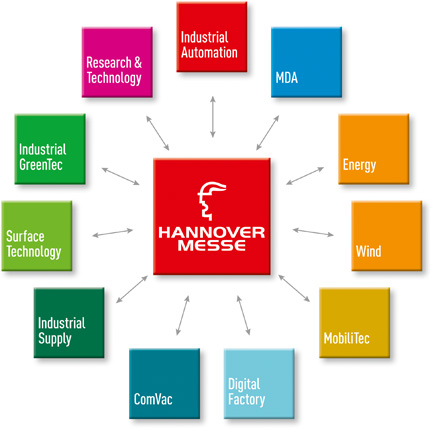
Walking around the 2013 Hannover Messe Faire can be a daunting task whether its navigating through the Hannover campus and its’ 13 co-located tradeshows or figuring out which one of the broad range of special events, forums and key note speaking engagements to attend. One thing is for certain. The “Internet of Things”, “The Integrated Industry” and “The Industrial Revolution 4.0” themes all describe the evolution of connecting, embedding and extracting intelligence from previously unconnected devices. Although the industries can not come to a consensus on what to call this paradigm shift, one thing is for certain….The chosen protocol that’s empowering this evolution is ETHERNET.
The challenge lies in integrating Ethernet functionality into devices, machines or automation equipment that doesn’t always conveniently fit into a 1u, 2u, 3u, 4u… or DIN rail mounted enclosures. Designers, integrators and machine builders need a flexible alternative to address the diverse applications, size and environmental considerations required to truly take advantage of deployinganytime, anywhere, any device connectivity to industrial automation applications.







 On the road to becoming a shipping product, our



 or figuring out which one of the broad range of special events, forums and key note speaking engagements to attend. One thing is for certain. The
 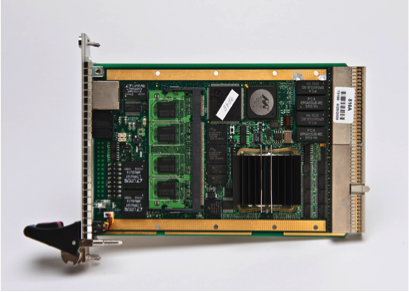 Cisco is a pioneer in providing robust, and scalable embedded technology solutions. Kevin Holcolmb, Cisco Technical Marketing Engineer, discusses our new ESS 2020 Embedded Switch.