Over a decade ago, I started thinking about what life would be like with connected cars. Erratic drivers, speeding tickets and unfavorable weather could be avoided while driving. I read an article recently that takes a more in-depth look at the future of connected driving titled, Big Data: When Cars Can Talk by Jeff Bertolucci of InformationWeek. It begs the question: how can connected roads, cars and drivers make for a safer traveling experience?
In the fast-changing, thin-margin world of consumer products, new winners and losers are created every day. Speed of innovation, time-to-market, and employee productivity can mean the difference between the next hot trend and a warehouse full of excess inventory. Success in the highly competitive consumer packaged goods (CPG) and retail industry depends on broad-ranging collaboration, accelerated innovation, and employees who are empowered and productive every step along the way—from product development, to merchandising and sourcing, to store management and customer service.
The promise of the Internet of Everything (IoE) looms near, and as the networked connections between people, process, data and things exponentially increase, the opportunity for private industry sits at $14.4 trillion USD. And the potential for humanity is limitless. This means that the future of information technology (IT) will look very different.
Realizing the potential of IoE will require what I have been calling the Model for Next Generation IT. It’s a familiar view of IT, but the value is shifting in each layer. And as the value shifts, we’re seeing new business models emerge, in great part due to the adoption of cloud computing and everything as a service (XaaS). But we must keep in mind the value that the network delivers in the future as I wrote in my earlier blog, “Three Truths About Networking – the Next Chapter”.
In the past, category leaders that provided separate components defined the infrastructure layer of IT. In fact, we referred to them by what they delivered – server companies, storage companies, networking companies, security companies and so on. But as we see the needs for IT shift with the consolidation of major technology trends like mobility, cloud, M2M (or the Internet of Things / IoT), big data and analytics, and a whole new breed of applications – the infrastructure needs in IT have changed.
Are you using or evaluating Windows Server 2012 and Microsoft System Center 2012 to deliver higher performance and scale for your workloads? If so, then take advantage of an upcoming joint Cisco / Microsoft webinar to learn how the Cisco Nexus 1000V can simplify your Windows Server 2012 Hyper-V environments through a non-disruptive operational model, policy based provisioning, and a strong services ecosystem.
The webinar will focus on Cisco’s Nexus 1000V for Hyper-V offering. You’ll learn about the new networking stack introduced in Windows Server 2012 and System Center 2012, Cisco Nexus 1000V architecture, how it integrates with the Virtual Machine Manager (VMM) component of System Center 2012 and the rich networking capabilities it brings to Windows Server 2012 Hyper-V environments.
Ananthanarayan Sundaram, Product Marketing Manager, Microsoft
Prabhu Ramabadran, Technical Product Manager, Microsoft
Finally, please be aware of these Nexus 1000V resources to assist in your learning, deployment, and operations of your virtual networking environments:
Wi-Fi networks seem to now be everywhere. Once primarily confined to the home or office, we now expect Wi-Fi access in coffee shops, hotels, airports, stores and even in sport stadiums. Not only are these Wi-Fi networks providing valuable Internet access to appreciative mobile users, they are collecting massive amounts of useful information. Innovative businesses and operators are now learning how to unlock this valuable information to turn Wi-Fi networks into key enablers of business value. We have identified eight technical characteristics of Wi-Fi networks that can help to deliver real value to the bottom-line:
1. Recognizes All Wi-Fi Enabled Devices
Recent research by Cisco IBSG shows that consumers have an average of 2.6 mobile devices, most of which are now Wi-Fi enabled. These devices are constantly signaling of their existence to Wi-Fi networks. As a result, Wi-Fi access points are constantly collecting information on these devices and the movements of their owners without users having to authenticate on the network. This means that venues are collecting information on a large number of people at an – effectively anyone who enters with a Wi-Fi activated mobile device in his pocket. However, this does not raise personal privacy issues because only the MAC address of the device is collected and the information is aggregated across all users.
As urban growth accelerates and resources are stretched thin in cities around the globe, the concept of “Smart Cities” is more important than ever before. That’s one reason I’m excited to be in Nice, France, this week to help launch the “Connected Boulevard,” an ambitious proof of concept built to leverage and anticipate the Internet of Everything (IoE) for smart and connected city services.
The Connected Boulevard is the first real-world example at the city level of how IoE is enabling infrastructure intelligence and value through connections among people, processes, data and things. This proof of concept involves 200 sensors and detecting devices in the city center of Nice, providing context-aware information on parking, traffic, street lighting, waste disposal, and environmental quality.
Click on the video below to see the Connected Boulevard in action and to hear Mayor Christian Estrosi and Director General Anne Boquet explain how the Internet of Everything is helping Nice to realize its plan to become a Smart City.
Long after she made it cool to be a woman in high tech, Sheryl Sandberg is now making it popular to talk about gender in the workplace. The Facebook COO is sparking wide discussion about female ambition with her blockbuster book “Lean In: Women, Work, and the Will to Lead”.
In my latest blog post on Inclusion & Diversity, I discuss Sheryl Sandberg’s new book and the growing role of women in the work force. Read the full post here.
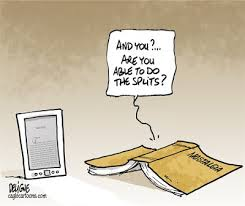
Today we’re talking tablets versus textbooks in the first of a series of blog posts inspired by cartoons. Does anyone have a good memory of their education textbooks? Textbooks are cumbersome… anyone disagree? Most textbooks are a bulky nuisance weighing down backpacks of elementary to high school students nationwide. What I’m wondering is: why burden shoulders and backs with textbooks when the solution is already present in mobile education? Cisco BYOD Solution for K12 Education transforms education allowing the freedom to go anywhere on campus with a mobile device and still perform the tasks you would on a wired network. Here’re my two cents on why schools should consider making the switch away from textbooks. Continue reading “[Cartoon Catalyst Blog Series] The New Age Textbook – Implications of BYOD on K12 Education”






 Are you using or evaluating Windows Server 2012 and Microsoft System Center 2012 to deliver higher performance and scale for your workloads? If so, then take advantage of an