
Meeting the needs of every customer in the AI era
As the demands of AI and machine learning (AI/ML) continue to surge, organizations of every size—including enterprises, service providers, neoclouds, and hyperscalers—are reimagining their data center networks. The era of traditional high-performance computing (HPC) networks is giving way to a new generation of architectures designed to deliver seamless scalability, high performance, and the flexibility required by modern AI/ML workloads.
Scaling for AI/ML is no longer just about adding more capacity; it requires fundamentally new approaches that prioritize open, sustainable, and vendor-agnostic solutions.
Disaggregated architectures are at the forefront of this evolution, enabling organizations to decouple hardware and software components. This approach allows for independent scaling, more granular control over resources, and the ability to mix and match best-of-breed technologies. By leveraging disaggregated architectures, organizations gain the agility to adapt quickly, leverage open-source technologies to avoid lock-in, and ensure efficient resource utilization across increasingly complex environments.
Cisco 8000 Series and SONiC: Tailored for modern demands
Cisco is leading the AI networking transformation, embracing disaggregated architectures and meeting customers wherever they are in the digital transformation journey. For customers seeking choice and openness in their network operating systems, Cisco offers robust support for Software for Open Networking in the Cloud (SONiC) on Cisco 8000 Series switches powered by Silicon One. This solution empowers organizations to select the network operating system that best fits their operational needs, including open source, while taking full advantage of Cisco industry-leading hardware capabilities.
A key enabler of this flexibility is the Switch Abstraction Interface (SAI), a core component of SONiC. SAI provides ASIC and hardware abstraction, allowing for seamless portability of network operating systems across diverse hardware platforms (Figure 1). This abstraction layer enables vendors to deliver consistent programming interfaces to their ASICs, while also enabling the development of highly differentiated hardware solutions.
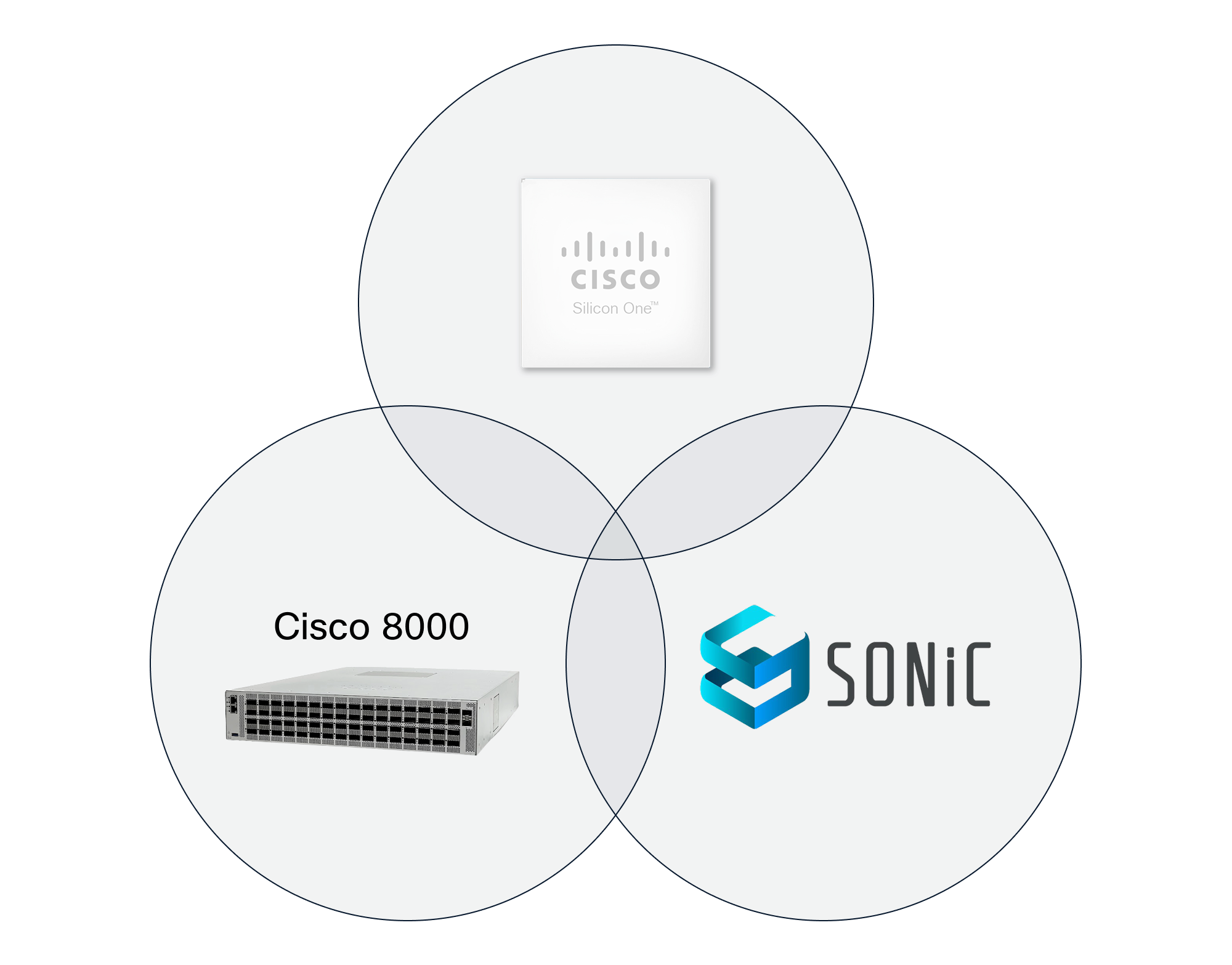
Figure 1: Building flexible, scalable, and sustainable network infrastructures
Cisco 8000 Series switches, powered by Silicon One, deliver a wide range of speeds—from 100G to 400G, 800G, and soon 1.6T—making them ideal for both general-purpose data centers and the most demanding AI/ML clusters. By combining the high performance of Cisco Silicon One, the advanced switching capabilities of Cisco 8000 Series switches, and the SONiC open, modular architecture, organizations can confidently build flexible, scalable, and sustainable network infrastructures. This solution enables seamless provisioning and operations across multiple vendors and a wide variety of use cases, empowering customers to modernize and expand their data centers to meet the challenges and opportunities of the AI era.
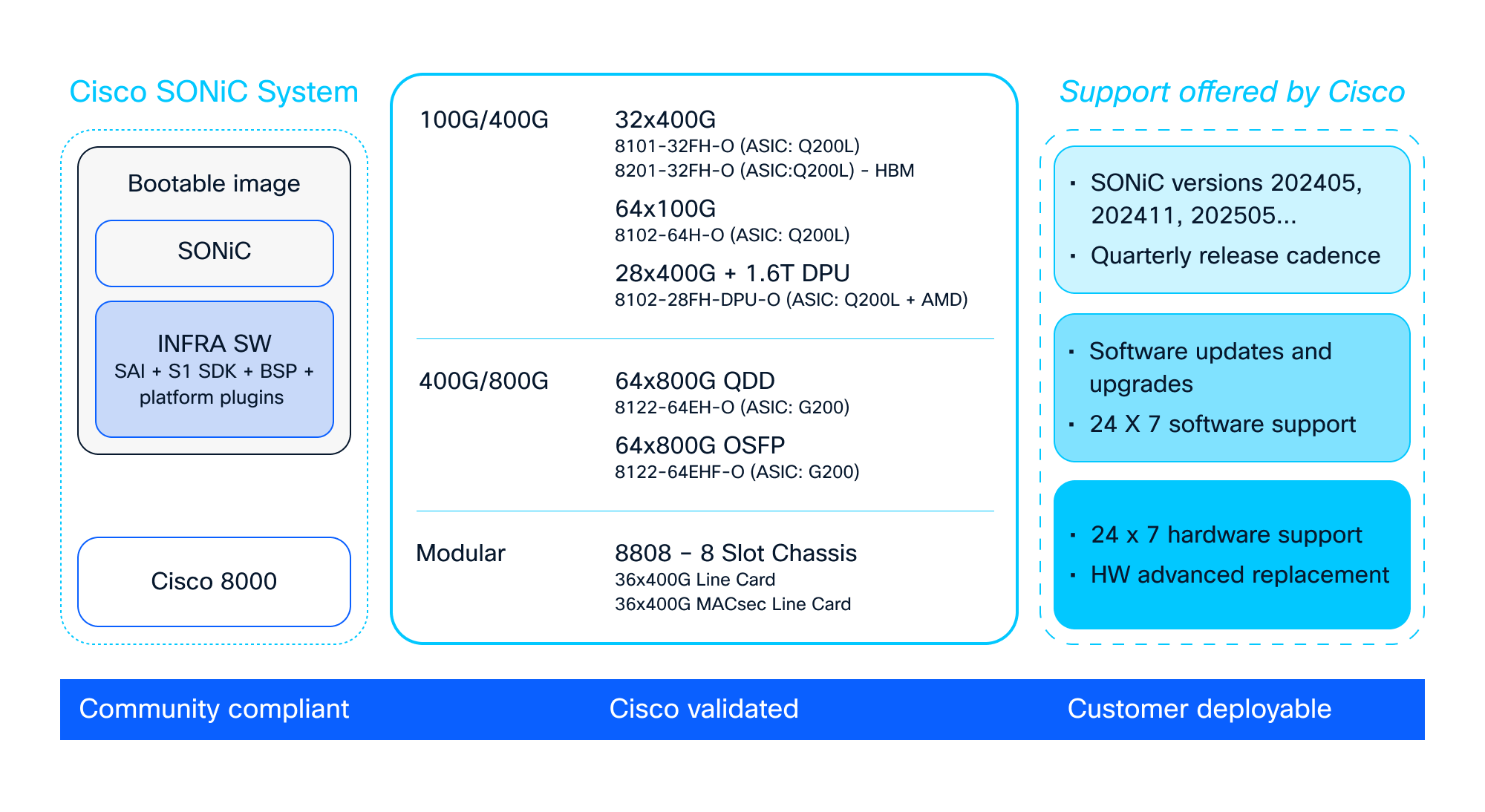
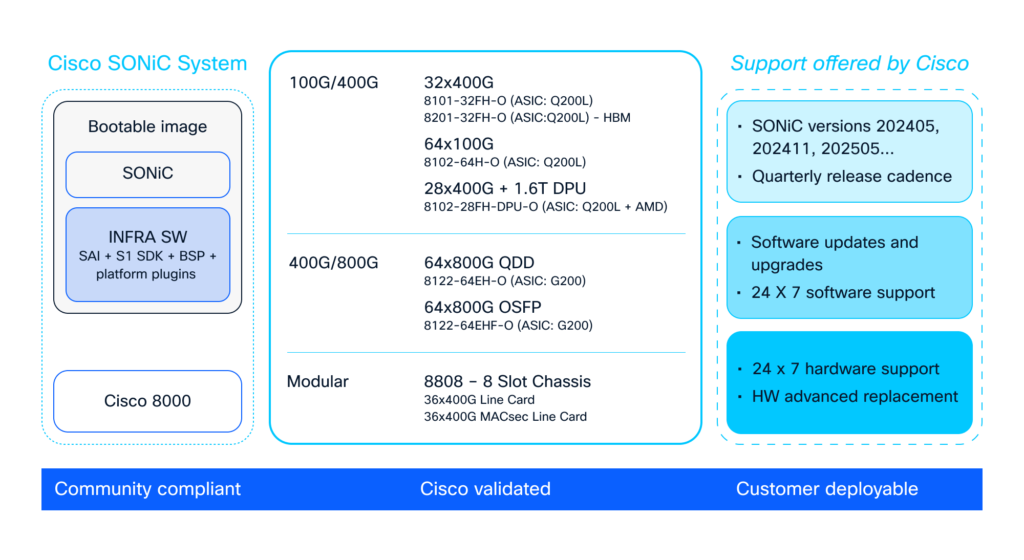 Figure 2: Cisco 8000 Series SONiC Portfolio
Supporting diverse architectures for multiple use cases
Supporting diverse architectures is crucial for AI/ML environments because it enables organizations to efficiently address a wide range of performance, scalability, and workload requirements, ensuring optimal network agility and resource utilization as demands evolve.
Cisco 8000 Series platforms with SONiC empower three essential data center architectures:
- IP/BGP fabric:
The most widely deployed fabric architecture, IP/BGP supports both two-tier and three-tier Clos designs. It offers simplicity, scalability, and a mature feature set for both IPv4 and IPv6, making it ideal for organizations seeking a proven and resilient front-end network. - VXLAN EVPN fabric:
Advanced, multitenant networks are powered by features like EVPN multi-homing, host mobility, and seamless workload migration. This model is ideal for service providers and enterprises modernizing their front-end environments. - AI/ML backend fabric:
Purpose-built for the most demanding AI/ML applications, this solution features a lossless, non-blocking design and supports a wide range of AI network architectures—including fat-tree and rail-optimized designs. Advanced features such as QPID hashing and adaptive routing and switching (ARS) with flowlet load balancing and packet spraying optimize traffic distribution. Enhanced congestion management—including support for Remote Direct Memory Access over Converged Ethernet v2 (RoCEv2), Priority Flow Control (PFC), and Explicit Congestion Notification (ECN)—ensures high throughput and low latency, even at scale. Additionally, integrated AI observability tools provide deep visibility into network operations, making this solution ideal for supporting large-scale AI/ML clusters across diverse topologies.
Flexible SONiC consumption models on Cisco 8000 Series switches
For SONiC consumption on Cisco 8000 Series platforms, Cisco offers flexible options to suit varied customer needs, including:
- Deep integration and customization:
Source code sharing for hyperscale customers enables tailored SONiC deployments. - Ready-to-deploy solutions:
Fully compiled SONiC images are available for immediate, reliable deployment. - Build-your-own flexibility:
SDK, SAI, and platform code binaries are provided for customers who want to compile their own SONiC solution on Cisco hardware.
Our flexible SONiC consumption models on high-performance Cisco 8000 Series switches empower every organization to adopt SONiC in a way that aligns with their operational and business goals. With rich feature support, enhanced programmability, open APIs, automation, and comprehensive observability through deep hardware and software telemetry, customers can future-proof their investments, streamline operations, and accelerate innovation—while maintaining the freedom to choose solutions that best fit their needs.
Empowering the SONiC Ecosystem: Cisco leadership, investment, and community engagement
Cisco is not just adapting to the AI era—we’re leading it.
We are among the top 5 contributors to the SONiC community, actively participating in key working groups and continuously investing in new features, integrations, and enhancements. This deep community engagement ensures that our customers benefit from the latest innovations and industry best practices, driving a more robust and interoperable open networking ecosystem.
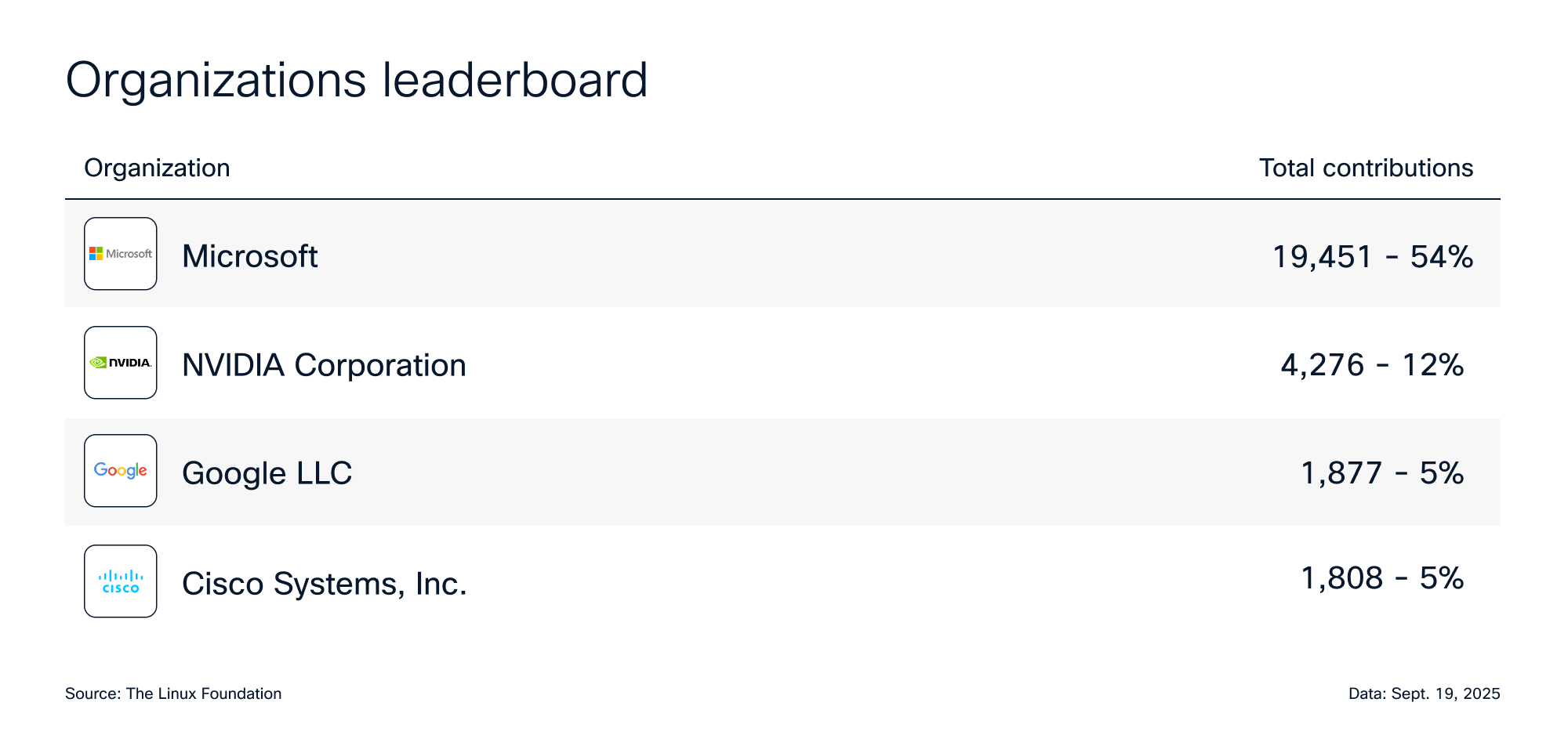
Figure 3: Top contributors to the SONiC Foundation
See innovation in action at the 2025 OCP Global Summit!
Join us at the 2025 OCP Global Summit to experience Cisco leadership firsthand. Discover how Cisco 8000 Series switches and SONiC can help you build a modern, open, and scalable AI-ready data center—optimizing performance for every use case, from front-end multitenant environments to high-performance AI/ML backends (Figure 4).
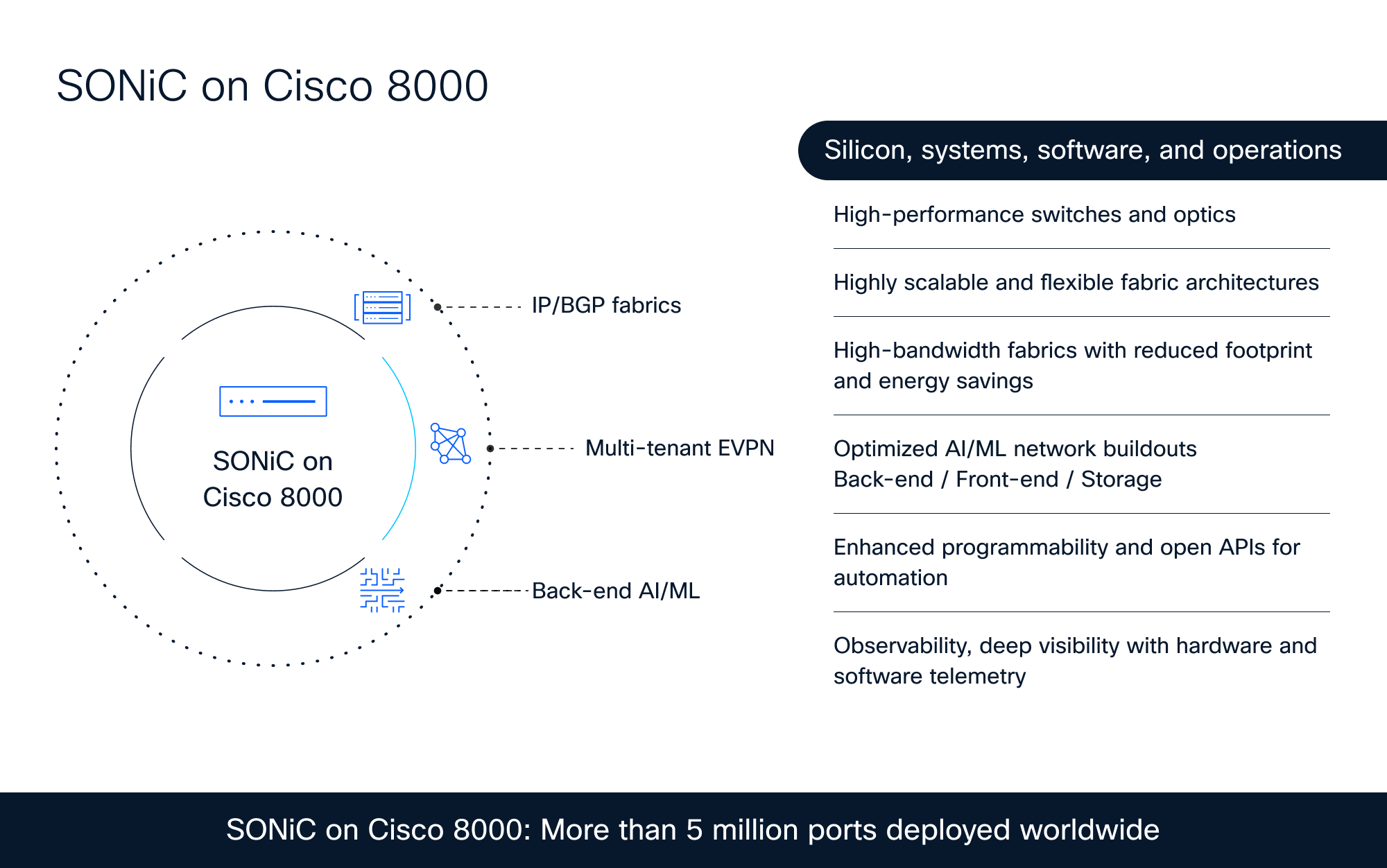
Figure 4: SONiC on Cisco 8000 Series switches
Visit the Cisco booth at OCP to see our solutions live in action and embrace the opportunity to revolutionize your data center infrastructure for the AI era.