For most of my career, if you asked me where I worked, the honest answer was, “It depends on the month.”
My Career Was a Constellation, Not a Line
I did what curious people do — I went looking. I’ve been a founder of my own tiny venture. A freelancer. A startup engineer. A very happy R&D engineer inside a 400,000-person consultancy. A product engineer building systems for financial trading floors. An R&D intern at a major streaming platform. A voice-core lead at one of the world’s largest telecoms.
The routine was always the same: arrive, find the hardest problem in the stack, and climb all the way inside it. From the outside, my resume can look restless — like someone who couldn’t sit still. It never felt that way from the inside.
Underneath every one of those jobs was the same slightly nerdy obsession. You know the moment on a video call when somebody freezes mid-sentence and briefly becomes a Cubist painting? Most people sigh and say, “You’re breaking up.” I want to know which hop gave up. But what I genuinely can’t get over is the other ninety-nine percent of the time when it just works.
Think about what that actually takes. My face and my voice get chopped into packets, handed between a dozen networks that have never met each other, pushed through a cable lying on the ocean floor, and reassembled into what’s recognizably me on the other side of the planet, in about a tenth of a second, while nobody on the call notices a thing. Fourteen years in, I still want to know every single thing it took for those packets to make the trip.
That curiosity has propelled me across companies, countries, and continents.
Curiosity Never Clocks Out
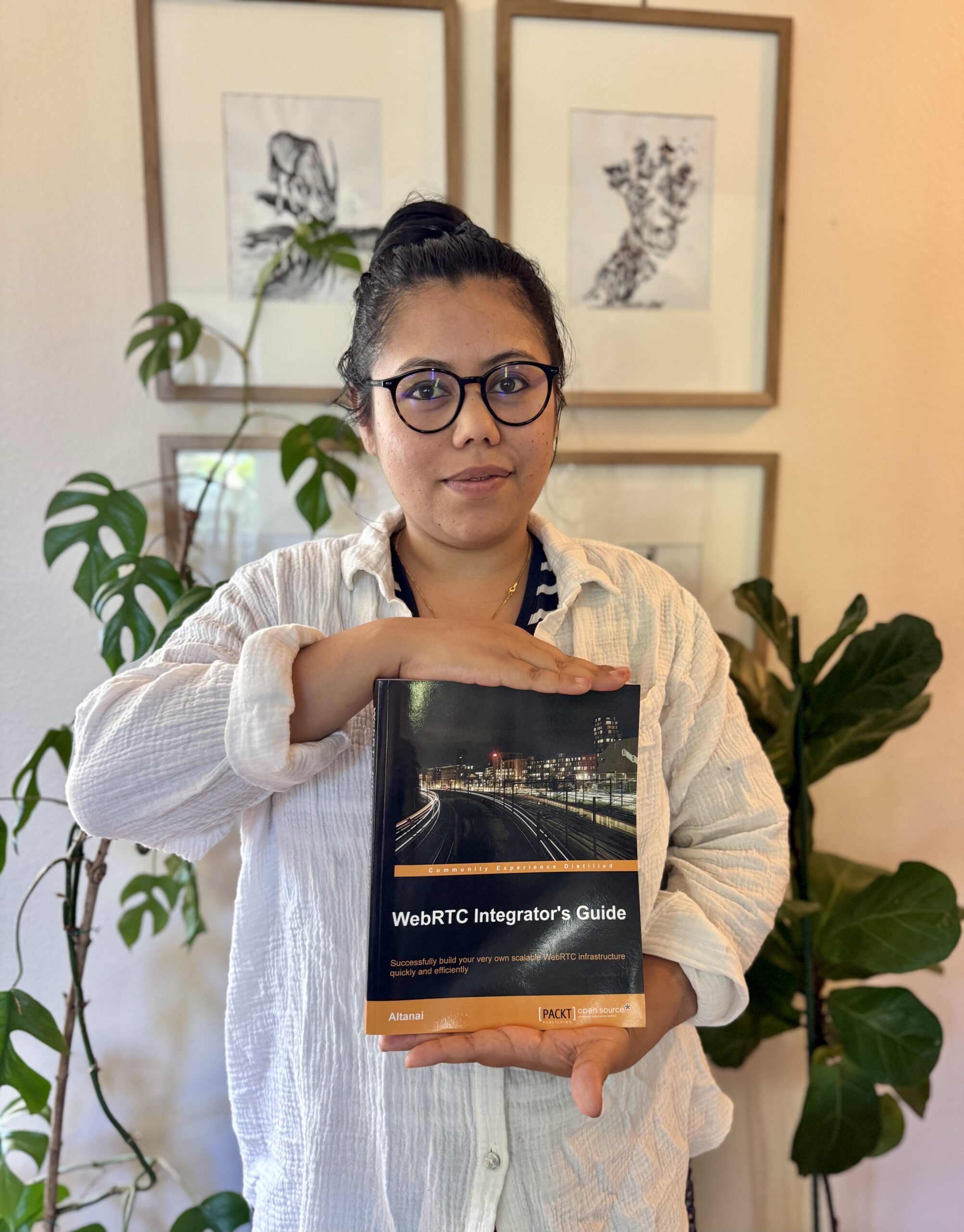
My curiosity never clocked out. I spent late nights on the floor of my apartment, surrounded by signaling diagrams, writing the WebRTC Integrator’s Guide — a then-brand-new way for browsers to talk to each other in real time — a book nobody asked for, but one that is still cited by engineers and earns royalties to this day.
Around the same time, I also built Ramudroid — an open-source, solar-powered robot that drives around picking up litter with a camera and a bit of edge ML. Neither project was for a paycheck, but both were proof that the things you build out of pure curiosity can teach you just as much as the things you build within a job description.
I have never once been bored.
Trading "Only-One" Status for Belonging
Every single one of those chapters taught me something I still use. But each one was also missing a piece. Sometimes I had deep technical ownership but no scale. Sometimes I had enormous scale but no real ownership. And sometimes I had real impact, but the parts of me that weren’t strictly relevant to the job description — the book, the robot, the questioner — stayed in their own compartment, separate from work.
For most of those years, I was also the only woman in the room. Real-time protocol work is about as deep as deep tech gets — SIP, ICE, TURN, congestion control — and the rooms where those decisions get made have historically been small and overwhelmingly male. I got good at holding my own in them. I came in over-prepared, argued from data, and won the technical arguments I needed to win. But being the only one does cost you something, and what it usually costs are the parts of yourself you’ve decided not to bring in.
I wanted all three — depth, scale, and belonging. Somewhere along the way I’d quietly decided that was a fantasy.
The Day I Was Handed the Pen
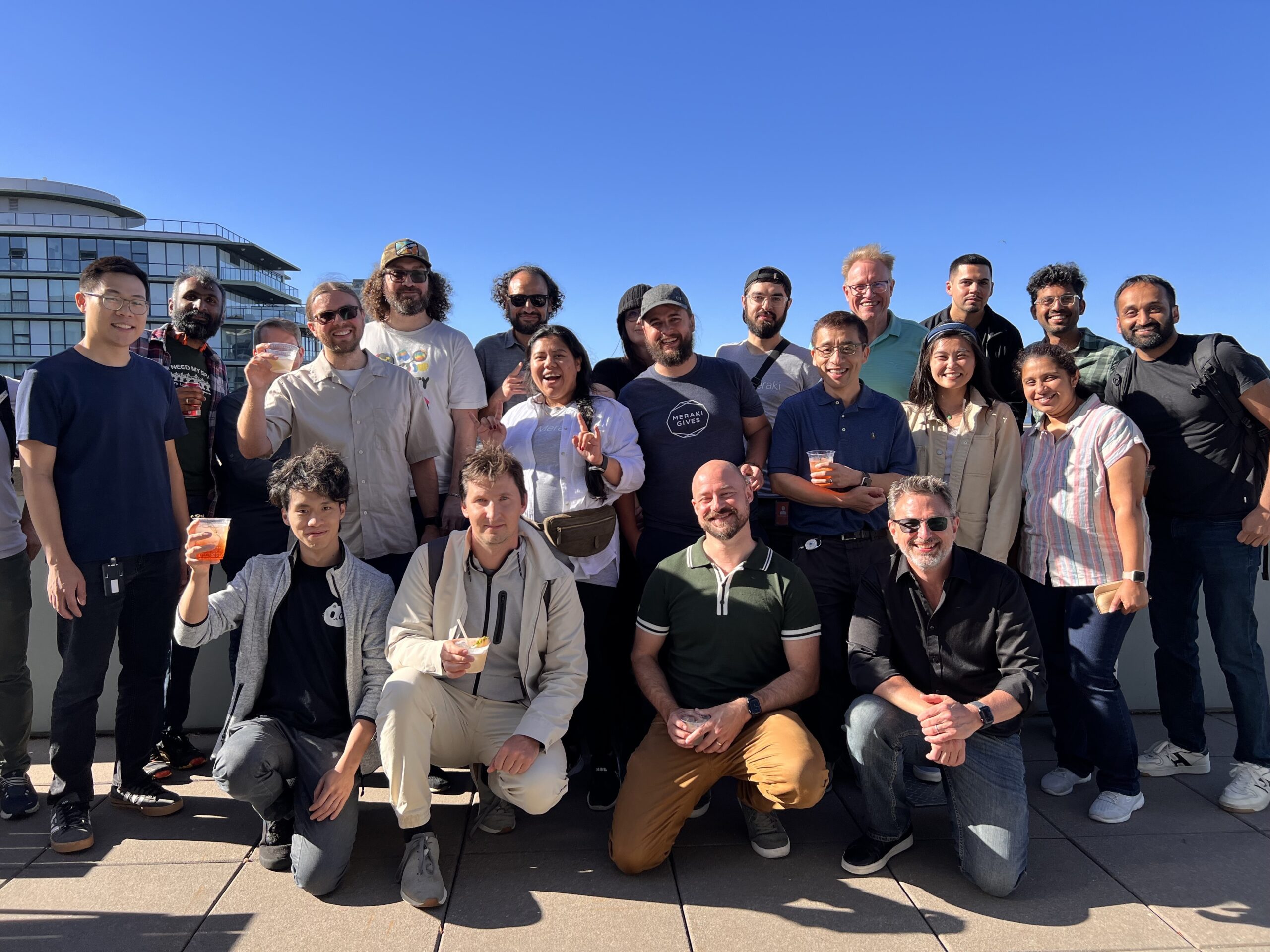
I joined Cisco in 2023, on Meraki’s Secure Connect team. As a networking protocol developer, my job is building the protocol stack behind VPNs — the tunnels that carry an entire company’s traffic between its offices, its people, and the cloud. It’s the same question, with the stakes turned all the way up: how does this packet cross a dozen networks nobody controls and come out the other end unread? Three months later I was in a design review, making a case that had been building in my head: our VPN tunnels were choosing paths using rules that couldn’t see what the network was actually doing at that moment. What if the tunnels could weigh live conditions and choose for themselves?
I braced for the reaction I’d been trained to expect — the polite nod, the, “Let’s take that offline,” the idea resurfacing three weeks later in someone else’s voice. My lead’s answer was, essentially, “Great — it’s yours.” That’s the moment I think of. Not a promotion, not an award. Just being handed the pen, that early, on something that mattered.
I got to design the Tunnel Weight Algorithm — a dynamic, condition-aware way for VPN traffic to choose its best path in real time — and the high-availability architecture that grew out of it. That work now runs across tens of thousands of tunnels serving more than a thousand international enterprises, including Fortune 500 companies. I became the recognized subject-matter expert for the protocol stack, and took on Sev1 on-call — the go-to responder for our most critical incidents — for systems carrying our most sensitive traffic.
All of this, by the way, from a small place north of Seattle 🏠. I work remotely, so I spend my days keeping other people’s traffic moving smoothly across the planet — and then freeze mid-sentence on my own team call and briefly become a Cubist painting. My home Wi-Fi is deeply unimpressed by my resume.
That’s the depth and the scale I’d been chasing for a decade, in the same job, at the same time. And the questions keep getting better. Lately, they live where AI and networking collide, from AI-aware path selection to spotting AI-driven manipulation of real-time calls. But the part that actually settled it for me is smaller than any of that: I’ve never once had to choose between being an engineer here and being me.

In the same stretch of years, I’ve been able to grow as a multidimensional builder. I designed, I programmed, re-architected aspects of Cisco Secure Connect and watched it grow, filed patents, published IETF Internet-Drafts, and spoke at conferences — sometimes in the same week. I’ve judged student science fairs, coached robotics students, and mentored interns. Nobody asked me to pick a lane.
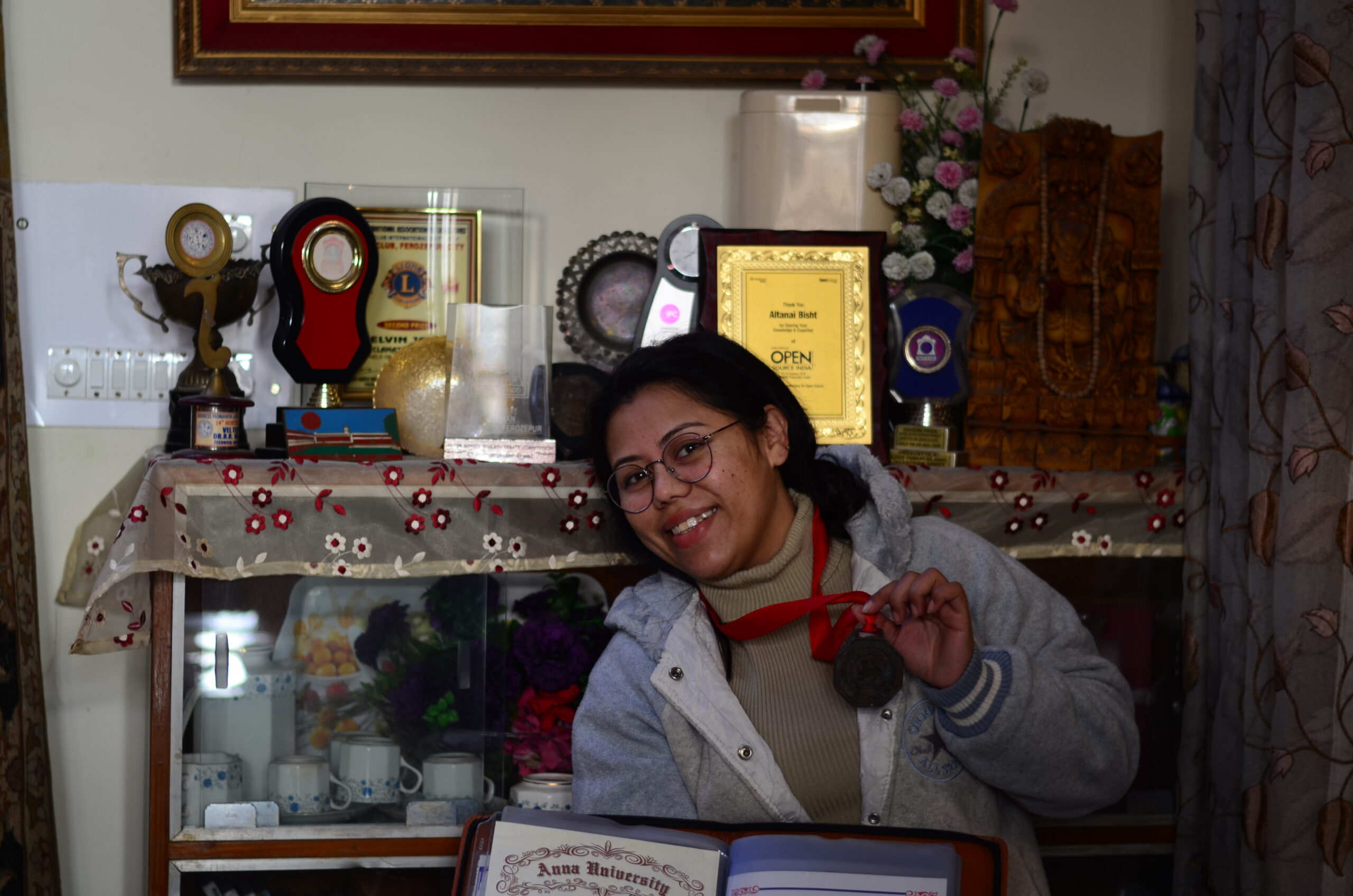
I’ve collected over two dozen recognition awards so far here at Cisco, but the one that means the most isn’t on any wall. It’s logging on each morning knowing that the whole, wide-ranging relentless questioner, over-curious version of me is the version they actually wanted. There’s no separate compartment.
Unpacking My Bags
If you’d told my younger self — the one bootstrapping a product, freelancing between gigs, hopping between startups and giants — that all of it was preparation, I’m not sure I would have believed you. It felt like wandering. It turned out to be a map.
Every place that didn’t quite fit taught me exactly what I was looking for. When I finally found a team where protocol design, global impact, and genuine belonging all showed up in the same job, I stopped looking.
If your resume looks more like a constellation than a straight line — especially if you’re a woman who’s been the only one in the room, wondering if the "real you" and the "employable you" have to be different people — I want you to know they can be the same person.
Fourteen years. Seven companies. One question. Cisco is where I finally unpacked my bags.
Ready to find a team where you don’t have to choose between professional growth and being yourself? Explore your next chapter on the Cisco Careers site.
Subscribe to the WeAreCisco Blog.