Avatar

When I was offered an internship at Cisco Ireland as part of my university degree, I wasn’t sure what to expect – would I be bored, would I be stressed, or would I be welcomed and thrive in my new environment?

I had to wait four months between when I accepted my offer to my first day. So, that was four months of cramming and coding to finish out my semester, with an extra strong side of nervous energy about what my new working environment might be like. Stereotypical responses like, “You’ll be fine” and “You’ll have a ball”, and “Enjoy College while you can” – well, those didn’t particularly help either.

And then my first day at Cisco arrived.

From the moment I first arrived on site at Cisco Galway, however, I knew it would be an internship like no other. Almost instantly my nerves vanished.

The bright, open spaces and use of colour immediately had an impact on me. Almost everyone had their desk customised in some shape or form: with photographs, action figures, posters, and even county flags! One thing I feared about joining the corporate world was the lack of individuality you often see in the movies and on TV: everything is a cold grey colour and “modern” looking; everyone’s the same, there’s no personality.
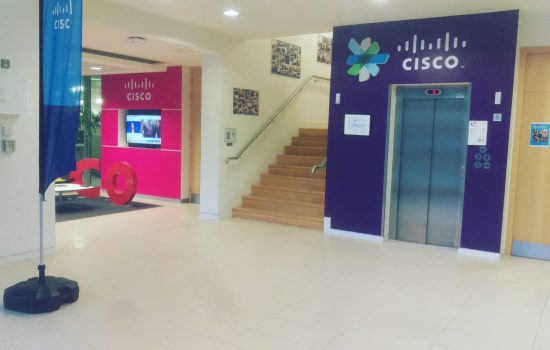
This is NOT the case at Cisco!

Employees roam the halls here happily and you can tell they’re wearing what they’re most comfortable in – for some that’s suits and bowties, for others it may be more casual and relaxed.  But everyone is comfortably themselves – and we’re embraced for it! Our individuality and personalities are seen as an asset to our teams and the innovative technology we’re working on, and I can see this ability to be yourself in the work place also helps everyone enjoy their work even more.
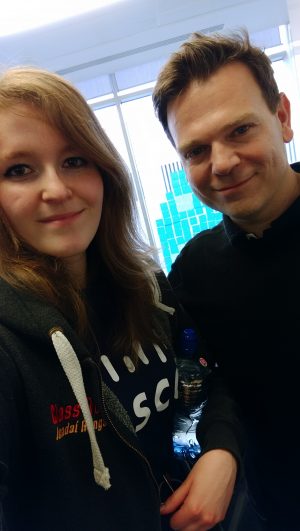
Imagine my surprise when, in my first couple of weeks, I was brought into help my team and given real coding problems. This was something I was not only surprised by – but also truly delighted at. I’ve heard plenty of stories from friends who are interning at various companies on how the management won’t trust them with anything. With the knowledge that Cisco was different – I couldn’t believe how nervous and apprehensive I had ever been to start! I am now constantly excited and anticipate the next day – and even look forward to Mondays rather than dreading them! Who knew you could love your work week just as much as the weekend?

You don’t have to travel too far through the halls of Cisco to know – many of the Cisconians (the fun nickname Cisco employees give themselves) feel the same exact way about Mondays now.  J

As a result of my experiences at Cisco Galway, I wasn’t surprised when I heard that we won first place in the Great Place to Work awards for Ireland. Seeing the effort that the team put in, and how everyone around me can have a laugh and really enjoy their working day – it truly is one of the greatest places to work! Along with the recent celebration of 10 Years of Cisco Galway, the party seems to never stop!

I’ve quickly come to appreciate where I’m working, and am always trying to make the most out of my internship. From the colourful lobby, to constant fun events taking place and the happiness of everyone around me, I can honestly say I’m going to miss it when I go back to university to finish my studies, but I am so glad to have had this experience and value the knowledge Cisco has given me throughout this journey.


Want to intern at Cisco? Check out our opportunities!

 

Authors

Avatar

My LinkedIn feed is constantly deluged with updates about my connections landing new roles, learning new skills and making an impact at their respective companies. It seems every day I hear about one of my peers taking on more responsibility and becoming more influential. Yes, I recognize this is probably true of most LinkedIn feeds, not just mine. But there is an underlying, noteworthy theme that runs throughout my LinkedIn profile and social feed:

Most of my connections are millennials… rising millennials.

There’s a pretty decent chance that “millennial” is on your list of least favorite buzzwords, I know, but stay with me. We’ve all heard that this generation is, well, different. As a whole, they’ve been accused of lacking work ethic, having short attention spans and being entitled (😑). On the flip side, we’ve also heard they’re highly valued in the workplace because they’re fresh, creative and flexible (😎). Whether the stereotypes are true or not, it’s time we start seeing millennials for what they truly are… your customers.

OK, you got me. I’m a millennial, but before you infer a bias, just know that I’m also here for the same reason you are – I’m a marketer who understands the value of knowing my audience. And despite being a millennial, I needed some help understanding just how much power I have as a customer – so I turned to the data. The experts from Sacunas shared some critical audience insights in their report on The Next Generation of B2B Buyers.

So, how important are Millennials?

According to the report, 73% of millennials today are involved in their company’s product/service purchase decisions. As they get older, this percentage will only continue to increase – so all those ladder-climbing connections from my LinkedIn feed aren’t overachievers or anomalies, they’re just following the trend line. They’re quickly becoming the new decision-makers for their companies, and for us marketers, it’s important to understand how they make their decisions, so we can strategize how to reach and relate to them.

  • Google First, Ask Questions Later – 56% of millennials said that digital channels (search engines, websites, social media) are an important part of their buying process. When I was searching for customer insights, before I ever thought to talk to someone about it, I did a Google search and the content that was built well for SEO won my attention. Clearly, I’m a statistic.
  • Mobile Matters – 82% feel that mobile devices are an important part of their product/service research. I should mention that the aforementioned Googling was done from my smart phone.
  • Social and Savvy – 85% are on social media, with Facebook being the leading choice for researching new products and companies. When my grandmother added me on Facebook, I had to re-evaluate if it was still cool enough for me. Turns out it is, and not only do I research companies and products on social media, I expect them to be both present and active if I’m going to take them seriously.
  • Seeing is Believing – this is a generation of visual learners who are attracted to video and photo above any other type content. I grew up watching Mighty Morphin’ Power Rangers, and you better believe when I recently saw a business-related blog post that led with a gif from the show, it caught my eye and I clicked and read that content.

How do you actually reach these guys?

Sacunas reported that the #1 overall research insight was this: Digital is the most important sales and marketing channel for B2B Millennial buyers.

Their words, not mine.

“Millennial” is considered a buzzword for a reason – you’ve heard insights about them before. But there’s never been a better time to take these insights seriously. Through Marketing Velocity, Cisco provides resources that help you digitally transform your business and tell your story in a way that actually resonates with this generation of decision makers.

Cisco is going on this journey with our partners. When it comes to effectively reaching prospective millennial buyers, like myself, it’s go digital or go home. Or in the famous words of my childhood hero (and recent box office success), the red Power Ranger:

“It’s morphin’ time!”

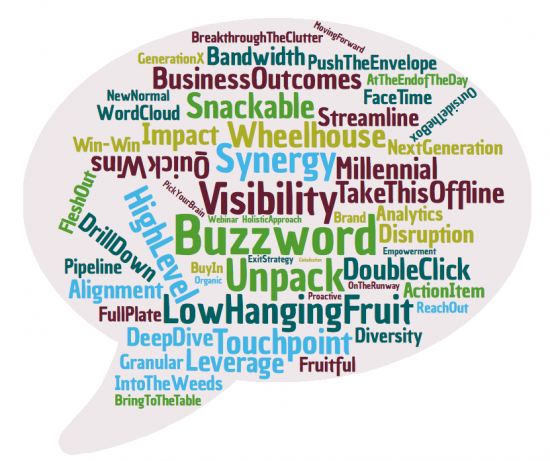
Did your favorite (or least favorite) make my Buzz-Word Cloud? Did I leave it out? Let me know in the comments below or on Twitter!

Authors

Matthew Ingram

Social Media and Blog Manager

Global Partner Marketing

Avatar

Join us at DockerCon to learn how the solutions we are developing with Docker will make it easier for enterprises to adopt containers in production. Cisco is offering a hands-on lab, 1×1 meetings with experts, demos and a presentation.

Continue reading “Cisco at DockerCon – Making Container Adoption Easier”

Authors

Ken Spear

Sr. Marketing Manager, Automation

UCS Solution Marketing

Avatar

#CiscoChampion Radio is a podcast series by Cisco Champions as technologists. Today we’re discussing New Wireless Goodness.

Get the Podcast

  • Listen to this episode
  • Download this episode (right-click on the episode’s download button)
  • View this episode in iTunes

Cisco Guest
Cristian Raducanu (@c_raducanu), Product Manager

Cisco Champion Hosts
Rowell Dionicio (@rowelldionicio), Network Engineer
Lee Badman (@wirednot), Network Architect

Moderator
Lauren Friedman (@lauren)

Continue reading “#CiscoChampion Radio, S4|Ep. 4: New Wireless Goodness”

Avatar

Wireless used to be simply a backup option to connect to the network for many enterprises. Wi-Fi was useful but certainly not mission-critical. No longer. Wireless has now become the center of almost any enterprise’s digitization strategy. Here are some anecdotal examples. The world’s largest amusement parks run their rides on a wireless connection. Imagine a drop in connection and its ramifications. Similarly, giant online retailers stand to lose a million dollars per second of a wireless connection loss since the robots powering their supply chain would potentially stop working. Likewise, think of the impact of a stable wireless connection powering about 40% of the equipment in a typical hospital setting.

The evolution of a thriving wireless-based ecosystem and its innovation have made it the default access mechanism for many enterprises. Cisco has been leading the industry in driving innovation in the wireless space for a long time. This has enabled us to create a host of wireless-based solutions that directly impact our customers’ business outcomes. We are proud to be able to offer a 360-degree customer experience with innovation across the entire wireless spectrum (pun unintended!).

Wireless-based innovations are abounding and these are being deployed to further varied business outcomes. From technologies that are creating new experiences like Optimized Roaming, which allows users to seamlessly connect to the best access points as they are move around, to Cisco CleanAir© that helps reduce interference between Wi-Fi and non-Wi-Fi devices to run multiple high-bandwidth apps at the same time. Other solutions like Apple Fast Lane allow for priority applications on Apple devices to run at optimal performance because the system intelligently understands where the traffic is coming from. And still others that are actively accelerating the creation of new business ecosystems like Flexible Radio Assignment (FRA), which automatically adjusts to a dual 5GHz frequency through software for better capacity and performance in high-traffic environments. FRA doubles the capacity for each access point and reduces the need for purchasing redundant access points as well as deploying expensive infrastructure like cabling.

Several new use cases are emerging that allow enterprises to derive further value of out of their wireless infrastructure. One such scenario that allows all the wireless devices in an entire system to work together is a big-box store environment, which intends to offer a 10% discount for the holidays. Instead of changing price tags by hand or expending manpower to make changes by category in the system, the system can be instructed wirelessly to instantly reduce prices on all products by 10%.

And, this brings us to the final frontier for wireless that we are starting to knock on. Machine learning and artificial intelligence are enabling our wireless connections to become smarter. The time when smart networks using artificial intelligence can diagnose their own issues, finding problems that would take human beings a very long time to sift through, and then fix them without our intervention is not so far away. With machine learning, Wi-Fi will begin automating the basic tasks in networking thereby truly enabling business outcomes rather than just serving as a means to connect the network.

The possibilities when wireless devices are working in concert, connected seamlessly, and managed with ease are infinite. Join us on this journey and discover the true power of your wireless infrastructure.

Would love to continue the conversation @aoswal1234.

Authors

Anand Oswal

No Longer with Cisco

Avatar

Kip Compton has an interesting story. He’s an MIT grad, he was raised by a mom that was a computer programmer back when pretty much nobody’s mom was a computer programmer, and he’s Cisco’s VP of Cloud and Platform Services, which gives him loads of interesting insight into the state of cloud today. Tune in to Episode 3 of Cloud Unfiltered to hear what Kip has to say about:

  • How he got into tech
  • Why he’s led so many different groups at Cisco
  • How the cloud conversation has changed over the past year and why that’s so important
  • The difference between hybrid cloud and hybrid IT
  • Why security, performance analytics, and the network are critical to hybrid IT
  • Why the winners in the cloud transition will be the ones who master culture change
  • What Cisco has to offer companies as they embrace the cloud

See the video podcast on our YouTube page, listen to the audio version on SoundCloud, or read the transcript if you prefer. The audio is a little dodgy on this one at times, but hang in there—the blips are brief and the content is worth it. And if you like what you hear, we invite you to subscribe to our channel so you don’t miss any of the other exciting podcasts we have scheduled over the next several months.

Authors

Ali Amagasu

Marketing Communications Manager

Avatar

We all have those times in our lives when we feel like standing still for a moment to think about the meaning of it all. Why are we here? What have we achieved so far? Are we happy? How many things have we checked off our bucket list, and why does time seem to go faster as we grow older?

I will be turning 50 next year and my bucket list is still the size of a dictionary. I want to play in a band again, visit at least twelve more countries, become fluent in Spanish, Italian, Portuguese and Greek – just for the heck of it. I want to publish a book, be a granddad someday and, first of all, stay healthy and die young at an extremely old age, if you see what I mean.

One item I crossed off my list already a long time ago is finding a good job in a great place to work. I came into Cisco about a decade ago as part of the Scientific Atlanta acquisition. I love science, technology and people. I love my job and my colleagues – some of whom I have known for more than twenty years. I love my life at Cisco.

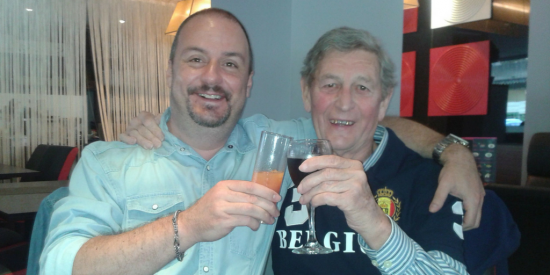
Kris and Guido.

Still we all have those moments in our lives when we need a little pushing. In the spring of 2014, my father-in-law was diagnosed with gallbladder cancer. After a hard and courageous struggle that lasted almost three years, he finally let go. He was 78, and he had worked hard until his late sixties. He was far from a technology expert, but he was an excellent salesman and most of all my best friend. He was a granddad, too, and he traveled to more countries in his life than I probably ever will. Even though quite a few things on his bucket list were left undone, I like to believe he died a satisfied man – only a couple of years too soon.

The process of losing a loved one, unfortunately, is something we all have to cope with more than once in our lives. And while Cisco encourages their employees to celebrate the good times, milestones, and achievements – it’s nice to know that we can rely on their full support when things go south for a while too. Dealing with grief is never easy and the number of other things you need to take care of when someone dies is just unbelievable. That being said, I was just as overwhelmed by the sympathy and support of my manager, my team, and many others at Cisco provided in that time.

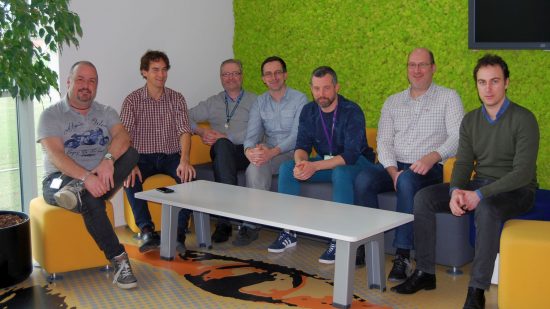
“More than just a team” — Kris (far left) with Eric, Luc (Kris’s team leader), Bart, Thijs, Rob and Tom – all together, 135 years of Cisco service!

There are many different reasons why I love where I work, but the team spirit, energy, and kindness of the people around me here at Cisco are all truly amazing. When I returned to the office from a couple of days’ much needed bereavement leave, I was called into my manager’s office. At my father-in-law’s express request, we had included a line on his death notice kindly asking people not to send flowers or wreaths, but to donate a little money to the Flemish Cancer Foundation instead. My manager gave me an envelope with over 250 euro that he and my teammates had collected while I was out.

Deeply touched by their sympathy, my wife and I transferred the money to the Foundation that night. Giving back had never been so heartfelt.

I have a new item on top of my bucket list now, right next to “Stay Healthy”. I call it “Life Is Good, Live It Well”. I will try to check it off every day.


Want to work for a company that is passionate about giving back? We’re hiring!


Authors

Kris Claus

Project Manager

Software Engineering (Cisco BU: SPVSS)

Avatar

Win with Network Monitoring

The Cisco Security Incident Response Service team works every day with customers who have either experienced a data breach or have engaged our team to help ensure they are prepared for an incident before it occurs.

Our incident responders recently worked with a client whose organization had been targeted with destructive ransomware attacks.  The attack had rendered most of their critical infrastructure, such as domain controllers and email servers, unusable. To make matters more challenging, there was no aggregation of logs from these critical systems to a SIEM or other syslog solution for investigation.

The organization had been subjected to previous attacks and had taken steps to remediate the situation by specifically blocking use of “PSExec”, the popular remote administration tool included with Microsoft SysInternals Suite.  Limiting Remote Administration Tool usage and auditing the accounts able to perform remote administration is a popular recommendation for hardening against an attack. Blacklisting each type of remote administration can be much like a high-stakes game of whack-a-mole when it comes to security as tools and tactics change over time.

Forensic review of an affected workstation by our incident response analysts revealed a Windows Prefetch file with a handle to a batch script known to be used to install a malicious service. Prefetch files store a reference to any file the launching program accesses within the first 10 seconds of being run. This reference allows resources to be more quickly located for loading on subsequent restarts of the application. Due to this behavior, Prefetch files can often reveal interesting relationships between malware files and other programs on the system being reviewed.  This particular Prefetch file had a name that was particularly inviting for further review since it contained the name of a domain controller for the customer, such as the faked example, “PAEXEC-1234-DomainController_2.exe”.

Of particular interest to our team was whether the Prefetch file located was for the tool “paexec” openly available on the Internet, and what would cause another computer’s name to be part of the executable name on infected systems. PAExec is a Remote Administration Tool available for free download from “hxxtps://www[.]poweradmin[.]com/paexec”.

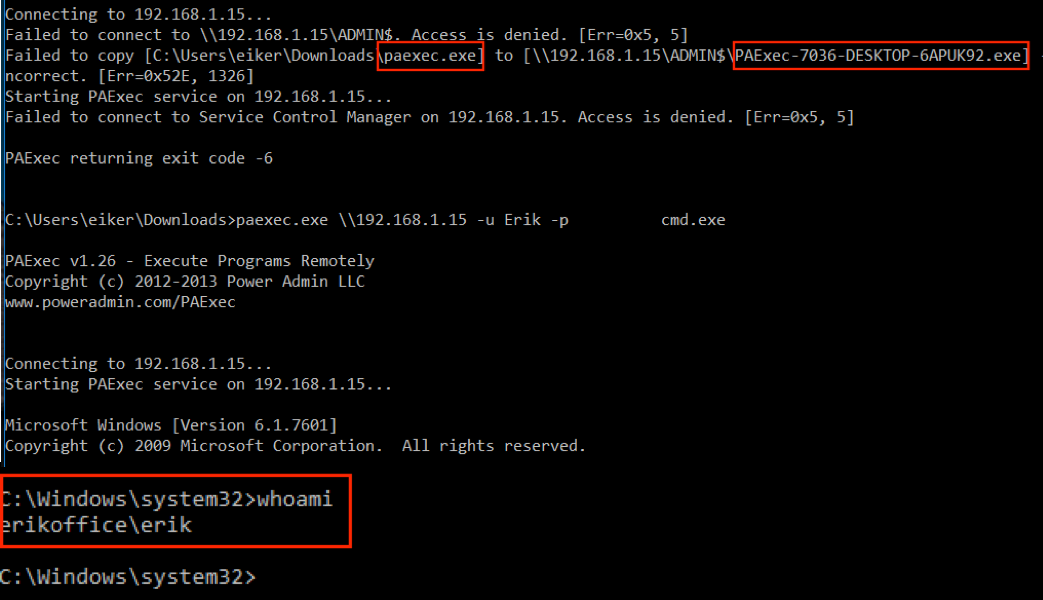
Many Remote Administration Tools are not malicious on their own. They are used to run remote commands and to remotely install software.  Upon download from the maker’s website, the executable was named “paexec.exe”.  The binary was found to have identical characteristics to binaries recovered during our investigation.  The next step was to discover how the binary naming could be affected by running a test.  Using a forensic laptop to create a session with the “paexec” binary on a personal computer with administrative privileges, it was found that “paexec” automatically copies itself to the “ADMIN$” share on the remote machine with the naming convention “PAEXEC-<process ID paexec ran under on originating computer>-name of computer session came from.exe”.

To further illustrate this, refer to Figure 1 below, where “paexec” was run on a machine named “DESKTOP-6APUK92”, with Process ID “7036”, and copied to a computer named “ErikOffice” with IP address “192.168.1.15”.  The first attempt at the session in Figure 1 was unsuccessful due to a wrong password, so the name of the binary that failed to copy to “ErikOffice” is highlighted:

Figure 1: PAEXEC Test to Remote Machine

The name of the binary on “ErikOffice” was verified to be “PAExec-7036-DESKTOP-6APUK92.exe” on the “Windows\System32” folder by default, and the executable was installed as a service. After running this test, our team was able to conclude the direction and time of lateral movement by the attacker despite a lack of event logs from the machines, or any aggregated logging for network visibility.

Attackers can always come up with another tool or method to bypass endpoint controls.  Some battles are best won at the network level.   With a Netflow monitoring and alerting system such as Cisco StealthWatch, an organization could configure zones of the network where Remote Administration is allowable, such as from System Administrator jump hosts or workstations, and either block or set alerts for attempted connections from anywhere other than that zone for such activity.

If your organization is facing an attack, or could use additional resources to prepare for an attack, consider reaching out to the experts on our Cisco Security Incident Response Services team.

Authors

Erik Iker

Senior Incident Response Analyst

Advisory Services