Avatar

The Network. Intuitive.

Introducing an entirely new era of networking — constantly learning, constantly adapting, constantly protecting.  Cisco Digital Network Architecture (DNA) foundation enables digital transformation for healthcare. Its software-driven service that delivers faster innovation with actionable insights, lowers costs with network automation, and reduces risks with security everywhere. It provides the flexibility you need for accelerated transformation, which is at the heart of healthcare innovation.

https://youtu.be/8LrQOVSUcVc

test

What can Cisco DNA for healthcare do for my healthcare organization?

Innovate faster with business and network insights: Generate real-time analytics to provide more relevant care and research experiences, increase clinician and staff productivity, and optimize space usage. The new network automatically collects device, application and user data and correlates it into insights. It uses machine learning to predict performance and enable proactive clinical and business operations.

Lower complexity and costs with automation: Roll out and update clinical, research, and factory networks faster and reduce day-to-day operational and network-management costs with automation, central management, and application assurance. The new network behaves as a system, automating mundane tasks, studying the changes and constantly learning. It turns days of work into hours and hours of work into seconds.  It shifts IT time to focus more on identifying new opportunities for innovation and driving new patient, clinical, and business outcomes.

See and act on threats: Secure critical patient data, medical devices, and clinical-trial research with continuous, faster threat detection and protection, with security embedded network-wide. Threats keep evolving, and we know healthcare is the #1 targeted industry by cyber attackers. The new network knows this too. It sees hackers even when they do not want to be seen. Even when they are hiding in encrypted traffic. It stops 20 million threats a day, and learns from every one of them. The new network can see the visible AND invisible threats. And that changes everything. 

What components make up Cisco DNA?

Software:

  • DNA Center is a better way to manage your network. Offers centralized, intuitive management that make it fast and easy to design, provision, and apply policy across your entire network environment.
  • Software-Defined Access. The industry’s first policy-based automation from the edge to the cloud takes a logical, policy-based approach that deploys and secures services and adapts to changes faster.
  • Analytics and Assurance. Abstracts network insights by collecting data from the network using the Network Data Platform and then identifies service-impacting issues before users do while enabling faster troubleshooting.
  • Encrypted Traffic Analytics (ETA). Enhances the ability of the Cisco network to act as a sensor and uncovers threats hidden in encrypted traffic using network analytics (without decryption). These threats are viewed within the Stealthwatch Management Console. ETA enhances the ability of the Cisco network to act as a sensor.

Hardware:

  • Network Data Platform collects data from the network, normalizes that data and then sends it to DNA Center to be viewed in the Assurance screen.
  • Cisco Catalyst 9000 Series is the first purpose-built platform designed for Cisco DNA. An open and programmable platform with integrated support for wireless and IoT devices. It extends our existing wireless, switch and routing DNA-ready infrastructure.
test

How can I learn more?

Visit cisco.com/go/dnahealthcare and contact your Cisco sales representative.

Authors

Barbara Casey

Senior Executive Director, Healthcare

Americas Business Transformation

Avatar

In the past five years, humanity has seen incredible advances in almost all areas of activity and knowledge. We’ve witnessed an unparalleled level of disruption by innovative entrepreneurs entering established industries and turning them on their head. Simultaneously, we’ve seen an explosion of research in the juncture of neurological research and mindfulness.

Advances in neuroimaging have allowed us to more precisely see what’s going on in the brain during many different activities and experience. And rigorous research in the new field of mindfulness demonstrates the significant beneficial effects of physical health and well-being, as well as increased effectiveness and skill in the workplace.

For more detail, see:

Although centuries-old, mindfulness has found its way into the corporate world. Google, Intel, P&G, Genentech, and Cisco, to name a few have turned to this field as a way to increase employee well-being and productivity.

Below, and in the following posts, Dr. Shauna Shapiro and I will explore six intersections of innovation + entrepreneurship and neurology + mindfulness. For each of these intersections, we explore the innovation insight, the connection with neurology, and finally how mindfulness practice can help.

The intersection points are:

  1. Innovation doesn’t exist without failure.
  2. An unchecked ego is an obstacle to innovation.
  3. If you can’t control your attention, you can’t innovate.
  4. What you practice grows stronger–including optimizing your work for process execution or innovation.
  5. When we resist what is, we suffer.
  6. Cognitive flexibility, openness, and the capacity to ‘pivot’ are necessary for innovation.

Today, we look at intersection No. 1: Innovation doesn’t exist without failure.

Startups have gained great status, and we often idolize those successful founders. However, often we oversimplify how successful startup founders attained their success. Many of us think the story goes like this: a genius has a great idea, the world thinks he or she is crazy, then he or she proves them wrong with great success.

It’s a fine story (good enough for a movie or two), but it’s often not reality. Any major success requires founders to start with an initial idea, test it, learn from why all or part of it didn’t work, iterate, try again–and continue to pursue the accelerated iteration cycle as quickly as possible. In fact, a founders’ ability to succeed is more directly related to their capacity to adapt quickly to what the iterative learning testing process shows them, instead of coming from a prescient ability to foresee the future and get it right the first time. This is a well-known phenomenon in Silicon Valley, and there are even books and conferences about it.

 However, as anyone who has experienced setbacks or even failures can attest to, it’s not easy to accept failure and quickly move on.

Part of why it’s not easy is because we often take these “failures” as personal, permanent, and global.

It’s quite natural to experience feelings of fear, frustration, disappointment, and grief when we confront a failure or setback. Some of us simply become consumed by these emotions and quit. Those who are successful typically accept the experience of the emotions. They let them rise, fall, and then pass away (as all emotions do),

Let’s look at why we struggle to let emotions run their course. Often, we judge ourselves for our failures and spiral into a pit of self-judgment and shame. As we become caught up in our emotions, and the subsequent stories we tell ourselves, our brain becomes emotionally hijacked by our amygdala. This inhibits our higher order reasoning (the prefrontal cortex) from coming to the rescue. In other words, our self-judgment and emotional overwhelm literally shut down the learning centers of our brain, inhibiting our perspective taking, and decrease our capacity to respond in our best interest.

Thus, when the prefrontal cortex has been hijacked, we’re not at our peak intellectual performance. And our ability to creatively and effectively move forward with our innovation or entrepreneurial quest will be jeopardized.

Learning to respond to setbacks and failures with equanimity and clarity may be the differentiating feature between future success and ultimate failure. It’s possible that many of the successful startup founders’ and historical innovators’ achievement is attributable more to their mental and emotional capacity to deal with failures than to sheer genius.

Mindfulness practice can help prevent emotional hijacking. First, it helps us see the situation clearly, objectively, and without shame. Instead of having our thoughts and emotions control us, mindfulness gives us the space to consciously, deliberately, and purposefully respond by keeping our prefrontal cortex on board.

To help, here’s a simple mindfulness practice to help increase your self-awareness and self-control.

Three-Minute Mindful Practice

Step 1: Become aware of your experience. For example, notice if you’re stressed, upset, disappointed, or whatever you are feeling. Let go of the story and see if you can actually feel the emotions. Rest your attention on sensations in your body, not on cognitive thinking.

Step 2: Become aware of your entire body. Feel your feet, feel your spine straight and upright, feel your belly, your chest, your face. Soften your jaw, your eyes, your forehead.

Step 3: Become aware of your breath. Feel the gentle movement of the breath flowing in and out of your body.

Join us for our upcoming posts to explore the second and third points: the ego as an obstacle for innovation and attention control as a requirement to innovate.

We would love to read and respond to your comments. Please post below.

Co-Author: Shauna Shapiro

Shauna is a professor, author, speaker, and internationally recognized expert in mindfulness. Dr. Shapiro has published over 150 journal articles and chapters, and coauthored the critically acclaimed texts, The Art and Science of Mindfulness, and Mindful Discipline. She was an invited TEDx speaker, her 2017 Talk has been rated one of the top 10 TED-talks on Mindfulness. With twenty years of meditation experience studying in Thailand, Nepal and in the West, Dr. Shapiro brings an embodied sense of mindfulness to her scientific work. Dr. Shapiro is the recipient of the American Council of Learned Societies teaching award, acknowledging her outstanding contributions to graduate education, as well as a Contemplative Practice Fellow of the Mind and Life Institute, co-founded by the Dalai Lama. Dr. Shapiro has been invited to present her work to the King of Thailand, the Danish government, and the World Council for Psychotherapy in Beijing, China, as well as to Fortune 100 Companies including Cisco Systems, Genentech and Google. Her work has been featured in Wired magazine, USA Today, Shape, Dr. Oz, the Huffington Post, Yoga Journal, and the American Psychologist.


Authors

Oseas Ramirez Assad

Senior Manager, Business Development and Innovation Enablement

Strategic Innovation Group

Avatar

Just over a year ago, David McGrew, one of Cisco’s fellows, walked into my office to brief me on a project he was working on. The next 45 minutes were pretty unforgettable.

He explained to me that he and his team had discovered how to solve one of the biggest challenges in network security: They had invented technology that can identify malware in encrypted traffic. They even were showing four nines of accuracy in their test cases and no information was being decrypted. The fact that no decryption was involved meant their approach did not come at the expense of privacy.

It wasn’t until he walked me through exactly how they were running machine learning algorithms they invented on some of Cisco’s massive networking traffic data set — and how they had identified many data features of the encrypted traffic that can be used to recognize malware — that I realized they had solved the unsolvable. I thought it was impossible, but a small team of Cisco’s data scientists had proved otherwise. They had thrown the industry debate of “security versus privacy” right out the window.

Rethinking Networking for a New Generation 

Today we’re launching this very technology — Encrypted Traffic Analytics (ETA). But it isn’t the only innovation we’re announcing. ETA is actually a part of what we call “the intuitive network,” a new generation of intent-based networking infrastructure.

Based on Cisco’s Digital Network Architecture, the hardware and software innovation we’re releasing this summer culminates the work of thousands of engineers. It’s Cisco’s most significant development achievement in the last decade.

We consider this moment in Cisco’s history to be the next starting point for networking. It’s more relevant today than it has ever been, and Cisco is delivering the networking platform for digital business. An intuitive network that is powered by intent, secure, informed by context, and learns.

Every day for the past two years, we’ve been building this network and mapping out what our customers needed to make it real.

We knew the network was critical to the future, but with the explosion of devices, the emergence of cloud, and the rise of mobility we had to question if the current approaches for building and managing networks were sufficient in this emerging world.

We knew our customers were spending too much time and expense operating their networks, and their infrastructure wasn’t agile enough.

And then there was security. IP networks allowed us to connect the world, but we didn’t anticipate that threat actors would take advantage of this connectivity to attack us.

These factors led to a fundamental conclusion: We had to rethink how we build enterprise IP access and campus networks, from the ground up.

And there were two big developments we needed to do so: intent-driven infrastructure and a command center for the enterprise network today announced as Cisco DNA Center.

Building the Intuitive Network

The intuitive network starts with intent-based infrastructure that is secure — essentially all IP infrastructure, including switches, routers, wireless access points, that provides the connectivity and routes traffic from devices (PCs, tablets, phones, video screens, IoT) within the enterprise and to the internet.

IP networking started small 30 years ago, connecting two departments in a lab. Now, enterprises have networks with tens of thousands of boxes. Most of them still have relatively primitive tools to manage this complexity. It’s an expensive process and can slow down the business.

The wireless network is separate from the wired network, which is separate from the Wide Area Network. And they’re all managed and configured separately, and they can all have different interfaces, commands, and configuration models. Even worse, this is all usually done one box at a time.

With the intuitive network, we fundamentally changed the approach, removing a lot of the complexity accumulated over the past 30 years.

Now we have one unified system that spans the entire enterprise access network, covering all type of devices. It acts as a single platform, driven by intent. This intent-based infrastructure is programmable and integrated so that it can be automated. Also, security is built-in with the ability to find threats and automate responses to keep enterprises protected from advanced threats.

This unified system includes our networking software operating system, IOS. Over the past two years, we’ve completely rebuilt IOS for the digital age. IOS is now API driven, open, programmable, and modular — all capabilities that are required from a modern software stack.

These capabilities will allow IOS to be extended by our customers, more easily integrated with other systems, and delivered in whatever form factor our customers want. It will run across our entire enterprise switching, wireless, and routing portfolio — on new and existing infrastructure. All the capabilities and richness developed over the past 30 years are now updated and brought forward — to power intent-driven networking for the next 30 years.

And although our intent-driven IOS software can be deployed on existing equipment to transform deployed networks, we are also releasing a new lineup of our award-winning Catalyst campus switches — the 9000 series. These platforms are the most advanced enterprise switches in the world. Notable benefits:

  • Programmable: High-performance, programmable ASICs that adapt to future innovations — a breakthrough in silicon technology.
  • ETA Ready: Ability for the network to find and block the most sophisticated cyberattacks.
  • IoT Ready: Instantly discover, onboard, and automatically segment IoT traffic. This includes the ability to automatically configure the network for security — separating IoT devices from other traffic.
  • Mobile Ready: Capable of hosting a wireless controller, and future-proofed for new wireless standards such as 802.11ax.
  • Cloud Ready: These platforms are built for extensibility and open programmability. They can host third-party applications on a built-in x86 compute complex, allowing our customers to run their applications in containers or virtual machines.

Along with all our development building intent-based infrastructure, we also developed a command center for the intuitive network, Cisco DNA-Center. Cisco DNA-Center is where Intent is defined, as policy, and then the network is automatically configured to implement that intent.

This process happens across hundreds or thousands of individual switches, routers, and wireless access points that make up an enterprise access network. What was before a manual task where each part of the network had to be configured separately, often box by box, we will now have a central on-premise or cloud-delivered (depending on customer requirements) dashboard to define our business intent, and the entire network will act as a single fabric to carry out that policy.

Cisco DNA-Center is also an analytics platform, collecting context from the network as it operates. All types of data that were previously isolated on thousands of individual routers, switches, and wireless access points can now be streamed to Cisco DNA-Center in real time, helping us better understand the operation of the enterprise and continually learn to solve complex business problems.

This closed loop of defining intent, collecting context, learning, and then implementing new intent based on those insights is intent-based networking. The combination of Cisco’s intent- based, secure infrastructure with Cisco DNA-Center’s single point of policy definition, context collection, and learning will become the new approach to building enterprise networks.

This is The Network. Intuitive.


Authors

David Goeckeler

No Longer with Cisco

Avatar

For over 30 years, Cisco has built the fundamental technology that has driven the rise and growth of the internet. New industries, new companies, new jobs and new experiences have resulted from technologies that have become a seamless part of our lives, and I’m incredibly proud of our contribution to these advancements.

All of this innovation has led us to an age of exponential expansiveness. When I think about the future we’re moving towards, I believe this transition will result in incredible value and endless possibilities for our customers, but we have to overcome some real complexity and fundamental challenges before we can take the next big leap.

We have a long history of making significant transitions at scale. The most important thing we’ve learned is that with every transition, we must rethink everything we do. We see a tremendous opportunity to apply the latest technology innovations — from machine learning to artificial intelligence to advanced analytics — to the way we operate and define the network.

In rethinking the network, we must move from a highly manual, time-intensive, often static approach to one that works with the future in mind — anticipating your needs, understanding your intent and continually learning from the context of all the data that surrounds your business.

Launching a new, intuitive network

For all these reasons, today we are unveiling a new network for a new era, a network for today’s world and tomorrow’s. Our new network is the result of the deep innovation we’ve been driving at Cisco, and it’s something I believe will change the trajectory of the entire industry.

The new network delivers a world where you can connect billions of devices, identify them almost instantly, know what’s trustworthy and what isn’t, and draw exponential value from the connections – and you can do it in hours instead of weeks and months. This capability is so new and so vital, that in our view, it will free up businesses to pursue new opportunities — because big changes will seem less daunting and less risky.

At the core of this new era is intent-based networking, which is focused on business outcomes and the increasing speed at which companies can achieve their desired results. It is a network with a purpose, one that can think ahead to help organizations move faster and be smarter. While there are several technologies involved in bringing this to life, on a conceptual level the key pillars of this approach are intent, context and intuition. As the pace of business only accelerates, the need for these capabilities is critical.

Intent-based networking allows for automation at scale, so companies can manage a seemingly unmanageable array of devices and other technologies. Interpreting data with the right context is what enables the network to provide new, more meaningful insights. As an industry, we’re increasingly creating technology that is more intuitive — from interacting naturally with technology through voice or gesture to building more human-like qualities into the technology experiences we deliver.

At the core of all this is trust. The new network is a fully integrated, single system that is both intelligent and highly secure. Businesses can trust that the right best practices, based on decades of network experience, are in place to automate the network. Businesses can trust that the network is constantly learning and evolving to detect issues before they happen, while providing actionable insights to resolve them on its own.

Moving to an intent-based approach across Cisco’s portfolio

Beyond the reimagined network, we are driving the power of intent, context and intuition across the entirety of Cisco’s portfolio — from our next-generation data center architectures, to advanced IoT applications, our world-class security portfolio, end-to-end analytics, and our vast investments in our core technologies. We are committed to creating new ideas that push the envelope, bringing innovation to our customers in new ways.

We must move to a place where we build technology that is intuitive from the start and continues to evolve and learn over time. Intent-based infrastructure is where we see our next big growth opportunity. We believe the network will be an enabler and an accelerator of this new set of technologies.

Many are saying we’re becoming a software company, but the reality is that hardware, software, and services are all critical to our future — and to providing our customers with the right foundation for their digital businesses. While we are announcing how we will make this shift in our core business, enterprise networking, today’s news also marks the beginning of a top-to-bottom commitment to intent-based infrastructure.

As we move into this new chapter of intent-based infrastructure, our intention — my vision — is to deliver a truly secure and intelligent platform for digital businesses to bring greater value to our world. We believe this foundation will serve as the basis for how our customers will reinvent their futures.

Authors

Chuck Robbins

Chair and Chief Executive Officer

Cisco Systems, Inc.

Avatar

Disruption.  Transformation.  Digitization.  Change….  The speed at which new developments are occurring in technology is incessant, and it is not a stretch to say; no industry is experiencing a more significant reinvention than financial services. Every aspect of this expansive industry is undergoing dramatic change as technology enables new opportunities for those who are nimble and presents a considerable threat to those who are slow to embrace change.

The financial services industry has been working tirelessly to deliver better experiences. Most financial service firms now realize they must improve delivery of financial services on digital channels to keep pace with tech organizations like Google, Amazon, and Apple. What is still in unclear, is what role financial service firms play going forward. The threat to the relevance of traditional firms comes from the expectations being set by non-bank digital-first organizations, the burden of legacy systems and organizational structures and the impact of new Fintech players.

https://www.youtube.com/watch?v=pZuwA6o7FOw

Digitization is driving connectivity to millions of things that were never connected before, creating tons of new data and new opportunities.  But all that connectivity is also increasing exposure and risk. You need a network that has built in security end-to-end – simple and effective security that sees more and protects more.  And as you connect all those devices and extend your networks to partners and customers, you need to automate tasks so you can scale quickly and efficiently.  All those devices are creating tons of new data that you can use to drive new business models or operational efficiencies – but getting to the data while it is most valuable means you need a strategy and a network that can process and prepare data before it is in motion.

The network must become the computer – processing and preparing data at the edge.  And when your employees want to get together and evaluate that data – they can do so on the fly, thanks to collaboration solutions that fit in every pocket, every office, every conference room.

Next week (June 25th – June 29th) CiscoLive! is returning to Las Vegas.  Thousands of technology enthusiasts and heroes of the digital age will come together for a transformational experience that includes today’s IT visionary thought leaders and Cisco’s top partners.

Come join the fun and connect with experts from Cisco’s Financial Services team in the IoT Village Industry District and see the latest innovations first hand. We’ll be demoing the latest in our Customer Experience Solutions, Security Solutions, Cloud Managed IT and much more.

Join us during the week for a session:

Reimagine Financial Services

Monday, Jun 26, 12:45 p.m. – 1:00 p.m. | World of Solutions, IoT Theater

Wednesday, Jun 28, 5:30 p.m. – 5:45 p.m. | World of Solutions, IoT Theater

Security in Financial Services

Tuesday, Jun 27, 3:45 p.m. – 4:00 p.m. | World of Solutions, IoT Theater


You can learn more about planned activities on the Week at a Glance Overview on www.ciscolive.com/us.

Learn more about Cisco Financial Services at www.cisco.com/go/financialservices

Authors

Danny Vicente

No Longer at Cisco

Avatar

This post was authored by Sean Baird with contributions by Doug Sibley and Yuxi Pan


Executive Summary
For the past several months, the problem of “fake news” has been abuzz in news headlines, tweets, and social media posts across the web. With historical roots in information warfare and disinformation, “fake news” is a different kind of cyber-threat affecting people all around the globe. Using advanced machine learning and artificial intelligence technology, Talos researchers set their sights on this different kind of cyber-threat and beat out over 80 registered teams worldwide to claim first place in the Fake News Challenge.

Read More

Authors

Talos Group

Talos Security Intelligence & Research Group

Avatar

A few months ago, I wrote about the new OASIS Common Security Advisory Framework (CSAF) Technical Committee (TC). The purpose of the CSAF Technical Committee is to standardize the practices for structured machine-readable security vulnerability-related advisories. And then we will further refine those standards over time.

The Common Vulnerability Reporting Framework (CVRF) Version 1.2, the first release from the OASIS CSAF TC, is now available for public review and comment.

The official OASIS announcement can be found at the following link: http://cs.co/90058WMhL

The following are the links to the CSAF Common Vulnerability Reporting Framework (CVRF) Version 1.2 Committee Specification Draft 01 / Public Review Draft 01 documents:

Please refer to the OASIS announcement site for further information on how to participate and provide comments.

Authors

Omar Santos

Distinguished Engineer

Cisco Product Security Incident Response Team (PSIRT) Security Research and Operations

Avatar

I am always happy to tell people about how great it is to work for Cisco, but recently, there was a 48-hour period where I wanted to shout it from the rooftops.

It all kicked off with the Great Place to Work Awards…

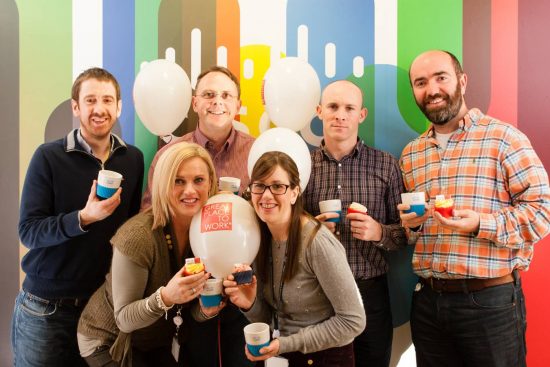
The Great Place to Work Awards recognize workplace cultures that deliver outstanding business performance.  For those of you that don’t know how the awards process works, the Cisco Ireland team (photo below: Patrick Eustace, John Costello, Leonard O’Halloran, Shane Carner, Sheila Greaney and Sinead Kelly) had to submit an audit document telling Great Places all about the culture of the business. Secondly, all employees complete a confidential survey that asks a number of different questions on how happy they are in the workplace.


Great Place to Work


The Irish team attended the awards ceremony on Wednesday night in Dublin with no idea of where we’d be placed. As the awards counted down the different companies from rank 20 to 1, nerves were at an all-time high. With baited breath, Cisco was announced the best medium-sized company to work for in Ireland… but the fun didn’t stop there!


Happy 10th anniversary Cisco Galway – with a very special guest

After celebrating in true Irish style at the awards on Wednesday night, it was time to continue the festivities with a special guest. Rowan Trollope, Senior VP & General Manager, IoT and Applications, arrived on Thursday prepped to lead the Galway team in their tenth anniversary celebrations.

Opening with just four employees in 2007, the Galway office has grown to employ just under 200 people today. Now a major innovation hub and research and development site for Cisco’s Global Collaboration business, the site is home to leading innovations that remove barriers to accessing and using technology for work-based activities. Cisco Galway places a major focus on family and team culture and has fully embraced socially responsible community and charity engagement, having raised close to €300,000 on the site for various local and national charities over the last decade.

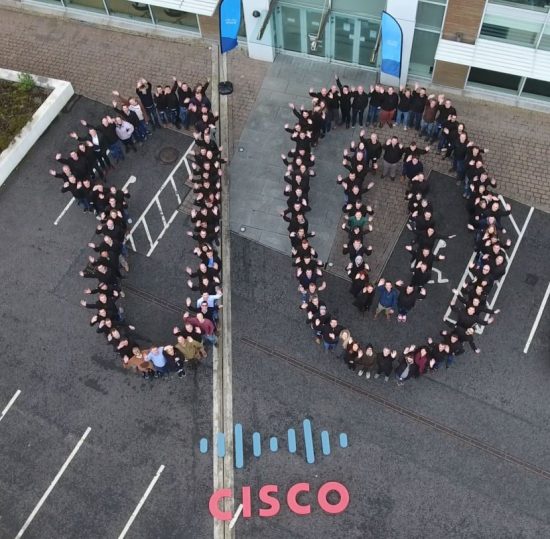
The anniversary celebrations kicked off with Rowan’s “All Hands” meeting and recognition of the Great Place to Work award, followed by champagne and cake. IDA Ireland (who are responsible for the attraction and development of foreign direct investment in Ireland) made a presentation to Cisco Galway on the ten-year achievement followed by what has now become an annual drone photo.

10th Anniversary


Despite the Friday festivities, there was a disturbance in the force…

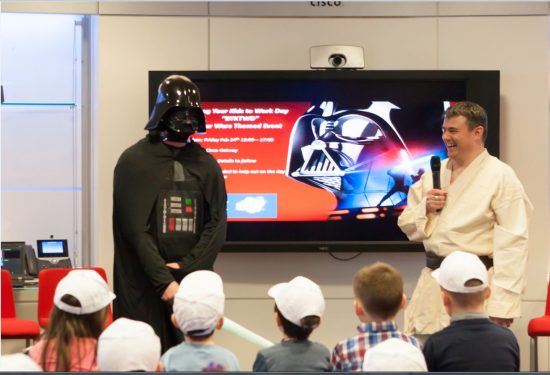
If all that wasn’t enough, Cisco Galway had more fun planned with a Star Wars-themed Bring Your Kids to Work Day. 106 younglings registered for the event, aged between six months and 13 years, and were met by Jedi Master Martin Skywalker and the ominous Pat Vader.


Bring your kids to work


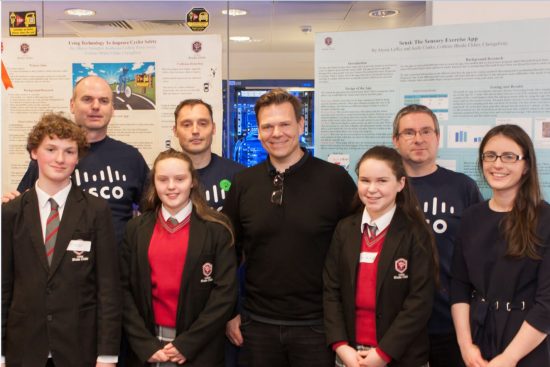
The children participated in many activities arranged by over 30 volunteers, including a coder-dojo (where children learned the art of code), a Minecraft Studio and a science and technology lab where the children were introduced to concepts of robotics, AI, VR and IOT. At the Jedi Scientist exhibition, three teenage children of Cisco staff (pictured below), who recently participated in the BT Young Scientists Exhibition in Dublin’s RDS Arena, demonstrated the solutions they have developed to real-world problems in the form of smart plugs, cycling safety, and sensory development.


Rowan's visit
Thanks for the visit, Rowan!


So what’s the craic (the Irish word for fun)?

It’s easy to see, just from a mere 48 hours, why Cisco Ireland is such a fantastic place to work. The Irish team have done a phenomenal job to make the office an inclusive and fun place to be, whilst making a real change to the world around them – whether it’s helping charities or encouraging the engineers of the future. With a clear link between company performance and employee engagement, it’s no coincidence that the team have been performing well in terms of business targets, too.


What does 48 hours at work look like for you? Tell us in comments. If you want to join the Cisco craic (fun), apply on our Careers site.

Authors

Sheila Greaney

Office Manager

Unified Communications Galway Dev Center

Avatar

You are the champions of configuration; the sultans of software, the pashas of peripherals, the bhagwans of bandwidth, the wizards of wireless and industrial IoT; the kings and queens of the cloud.

For the Superheroes, we have a Super-Event, as Cisco rolls into Las Vegas for the annual CiscoLive meeting.  And this year, we have a lot in store for you—our utilities, oil & gas leaders!

While strolling through the campus, make sure you stop by our Digital Utilities demo area in the Industrial District.  There you’ll be able to learn how Cisco spans the network from the Enterprise to the Substation, including solutions for Security, MPLS, Field Area Networking (FAN), and Advanced Metering Infrastructure (AMI).  You’ll also see partner demonstrations from EatonOSIsoft, and Eximprod.

Join us for our in-depth sessions!

Securing the Digital Grid

Monday, Jun 26, 6:15 p.m. – 6:30 p.m. | World of Solutions, IoT Theater

How FAN Helps Enable the Distribution Network

Tuesday, Jun 27, 2:30 p.m. – 2:45 p.m. | World of Solutions, IoT Theater

Cisco Cyber Resilience Technologies for Optimizing Oil & Gas Operations

Wednesday, Jun 28, 4:00 p.m. – 4:15 p.m. | World of Solutions, IoT Theater

To compliment the Digital Utilities demo area, take a look at our extended IoT offering in the IoT District, where you’ll see how Cisco helps link all of your devices to enable better data management and insight than ever before.  And since none of your systems sit on a lonely island, check out our Cloud and Data Center Village, our Collaboration Village, and Security Village, to see how we empower, secure, and define your network architecture through Cisco DNA.

As vital as oxygen; as indispensable as nourishment—you’re the ones who hold IT altogether; who keep IT running; the ones who will transform IT into a future that will truly amaze.

You’re the ones. Heroes. Superheroes.

If I seem out of breath here, I am.  What an event we have planned for you this year!  I’m looking forward to seeing you in Vegas from July 25th-29th.  Come join us for the biggest Cisco event of the year!

Find out more at www.ciscolive.com

For more information on Cisco Utilities please visit: http://www.cisco.com/go/utilities

For more information on Cisco Oil & Gas please visit: http://www.cisco.com/go/oilandgas

Authors

Jon Judson

Marketing Manager

Industry Marketing