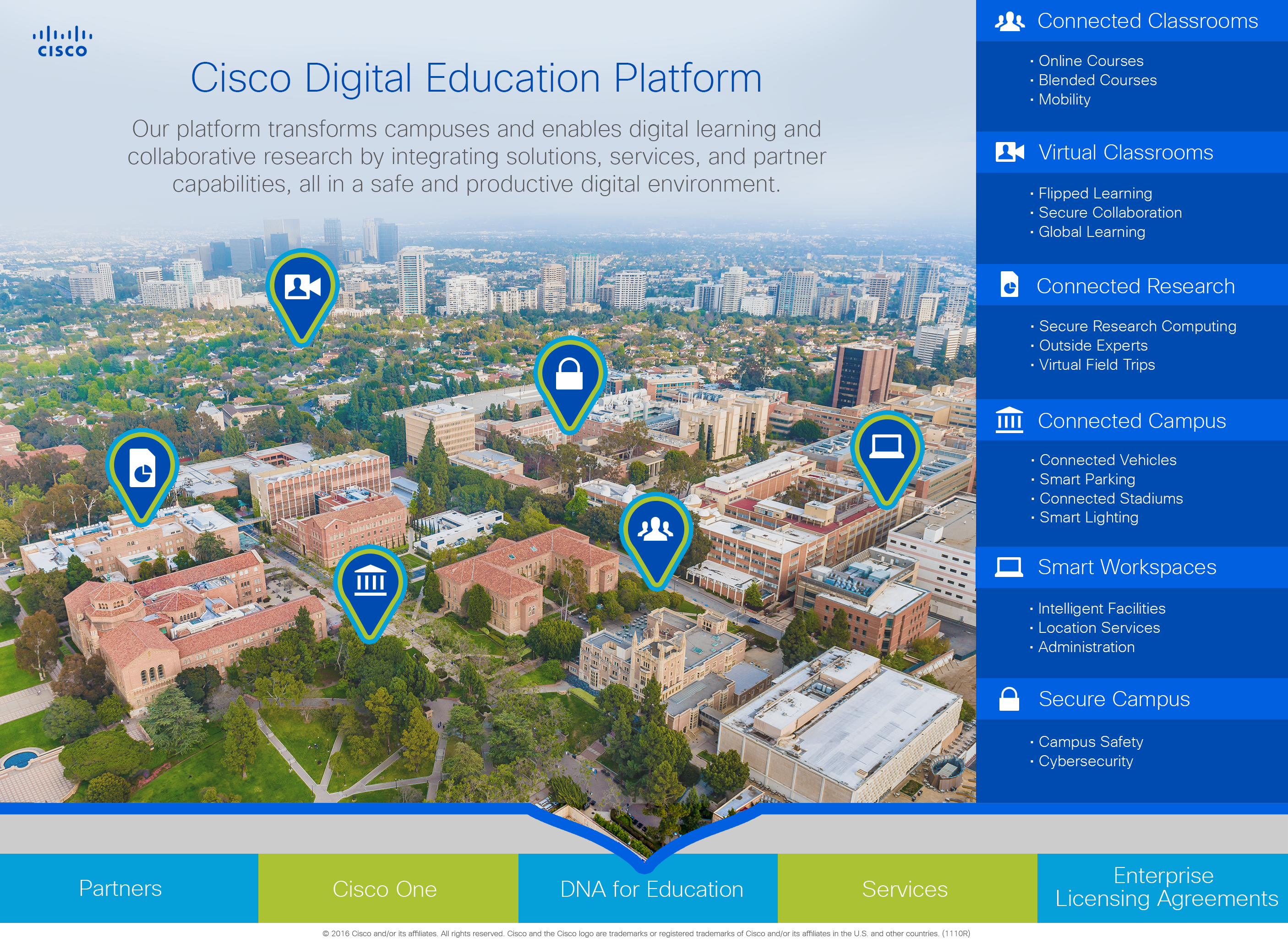
With EDUCAUSE in full swing, Cisco is thrilled to announce the launch of a new Digital Education Platform – right from the show floor in Anaheim, California!
EDUCAUSE is the premiere technology event for higher ed, and we know that higher ed faculty, staff, and administrators are eager to adopt new technology that is simple, secure, and integrated to benefit today’s educators and learners. That’s why this new Digital Education Platform provides a simple and secure way to collaborate. This platform integrates both Cisco WebEx and Cisco Spark into existing Learning Management Systems (LMSs), which allows educators to schedule highly secure online classes right from within their own LMS. Instructors are now more likely to adopt these technologies and provide video in every class room to join together learners on campus or online. Students tools like Spark encourage conversations to continue outside of the classroom from within the LMS.
In fact, Georgia State University, Mercer University, and Utah State University have implemented this platform in the following ways:
• Accessing and sharing course material from the cloud
• Facilitating lessons virtually and remotely
• Downloading, viewing, and streaming recordings
• Managing attendance records
• Supporting recruitment and retention goals
During today’s breakout session at EDUCAUSE, administrators from these schools joined me to discuss how they are implementing virtual learning applications. Kevin Reeve, director of teaching and learning technology at Utah State, explained how adopting integrated technologies helped students complete their studies, “The reason we [use] Cisco’s WebEx in addition to TelePresence [is] the integration of all these pieces. For example WebEx can connect to TelePresence. We’ve had students who have moved away from a physical campus, and Cisco’s technology allows students to continue to learn no matter what their circumstances.”
At Mercer State, their help desk had numerous support cases opened with other technologies. With Cisco, the university found a solution that it could model and fund.
There’s never been a better time to reimagine education. Be sure to look out for updates from EDUCAUSE on social media – we’re on Twitter at @CiscoHigherEdu and @CiscoEdu, and on Facebook at Cisco. U.S. Education. Also keep an eye on the blog this week for my takeaways from the show floor. Finally, if you’ll be at EDUCAUSE, make sure to visit us at booth 1101 to see our higher education solutions and the Digital Education Platform in action!
The OpenStack Summit is a place to learn and collaborate, discuss and inspire, all in four days every six months. Keynote talks for the first day reflected the international blend of both the operators and users of OpenStack. Our Cisco team agreed that we like the overall message, which feels like, “Here is how we’ve changed the world,” rather than a call to change the world. Not that it felt like a done-deal, but that it provides a proud showcase of the feats of a world-wide cloud community. OpenStack community members have created a cloud for the planet, and the members of our planet are doing amazing work with it.
In addition to user stories, day one gives us the results of the SuperUser Awards, where teams apply and showcase their OpenStack deployments. Spoiler alert, the winner is China Mobile! As noted in the SuperUser article, “China Mobile is the world’s largest mobile phone operator with an eye-popping 835 million subscribers.” Wow. Notably, there were 12 nominees, from enterprise workloads to service providers to research or government to telecom.
For many of today’s speakers, OpenStack enables their scientific research. Oh, the science! Time and time again a speaker talked about their massive cloud updates, such as CERN adding 100,000 cores in the next six months. And from Cambridge University, Dr. Rosie Bolton described the world’s largest radio observatory and its data use. Their instruments ingest 400 Gbyte per second, distribute 400 million tasks, then generate and destroy 1.3 ZettaBytes of intermediate data products on the way to preserving and shipping 1 PetaByte per day of scientific data products. One quadrillion bytes of data thanks to a Square Kilometer Array (SKA) telescope pointed to the sky. We can learn so much here.
CSIRO’s ASKAP antennas at the Murchison Radio-astronomy Observatory in Western Australia, 2010. Image Credit: CSIRO.
Day two of the Summit brings me to an early morning breakfast with the Women of OpenStack, led by Jessica Murillo, Vice President, Strategy at IBM Systems. We’ve gathered together before the keynotes for about three years now. We heard two lightning talks.
First was Nithaya Ruff, Director of Western Digital Open Source and CTO Office talked about using OpenStack contribution analytics to improve diversity. Bitergia collected and presented data at the last summit, and it is very helpful to track metrics because: what we measure, we do. Sharing the report sparks conversations about how to improve, what areas to focus in, and which projects and programs are helping improve the numbers.
Next was Holly Basemore, Director of Elastic Cloud at Comcast. She talked about what it means to network with others. Don’t push an agenda about what you’re working on, rather connect in a meaningful way and find out about their passions and interests. After you meet people, reach out in a timely manner to make sure the connection and memory is fresh.
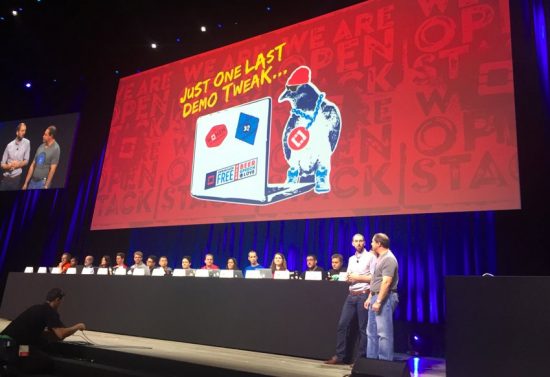
We are all so proud of the many women representing OpenStack developers and users on stage for both days of keynotes. We also saw an impressive demo of interoperability and OpenStack clouds including Cisco Metacloud, represented by Rohit Agarwalla, second from the left.
Sixteen Interoperable Cloud Orchestration Demonstration at OpenStack Summit Barcelona, 2016.
Image Credit: OpenStack.
Sixteen cloud demos represented on stage, all orchestrating deployment of a Linux, Apache, MySQL, PHP (LAMP) stack running a WordPress instance. As expected in open source projects, you can get the source code and run it yourself. This image shows the good nature of both busy people and vendors collaborating together to make this happen on stage. And the nature of the OpenStack Summit is what sticks with me as I continue to work with these collaborators and contributors each day.
Digital marketing is a brave new world. Chad Bockert, VP, World Wide Technology kicks off our Partner Guest Blog series sharing their unique approach to winning with customers.
Chad Bockert, Vice President Business Development & Marketing World Wide Technology
To understand how we approach marketing, it helps to first make one thing clear: we don’t see it as marketing.
Now let me explain what I mean by that. Because the fact is we do have a marketing team. And its role here at WWT has grown a lot in the last few years. I’d take that a step further and say marketing now plays an integral role in how we communicate to our customers and partners. I’d take that yet another step further and say marketing now plays an integral role in the evolution and success of this company.
The digital marketing techniques we’re using are beyond anything that was possible even five years ago.
But we don’t see it as marketing—and that’s important. No one wants to be marketed to. So we don’t want to be out there giving people what they don’t want. But what they do want is to learn. Our customers spend so much time online doing research. They’re looking for information. They’re looking for answers. They want to see how problems that matter to them can be solved.
And it turns out, we have that information. Our engineers are generating those answers every day.
Now, it took a while for us to realize what an opportunity that presented. If you go back a few years, no one was thinking that — when our engineers were collaborating in our labs, brainstorming some thorny issue — that experience was actually generating “content” that could be spun up into videos or blogs or tweets that would be really interesting and valuable to our customers.
But the world’s changed.
It’s a different kind of relationship that we’re looking to build with customers. Given all the trends in our industry—to digitization and services and lifecycle management—being the thought leader that people turn to for answers is more valuable than ever before. It’s the gold standard. It’s what WWT wants to be for its customers: the trusted advisor they count on to solve the problems they care about.
So over the last few years, we made some changes—changes in how we relate to our customers and also, necessarily, how we think about marketing. It’s been a good journey for us. You can get a quick glimpse of that journey here:
https://youtu.be/5U3XbSodsiM
Today when we do marketing, what we’re really doing is building a relationship with our customers.
And it’s the same relationship that sales is building and that engineering is building. We, as a company, are putting ourselves out there as the problem-solver that our customers are looking for. Give them the answers they need. Help them clarify their goals and their technology strategy for getting there.
For us, that’s what digital marketing is all about.
It’s a chance for us to get online and get information to our customers that they care about—whether it’s a video or a webinar or a blog post, or we’re showing up in their Twitter feed, or they’re looking at us on YouTube. These are all elements of our digital marketing practice that we’ve been building up in recent years—a lot of it with help and encouragement from Cisco.
Over time, we’re getting better at it and getting smarter. We can be much more targeted now, giving particular customers exactly the information or content they’re going to be interested in. And the measure of its value is not, “Does it sell what we’re trying to sell?” but “Does it answer the questions our customers care about?”
When we started down this road, there were people in the sales team who were skeptical.
They didn’t see the value. We had to prove it to them. But, as buying habits have changed, so has their skepticism. They now see digital marketing complementing and reinforcing their own efforts. They see their customers being targeted successfully with exactly the information they want. They see new customers reaching out to us because of content they discovered online. And the end result of all that is we do sell more. We sell more because we’re giving value to our customers up and down the line, from the tweet and the blog post to the comprehensive technology solution.
So today at WWT, whether we’re engineering or sales or marketing, we’re all adding value. And because of that value, our customers keep coming back to us—and that’s how we continue to grow and succeed.
******************
About Chad Bockert
Chad Bockert has been with World Wide Technology since early 2000 serving in various roles including strategic consultant, program manager, director of corporate business development and most recently as the VP of business development and marketing.
Prior to WWT, Chad was a management consultant for Ernst & Young in the telecommunications and OSS division working with organizations like Sprint, Qwest and several regional CLEC’s.
Over the years, Chad has worked to develop many of WWT’s strategic accounts while building the business development organization designed to provide strategy consulting to sales teams in the pursuit of new business.
Chad holds a bachelor’s degree in management information systems from Saint Louis University. He is also very active in the St. Louis community and serves as a member of the marketing advisory board for St. Louis Lambert Airport, a member of the COCA board and a board member for The Magic House Board of Directors.
Collaboration is a hot topic in the manufacturing and energy industries for good reason. Efficient collaboration helps workers connect to expert resources faster and speed time to market. In short, it helps lower costs and improve profits. Continue reading “A better way to collaborate in industry”
The Greek philosopher Heraclitus is the source of the phrase “The Only Thing That Is Constant Is Change”. His saying is totally applicable to today’s world of Big Data and Analytics. Our industry landscape is constantly changing, no doubt about that!
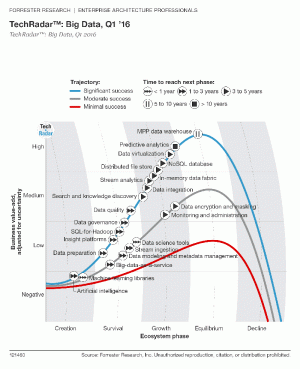
Think about it a bit from a technology point of view: Hadoop, Spark, NoSQL, Machine Learning, Data Virtualization, Data Preparation and on and on… Just take a look at the left – it’s all the Big Data technology waves and happenings according to Forbes/Forrester for 2016
Got all that? So, what to do? How to keep up and stay current? Well, one thing would be to attend our November 11 webinar – a joint production from Cisco and Intel.
In the session we will be discussing recent big data trends including real-time streaming analytics and how big data technologies are going to play a significant role in data analytics. We will cover Cisco solutions differentiation and how an industry leading partnership with Intel helps to unlock value from your big data.
We have key leads from both company’s: Karthik Kulkarni, one of our factory-based Big Data Solution Architects will speak for Cisco while Tim Abels, Systems Architect Principal Engineer will highlight the Intel perspective. So no marketing architecture fluff here – just two hard-core technologists presenting their view of our industry. Interested? Then please register here.
For more information on Cisco Big Data and Analytics solutions visit www.cisco.com/go/bigdata. While you can start learning about Intel’s Big Data capabilities here.
We wrote about Full Duplex DOCSIS® technology a few weeks back prior to the SCTE event in Philadelphia. Along with Remote PHY, virtual CMTS, video security, and virtual video processing, it was one of the hottest topics in our booth.
Why is it getting so much attention? Because cable visionaries are pursuing the goal of delivering symmetrical, multi-gigabit speeds over HFC. The proposed extension to the latest DOCSIS 3.1 specification calls for using the echo-cancellation technology Cisco contributed to the industry to deliver speeds as high as 10 Gbps downstream and upstream over the exact same spectrum. CableLabs officials aim to deliver the specification by the end of next year, enabling MSO deployments to start as early as 2018 or 2019. However, Full Duplex DOCSIS®, with its requirement for deep fiber builds, raises some major technical, operational and financial issues for cable operators that must be addressed before its benefits can be reaped.
Join Cisco Fellow John Chapman at a webinar with our industry colleagues at Heavy Reading, Cox and Comcast on Friday November 18 11am New York time / 4p.m. London time.
Register here and be ready with your questions to learn about Full Duplex DOCSIS.
It seems like everyone is concerned about cybersecurity these days, but the stakes are especially high for the federal government. For good reason, as the public sector’s networks and data in question contain some of our nation’s most important and most sensitive information. But the technology landscape is constantly shifting, and it can be difficult to stay on top of the latest in cybersecurity. It can be even harder in government, where agencies have to comply by a strict set of policies and it can often take longer to implement new technologies or processes than it does in the private sector.
Despite this landscape, here at Cisco we’re committed to partnering with the federal government to ensure that all agencies have the highest possible level of security. Why? Because security is the number one enabler of the digitization of government.
In order for government agencies to be able to take advantage of connected information technology to create new capabilities, monitor and control environments, and streamline operations, they need to be assured that their systems are secure. So we’re making it our mission to bring top-notch security to government IT so that agencies can save time and money and provide unprecedented access to information in order to help keep citizens informed.
As part of that mission, we are happy to present GovLoop’s latest guide on cybersecurity in government. One of our federal cybersecurity experts, Will Ash, shared his expertise with GovLoop so that others might be able to learn from his experiences. In particular, Will is focused on a holistic view of cybersecurity. According to him, “the biggest impediment to ensuring cybersecurity is planning, budgeting and executing around single security products as opposed to a more holistic threat defense strategy.”
Last week I had the privilege to participate in the Wealth Management Cisco Chat with Dr. Nouriel Roubini (@Nouriel), NYU Stern economist and chairman of Roubini Macro Associates, Louis Celi (@Rthoughtlab), chief executive and founder of Roubini ThoughtLab, and Joseph Pagano (@joseph_pagano), Cisco financial services practice advisor. The Twitter based chat stemmed from our recent research with Roubini ThoughtLab that predicts technological, economic, and demographic shifts in the coming years will transform the industry by 2021 — in about 4 years’ time from now.
We kicked the chat off by asking “Why was the research done and what made it unique, as well as any surprises that came out of it”. The ball got rolling right away with some great insight from Dr Nouriel Roubini:
A1. The new abnormal: low growth, low interest rates and ageing. So finding high returns will become a challenge #ciscochat
A few surprises from the research: investors want anytime anywhere device access (57%), integrated omni-channel (48%) and tech enabled planning (45%) and 63% of investors believe providers are prepared for cyber security but only 48% providers agreed. These surprises flowed directly into the next series of questions around the main takeaways and key drivers for change. In a truly unique opportunity, Joe was joined in our New York office by Louis Celi to answer these questions as they came in:
The US CFTC said the risk of cyberattack probability represents the single greatest threat to the stability and integrity of our markets, “by deploying risk data aggregation and cyber defense platforms advisors can lower operational risk substantially and meet future compliance and this can in turn improve the brand and trust with clients, turning cyber security into a business growth strategy”… There were so many great insights given at such a rapid pace, Twitter’s platform allowed us to reach more people than ever with over 10.8 million impressions.
As I said in my last blog, implementing the Internet of Things (IoT) is a journey, not a one-time event. And like every journey, it begins with a single step.
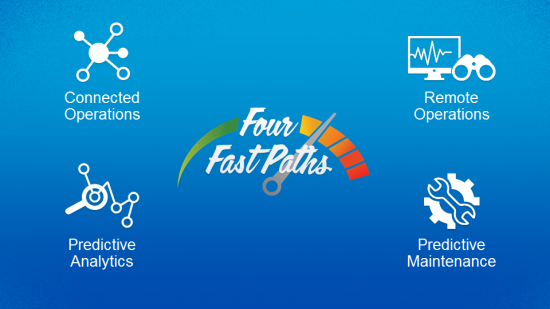
Over the last few years, I have met with dozens of customers across the world and in every industry. Believe it or not, many of them have not heard about IoT, or are confused about how they can implement IoT for business impact. But there are also thousands of customers who have already started on their IoT journey. I have looked at the use cases these customers have picked as their first small projects, and grouped them into four categories. I detail them in my upcoming book, but here is a quick summary.
First, connect devices, sensors, and meters to each other and to a network.
Begin by connecting existing devices to your existing unified IP network and adjust your business process to take advantage of these newly connected things. When all the devices in a plant, oil rig—or any facility—are networked, you suddenly have a window into every part of the operation, enabling you to collect data from sensors that can help you to prevent part failures and optimize operations.
Rockwell Automation provides a great example. By connecting assembly lines and operations in 20 manufacturing plants, and then connecting those plants to each other and its enterprise network, Rockwell was able to:
Reduce its inventory cycle from 120 days to 82 days
Reduce rejected parts by 50%
Increase on-time delivery from about 80% to 98%
Avoid 30% in capital expenses
Second, add remote operations, monitoring, control, and asset management.
Once you’ve connected your devices on one IP network, adding remote monitoring or asset management capabilities is a logical next step. This is by far the most popular use case. Have you ever faced a situation where your packaging line suddenly stops and you get a safety alert that one of the many doors on the machine is open? You can’t restart the line until you send someone to the plant floor to physically check every door. Implementing remote operations delivers a payback the first time it helps you avoid sending a person to see what’s going on.
Nimble Wireless, a startup in India, has a client that operates 150 ice cream stores—and is often plagued by power outages that can ruin the inventory of a store in minutes and create a health hazard. Nimble Wireless equipped the freezers in the stores with sensors that notify the manager if the temperature goes up 1 or 2 degrees. The system keeps escalating the notifications all the way up the management line until the problem is fixed. It will even suggest actions to take, such as closing the freezer door or turning on the generator. Within a month of deploying this solution, the company started realizing a payback, and within 13 months, it calculated a return of five times its original investment.
Next, use predictive analytics to identify, understand, and immediately take the best actions.
According to Vernon Turner of IDC, less than 1 percent of data generated today is being analyzed. That’s a lot of data going to waste! Predictive analytics can help your staff sort and understand what’s coming in, so they can take intelligent actions. It can begin on a basic level—just recognizing patterns and identifying exceptions can help you capture significant value. But the real benefit of putting all these smart assets on the same IP network is to correlate and combine the data coming from multiple sources to gain new insights and to take even more valuable action.
Out-of-service mining equipment can cost operators as much as $2 million per day.
Many industrial operations today run on a 24/7 basis. Downtime can costs plants as much as $20,000 per minute. By using the data coming from your connected machines, combined with industry data and algorithms, predictive analytics can identify trends and probabilities of equipment failure within a certain timeframe—providing the opportunity to optimize the operations and take corrective actions.
Fourth, adopt predictive maintenance to increase uptime.
It must be a corollary of Murphy’s Law that things break down at the worst times and in the most inconvenient places. But if you can anticipate these breakdowns, you can minimize the damage.
Rio Tinto, a global mining company, operates extremely expensive equipment in very demanding and remote locations. The cost of just one of its enormous autonomous trucks being out of service is $2 million per day—and that doubles if the breakdown occurs at the bottom of a pit mine and another vehicle has to haul it out. But that cost can be minimized by predictive maintenance. Each truck has some 92 sensors monitoring engines, drivetrains, and wheels. The sensors generate data that is analyzed in near-real time to anticipate when the next failure is likely to occur. So a truck can be rotated out of service for maintenance in an orderly way, instead of disrupting operations through an unplanned breakdown.
These are just a few examples. Your peers are implementing fast-payback IoT solutions across many industries—from agriculture to healthcare to sports and entertainment. In fact, I can’t think of any market where IoT is not being adopted today.
So how about you? If you haven’t yet started on the IoT journey, just pick one of the four fast path scenarios mentioned above to minimize the risk and maximize the value of your first project. Which of these is the best fit for your business?
















 rotated out of service for maintenance in an orderly way, instead of disrupting operations through an unplanned breakdown.