In today’s hyper-fast, hyper-competitive digital age, it’s increasingly clear from talking with customers and partners that leading companies must share and leverage each other’s best practices.
No single company – no matter how big and successful – can navigate today’s mass digitization of business and society alone. That’s why we at Cisco are finding that Inclusion is the New Innovation. This is as true for unleashing the potential of technology as it is for tapping the diverse talents of people.
I know this through my role in leading Market Acceleration for Human Resources at Cisco. We engage with key customers and partners to explore and co-create new business outcomes that not only improve performance but also spark new approaches to innovate a t the intersection of inclusion, diversity, collaboration, and technology. Continue reading “Cisco @SXSW Interactive: Where Inclusion is the New Innovation”
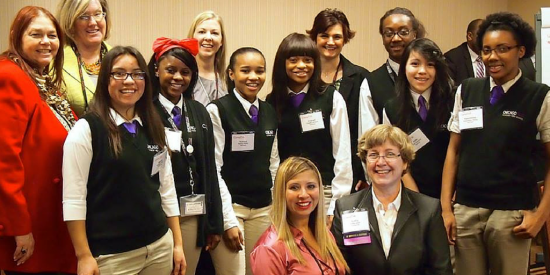
My eleven-year old daughter came to me a few months ago claiming an intense dislike for Robotics. As any other parent can tell you, her avowal made me terribly sad. More so since she claimed Robotics was a “boy-thing.” I told her, as I confess here, that I am certainly no authority on women and technology nor do I like to sound preachy. I am, however, a parent, a husband and a leader of a large engineering team, and in that capacity I would like to discuss how we can all work together to create the next generation of technology role models – role models who make it effortless and exciting for children like my daughter to look forward to a fulfilling career in technology.
At Cisco, we pride ourselves on the network we have created. It is the collective work of thousands of engineers spanning several decades. I often tell people I am proud to work at Cisco because I honestly believe we are making a significant impact on the world. It is with the same conviction that I tell people we must endeavor to level the playing field for women in technology and engineering – not just at Cisco, but everywhere in the industry. Continue reading “Creating the Next Generation of Tech Role Models”
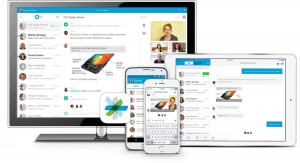
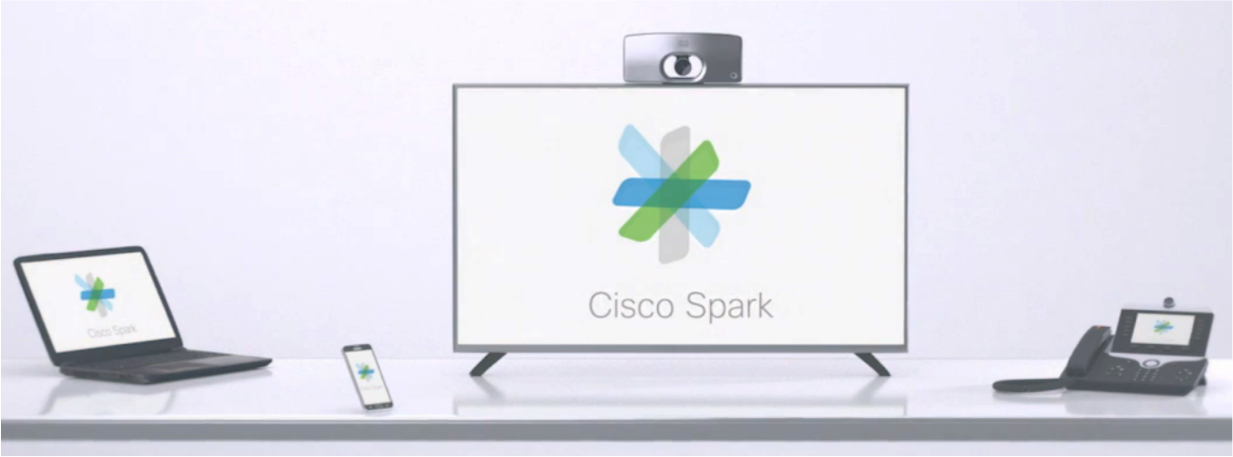
Yes, Cisco Spark has arrived! That cool mobile business messaging app we launched a year ago has grown up. It’s now a full-blown business communications service from the Cisco cloud. We are really excited about bringing this to market and are encouraged by some of the early reactions, including an analyst who said “I have seen the future.”
https://www.youtube.com/watch?v=V1uOsorKhsg
For some months now, we have been working with a select group of partners and customers to test the service. They’ve been giving us great feedback. But the trial is now over. We’ve cut the ribbon and we’re now open for business.
Patch Tuesday for March 2016 has arrived. Today, Microsoft has released their monthly set of security bulletins designed to address security vulnerabilities within their products. This month’s release contains 13 bulletins addressing 44 vulnerabilities. Five bulletins are rated critical and address vulnerabilities in Edge, Graphic Fonts, Internet Explorer, Windows Media Player, and Window PDF. The remaining eight bulletins are rated important and address vulnerabilities in .NET, Office, and several other Windows components.
Bulletins Rated Critical
Microsoft bulletins MS16-023, MS16-024, MS16-026 through MS16-028, and MS16-036 are rated as critical in this month’s release.
MS16-023 and MS16-024 are this month’s Internet Explorer and Edge security bulletin respectively. In total, 24 vulnerabilities between the two bulletins were addressed with five vulnerabilities in common (meaning that both Edge and IE are affected by the same five vulnerabilities). The IE security bulletin addresses 13 memory corruption vulnerabilities while the Edge bulletin addresses 10 memory corruption flaws and one information disclosure bug that manifests as a result of Edge improperly handling referrer policy, potentially leaking the user’s request content or browsing history.
#CiscoChampion Radio is a podcast series by Cisco Champions as technologists. Today we’re discussing Digital Ceiling with Cisco Subject Matter Expert John Parello.
Today, March 8, marks International Women’s Day, an opportunity to celebrate phenomenal women around the world. This year’s theme, Step it Up for Gender Equality, encourages everyone to take the #Planet5050 pledge in support of a world where women are equally represented: in education, in civil rights, in the workforce, in pay parity, and more; “50-50” by the year 2030.
At Cisco, we’ve got strong women everywhere: represented in our customers and partners, reflected in the tens of thousands of women among our ranks, and formalized in our most senior executives, including Kelly Kramer, CFO; Karen Walker, CMO; Fran Katsoudas, Chief People Officer; and Rebecca Jacoby, SVP Operations to name a few. To reference Beyonce’s latest hit, we’re in “formation.”
And, yet, there is still so much work to do. As a part of our Government and Community Relations team, I spend a great deal of my time creating and leading programs that engage the talents of our global employee base with volunteer opportunities that demonstrate our support for the United Nation’s Sustainable Development Goals.
I just returned from Sydney, Australia, where I attended the Gartner Business Intelligence, Analytics and Information Management Summit. Sydney is the first of seven Gartner BI and Analytics Summits that take place throughout the globe each year. As such I find the Sydney Summit to be a great opportunity to learn where the Gartner BI, Analytics and Information Management analysts are leaning-in for 2016 and beyond. Here are some of the things I learned.
Keynote Reveals Key Trends
Gartner analysts Ted Freidman and Kurt Schlegel kicked-off the Summit with their keynote, Information and Analytics Leadership: Empowering People with Trusted Data. This session was a fantastic synthesis of the latest data and analytics trends coalescing in three key data and analytics imperatives summarized below.
Virtualizing your network functions and decoupling them from specific hardware can help you simplify operations, automate service delivery, and make money more quickly. Find out how to do it the right way in our latest Fundamentals installment.
https://youtu.be/8Xe2PU-wHvY
At one level, NFV (Network Function Virtualization) is simply what it implies: Those network functions that must happen within the network are now (ideally) virtualized. This means that they are re-created as software versions. The benefits to doing something like this can be quite good, similar of course to the benefits we have learned to love and expect from server virtualization. Virtualizing network functions should be done to compliment the reality of our virtualized workloads as well…or put another way…we do this not because we can do it…but because we should. We do it so that we can gain benefit in some new area.
So what area(s) would that be?
I would cite the top three as: faster service delivery, higher resource utilization, and lower operating costs.
Cisco has a couple of different technology groups and so the idea of NFV might first bring ‘Service Provider’ to mind. Which makes sense…this is the primary place the industry has been looking to adopt this set of capabilities. The returns for a service provider can be enormous…for the exact same three reasons I cited. But that is NOT what we are talking about here. Specifically, we are talking Enterprise NFV.
Enterprise NFV is focused on bringing this SDN style functionality to your branch office capabilities. Any large enterprise is thinking like a service provider these days because the IT department (or whatever you might call it now) are providing business critical functions. The faster it can be done, the more it can be used and at the lowest cost..the better.
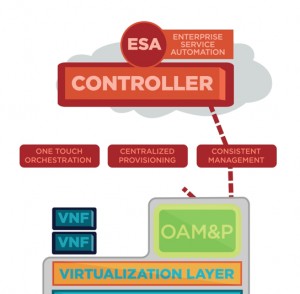
This is covered in the video…but just to make sure you don’t miss it, there are a couple of key components you should understand:
Enterprise Service Automation is an application running on top of Cisco’s Enterprise controller, APIC-EM, that centrally orchestrates and manages network services, whether physical or virtual. ESA provides a standardized site design, zero-touch deployment, and automated monitoring of the Cisco Enterprise NFV solution and its network services.
Virtual Network Functions (VNFs)
Cisco Enterprise NFV supports Cisco’s best-in-class virtual network functions as well as 3rd party non-Cisco services. License portability from physical Cisco devices to its software counterpart is possible through Cisco ONE, providing investment protection and an easy path to virtualization.
Robust services available with Enterprise NFV include Cisco routing (Integrated Services Virtual Router, or ISRv), Cisco firewall (ASAv), Cisco WAN acceleration (vWAAS), and Cisco wireless LAN controller (vWLC) functions. Cisco ONE provides license portability from physical devices to software components, protecting your investment and creating the easiest path to virtualization.
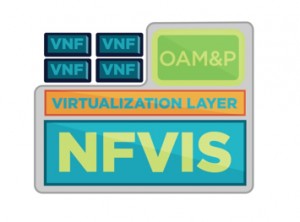
Enterprise NFV Infrastructure Software (NFVIS)
Cisco Enterprise NFV Infrastructure Software virtualizes and abstracts the network services from the underlying hardware. It provides the Linux-based virtualization layer (network hypervisor) that allows you to easily add VNFs to your network. An integrated hypervisor lets you create and run network functions as virtual appliances using a graphical user interface. Programmable, open APIs allow enhanced applications, such as the ESA app described earlier, to work in the virtual branch.
A Plug-and-Play (PnP) Application agent automatically connects to a central orchestrator in the APIC-EM, from which it downloads profiles to automatically set up WAN interface configuration details for a VNF and then lets the VNF boot right up with that configuration.
Lifecycle management capabilities built into NFVIS also manage your VNFs and monitor their performance.NFVIS supports service chaining, zero-touch deployment, life cycle management and programmable open APIs.
Don’t miss our live workshop on March 22. You can listen and watch the replay if you should miss it at this same link.
Special thanks to James Sandgathe and Liad Ofek for their technical guidance on this. I hope the metaphor we used in the animation is one that resonates with everyone. Feel free to let me know what you think.
It was somewhere between not too long ago, and a lifetime ago that I was graduating high school and entering College and pondering that dreaded question, “what do you want to be when you grow up?” As a child I had loads of ambition and diverse career choices, ranging from circus acrobat to pediatric cardiologist, to artist.
My fear of heights limited my acrobatics career, and the theory that artists only become famous when they’re dead, led me to follow my passion for technology. This led me to my 11-year career at Cisco. I am very happy with my opportunity, and continue each day to learn something new. I have had wonderful mentors along the way, especially female mentors, such as Cisco’s VP Global Operations, Juli Clark.
My mom was a single mom, and although she worked 24 years for the NY Board of Education, I clearly remember her joking around saying, “I still don’t know what I want to be when I grow up”. She has always had a strong will, and curiosity to try new things. She also encouraged me to get a college degree (first in my family) and inspired me that I could be anything I wanted to be when I grow up, sky’s the limit.
I have always loved technology, in fact, I would stay late at our school computer labs while my mom worked, and often won the “computer awards” beginning as far back as Elementary school.
I am very excited to now sit on the CompTIA Community Executive Board and serve as Chair of the CompTIA Advancing Women in IT Community. I am a long standing member of the National Women in Technology Group, where I have given speeches for young women in technology. Moreover, I actively give back to the community and am an advocate for U Touch – an organization focused on transforming lives in disadvantaged regions by providing Technology, Training and eMentoring. I also work with the nonprofit TechGirlz which helps to empower middle school girls to become tomorrow’s technology leaders. By putting tech directly in to their hands through free, project based workshops, and aiming to eliminate the gender gap by sparking a passion for tech early in girls’ lives it has inspired them to become interested in technology.
It’s no secret there’s a shortage of women working in IT. While this is a complex problem, with a whole many factors influencing the current makeup of the employee landscape, there’s one point that seems to get brought up repeatedly, often accused of being the main culprit responsible for this deficiency—there are no careers in IT that appeal to young girls. And if young girls can’t get excited about IT, how are we supposed to get more women involved in the profession? Of course the truth is you can leverage a career in IT to find work in a huge variety of industries. Whether it’s a user experience designer or engineer, interested young girls can pursue a career in IT that will take them just about anywhere.
While the stereotype of a career in IT may be that of the “nerdy” professional who never sees the light of day, hard at work deep in a cubicle in their company’s IT department, the reality is far different. Today’s IT professional has an incredible number of career options in a vast number of industries and varied careers within IT organizations such as Cisco. These professions sometimes offer some great travel opportunities, lucrative career growth, the ability to meet new people and develop diverse skills, and you are constantly learning something new as technology is always changing and never stagnant.
Cisco has wonderful Connected Women’s programs, mentorship and leadership opportunities which help foster growth and development within our careers. The question remains how do we attract and retain new women and young girls to pursue a career in IT?
What can you do right now?
Create Awareness: Speak to women and girls about what you do, and why you love it! Offer to give a “Dream IT” presentation. Where are some places that you can do this?
Women’s organizations
• your alumni association
• your local high school
• your local Girl Scout troop and/or 4H organization
• women’s networking organizations within your company
• veteran’s organizations
• local news organizations covering the technology industry and/or women’s interests
Join one of the Connected Women’s Groups within Cisco and externally – find mentors or mentees which you can share best practices and overcome challenges together
Know someone looking for a job? Pass this link on to them:AWIT Career Resources – It is open to anyone (female or male, students or adults) who wishes to learn more about IT careers
How can men help their female colleagues in this process?
There is no shortage of men in IT, or leadership… it is important for them to be an important part in this cause! Most men, or at least most of the ones I encounter — are firmly committed to advancing the careers of women around them. They want their wives to succeed; they want their daughters to succeed; they want their female friends, colleagues, and employees to succeed; they want to reap the rewards of investing in the trajectories of female employees and co-workers. The problem is that they just don’t know how. And why should they, given that women themselves are having so much difficulty identifying possible solutions to their quandary?
Include female colleagues to social outings and work collaborations, give them a seat at the table internal and external. Work Life collaborations foster relationships, mentorship, and the opportunity to be inclusive and fair in a diverse work place.
Don’t be afraid to offer women constructive feedback…we are strong and can handle it. Do not give niceties instead, give young women the same kind of feedback — honest, fair, tough, and specific — that they provide to their male counterparts to help us succeed
Take part in the conversation, be present and open minded. One of the best indicators of an organization’s commitment to diversity is who shows up at diversity-themed events. All too often, only women engage in conversations about balance of family or flexible modes of work. Unfortunately, if the discussions do not extend beyond this population, and outside the realm of “women-only” functions, then nothing will ever get done. Men who want to help need to be part of the dialogue, and present at those conversations.
Give credit where it’s due. Every working woman has faced this situation: she offers a point or suggestion in a meeting; watches the conversation move on without notice; and then hears her precise point being echoed five minutes later by a man, whose views are then repeated and praised by the others. So pay particular attention to who is talking during a meeting, and who gets credit for these words. Try to call women participants out by name (“As Jennifer said just a few moments ago …”) and reference them later in the conversation (“Bob, your idea reminds me of the argument Jen was making earlier…”). Go out of your way to call on quiet people — regardless of their gender — and take the time to learn who really contributed to joint projects or presentations. Celebrate the entire team, and build strength and camaraderie.
In the end- the people you work with, sell to, and market to be will made up of men and women. Strengthening Diversity is good because it betters the team, the leadership, and the overall organization.
I now have two step daughters, Danica 18, Mila 16, and two daughters of my own Brooklyn (almost 2 years old) and Cali (3 weeks). As my beloved mother guided me, I want them to know they can be anything they want when they grow up, and maybe just maybe that is a career in IT.



 se talents of people.
 me terribly sad. More so since she claimed Robotics was a “boy-thing.” I told her, as I confess here, that I am certainly no authority on women and technology nor do I like to sound preachy. I am, however, a parent, a husband and a leader of a large engineering team, and in that capacity I would like to discuss how we can all work together to create the next generation of technology role models – role models who make it effortless and exciting for children like my daughter to look forward to a fulfilling career in technology.



 Get the Podcast