

The JD Edwards Summit brings together over 700 business partners from around the world for a week of product updates, industry discussions and intense training. A number of vendors were asked to present solutions that are specific to this customer base. Cisco and Nimble Storage presented the UCS Mini based SmartStack solution where the entry configuration is street priced at $79,500 and supports up to 1400 concurrent users. Continue reading “Cisco Voted Top Platinum Sponsor – JDE Summit 2015”

Authors


I often find when you say “cloud” to a customer they get a reluctant look on their face, and I wonder to myself, ”Is it the mystery about the cloud that concerns them? Maybe the idea of things being sent off to a far away place known as ‘The Cloud’ makes them leery of embracing a technology that can do so much for them.” Let’s be honest. In relation to networking as a whole it is a very new idea.
Often I have to address common misconceptions about our own cloud-managed IT solution, Cisco Meraki. They do see the value of cloud-managed IT such as Instant IT, full business visibility, on-demand scalability and lower IT costs. They just sometimes have the wrong perception of the Cisco Meraki solution! I thought I would take a moment and address some of the more common misconceptions.
Misconception #1: Cisco Meraki is Only Wi-Fi and for Small to Medium or Commercial Customers
False. Although it is true that Meraki started out as delivering cloud-managed Wi-Fi they have grown to bring to market switching, routing, security and even mobile device management, all managed and monitored from the cloud. This means that our customers can deploy a comprehensive infrastructure, threat and mobile management solution. And they can deploy it whether they are managing a few sites or thousands of sites. In the US, Motel 6 supports over 1,100 locations with Meraki. We see customers like Infopark deliver and support wireless, switching and security capabilities for over 600 customers with less than 30 minutes per month put into managing the infrastructure.
Misconception #2: Cisco Meraki is Only for US Customers Continue reading “Cloud-Managed IT: The Demystification of Cisco Meraki”
Authors


This week, Cisco Corporate Social Responsibility will follow Deborah Huyler and Andrew Torres, two Cisco Networking Academy Dream Team students, as they set up wireless access points, provide network troubleshooting, and soak in the sights and sounds of NBA All-Star 2015. They’ll be sharing their stories from Madison Square Garden, the Barclays Center, and other event venues through journal entries, photo slideshows, and videos! Read Deborah’s first blog post below:
Hi, everyone! My name is Deborah Huyler, and I am a Cisco Networking Academy student from Westchester Community College in Valhalla, New York.
I was selected to attend NBA All-Star 2015 as a member of the Dream Team. I will be assisting the NBA’s IT team in setting up the different networks around New York City during the week of the All-Star Game. I will be working at Madison Square Garden, the Barclays Center, the Sheraton Hotel, and a few other venues. We will set up access points, run cables, and whatever else may be needed to make sure the All-Star network is live!
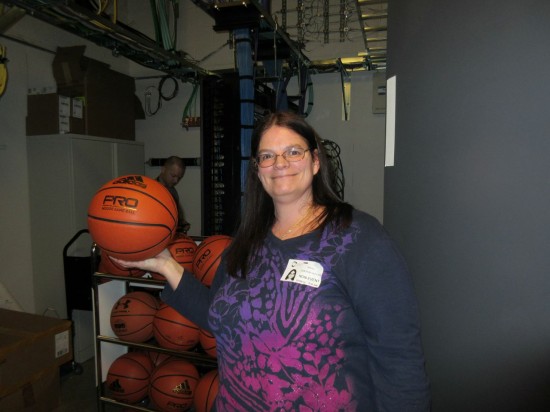
Continue reading “Cisco Networking Academy Dream Team: Day One at NBA All-Star 2015”
Authors

This post was authored by Andrea Allievi & Earl Carter
Ransomware continues to impact a large number of organizations and the malware continues to evolve. In January, we examined Cryptowall 2.0 and highlighted new features incorporated into the dropper and Cryptowall binary. When Cryptowall 3.0 appeared, we were interested in seeing what new functionality was incorporated into this latest variant in the Cryptowall series.
The latest 3.0 sample that we analyzed was in a zip file. This zip file contains multiple dropper files which are essentially identical in functionality except for the encryption algorithm used to obfuscate the dropper and eventually build the Cryptowall 3.0 binary.
Authors

Shawn McCarthy, Research Director at IDC Government recently penned an insightful blog on IoT. Titled “Beyond the Internet of Things: How Convergence Can Help Governments Support Their Rising Tide of New Devices,” the blog notes with more devices producing more data, government agencies have been working to add more storage, security, network bandwidth, and systems management tools. David Bray, the innovative, young Chief Information Officer at the Federal Communications Commission, has noted this exponential change. In a recent interview, Bray estimates that from the current 7 billion networked devices we will grow to upwards of 50 billion networked devices by 2020. Deloitte suggests that by 2020, the IoT is powered by a trillion sensors. And Cisco Systems’ research indicates the economic impact in 2020 is more than $14 trillion. In order to take advantage of their mountain of new data, and the associated range of new applications, agencies will have to merge parts of their existing infrastructure. That converged infrastructure can take two forms – merging data centers themselves or consolidating components within a single optimized computing package. Converging IT infrastructure is the first step in the roadmap to capitalizing on the benefits of the Internet of Everything (I0E). Bray goes even further, arguing that we will need to shift from searching for data to having relevant data find us, to include developing machines that learn our preferences for data as well as when to deliver that data in a form most useful to our work. McCarthy also reviews the disruptive, but hopefully positive, effects of IoT on citizen services, government reaction times, and employees. Continue reading “Beyond the Internet of Things (IoT): A Commentary”
Authors
In the 1989 movie Back to the Future II, Michael J. Fox’s character Marty McFly travels to the year 2015. He sees a future with hover boards, holograms, flat-screen TVs, and video calls. Not bad for predictions made over 25 years ago!
But the movie didn’t give us a glimpse of what a contact center might look like in 2015. Based on the trends over the last year, let’s consider what Marty may have seen had he traveled to a contact center in 2015 instead of Hill Valley.
Moving from Multichannel to Omnichannel
And 2015 will be the year that the “omni” will be cemented into omnichannel. Multichannel customer care has been around for some time now.
Customers can reach out to contact centers via the channel they choose: voice, video, web chat, email, or social. But what if a customer uses more than one channel to complete a single transaction over a period of time?
Each time the customer makes contact, all the information and context from previous contacts, regardless of channel, will be available. Each subsequent agent or resource can get right to the issue at hand to complete that customer’s journey and fulfill their request.
Speaking of customer journeys, omnichannel allows you to Continue reading “Back to the Future in 2015: Marty McFly’s Contact Center”
Authors

As a result of Cisco’s acquisition last May, ThreatGRID is now part of the Cisco Advanced Malware Protection (AMP) portfolio as AMP Threat Grid. The acquisition expands Cisco AMP capabilities in the areas of dynamic analysis and threat intelligence technology, both on-premise and in the cloud. AMP Threat Grid extends Cisco AMP with even greater visibility, context, and control over sophisticated threats. Security analysts and incident response teams can augment their forensics analysis to detect and stop evasive attacks faster than ever.
AMP Threat Grid is not simply another dynamic analysis platform or sandbox. While the solution does leverage various dynamic analysis techniques and ‘sandboxing’ to produce content, it also acts as a content engine so that you can more quickly and easily extract insights from the data. AMP Threat Grid treats all of its analysis as content, making it available to the user via a portal or API. AMP Threat Grid also doesn’t stop at a single analysis technique; instead it applies multiple dynamic and static analysis engines to submitted samples – all produced disk, network, and memory artifacts – in order to generate as rich a source of data as possible.
Authors

 Working on an MPI implementation isn’t always sexy. There’s a lot of grubby, grubby work that needs to happen on a continual basis to produce a production-quality MPI implementation that can be used for real-world HPC applications.
Sure, we always need to work on optimizing short message latency.
Sure, we need to keep driving MPI’s internal resource utilization down so that apps get more use of hardware.
But there’s also lots of “uninteresting” — yet still critically important — stuff that happens behind the scenes. Continue reading “Open MPI: behind the scenes”
Authors

“Today’s decision by the IEEE Board of Directors is a significant victory for consumers and for those who want a reasonable and stable patent system that supports innovation.
In making this decision, the IEEE supported those companies who are willing to both grant and receive licenses for patents required for use in IEEE standards on reasonable terms. We congratulate the IEEE for resisting pressure from the few who wanted to use the patent system to force unreasonable costs on makers and users of everyday products like smartphones and wireless routers.
Today’s decision will help ensure that owners of patents required to implement standards won’t be able to use their leverage to obtain unreasonable royalties.
Cisco will work with the IEEE and other stakeholders to ensure that the new clarifications are implemented in a fair and equitable manner.”
Authors