A long time ago I got asked to write about how to use Fibre Channel over Ethernet (FCoE) for distance. After all, we were getting the same question over and over:
What is the distance limitation for FCoE?
Now, the short answer for this can be checking out various data sheets for the Nexus 2000, Nexus 5500, Nexus 6000, Nexus 7000, or MDS 9X00 product lines. But it didn’t answer the most obvious follow-up questions: “Why?” and “How?”
Problem is, whenever you start talking about extending your storage connectivity over distance, there are many things to consider, including some things that many storage administrators (or architects) may not always remember to think about. The more I thought about this (and the longer it took to write down the answers), the more I realized that there needed to be a good explanation for how this worked.
 Generally speaking, the propeller spins the ‘other way’ when it comes to storage distance.
To that end, I began writing down the things that affect the choice for selecting a distance solution, which involves more than just a storage protocol. And so the story grew. And grew. And then grew some more. And if you’ve ever read any blogs I’ve written on the Cisco site you’ll know I’m not known for my brevity to begin with! So, bookmark this article as a reference instead of general “light reading,” and with luck things will be clearer than when we started. Continue reading “Storage Distance by Protocol – FC, FCoE, and FCIP, Part I”



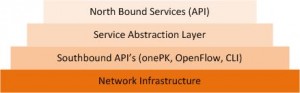 The basis is really the separation of the control plane (configuration and management) onto a server that centrally controls many network nodes. From the data plane which are the switches and routers that pass the data for the application from one end device to another, or many. The SDN controller communicates over a secure communications path using an API supported by the network device.







 I am happy to share the great news that the Cisco team received industry accolades last week when it was recognized by Frost & Sullivan for delivering a seamlessly connected enterprise collaboration solution across industry verticals. The award, based on Frost & Sullivan’s Vision of the Future of Manufacturing Production 2.0 (Visi-MAP 2.0), identified the top 50 game changers in manufacturing hardware and software. The Visi-MAP 2.0 initiative uses this platform to identify companies that refuse to take a ringside spectator view of industry developments and instead, lead in the visionary innovation process.