Avatar

At Cisco Live London, Cisco unveiled  Wired & Wireless convergence, along with its associated products, the Wireless LAN Controller 5760 and the Catalyst Switch 3850 with built-in Wireless Controller. While on the expo floor explaining the newly introduced ‘converged access’ to our customers, I had some interesting conversations that I thought might be cool to share with you. There may be some paraphrasing here, but if my conversation became a screenplay, it would have looked like this:

—-

The Cisco Live! London expo show floor is throbbing with excitement, customers browse the many demos that are around the World of Solutions arena.

NAT, Wireless Controller 5760 Product Manager, stands at a demo booth with the new controller.

CUSTOMER 1 ambles over.

CUSTOMER 1

I heard about the converged access and it sounds very interesting. Why should I consider 5760 controller?

NAT

Do you have bandwidth hungry applications such as video / multimedia  applications used by your wireless users?

Continue reading “On Converged Access & Wireless Controller 5760: A Screenplay”

Avatar

From super storms to snow storms, the U.S. has experienced its share of extreme winter weather over the past few months – evidenced today by the revelations from my family in #Snowklahoma. The damage left by recent blizzards, Hurricane Sandy and the Nemo Storm has businesses and residents rethinking ways to ensure continuity during severe weather.

For government agencies, businesses and even schools in some cases, teleworking (or telecommuting) is a popular solution that allows continuity of operations (COOP) while keeping employees out of harm’s way during natural disasters. In contrast to the Yahoo announcement today, many agencies, organizations and teams rely on telework to keep employee productivity high regardless of weather, travel delays or other conditions. Continue reading “Extreme Weather Ramps up Need for Federal Teleworking”

Authors

Kerry Best

Marketing Manager

Public Sector Marketing

Avatar

Today Paul Perez, Vice President and CTO of Cisco’s Data Center Group joined on stage downtown San Francisco Boyd A. Davis, Intel Architecture Group Vice President and GM, Data Center Software Division  to announce a proposed  extension of the alliance between Cisco and Intel into Big Data .

Over the past months, our readers had the opportunity to appreciate the growing investment of Cisco in this market frequently articulated by our experts Raghunath Nambiar  and Jacob Rapp  through blog postings and speaking at industry events.

Cisco and Intel have worked together for years to deliver enterprise solutions that improve performance and enable organizations to deliver new services. As we have stated several times recently , Intel has been a critical partner and significant contributor to the phenomenal success of the Cisco UCS. So it will not come as a surprise to anybody that Cisco and Intel are looking to  partner again to offer you a leading Big Data solution.

In this video, Cisco Paul Perez and Intel Boyd Davis explained how Cisco will support the Intel distribution of Apache Hadoop on UCS, and how both companies intend to collaborate to address the growing Big Data needs of our joint customers.

https://www.youtube.com/watch?v=koaf_YQibik

Please read the Intel announcement and stay tuned for a more detailed and technical  blog by Raghunath Nambiar.

Avatar

I’m not a doctor…but I am a patient.

I’m also a keen observer of the world around me—especially when it involves my health.

For many healthcare professionals, I believe the recent challenges surrounding the industry have taken some of the enjoyment out of their work. Issues such as new and changing regulations, increased lawsuits, escalating costs, and barely manageable patient loads, among others, have all taken their toll on the doctors, nurses, and administrators who, I believe, entered the healthcare field to have a fulfilling, lifelong career serving people and helping them live better lives.

This situation presents a real issue for literally everyone fortunate enough to have access to modern healthcare. Population growth and aging populations in many countries around the world mean we need more healthcare professionals, not fewer. Happier, more productive doctors and nurses mean better care for their patients. And, people who dedicate years of their lives to practice medicine should have a satisfying work experience.

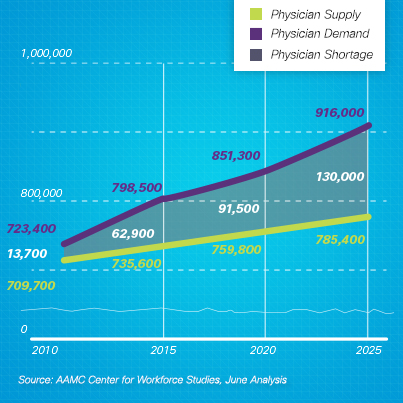
In the United States, demand for physicians will outpace supply by 130,000 by 2025 (Source: AAMC Center for Workforce Studies, 2011)

For healthcare professionals (and the rest of us), I have great news—we are at the cusp of a renaissance in healthcare. Technology—including the Internet of Everything (IoE), robotics, 3-D printing, wearable technology, cloud, mobility, and many others—promises to usher in this new era in healthcare. In short, the best is yet to come.

HIMMScomp4[1]

To make my point, here are a couple of examples that I believe will transform healthcare over the next 10 years. (For those of you attending the HIMSS13 conference March 3-7, I will be presenting several more examples in my keynote speech.) Continue reading “Ushering in the New Era of Healthcare”

Authors

Avatar

After a few months of work, I’m happy to announce Cisco has contributed the LISP protocol upstream into the Open vSwitch project. LISP is an open protocol developed by the IETF LISP Working Group. By getting LISP upstream into Open vSwitch, Cisco is continuing it’s tradition of enabling Open Standards by contributing to Open Source projects. What makes LISP interesting in the context of Open vSwitch is the fact it’s a pure L3 tunneling technology, the first in Open vSwitch. The current LISP code in Open vSwitch requires the use of static LISP tunnel endpoints. The instructions in the README file detail how to configure and use LISP tunnels in Open vSwitch. We have plans to remove the requirement for the static tunnels going forward. But for now, people who would like to experiment with LISP tunnels in Open vSwitch can use git to pull the latest master and give it a try. Feedback on the Open vSwitch dev mailing list is appreciated!

Authors

Kyle Mestery

TECHNICAL LEADER.ENGINEERING

Office of the Cloud CTO

Avatar

Cisco and VMware share a long track record of joint innovation and integrated solution development, providing differentiated capabilities and benefits for our partners and customers. Cisco Unified Computing System (UCS) is a great example of technology that raises the performance bar and dramatically simplifies the data center operational environment by delivering a compute platform purpose-built with scalable virtualization in mind. Meanwhile, VMware Horizon View is uniquely suited to delivering a total desktop virtualization solution that simplifies IT management, increases security and increases control of end-user access while centrally delivering desktop services from the cloud, which drives down costs.

When you pair Cisco UCS with VMware Horizon View-you get the best of both worlds: truly scalable, easy to manage, end-to-end solutions that dramatically improve price-to-performance ratios for desktop virtualization deployments.

Large enterprises began adopting Virtual Desktop Infrastructure (VDI) as customers sought more secure, scalable and cost-effective means to deliver desktop workspaces to end-users. These days, VDI helps enterprises support growing trends like Bring-Your-Own-Device (BYOD), or as some of our VMware friends call it, Spend-Your-Own-Money (SYOM). As a result, Cisco and VMware have been successfully delivering VDI solutions to enterprise customers for the last two years.

But what we’ve heard from you, our trusted channel partner community, is that it’s harder to build the business case for VDI with customers who are in the midmarket space. Not only do these customers have fewer seats to virtualize, but they’re also usually without the resources or time to decipher how all of the moving parts associated with VDI fit together. How do we enable them to benefit from VDI without the significant CAPEX hurdle, or the costs associated with scaling once their needs grow? And how do we provide them with simpler, more cost efficient solutions?

Check out how partners benefit from a tremendous midmarket VDI opportunity.  Continue reading “New Midmarket VDI Solutions For Cisco and VMware Partners”

Authors

Rick Snyder

Senior Vice President

Americas Partner Organization

Avatar

This post is included  as part of a series related to social media training efforts underway at Cisco.  I sat down with Mark Traphagen  and Phil Buckley of Virante to ask a few specific questions around social media and how social media interacts with search engine  marketing and optimization.  This is the first of two parts for this interview.  

HAK51746What impact does Social Media have on Search Engines?
The first search engines were little more than human-fed directories.  As the web took off, trying to human index it became unworkable, for obvious reasons.  By far the most obvious and dramatic effect is seen in the growing personalization of search results. Since at least 2007, Google results have been influenced more and more by the searcher’s location, past search history, and how she interacts with web sites, among other factors. With Google’s introduction of Search Plus Your World in early 2011, social network influence came front and center.

Now by default if a searcher is logged in to Google while searching, her results are heavily influenced by Google contacts, including Gmail contacts and people circled on Google+.  Bing has begun a similar effort incorporating a user’s Facebook friends. Larry Page and Sergey Brin, the founders of Google, revolutionized web search with their invention of the PageRank algorithm, which counts links between sites as “votes” and weighs those votes by relative authority.  When the social web emerged, Google and other search engines realized that social interactions online could provide a new source of signals, a way to diversify the signal set and augment or confirm the signals being sent by links.  Since then, they have been slowly increasing the amount of effect that social signals have on search results.

Continue reading “The Social Media Play on Search Engines”

Avatar

The Global Certification Team is proud to announce that the Cisco Aggregate Services Routers (ASR) 9000 series have completed USGv6 Certification on software version 4.2.1 or later, with USGv6 SMU.  The details of the certification can be found at https://www.iol.unh.edu/services/testing/ipv6/usgv6tested.php?company=7&type=Router.

The Cisco ASR 9000 system incorporates innovative technologies such as Cisco Network Virtualization (nV) technology, which intelligently blends the edge, aggregation, and access points to simplify operation and accelerate IPv6 services. Two new nV enabled platforms provide additional flexibility and support to optimize service delivery.  More information can be found at Cisco.com

Get up to the minute updates on Cisco product certifications from the official GCT twitter, @CiscoCertTeam!


Authors

Clint Winebrenner

Product Certification Engineer

Global Certification Team (GCT)

Avatar

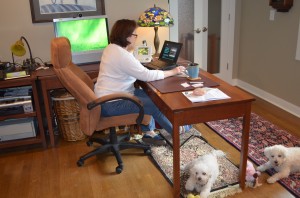
Cisco, in partnership with Mobile Work Exchange, is eager to kick off the third-annual Telework Week from March 4-8. Telework Week 2013 is a global effort to encourage agencies, organizations, and individuals to pledge to telework anytime during this week. I plan not only to pledge to telework that week, but also to continue in my career of teleworking.

I have worked for companies based in San Jose, Tucson, Phoenix, Washington DC, Boston, and now San Jose again… all without leaving my beautiful home state of Ohio.  I adopted telework in 1993 and as Telework Week 2013 approaches, I wanted to share my story about my years as a teleworker. Let me start by saying I would not change a thing.

telework5 001

Telework Pros and Cons… But Are They Really Cons?

Do I miss having lunch with my colleagues? Sure. However, my dogs are pretty good companions because they never complain. Plus, the food in my kitchen is a lot better than any cafeteria food. Don’t get me wrong, I’ve missed being able to celebrate the milestones taking place in my colleagues’ lives in person, but I’ve made sure they always get a baby gift or a wedding gift.

What I don’t miss is the daily commute. Driving in rush-hour traffic or in snowstorms aren’t especially fun or productive and through telework, I’ve been able to get to work on-time every day. Also, my checkbook likes my lower insurance rates. On top of all of that, I am able to work in pajamas or sweat pants if I feel like it. For big projects that require more focus and concentration, I appreciate not having people dropping by to chat about their weekend.

Sometimes, people tell me I have it so easy working from home, being that I can come and go as I please. However, any teleworker will tell you it just doesn’t work unless you have regular office hours. My schedule still fills up with meetings just like my colleagues’ working from an office. What many people don’t know though is that it seems a lot harder to end the work day when your office is just a few steps or clicks away. Continue reading “20 Years Teleworking: $291,200 Savings and 435,200 Pounds of Pollutants Spared”