
The custom research found that Network Service Providers have an advantage when offering Cloud services if they use their unique assets to differentiate their services. Over-the-Top (OTT) players may have seen success in offering plain vanilla Infrastructure as a Service at large scale and low prices but the opportunity for supplying the high-end and high-value spectrum of Cloud services is still underway. You will probably agree with me that security is critical for any service these days. It is a challenge that requires proper design and planning and proper vigilance and quick responses are what differentiate the winners from the losers. Cloud is a large market in the midst of a transition and it will be fun to watch how everything plays out, I’m placing bets on the Service Providers to scoop up a valuable share of the ~$43 billion XaaS market by 2013. Read More »
Yesterday we announced that Charter Communications, a leading broadband communications and entertainment provider and the 4th largest cable company in the United States selected the Cisco CRS-3 and ASR 9000 as part of a major network upgrade. This of course brings up the question our readers often ask – why? What is driving these investments? While we have our perspective (which we share regularly on the SP360 blog and other forums), it’s even better when we get the view directly from the customer. To that end, we had the opportunity to interview Bob Hunt, Charter’s VP of Network Engineering on Charter’s perspective on the network upgrade, the drivers, and the growth in DOCSIS 3.0 usage and the network efficiencies he’s forecasting. Read More »
The Edge of the network is a major focus for our customers, the market as a whole, and certainly for us at Cisco. The ASR 9000 System is the leading Service Provider Edge router in all three cases, and admittedly, the system is on quite a roll.
In our June ASR 9000 blog, we announced to the market the newest innovations in the platform – nV technology and the ability to scale the system to a whopping 96 Tbps (more than 36 times the capabilities of the nearest competitive platform and enough bandwidth for man, woman, and child in Beijing, London and Moscow to watch a streamed High Definition movie simultaneously). Along with that news, we had the honor of announcing five new customers joining the 500+ strong ASR 9000 family — China Telecom, NTT Playa in Japan, Tata Communications in India, Fastweb in Italy, Cox and Comcast in the US. Read More »
As I have blogged on the Internet of Things and Web of things in the past, I would like to focus my forthcoming blogs on Machine-to-Machine communications and its implications to the network, to protocols and security.
Let’s set the foundation:
Imagine a world where billions of objects have sensors to detect, measure, and assess their status, all connected over public or private IP (Internet Protocol) networks. This world of interconnected objects would have its data regularly collected, analyzed, and used to initiate an action. It would provide a wealth of intelligence for planning, management, policy and decision-making.
Important information is pushed out to machines, to individuals, and to organizations of every type anywhere in the world. The term that characterizes this world of interconnected objects, is the Internet of Things or IoT. Read More »
Public Service Announcement: Call Before You Dig (or “10 Most Bizarre and Annoying Causes of Fiber Cuts”)
At Cisco, we strive to provide the utmost in reliability and are particularly pleased with the market leading reliability we have with our IOS XR operating system on our ASR 9000 system and CRS routers. Whether it’s video, mobility, broadband or voice, reliability is key for a good experience. However, while we, at Cisco enable the experience, providers are the ones who deliver it – and in doing so, there are huge number of network heroes and heroines to make it happen. When it comes to fiber optic cable, someone somewhere actually has to go out and dig the trenches or hang the fibers, regardless of weather, critters, or angry land owners. This week on Lightreading.com, we saw an article worth sharing from our friends over at Level 3 Communications, “The 10 Most Bizarre and Annoying Causes of Fiber Cuts.” Read More »
The times, they are a-changing! And this is just the beginning!
Like the classic ‘60s tune composed by the legendary musician Bob Dylan, the world continues to change in more ways than we had imagined even a decade ago. We have seen the advent of Internet for all, free phone calls with Voice-over-IP, as well as free application software available not just for computers but delivered over mobile wireless networks to our smartphones and tablets. Desktop applications have given way to web-based applications, and the rapid ascent of social media to communicate with a globally connected set of followers in fractions of a second.
Set against this backdrop of these phenomenal technology advances, the Metro Ethernet Forum (MEF) has enjoyed a decade of outstanding technology and market success. Initially founded by a handful of enterprising individuals, the MEF recently hosted their tenth anniversary in California’s Napa Valley with an “A List” industry professionals from their 185 member companies. The definition of Carrier Ethernet is synonymous with the work of the MEF -- a set of standardized and cost-effective Ethernet business services, scalable, reliable, with service level guarantees that can traverse the metro, the nation, or the globe across any media.
Generations of innovations and new service application drivers (mobile broadband, video, and cloud) for Carrier Ethernet have been rapidly driven forward by the dedicated efforts and influence of the MEF volunteers. As with new generations of music, adoption of Carrier Ethernet services in the marketplace was not without similar challenges to overcome. The MEF and their close-knit community of equipment vendors and service providers have built a massive following around the globe. The effects of Carrier Ethernet market growth on world business, predicted by industry analysts to reach $40B in services and equipment in 2014, are profound.
Contributed by David Flesh, Sr Manager, Product Marketing, Cisco Network Management Technology Group
Many service providers today are implementing or investigating cloud computing to take advantage of its inherent operational advantages and as a platform from which to offer differentiated cloud-based services. By abstracting IT resources and services from the underlying infrastructure, service providers are achieving highly elastic, multitenant environments and savings. For example, cloud-based environments facilitate provisioning in minutes; time-to-market reductions of more than 50 percent; high server and storage utilization; 50 percent reductions in capital costs; and 25 to 30 percent reductions in operational costs.1
At the same time, cloud-based services are highly attractive to providers’ enterprise customers. Service provider-based cloud services offer greater scalability and performance without requiring premises-based infrastructure and management. Self-service, scale-on-demand, and pay-per-use features increase user convenience and IT flexibility, while automated recovery and cloud-based backup significantly enhance risk management.
The good news is that service providers today are uniquely positioned to take advantage of cloud computing. Infrastructure as a service (IaaS) -- a cloud utility architecture -- provides an easy entry point for many service providers who are already expert at provisioning, managing, and scaling infrastructure-based services for multiple customers. IaaS helps enable service providers to increase return on investment through existing infrastructure and to deliver high-margin multitenancy services and support new competitive offerings. According to the Cisco Internet Business Systems Group, a 2009 study has forecast IaaS service revenues to be approximately $15.6 billion by 2013.
By Bob McIntyre, CTO, Cisco Service Provider Group
I was digging around my PowerPoints on the laptop recently, getting ready for our “Cisco Live!” event, and came across a set of predictions I’d made, five years ago.
A CTO, making predictions five years out? What could possibly go wrong, right? Well, I wouldn’t be bringing it up unless it was so off base as to be funny, — or close enough to “correct” to boast a little.
Turns out it was mostly the latter, so allow me to boast a little. -- Just a little. I promise.
Back then, in 2006, I said what will make service providers successful would be the delivery to consumers of their own personal HD video stream, on any device, wherever they were. A two-way stream. (This was the year before the iPhone and smart phones hit the market, and four years before “pads” did.)
I also surmised that triple and quad play (voice, video, data and wireless) bundles would continue to be the big thing; that operators needed to move drastically faster on what we now call “apps;” and that what we now call Wi-Fi mobile hot spots and 4th generation wireless (back then, we called it “fixed mobile convergence”) would be critical. Read More »
The transition to IPv6 presents a complex technical challenge, and the business risks for not doing it right are potentially significant, in terms of impact on customer retention and growth, new business models, and competitive edge.
In this third installation of the series, Kelly Ahuja of Cisco and Ray Mota of ACG focus on Service Provider strategies for the transition to IPv6. As Kelly mentions, the Cisco Carrier-Grade IPv6 Solution (CGv6) is designed to help address both technical and business challenges associated with the transition. The Cisco CGv6 portfolio of IPv6 solutions enables service providers to:
Preserve investments in IPv4 infrastructure, assets, and delivery models
Prepare for the smooth, incremental transition to IPv6 services that are interoperable with IPv4
Prosper through accelerated subscriber, device, and service growth that are enabled by the efficiencies that IPv6 can deliver
It’s important to emphasize the word solution. CGv6 solution is not just a line card, or a network appliance, or a software feature. Unlike other companies Cisco has the experience and expertise to help network operators realize the promise of IPv6 by offering full Life Cycle Services Support. This is especially important as not all operators have experience in IPv6 or access to this expertise. Cisco can provide the people, processes and tools to ensure a seamless transition. Some of the capabilities our advanced services team provides include:
Although well known for oil and cattle, Texas is home to many high technology companies (including the Cisco campus of yours truly), and is the largest clean energy (wind) producer in the USA. It’s also got a booming economy that needs advanced telecommunications services to all parts of the state.
To that point, we recently talked with the team at Texas Lone Star Network (TLSN). Located just 50 miles northwest of the capital of Austin, TLSN operates a Cisco DWDM fiber network spanning over 3000 route miles offering wavelength, Ethernet, and SONET services to its 39 consortium company members, national carriers, wireless carriers, regional cable TV operators, colleges and the federal government. Earlier in the year they made the decision to upgrade their network with a deployment of Cisco’s ASR 9000 Series routers.
TLSN has connected the new ASR 9000 routers with 10G optical wavelengths enabled in the Cisco DWDM backbone network. The enhanced network provides them the foundation for new, revenue generating services, including cloud computing, cell backhaul, and IP/MPLS virtual private networks. In particular, cell backhaul is expected to be a growth area because of the number of 4G deployments going on in Texas right now.
“With the rapid growth in customer demand for higher capacity , driven especially by video, mobile, and high speed data services, we had to scale our network, but we had to also watch our operational expenses. Leveraging our new Carrier Ethernet platform we’re able to offer new services cost effectively to our member companies and customers to ensure that technologies such as telemedicine and distance learning are available to any community in the state. Plus, with our Texas-wide footprint we can offer both a wide range of highly available services coupled with a unique footprint that other providers can’t match.” Brad Seymour, General Manager, TLSN
Following the announcement of the ASR 9000 System last month, it was not too surprising that one of the most popular demos at Cisco Live in Las Vegas was the Service Provider IP NGN pod. For this event we had a setup which included 100GE interfaces connected between an ASR 9000 (edge) and a CRS-3 (core). Ultimately over the course of the show we totaled over one thousand 100GE customer engagements, and nearly 200 ASR 9000 Test Drive (better known as “Robot Arm”) demonstrations.
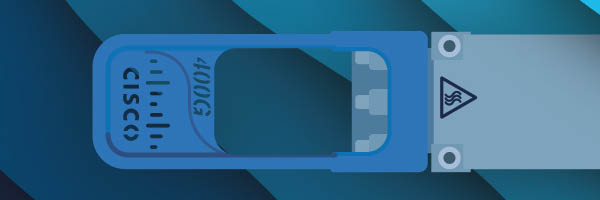
Capability to support 100GE is something that we see consistently in customer RFPs, even if they intend to deploy 10GE initially. It’s all about investment protection while (in some cases) they wait for the cost of 100G to be more competitive with using multiple 10GE links. Given the cost of 100 Gbps pluggable optics, it’s amazing to hold in your hands something so small and plain that sells for the cost of a luxury car.
Also a hit was the award winning Cisco ASR 9000 Test Drive, about which I’ve blogged before. This of course was physically located in San Jose, and streamed to Cisco Live while being controlled on the show floor by the users. (A true, but little known fact – the inspiration for the Test Drive came from toy heat engine known as the “drinking bird”. We liked the idea that the IOS XR-enabled ASR 9000 keeps running much like a perpetual motion machine).
One of the hot topics at Cisco Live 2011 last week was around the topic of IPv6 deployment and how to handling the exhaustion of IPv4 address space, both for Enterprise and Service Providers. Over fourteen sessions on the topic were covered, including such titles as How to Convince your Boss to Deploy IPv6, Cisco on Cisco: Making the Leap to IPv6, and IPv6 Planning, Deployment, and Operation Considerations. When it comes to IPv6 implementation, there is no “one size fits all” design, which is why the Cisco CGv6 solution is intended to preserve existing network infrastructure investments, prepare for the transition to IPv6, and enable companies to prosper in the new IPv6 environment.
In the second video of our series on the Service Provider Transition to IPv6 with Kelly Ahuja from Cisco and Roy Mota of ACG Communications, we hear perspectives from cable providers Comcast (USA) and Rogers (Canada) on how they are making the transformation to an IPv6 network. Or as John Brzozowski, Distinguished Engineer & Chief Architect for IPv6 at Comcast, notes “V6 matters to everybody…” that it’s an “…industry, internet community challenge that everyone has to face.”
One critical point that John makes is the need to make the transition seamless despite the huge number of moving parts in the network. This was a key reason for Cisco’s Carrier Grade Network Address Translation implementation, which provides the scale and performance required to offer a simple way to immediately deal with IPv4 address exhaustion issues. Equally important is that many customers aren’t expected to flash-cut over to IPv4. Instead, the transition time will likely take years to ensure that Internet end users are not adversely affected by the migration.
The share of time-shifted content as compared to conventional broadcast TV programming has been on a continual upward trend. One third of U.S. consumers currently use a digital video recorder (DVR) or similar device for time-shifting. However, as on-demand programming becomes more popular as a substitute for typical time-shifting, more consumers are visiting the Web to access their favorite shows and movies on a computer or mobile device. Consequently, the Web is quickly becoming a popular choice for on-demand digital TV that incorporates content downloads and streaming using Web protocols.
The Streaming of MPEG Media over HTTP Ad Hoc Group (now known as the Dynamic Adaptive Streaming over HTTP (DASH) Ad Hoc Group) began working on the development of a specification and published a call-for-proposals in May 2010 to address this growing market. After an initial evaluation period in July 2010, DASH Ad Hoc Group adopted 3GPP’s Release 9 as a baseline specification and began running several evaluation experiments. The DASH Ad Hoc Group is working on the standardization of the manifest file, delivery format, conversion to and from existing file formats, and the use of MPEG2 Transport Streams as a media format. The DASH Ad Hoc Group has also been coordinating closely with the 3GPP SA4 Working Group to better align their respective specifications in this area. Read More »
This past week, I attended the grand opening celebration of Verizon Wireless’ Innovation Center in Waltham, MA. The center, which brings together companies and entrepreneurs alike, is designed to provide a collaborative, hands-on workspace to rapidly develop innovative products and services that leverage 4G LTE technology.
The grand opening was an exciting event and the center was filled with innovative demos and technology tours featuring all types of LTE connected innovations -- from the connected home, connected car, gaming, digital juke box, video and even future innovations such as a connected bike and an LTE-connected robot.
Cisco is a Premier Participant and we have been involved since day one. We are pleased to have provided many man-hours of expert resources to deploy Cisco Mobile Internet solutions to help Verizon Wireless establish this unique center of excellence for all things LTE.
At the center, we have many demonstrations and technologies on display including Cisco Mobile Videoscape, the Cisco Cius enterprise tablet supporting 3G and 4G LTE, Cisco TelePresense, LTE-Connected Enterprise Branch, LTE-enabled Digital Media Signage and Cisco RAN Backhaul and LTE Evolved Packet Core solutions. We’re pleased to also provide the Evolved Packet Core for the 4G LTE Innovation Center lab network - identical to the commercial network - for use by the ecosystem of technology developers accessing the center’s technical and business development resources.
We had an excellent time in Las Vegas at Cisco Live 2011, despite outside temperatures breaking 100 degrees (38C) at times! While things were hot at the show, things were just as active on the customer momentum front for the Cisco ASR 9000 Series. We were able to announce two new customers that join the more than 500 customers of the platform worldwide: PCCW in Hong Kong and Polish Telecom (Telekomunikacja Polska, or TP Group). Despite their geographic distance, both operators share common challenges. Growth in video and mobile traffic is driving the need to each to add additional capacity -- as highlighted by our Visual Networking Index report -- yet competition from alternative providers makes it difficult to simply raise prices to pay for new networks.
In the case of Polish Telecom -- which also announced the deployment of the Cisco CRS-3 in the core -- the company sought to invest in a cost effective, robust and powerful broadband infrastructure that, as they proudly say, will help shape Poland’s economic and social future. The new network will support enhanced video, mobile, and cloud computing services. Mobility has been a huge growth area for TP. They’re the mobile market share leader in Poland under the Orange brand and have seen significant increases in smartphone penetration over the past 12 months by offering affordably priced Android-based handsets. This is driving up mobile Internet usage and the company is upgrading their mobile network to support faster data transmission with HSPA2+. On the wireline side, TP is rolling out VDSL “fiber to the curb” which will bring broadband speeds up to 40 Mb/s and higher, along with more video channels for their half-million plus TV subscribers . Ultimately this will result in better customer experiences, and hopefully for TP, lower churn and reduced operating costs.