A second road to quantum safety: a Postquantum Preshared Key mixes an out-of-band secret into the IKE key schedule that never travels the wire, so even a classical handshake resists "harvest now, decrypt later," on gear not supporting ML-KEM.
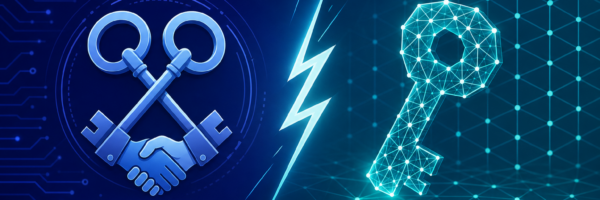
We put Diffie-Hellman and ML-KEM side by side on size, latency, compute, and security, and land on the smartest move: a hybrid key exchange that runs both and combines their secrets, so an attacker would have to break both at once.
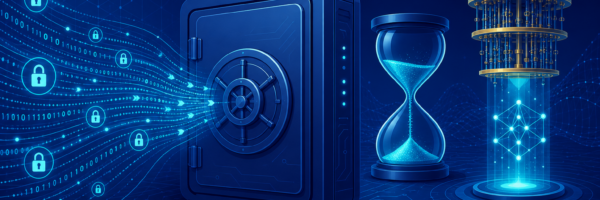
We zoom in on key exchange and its urgent "harvest now, decrypt later" threat, where attackers record encrypted traffic today to decrypt once quantum hardware matures. Then we meet the two contenders: classical Diffie-Hellman and post-quantum ML-KEM.
Statement by Eric Wenger, Senior Director, Technology Policy, Government Affairs: The 2026 National Cyber Strategy aggressively modernizes federal cyber capabilities and fortifies national defenses by modernizing procurement and dismantling
As quantum computing continues to rapidly advance, it will enable "harvest now, decrypt later" attacks, allowing adversaries to collect currently encrypted private data for future decryption. Campus and branch networks will become critical attack
Quantum computing threatens traditional encryption, and attackers are already preparing. With new NIST standards, the urgency to adopt quantum-resistant cryptography is clear. Cisco leads the transition with secure migration, risk assessments, and