

The following is an excerpt from Cisco’s FY25 Purpose Report. Explore the full report to learn more about how we Power an Inclusive Future for All.
As data center and AI usage surge, so does the need for cleaner, more efficient energy solutions.
Cisco has long believed that sustainability action can spur innovation and build a more resilient energy supply.
Since 2008, we’ve set ambitious five-year targets to cut our absolute Scope 1 and 2 emissions, paving the way to major milestones this year. In fiscal 2025, we proudly achieved our goal of reducing our Scope 1 and Scope 2 GHG emissions by 90%, compared to a fiscal 2019 base year.1 In addition, for the first time in company history, we sourced renewable electricity to match 100% of global annual electricity needs at Cisco owned and leased facilities.2
Reaching these milestones reflects our long-standing commitment to energy and sustainability — and our momentum ahead. We intend to maintain at least a 90% reduction in absolute Scope 1 and 2 emissions as we work toward our goal to reach net-zero GHG emissions by 2040.
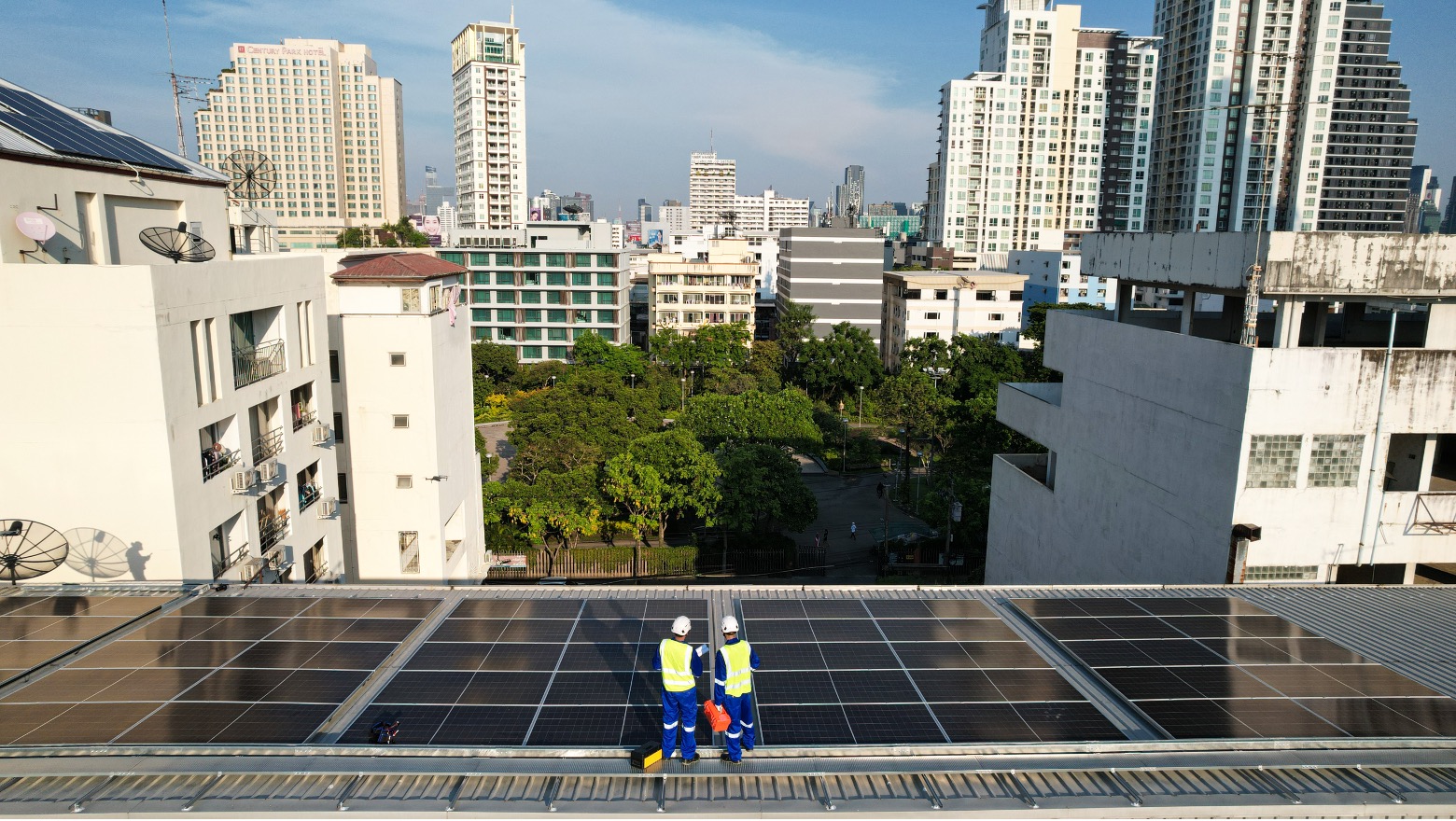
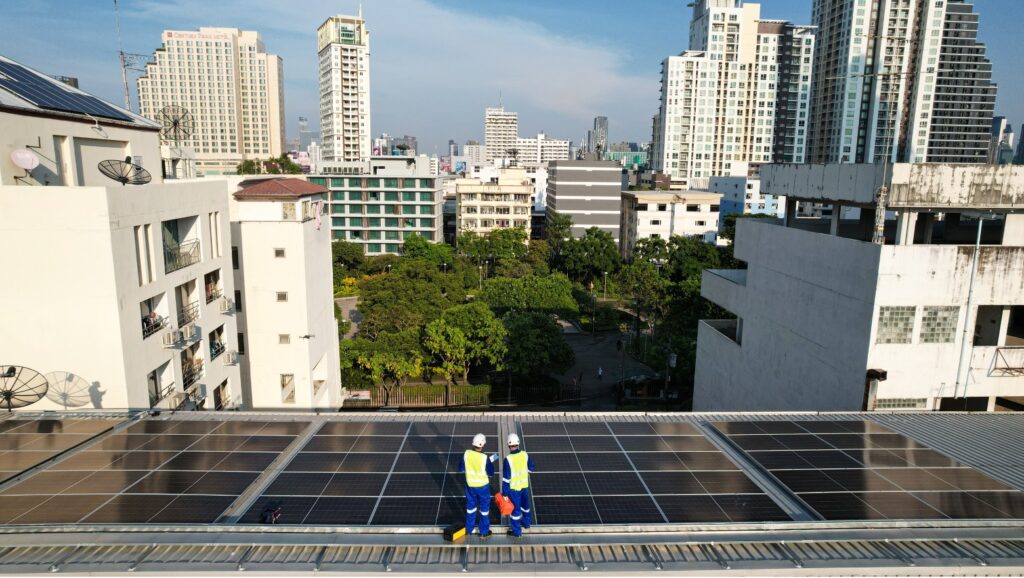
Sustainability across our direct operations
Cisco was able to achieve its ambitious Scope 1 and 2 GHG emissions reduction goal through a holistic approach across our global operations, from driving efficiency to sourcing renewable energy.
Driving Efficiency and Decarbonization
In fiscal 2025, we implemented 78 energy efficiency projects that avoid approximately 11.5 gigawatt-hours of energy consumption and 27,200 metric tonne carbon dioxide equivalent (CO2e) each year through our:
- Buildings: Implemented AI and advanced analytics to monitor and optimize energy, airflow, and cooling in our labs
- Electrification: Completed our first building electrification projects in San Jose, California and Galway, Ireland, with more underway and planned globally
- Fleet: Increased electric vehicles in our fleet of leased company cars for our European employees from 11% in fiscal 2019 to 66% in fiscal 2025
As we look ahead to fiscal 2026 — the final year of our five-year energy efficiency investment plan — we intend to continue investing in renewable energy, energy efficiency, and building electrification projects that reduce our emissions.
Sourcing Renewable Energy
In fiscal 2025, for the first time ever, Cisco sourced renewable electricity to match 100% of global annual electricity needs at Cisco owned and leased facilities2 through a variety of methods, including new long-term power purchase agreements in:
- India: Cisco’s Bangalore campus, our largest outside the United States, began receiving power from a new 92 megawatt (MW) solar and wind generation facility. The system is projected to generate approximately 181,400 megawatt-hours (MWh) annually. We also established dual electrical feeds, enabling Cisco to reduce campus diesel fuel use by approximately 30%.
- Texas: Cisco served as the anchor buyer for two aggregated virtual power purchase agreements for 172 MW of solar. Of the 172 MW, Cisco will procure 100 MW from two new solar projects estimated to come online in 2027.
Together, these efforts will produce more than 500,000 MWh of renewable energy per year, or the energy needed to power approximately 72,000 U.S. homes annually. They are part of our larger strategy to add more renewable energy sources to the grid, while better matching renewable energy generation with our power consumption.
In fiscal 2025, we also piloted the use of renewable fuels in our operations. We began using biodiesel in Bangalore for approximately 10% of our backup power generation needs and sourced renewable natural gas for Cisco sites in the United States and United Kingdom.
Optimizing Our Real Estate Footprint
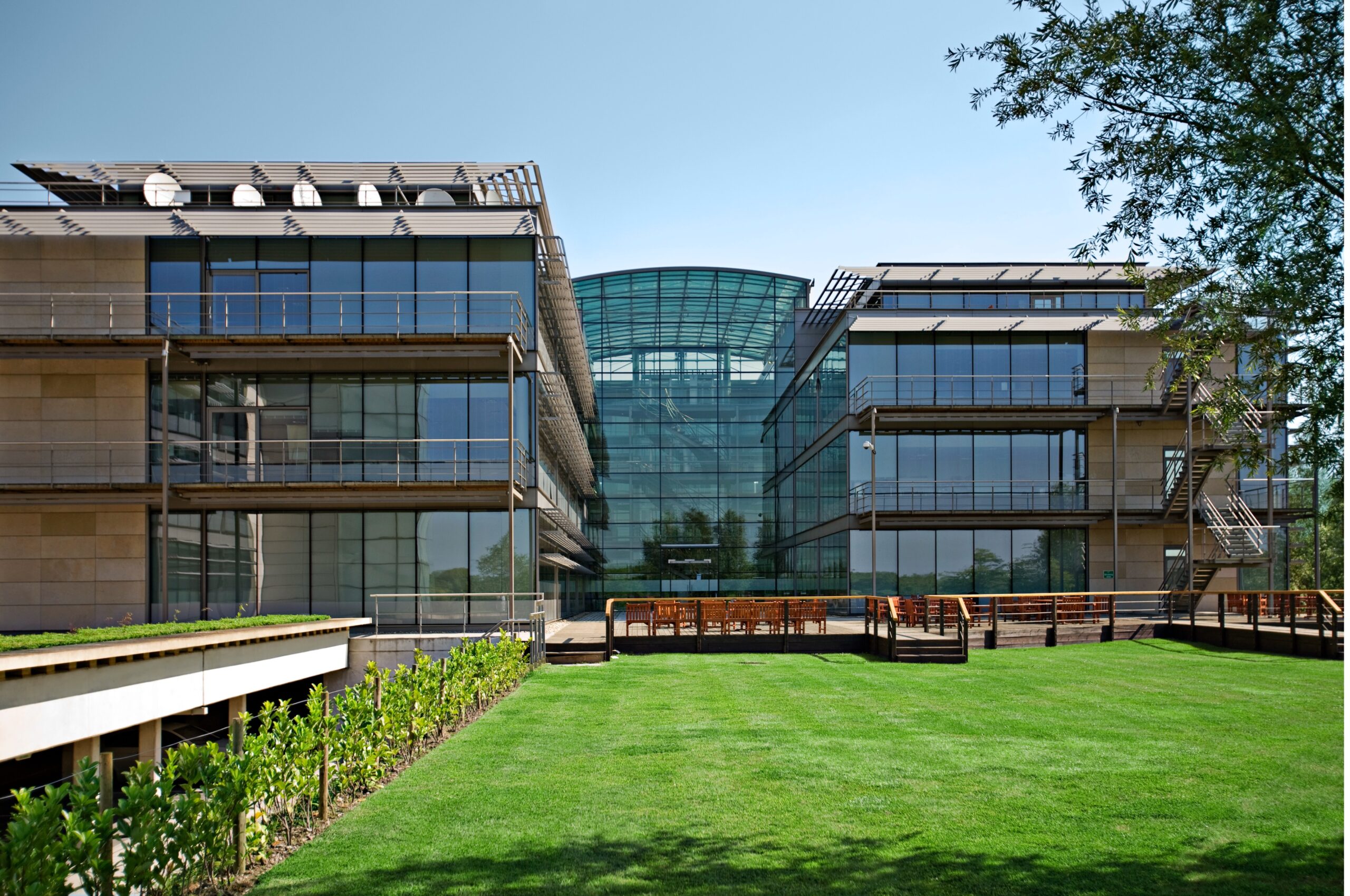
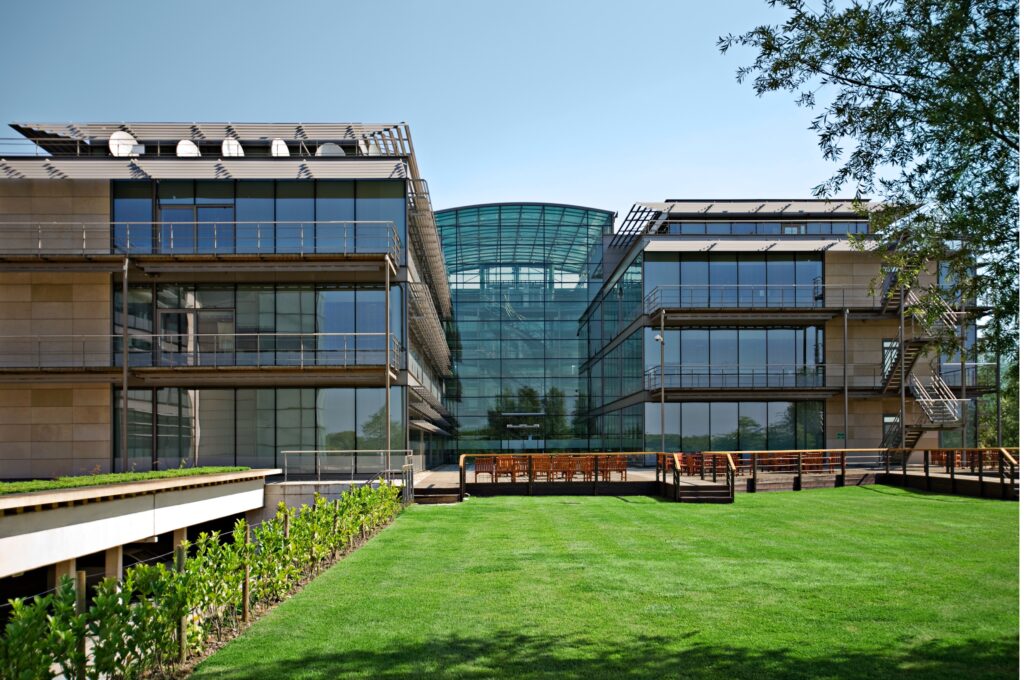
By creating and renovating spaces with sustainability and employee well-being in mind, we aim to reduce both our environmental impact and operational costs while creating healthier spaces for employees.
At the end of fiscal 2025, 45 Cisco facilities had earned certifications like Leadership in Energy and Environmental Design (LEED®) and the WELL Building Standard, with 11 more underway. These spaces now account for 21% of our global real estate portfolio. For example, our Shanghai office achieved LEED® and WELL Platinum certification and is 18% more energy efficient than code.
We’re also bringing intelligence into the built environment. With Cisco Spaces, sensors and Webex endpoints automatically adjust room settings to improve comfort and save energy. This smart building technology is live in our San Francisco and New York offices.
Supporting Our Suppliers
Reducing our own emissions is only the beginning; we’re helping our suppliers do the same. In fiscal 2025, we met and exceeded our goal that 80% of Cisco component, manufacturing, and logistics suppliers by spend have a public, absolute GHG emissions reduction target by fiscal 2025 — with 88% having emissions reduction targets.
We hosted a net-zero roundtable with suppliers in Thailand, convening business partners, suppliers, and local experts to tackle challenges like renewable energy adoption and product carbon footprint calculations.
In addition, we also teamed up with two consumer brands to help suppliers access clean electricity in Asia at more affordable rates. Already, four supplier sites representing three suppliers have committed to purchasing nearly 28 million kilowatt-hours of clean energy in 2025, avoiding an estimated 16,717 metric tonnes of CO2e of emissions.
Driving AI-Ready Infrastructure
In the AI era, we are continually innovating to make our products more efficient while advancing performance and security. This fiscal 2025, we announced several new products in our switching portfolio that help bring this balance across data centers and campus networks.
Introducing the N9300 Series Smart Switches
The N9300 Series Smart Switches combine intelligent networking silicon and data processing units, which help to simplify data center infrastructure and make it more efficient. The Smart Switches feature two processing engines that together intelligently steer traffic to drive enhanced capabilities, optimal performance, reduced energy consumption, and operational simplicity.
The N9300 series is powered by the Cisco Silicon One processing chip, our unified architecture for multiple network roles and devices. This innovation delivers switching and security products that are more efficient, lowering operational costs while increasing capacity. The Silicon One unified architecture has already supported the development of a broad portfolio of routing and switching devices, with more in progress.
Delivering Impact Through Our Products
Several more products across our enterprise switching, enterprise routing, and data center networking portfolios received ENERGY STAR® certifications. This designation helps customers more easily factor energy efficiency into their purchasing decisions.
Learn more about how we are driving energy efficiency in our products on the Purpose Reporting Hub.
Read the full FY25 Purpose Report
At Cisco, our Purpose is core to who we are and what we do. Learn more about our goals and progress to date in our Purpose Reporting Hub.
- Percentage is rounded from an 89.7% reduction. This rounding is for presentation purposes only and does not affect the underlying data. ↩︎
- Cisco achieved this milestone using a variety of methods, including on-site renewables, contractual arrangements such as power purchase agreements, and energy attribute certificates. See the Purpose Reporting Hub for our renewable energy strategy. ↩︎
Power an Inclusive Future for All
Driven by our Purpose, we combine our technology, people, and broader networks to address society’s greatest challenges.
Learn more about our Purpose X/Twitter
 Facebook
 LinkedIn
 E-mail