
What if the future of surgery didn’t begin in an operating room, but in a fully connected digital sandbox?
Here at Cisco, we’re one step closer to making this vision a reality.
Why we need to rethink healthcare training
Around the world, healthcare systems are facing challenges. There is a global shortage of surgeons and in some regions, there is just one surgeon for every 100,000 people. That shortage is expected to become even more pronounced over time, with an anticipated surgeon shortage of 50,000 by 2050 in the United States.
At the same time, conventional surgical training is costly, time-intensive (requiring at least 13 years of training), and often dependent on real-world operating rooms and live patients.
In a country like Switzerland, home to the world’s second most expensive healthcare system, solutions that increase efficiency and training while improving outcomes aren’t optional; they are essential. With Switzerland’s aging population and rise in chronic diseases, the need for qualified surgeons is only accelerating.
The question becomes pressing: How do we train aspiring surgeons around the globe more effectively without compromising the safety of all involved?
The answer lies at the intersection of connectivity, real-time data collection, and digital innovation.
Introducing Operation Room-X
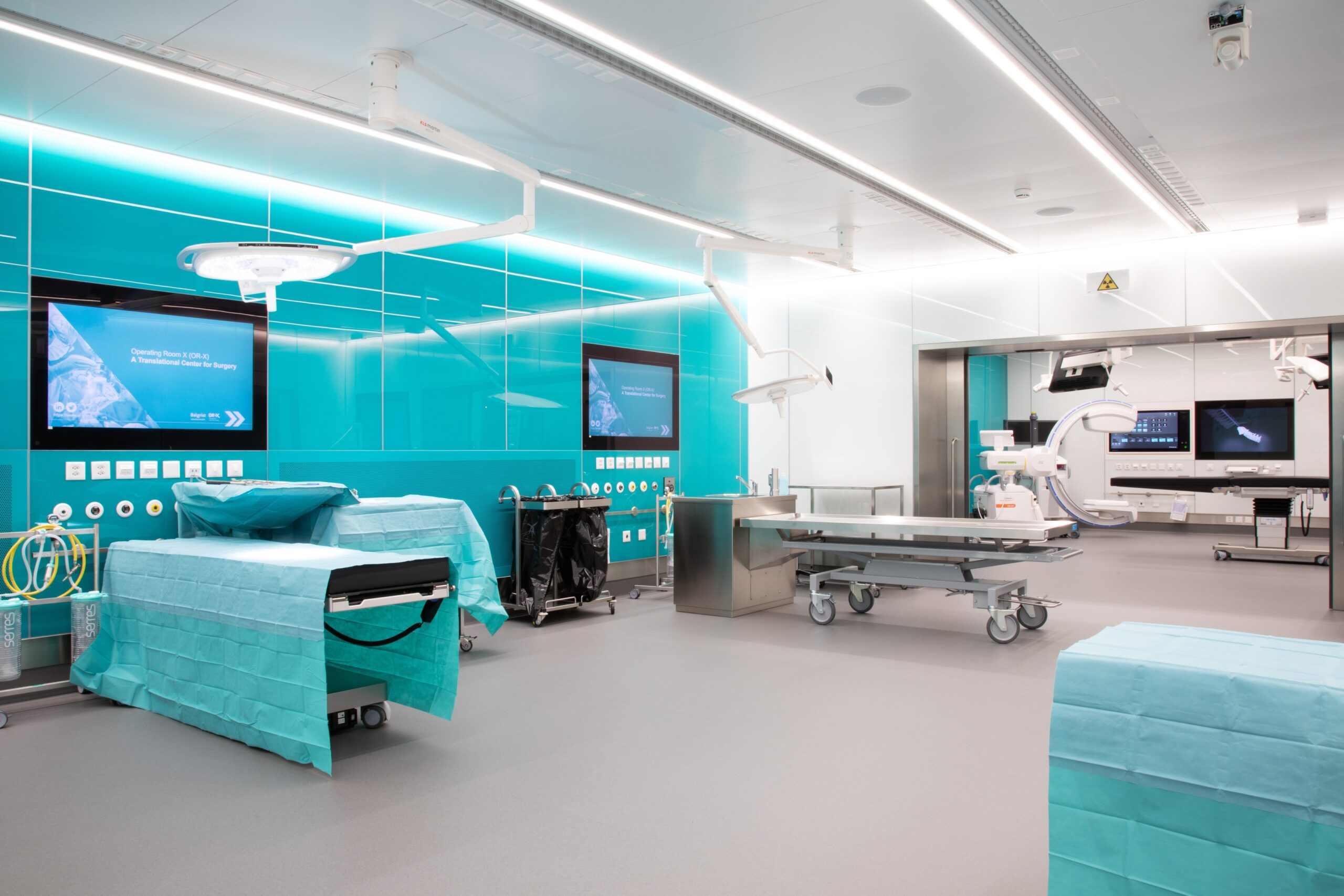
At Balgrist University Hospital in Zurich, Switzerland, Cisco is exploring the art of what’s possible through OR-X, short for “Operation Room X.”
But OR-X isn’t just another surgical hub.
It’s a connected innovation environment designed for surgical training and research, powered behind the scenes by Cisco’s intelligent networking infrastructure.
Through Cisco’s Country Digital Acceleration program, in-kind and financial support helped to create a space where surgeons-in-training could test ideas, validate use cases, and build robust training models, all without compromising patient safety. OR-X includes:
- Surgical training: Infrastructure for researchers to bring new innovations into surgical treatment for the first time.
- Research & Development: Infrastructure for surgical training, allowing surgeons-in-training to practice in a simulated surgical environment.
- Clinical Translation: A platform promoting clinical translation, allowing these innovations to be quickly and safely transferred into clinical practice.
But while the concept of OR-X is visionary, its success depends on something fundamental: reliable, secure connectivity.
The infrastructure behind the innovation
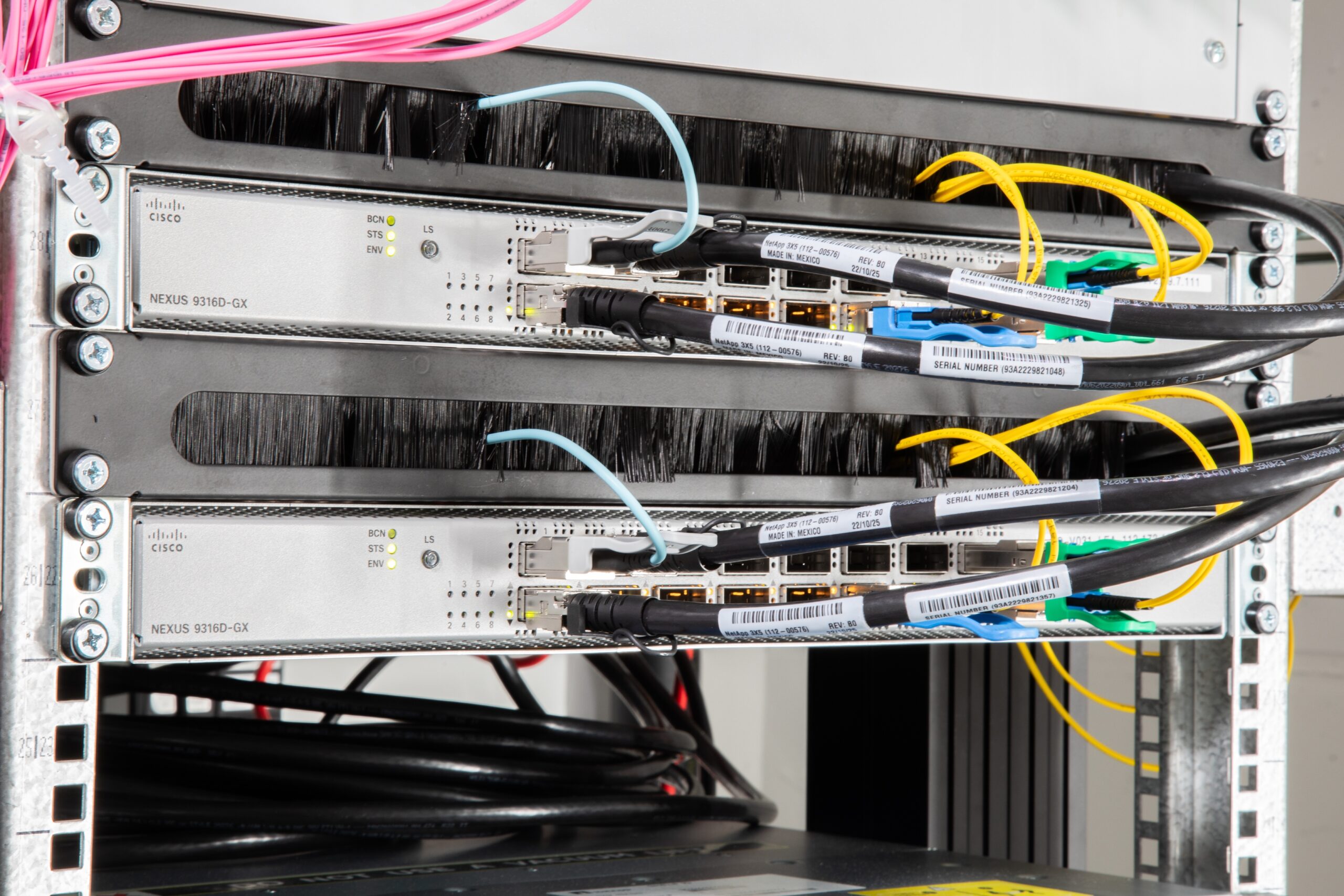
Behind the scenes, Cisco’s data centers and resilient networking infrastructure enable OR-X to function as a flexible experimentation environment.
In the data center, Cisco Application Centric Infrastructure (ACI) with Nexus components enables efficient configuration, segmentation, and management. For wireless communication, the facility relies on the latest generation of Cisco Access Points using the Wi-Fi 6E standard.
Within the OR-X space, transmitter boxes capture and exchange audio and video streams in real time. This allows surgical procedures, simulations, and experiments to be recorded, analyzed, and shared instantly with researchers and trainees.
The result is a flexible, future-ready infrastructure capable of integrating any device or technology, from certified medical equipment to early-stage prototypes.
In practice, this means surgeons and innovators can test new surgical techniques, explore advanced visualization tools, and experiment with emerging technologies in a safe and controlled environment. The platform also enables performance analysis and cross-disciplinary collaboration, allowing clinicians, researchers, and medical technology developers to evaluate and refine new approaches before they reach clinical settings.
The impact of the infrastructure is clearly reflected in its track record over the past two years. With 255 days of active utilization, the OR-X has facilitated 144 R&D experiments in surgical data science, AI, and robotics, while training 2,195 medical professionals across 108 hands-on courses. Beyond its role in establishing a nationwide orthopedic residency curriculum, the OR-X has become a premier hub for interdisciplinary dialogue, hosting 155 events, such as the Medical Augmented Reality Summer School 2025 and the AI Festival Zurich, and welcoming a total of 2,579 visitors into its cutting-edge ecosystem.
A blueprint for the future of healthcare innovation
This approach for OR-X has the potential to accelerate the development of surgical technologies while also improving training opportunities for future surgeons. This work sets a standard of excellence that other industry verticals can emulate, using Cisco as a benchmark.
It also demonstrates that solving healthcare’s most complex challenges requires more than standalone innovation. It requires collaboration between hospitals, governments, and technology providers, united by a shared digital blueprint.
Cisco technology is helping to power that very collaboration. Across more than 17,000 healthcare organizations worldwide, Cisco is helping healthcare systems modernize infrastructure, connect devices securely, and unlock new possibilities for patient care and surgical training.
At its core, this work is about more than just infrastructure.
It’s about enabling the next generation of surgeons and reducing strain on healthcare systems. It’s about designing a future where connectivity strengthens care without compromising safety.
At Cisco, our Purpose is to Power an Inclusive Future for All. That means ensuring that quality care, and the innovation that sustains it, is within reach for every community.
To learn more about how Cisco is powering the digital infrastructure that’s reshaping patient care, view our session from Cisco Live EMEA, “The Digital Health Blueprint: Uniting Government Policy and Strategic Investment.”
Explore this initiative and other Country Digital Acceleration (CDA) projects on our Interactive Map.