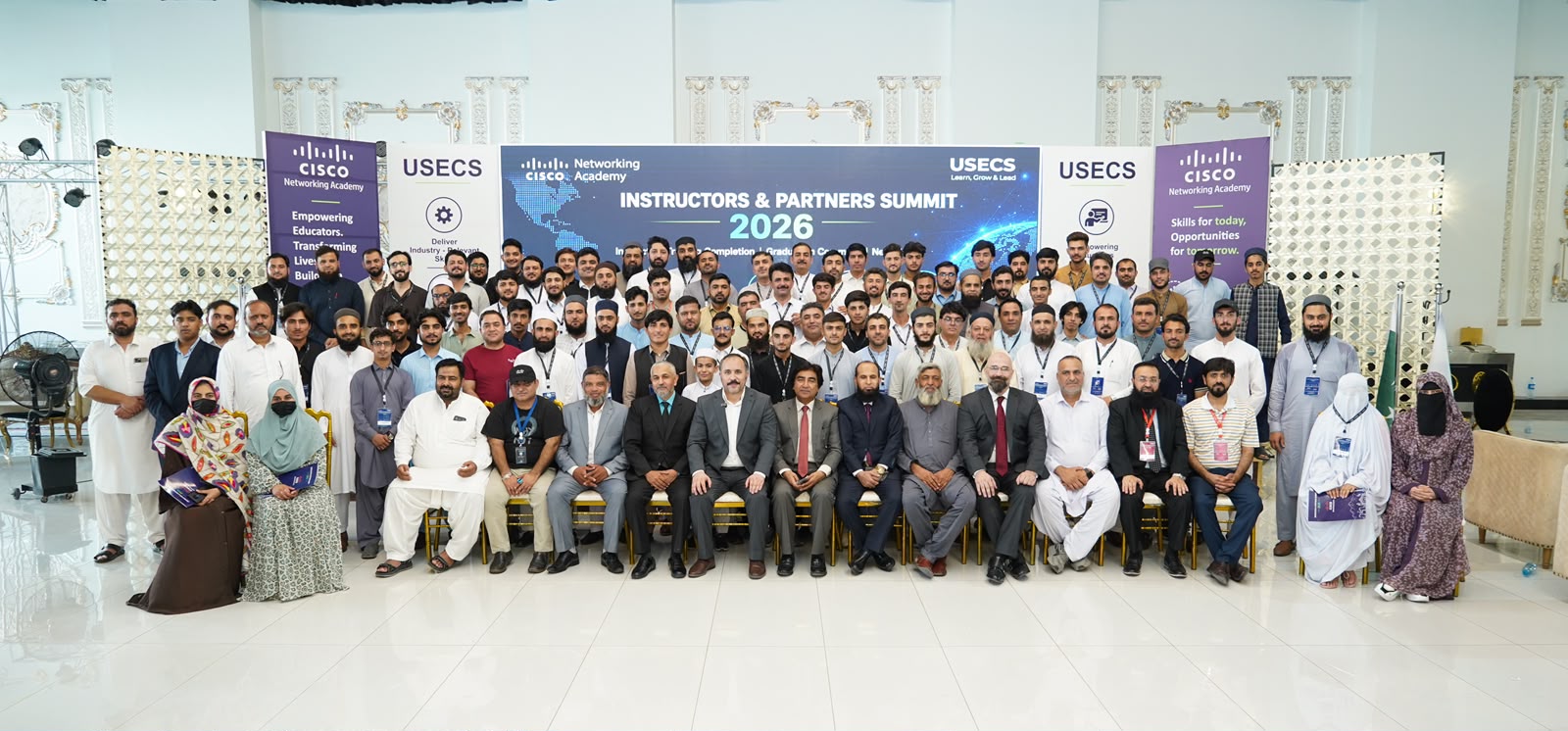
Digital opportunity is driven by educators, institutions, industry partners, and public-sector support moving in the same direction. In Pakistan’s Khyber Pakhtunkhwa (KP), this alignment is starting to look real.
On July 11, 2026, over 100 educators, academy leaders, partners, and technology advocates gathered for the Pakistan Instructors & Partners Summit 2026. Their objective: expand digital opportunities across KP and help build a future-ready workforce. The session was built around collaboration, digital skills development, and the practical question that matters most: how do you connect learning to economic growth?
A summit built around talent
The strongest idea running through the summit was also the simplest one: the digital economy needs talent, and talent needs a system around it.
Instructors, academies, prospective institutions, and ecosystem partners came together to help learners build industry-relevant technology skills that lead to career opportunities, strengthen communities, and create long-term impact. Workforce readiness and digital inclusion are increasingly tied to regional growth, especially in a growing region like KP.
This is where Cisco Networking Academy (NetAcad), Cisco’s global education program for digital and cybersecurity skills, plays a practical role in connecting education and industry. NetAcad helps learners gain the skills employers need most. At this summit, nearly 60 instructors completed the first phase of their training, expanding a growing network of educators who will help shape the next generation of technology talent across the province. That is not a symbolic milestone. It is capacity, multiplied classroom by classroom.
When global perspective meets local ambition
Attendees gained a unique perspective through Gianna Li Calzi’s virtual participation, which connected KP’s goals to Cisco’s mission to empower individuals through education and technology. Their message was direct: the work happening in classrooms across KP is part of a much larger global effort to expand access to digital skills and economic opportunity.
Senator Noor Ul Haq, who also participated, backed this view, underscoring a point that should no longer be up for debate: digital literacy and workforce readiness are essential to regional development.
His support also reflected a broader commitment to ensuring underserved communities can participate fully in the digital economy. Taken together, these voices pointed to a clear truth: investing in digital talent is not only an education priority. It is an investment in the region’s future prosperity, competitiveness, and resilience.
Making technical learning feel real
Technical education is far more effective when it provides a clear roadmap of what it can lead to. One of the summit’s standout moments was a Smoke Detector Simulation using Cisco Packet Tracer (Cisco’s network simulation and visualization tool for teaching networking and Internet of Things, or IoT, concepts). Participants saw firsthand how networking and IoT (the system of connected devices that collect and exchange data) can help solve practical challenges.
This session moved beyond theory and showed how technical knowledge becomes useful, real-world solutions.
That hands-on experience was reinforced by an engaging panel discussion and an inspiring AJK success story presented by Premier+ and its partner. Together, those sessions made career pathways feel far more substantial and real. They showed how digital skills can lead to meaningful employment opportunities while also helping institutions strengthen their technology education offerings.
And that shift matters. When learners can connect classroom knowledge to visible outcomes, education becomes more engaging, more relevant, and more likely to stick.
Why instructor development changes the equation
Every learner’s progress has an educator behind it, someone who builds confidence, sparks curiosity, and keeps momentum alive when the material gets difficult. At the summit, a dedicated workshop on high-impact facilitation skills gave instructors practical strategies to create more engaging, effective, and learner-centered experiences. Usable methods instead of abstract pedagogy
Each instructor who gains new skills can influence hundreds of learners over the course of a career, creating a ripple effect across schools, institutions, and communities. That is how a learning ecosystem gets stronger: not through a single event, but through better teaching repeated over time.
By investing in instructors, NetAcad is increasing its impact and strengthening the broader learning ecosystem across KP.
Thirty-two MoUs and a clearer path into FY27
One of the most significant outcomes was signing 32 Memoranda of Understanding (MoUs), formal agreements between organizations, through the Academy Support Center. That level of institutional commitment signals growing interest in joining and expanding the Cisco Networking Academy ecosystem.
These partnerships represent more than numerical growth. They point to a longer-term investment in a sustainable talent pipeline, one that connects learners to skills, skills to opportunities, and opportunities to economic progress.
That framing is important because it keeps the focus where it belongs: on systems, not moments. A summit can create energy. A network of institutions, trained instructors, and aligned partners can create continuity.
As KP continues its digital transformation journey, the priorities are now sharply defined: sustain teaching excellence, strengthen strategic partnerships, and create direct pathways from learning to employment.
With the foundation in place, the real work now begins
The Pakistan Instructors & Partners Summit 2026 was more than a celebration of progress. It was a launchpad for FY27 and beyond, grounded in practical outcomes and shared responsibility.
Strong digital futures are not built by technology alone; they are built by people who decide that access, skills, and opportunity should reach further than they do today. In KP, that decision is taking shape in classrooms, in partnerships, and in the kind of commitments that tend to matter years later.