Former Division I football player Michael Lowe is gaining hands-on network engineering experience with the San Francisco 49ers, applying skills from Cisco Networking Academy in one of the most connected environments in sports.
As a Division I football player at UC Berkeley, Michael Lowe once stepped onto Levi’s® Stadium’s field under the bright lights of game day. This summer, he returned to the stadium in a very different role, working behind the scenes as a Cisco Networking Academy Apprentice alongside the San Francisco 49ers Network Engineering team.
Lowe knows what it’s like to compete and lead on the field from his time as UC Berkeley football captain. Now he’s seeing the game from an entirely different perspective—inside the IT operations that support one of the NFL’s most technology-driven organizations.
Fans experience every touchdown, replay, announcement, concession purchase, and media interaction seamlessly, thanks to complex network infrastructure operating behind the scenes. During the apprenticeship, Lowe is gaining first-person, hands-on learning experience with the technology systems that support game day operations across the stadium as the 49ers host high-profile events and international sporting matches and prepare for the 2026-2027 NFL season.
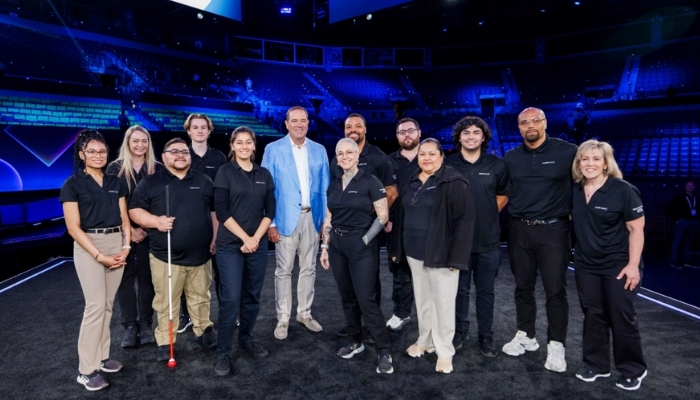
Earlier this year, Lowe participated in the Cisco Networking Academy Dream Team at Cisco Live, where he built relationships and shared his goal of combining his sports background with his new career in network engineering. Those conversations ultimately helped open the door to the 49ers apprenticeship.
I spoke with Lowe about the experience, the lessons he’s learned, and how Cisco Networking Academy helped launch his journey into network engineering.
From the gridiron to the server room
Hayley: You played college football yourself. You’re a D1 athlete. How does that background give meaning to this opportunity? It’s almost like you’ve made it to the big leagues in a way. How has your experience as an athlete shaped this experience on the other side?
Michael: My experience as an athlete has pretty much shaped my entire professional career. I went to Berkeley, which is right down the road. I actually had an opportunity to play in this stadium when I was in college. We played Oregon here in 2014.
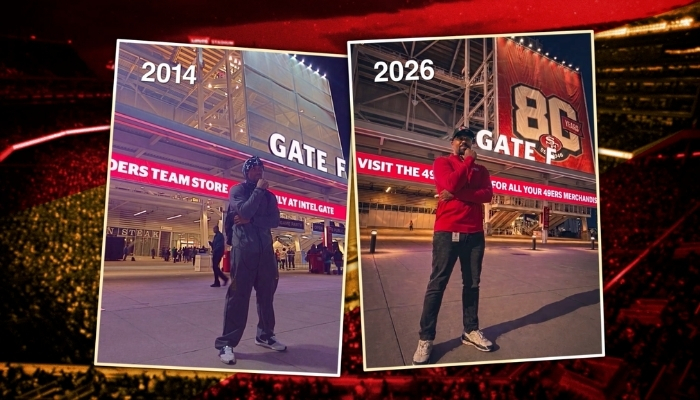
So now, walking into it on this side of things, it’s surreal to be able to look at it from behind the scenes—not on the field, but inside a technical office—and really see how all the departments work together and how IT is responsible for making sure the connectivity is there, the security is there, and everybody has access to what they need.
I’ve walked into this situation with that same mindset. Even when it comes to learning network engineering, I take the football approach.
In network engineering, you have a lot of different terms. You have IPv4, IPv6, STP, RSTP—different protocols. The way I break them down is just like a football playbook. We have different packages: 4-3, 3-4, dime, nickel. Some of those terms may not ring a bell, but we have all these different packages, and within those packages we have different plays, different terminology that we have to understand and memorize.
I take that same approach into technology and network engineering. We have different protocols, and those protocols are responsible for different things and have different terminology. But overall, it’s all about security, connectivity, and having access.
What fans don’t see on game day
Hayley: You’ve been on the field. What’s something that’s surprised you about what goes on behind the scenes to make everything run at a stadium?
Michael: Just seeing how IT is involved in configuring all of the devices and technology that each department uses.
Whether it be the TVs around the stadium that fans see when they go to the concession stands, having the menu items on the televisions—those are areas IT is responsible for.
The same goes for press box devices. When you have different media groups in the press boxes and in their offices, they need access and connectivity. Even the stadium microphone system works underneath the IT department. So it is pretty cool to see how hands-on we are, but also to see how all of those things work together. When you hear your name being called after making a play, it’s good to know that the IT team is making sure those things are working for everybody.
Finding a path through Cisco Networking Academy
Hayley: How did you first get started with Cisco Networking Academy?
Michael: I’m from Washington, D.C., originally. In D.C., we have a D.C. Infrastructure Academy. I decided to go into CCNA network engineering, so I joined that program. Through that program, I really excelled. Again, I took that approach from football and walked into the classroom ready to break down those terms, get a better understanding of network engineering, ask questions, learn, and not be afraid to make mistakes and learn from them.
My instructor, Tabitha, was great. I give her a lot of credit for helping me understand what network engineering is. I had no background in IT. My degree is in legal studies, so it was really a career switch for me.
Through that, I was nominated to go to Cisco Live.
Behind the scenes at Cisco Live
Hayley: What was your experience as part of the Cisco Networking Academy Dream Team at Cisco Live like, and how did it help set you up for this role?
Michael: At Cisco Live, we did a lot of physical deployment—not so much technical work—but we got to see the blueprints and talk to Cisco industry leaders about how these events are planned months in advance.
We learned about all the different things that need to be in place for events like these to be successful. Learning what goes into it on the back end was extremely cool.
You think you just walk into a situation and start setting things up, but it’s actually a lot of planning and blueprinting. It was pretty cool to ask questions and talk to different people about that.
Also, seeing some of the vendors and how they interact with Cisco, and how those relationships are built between vendors and Cisco themselves, was valuable.
Being with that team and that group of people really opened my eyes. I have a very “it needs to get done” approach, and I might create some anxiety around myself because of it. But seeing how patient everyone was, how things were planned out, and how much self-control they had in that environment really opened my eyes.
It helped me see that you can trust your planning and trust your strategy. Things will get done. You don’t have to create a false sense of urgency.
Leadership beyond the field
Hayley: At Berkeley, you were part of the Big C Society, recognizing leadership on and off the field—how has that shaped the way you approach teamwork and leadership in your career today?
Michael: Yeah, and I’m glad you brought that up because, being completely transparent, early in my collegiate career I stumbled a lot. I had to get used to it.
After my sophomore year, I took it upon myself to lead by example. Don’t be the guy who’s vocal but not putting in the work. I’d rather be the guy who’s quiet and just putting in the work. Through that process, all the way up to my senior year, I was recognized by my teammates and voted team captain.
I was able to increase my academic standards, improve my work ethic on the field and in the weight room, and eventually become a vocal leader for the guys. After they saw me lead by example, it opened up my confidence to become more vocal.
Being a part of the Big C Society, I embodied accountability, leadership, and responsibility on and off the field. To be recognized by a group like that was an honor, and I was extremely thankful for it.
Skills and opportunity can open doors
Hayley: How do you see these experiences shaping what’s next for you in your career?
Michael: I look at it as a testimony—a story I’ll be able to look back on and say that, as a new student entering a new career in a very broad field, experiences like Dream Team have really given me the motivation and confidence to tell myself that I can do this.
They’ve also given me the opportunity to really learn—to be a sponge in these environments, take all the notes you can, ask all the questions you can, and make all the connections you can because these are once-in-a-lifetime opportunities.
Being able to talk to different people along their career paths and hear where they started, and how opportunities came from the things they believed in and worked for—as well as from the people who helped them along the way—is incredibly valuable.
Taking this experience and using it as a catapult into the next experience is what I’m hoping to do. I want to learn everything I can while I’m here, so I’m prepared for whatever comes next.
For Lowe, the apprenticeship is more than a summer experience. It’s a testament to how the right combination of skills, mentorship, and opportunity can open doors to meaningful careers. Through Cisco Networking Academy, students gain the technical knowledge, confidence, and industry connections needed to take the next step in their professional journey. From the CCNA classroom to Cisco Live to an NFL stadium, Lowe’s story demonstrates how hands-on learning experiences can help learners turn ambition into opportunity and launch careers in technology.
Read next:
Cisco Partners With College Board to Launch AP Cybersecurity and Expand Career-Connected Learning