


The modern roadway is at a breaking point. As urban density increases, so does the complexity of managing traffic, protecting vulnerable road users, and maintaining aging infrastructure. For Departments of Transportation (DOTs), the challenge is twofold: they must modernize their systems to support Vehicle-to-Everything (V2X) technology that can aid in traffic efficiency and safety, but they must do so without compromising the security of critical traffic controls, all with limited funding.
When data is siloed or insecure, the idea of a “connected city” remains just that—an idea. Pedestrians and road workers depend on split-second awareness, and DOTs require a foundational layer they can trust. In Detroit, this past June at ITS Americas 2026, we demonstrated exactly how to bridge this gap.
The “Better Together” Advantage
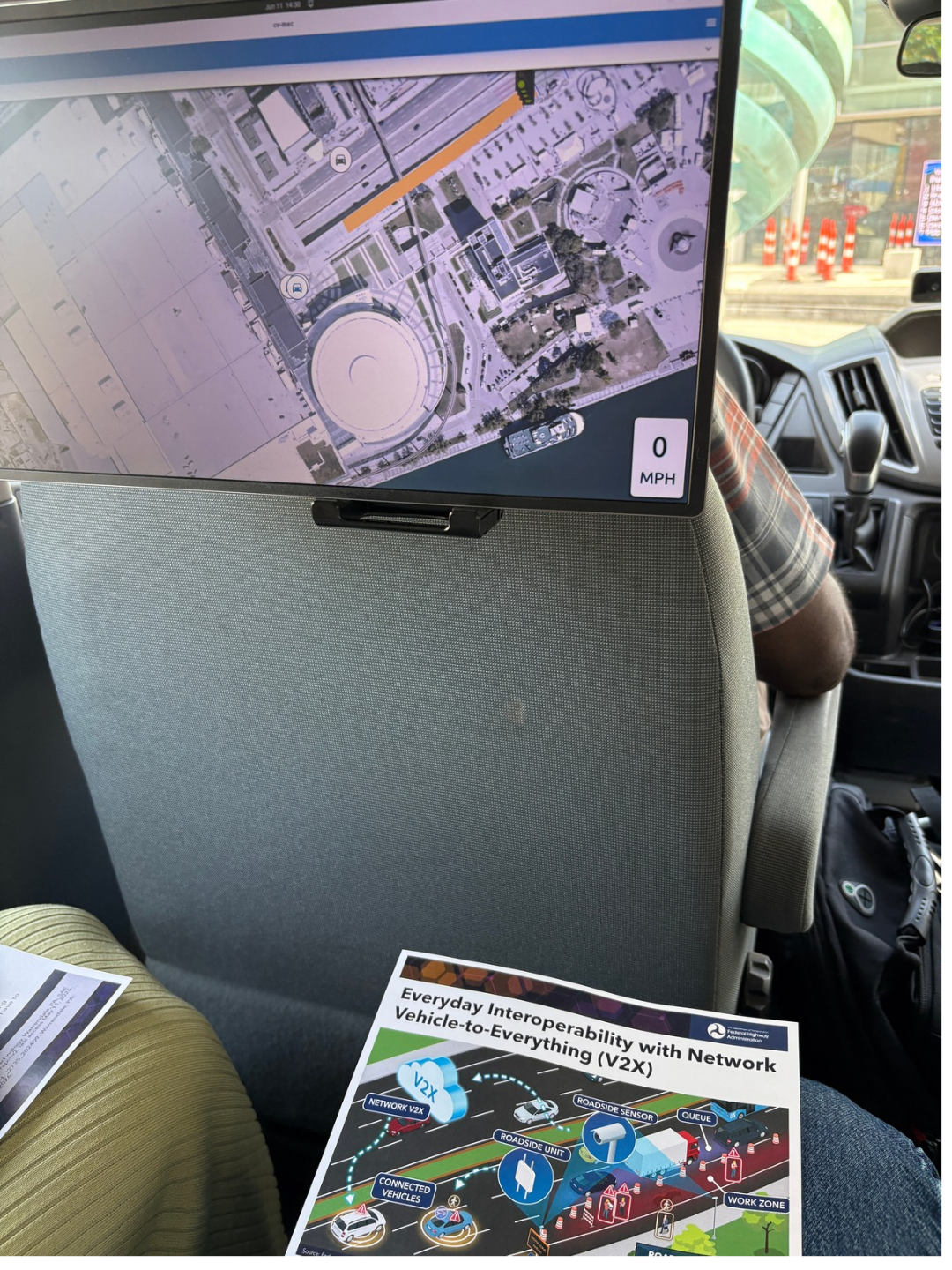
To solve this, Cisco and Verizon collaborated with the Michigan Department of Transportation (MDOT) to demonstrate how the future of mobility benefits from a seamless, secure, and high-performance V2X ecosystem. By combining Verizon’s high-performance cellular connectivity and interoperable Network V2X solution, Edge Transportation Exchange, with Cisco’s robust Industrial IoT portfolio, we moved beyond theory and into a scalable, real-world deployment. At ITS America, Cisco demonstrated cybersecure, multi-transport V2X connectivity across key MDOT intersections, powered by Verizon-supplied 5G SIMs. Utilizing an advanced data pipeline management platform, the demo published real-time safety alerts—such as pedestrian and work zone warnings—simultaneously via CV2X, network V2X, and cloud platforms.
This collaboration highlights how Cisco’s and Verizon’s technology integration can provide the low-latency, scalable, and observable communication necessary for modern traffic safety, and how trusted partnerships can accelerate the national scaling of connected vehicle technologies.
Michigan DOT: Driving Safe, Scalable Transportation Innovation
Michigan DOT sponsored and led technical enablements that showcased investable, safe, and mature technology stacks designed for real-world transportation environments. Their mission was clear: demonstrate future transportation innovations that save lives, improve corridor efficiency, and facilitate the integration of connected and autonomous vehicles—all while maintaining rigorous safety standards.
“MDOT is committed to advancing transportation technologies, ensuring that public infrastructure data is used responsibly to protect our communities,” said Michele Mueller, Manager, Connected, Automated Vehicles and Electrification, MDOT. “Our goal is to lead the nation in scalable, interoperable V2X solutions that enhance safety and efficiency on our roads.”
MDOT’s approach emphasized vendor neutrality and responsible data stewardship, ensuring that public sector infrastructure data is used securely and transparently. By sponsoring these demonstrations, MDOT positioned itself as a national leader in advancing scalable, interoperable V2X solutions that can be trusted by communities and stakeholders alike.
Cisco: Securing and Transforming Public Sector Data at the Edge
Cisco’s role was pivotal in providing a secure interface for public sector data, ensuring safety and trustworthiness from the ground up. We integrated industrial-grade routers directly into traffic cabinets, creating compact, high-performance security gateways that easily fit in crowded cabinets. These routers act as firewalls, shielding MDOT’s critical infrastructure from cyber threats at the source.
A key innovation was the use of an impenetrable one-way logical valve that protects intersection data, enabling safe and secure data flow from traffic cabinets to the broader network. Cisco’s advanced data pipeline management platform orchestrated data routing, decoupling messages from their transport mediums and enabling simultaneous delivery across simultaneous channels—including local processing, C-V2X roadside units, Verizon’s Edge Transportation Exchange platform, and secure cloud brokers.
Cisco’s ruggedized compute solutions processed LIDAR and video detection data locally, delivering real-time warnings for pedestrians and work zones within milliseconds. This edge data transformation reduced proprietary data handling, simplified integration with diverse devices, and laid the foundation for national scalability.
“As an industry as we scale Connected Vehicle technology, we must securely unlock data from our existing roadside environments. We must move beyond proprietary silos and pipe clean, trustworthy, and timely data to multiple delivery methods – direct, network, and hybrid V2X. Cisco provides the durable, observable, and trusted foundational digital infrastructure to meet the mission.” said Alex Clark, Transportation Acceleration Leader at Cisco.
Verizon: Delivering Interoperable Network V2X over Reliable, Low-Latency Connectivity
Network V2X is a game-changer—by routing safety alerts over the existing 5G network to standard cellular-connected devices like smartphones, in-vehicle infotainment systems, or standard vehicle head units, Verizon is bringing urgent alerts to road users immediately, without the need for nonstandard hardware.
“Verizon’s network is designed to deliver the low-latency, high-reliability connectivity that connected vehicles demand,” said Jyoti Sharma, Associate Director- Network Planning Global Networks & Technology. “By enabling multiple affordable options for delivering vehicle safety messages, we are helping to extend the reach of V2X technologies from pilot projects to nationwide deployments.”
Verizon’s network capabilities support the standardization of Vehicle-to-Everything (V2X) communications, enabling affordable and scalable delivery of vehicle safety messages to road users. This robust cellular backbone is critical for extending the reach of connected vehicle technologies beyond pilot deployments to nationwide implementations.
Open Innovation and Commercial Systems: Accelerating American Innovation
This demonstration leveraged fully commercial off-the-shelf systems, avoiding proprietary silos and vendor lock-in. By freeing data and enabling open innovation, the partnership supports the growing demand for AI services and accelerates the development of new applications that improve community safety and operational efficiency.
A Blueprint for National Scale
This collaboration was more than a demonstration; it was a proof-of-concept for the future of national transportation. By integrating Cisco’s deep observability and secure networking with Verizon’s platform and network infrastructure and MDOT’s leadership in safe, scalable deployments, we created an ecosystem that is as reliable as it is scalable.
For DOTs, this means the ability to deploy advanced sensing and V2X applications without fear of security vulnerabilities or latency bottlenecks. For the public, it means a safer, more predictable journey. We proved that when you secure the edge and unify the network, you aren’t just managing traffic—you are addressing roadway safety and building the resilient, intelligent infrastructure that our communities deserve.
Cisco remains at the forefront of this transformation, providing the secure, scalable foundation necessary to turn complex data into actionable safety insights. We recognize that achieving a truly intelligent infrastructure is a team effort, requiring the continued collaboration of technology leaders, public agencies, and industry partners to bridge the gap between innovation and implementation. Let’s collaborate to explore how we can further accelerate the path toward safer, more connected roadways for everyone. Reach out to a Cisco expert today.
Explore Cisco Industrial IoT
Improve business outcomes with our end-to-end Industrial IoT solutions. Securely connect assets, applications, and data in real time to apply transformative business changes.
Explore our portfolio


