
This is the first in a three-part series exploring how Cisco Crisis Response is partnering with nonprofit organizations that are harnessing the power of responsible AI in humanitarian settings. From assessing needs on the ground to connecting affected people with information and services, each installment examines a different stage of the humanitarian response lifecycle — and the responsible AI principles that must guide the work at every step.
In the initial hours and days of a humanitarian response, accurate information is critical and potentially lifesaving. Relief organizations must move fast to get assistance to people in need, but before they can act, they need to understand. Who has been affected? What do they need? Where are the gaps?
AI has the potential to expedite and transform the way relief organizations approach needs assessments in the aftermath of an emergency. It can accelerate data collection, surface insights faster, and help overstretched teams do more with less, ultimately facilitating the delivery of humanitarian aid to the people who need it. But in contexts where people and communities are at their most vulnerable, the need to leverage AI responsibly is paramount.
Cisco’s approach to responsible AI
That tension between the enormous promise of AI and the need to deploy it responsibly is something we take seriously at Cisco. Our approach to responsible AI is grounded in six core principles that are embedded in how we work, how we innovate, and who we choose to partner with. When we support organizations working at the frontier of AI-enabled crisis response, we look for partners who hold themselves to the same standards we do — and whose responsible AI commitments, in turn, help inform and refine our own.
One such partner is Kobo, the organization behind KoboToolbox: an open-source platform that more than 35,000 organizations across 220 countries and territories rely on to design surveys, collect data, and generate insights to inform programs and interventions in some of the world’s most challenging environments. Cisco has partnered with Kobo since 2014, supporting the development of KoboToolbox into the versatile software it is today — including, most recently, its early integration of qualitative analysis features supported by large language models. Now, with the KoboToolbox AI Formbuilder, the team is taking that one step further: using generative AI features to help humanitarian organizations build better survey forms faster. By focusing both on potential gains and risk reduction, these features enable humanitarian workers to expedite high-quality, high-volume data collection without compromising on the safeguards needed to protect both the data and the people it represents.
Operational challenges, ethical questions: Why responsible AI matters
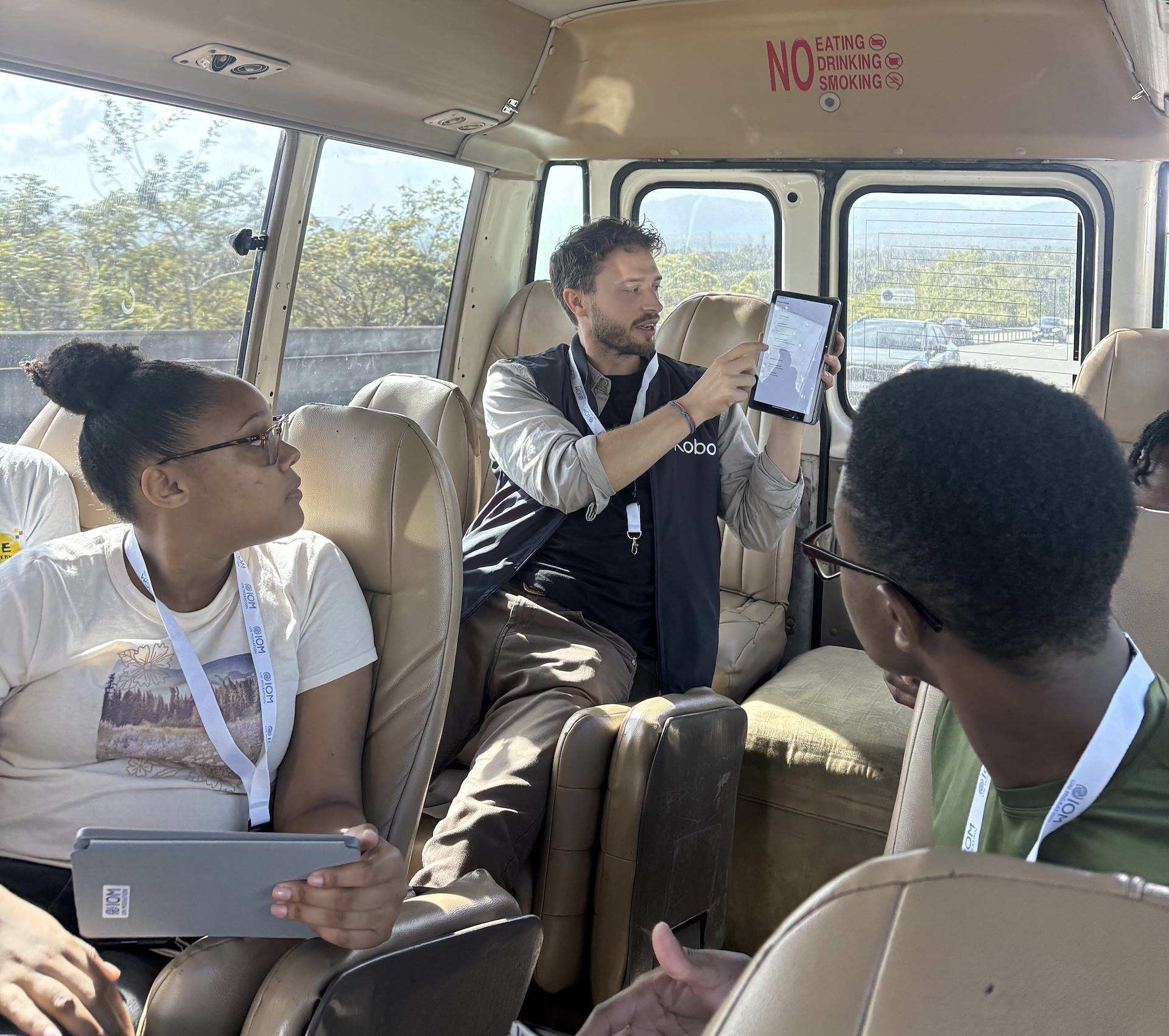
Humanitarian needs assessments form the backbone of an effective response. Field teams are often working in dangerous or remote conditions, with limited time and resources, gathering data to understand the full scale and scope of what crisis-affected communities urgently need. Traditional data collection methods like text-based surveys and paper forms can be slow, inconsistent, and prone to gaps or errors. And when the communities most affected by a crisis speak languages or dialects that aren’t well represented in those standard tools, their voices risk being lost entirely.
AI-assisted tools have the potential to address many of these challenges but, in doing so, they introduce new ones. The data collected in emergency settings — information about displaced children and families, their locations, their identities, their vulnerabilities — is extraordinarily sensitive. How do you balance the real impacts that can be achieved with the increased speed and efficiency of AI with the obligation to handle that data safely and ethically?
Building better humanitarian data tools with responsible AI at the core
Kobo’s approach addresses these challenges by prioritizing the integration of responsible AI capabilities directly into the data collection workflow and the tool itself. Features like automated speech-to-text transcription and AI-assisted translation allow field teams to capture detailed observations in real time, in the languages spoken by affected communities. AI-powered form building helps even non-expert users design high-quality, contextually appropriate surveys in minutes rather than hours, meaning relief workers can gather more actionable data faster than ever.
“At Kobo, our approach to responsible AI begins long before the end user — from early architectural decisions and community co-design, down to selecting models that meet the highest ethical and privacy standards,” says Tino Kreutzer, Kobo’s Chief Operating & Innovation Officer. “Before writing a single line of code, we assess potential risks and test model reliability using only synthetic data. By hosting the best available open-weight models in our own environment, we ensure user data is never shared or used for commercial training while maintaining highly reliable performance.”
“Humanitarian data needs strong safeguards. That’s why we prioritize ethical principles such as accuracy, privacy, and reliability in all our work.”
– Tino Kreutzer, Chief Operating & Innovation Officer, Kobo
Critically, the tool is built with human oversight at its core. By design, the “human-in-the-loop” model requires users to review, edit, and verify AI-generated transcripts and translations directly within the platform before any data is acted upon — a deliberate design choice that reflects the transparency and accountability required for the responsible use of AI. Furthermore, all AI processing happens within KoboToolbox’s own infrastructure, maintaining full data sovereignty.
KoboToolbox’s AI features in action
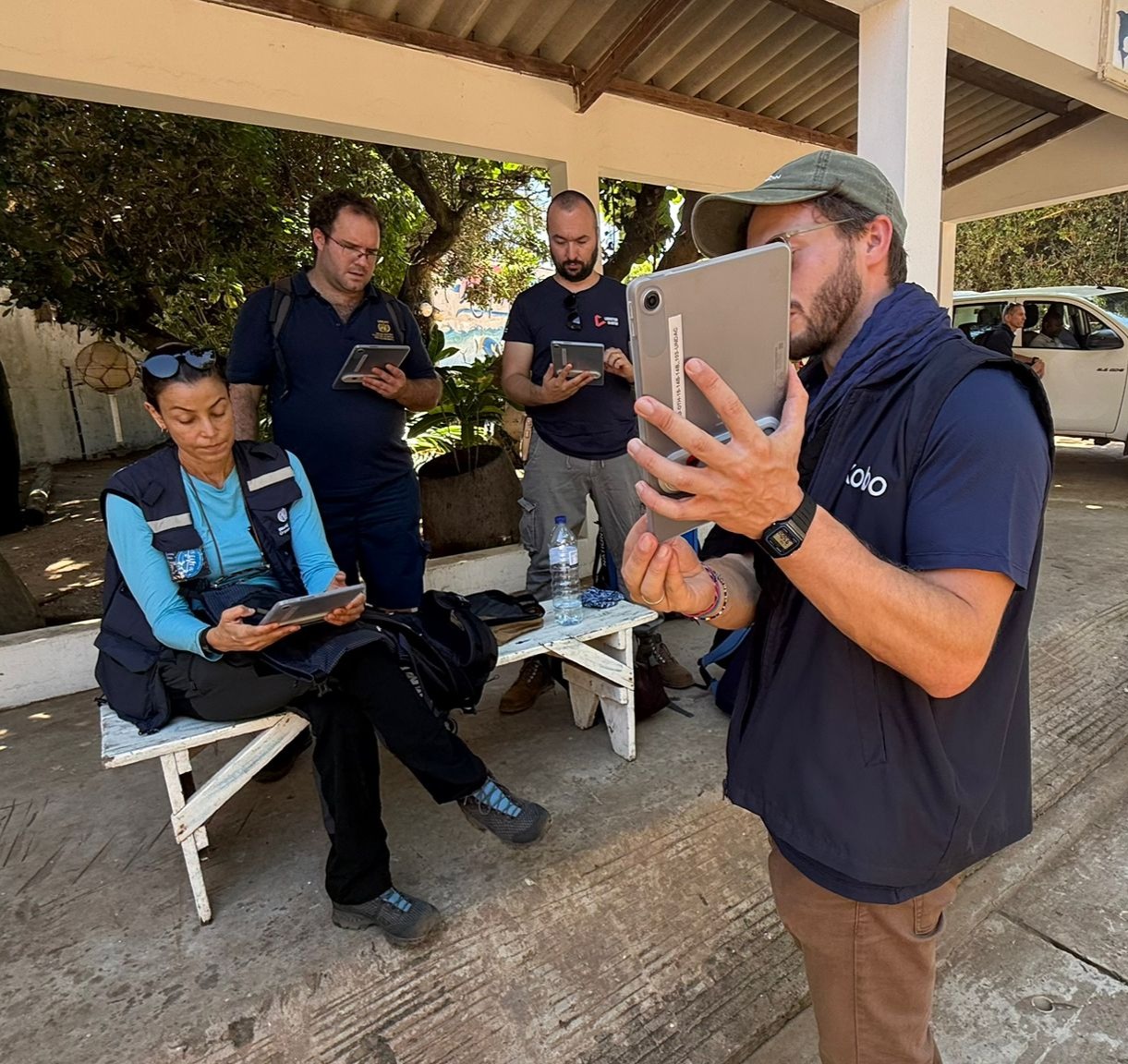
The evidence for what this tool can help humanitarian organizations accomplish is already taking shape. In a pilot with UN Women across 14 countries in the Middle East and North Africa, AI-powered transcription and translation features were used to process data from more than 14,000 people. The tool significantly reduced the time required to transcribe and translate responses, and because all processing happens within KoboToolbox’s infrastructure rather than being exported to external tools, sensitive data stayed secure and within the control of the organizations responsible for it. For the relief workers conducting interviews, that meant more time being present in the conversations rather than managing data workflows — and the people being interviewed reported feeling genuinely heard as a result.
The tools were put to the test in a sudden-onset emergency for the first time in early 2026, when flooding in Mozambique displaced nearly 700,000 people. Kobo deployed staff on the ground to support frontline responders, where a small team of enumerators used AI-assisted voice capture to record detailed observations about infrastructure conditions and service availability at accommodation centers for displaced families, producing richer, more nuanced data than traditional text-based methods would have allowed. The full impact of that data on the response is still being assessed, but the pilot validated that these tools can be deployed responsibly under real emergency conditions.
The potential — and the obligations — of scaling responsible AI in humanitarian settings
The early results suggest that AI can be responsibly deployed to improve how relief organizations understand and respond to crises. Kobo is committed to keeping the tool, including these AI-assisted features, free or affordable for the 35,000+ organizations already relying on the platform. With that reach comes the potential to transform how humanitarian organizations conduct needs assessments at a global scale.
“As we integrate AI more deeply into our work, we want to ensure we’re doing it in partnership with local organizations we work with, in ways that help meet the needs of the humanitarian sector without causing additional harm,” says Kreutzer. “Ethics and transparency should always be prioritized over single-minded efficiency gains — that’s our guiding principle.”
At Cisco, we believe that the potential to leverage AI as a force for good is vast, but it’s only as strong as the principles guiding its use. We’re proud to partner with organizations like Kobo that both inform and share in our commitment to mitigating the risks while maximizing the opportunities that these emerging AI technologies present in humanitarian settings, without jeopardizing the mission — or the people — they’re built to serve.
Next in the series: When affected communities need reliable information on how and where to access assistance in the aftermath of a crisis, how can relief organizations leverage AI-powered tools to help provide it — safely, accurately, and at scale?