Guest Blog by Igor Dayen, SP Product and Solutions Marketing
CCAP Architecture: Remote PHY (RPHY)
In the distributed CCAP architecture (DCA), the remote PHY (RPHY) component is what keeps DOCSIS relevant in the emerging world of digital fiber. It is of particular significance when a commercial digital fiber plant and a residential analog fiber plant are combined into one large digital plant.
With RPHY, the PHY circuit is moved outside of a device such as a CCAP and placed at the end of a network. This gives the RPHY architecture a performance benefit as RPHY keeps all the complexity centralized where it can be more easily scaled and maintained.
In addition, RPHY distributes the functions of a traditional cable headend so that the signals are converted from IP to RF deeper in the cable network, thereby providing key operational benefits as well.
“We are at the intersection of doing great things for the world. We have the ability to change people’s lives.”
-Chuck Robbins, Cisco CEO
Virtually every industry is undergoing digital transformation. The retail, manufacturing, energy, and transportation industries, to name a few, are all seeing major improvements in productivity enabled by digital technologies. It is only within the healthcare industry that this digitization, or the lack thereof, can become a matter of life and death.
Of all the industries where I’ve seen the intersection of technology and business, I find the pace of innovation within healthcare to be astounding. From consumer devices like Fitbit to vast genomic databases, new inventions are driving an exponential rise in the amount of data available to manage one’s healthcare. Yet, with all this data, a gap in connecting data remains a major problem.
Fractured Healthcare
Dr. Aenor Sawyer with the University of California San Francisco (UCSF) says it best, “People navigate the healthcare journey, but their data does not.”
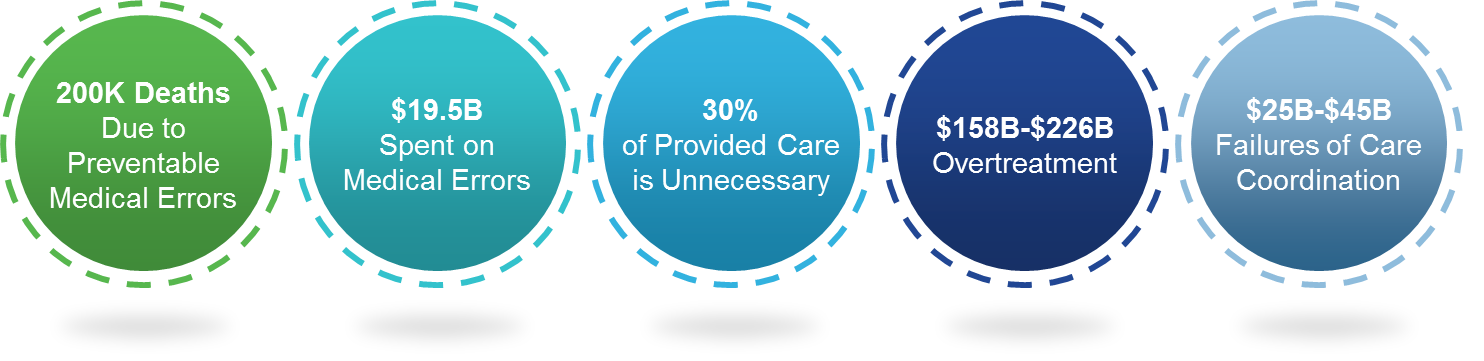
Although the healthcare industry applies technology successfully in some areas, it’s often implemented in a highly siloed manner. According to a study by the White House Office National Coordinator for Health and Information Technology, the consequences of this siloed approach are staggering.
I wanted to let you all know more about the new, exciting wireless access points coming out. So I asked the wireless Product Managers, Nasser and Brian to help me with this blog.
Let’s do this.
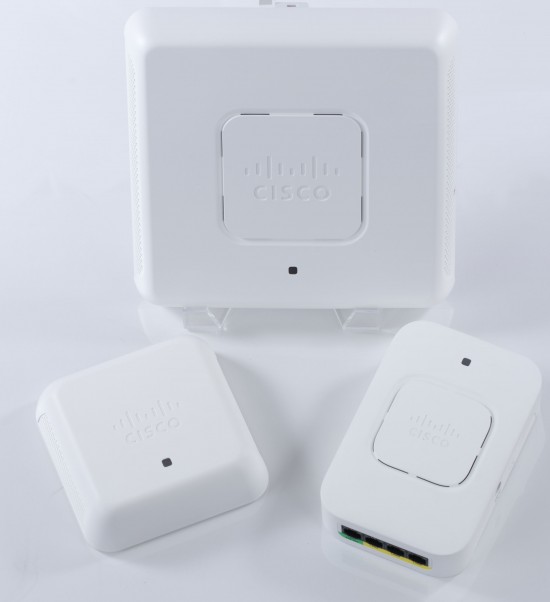
Cisco is expanding the wireless portfolio with four new models. Two 500 Series, one 300, and one 100 series.
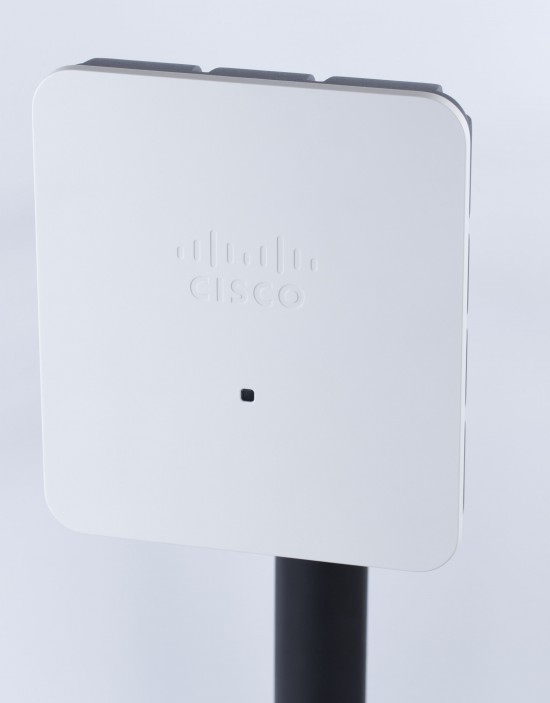
Yes, there are two new 500 Series Models. These wireless access points feature high-power RF output, Spectrum Intelligence, SmartPoE (it is optimized for 802.3at power, but works with 802.3af, all automatically) and Static Link Aggregation (LAG). This powerful access point has a concurrent 802.11ac dual radio 3×3 MIMO with three spatial streams. The WAP571 is a new indoor model. It features two energy efficient Ethernet ports. This model is perfect for businesses who looking for supporting more users with better performance and providing an outstanding user experience. This is the best performance, indoor access point.
Cisco’s new WAP571E Outdoor Wireless Access Point
The WAP571E is a powerful, outdoor Access Point that features an IP66 rated industrial design, 802.11ac dual radio and two Ethernet ports with Static LAG support. It provides basic coverage, point-to-point and point-to-multipoint bridging.The WAP571 can be deployed in any outdoor environment, like parks, school, pool and any common areas.
That sounds great right? But why?
Let us explain some these features:
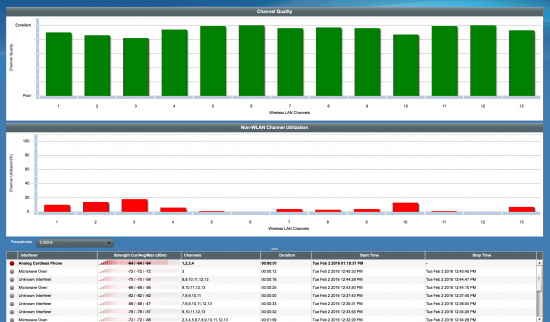
High Power: Better range and coverage, increased rate vs range. Spectrum Intelligence: This allows you to see what is going on in the RF spectrum for troubleshooting & optimization. SmartPoE: Automatic adjustment of performance given PoE budget available. 802.3af? No problem, but the trade-off is performance and range. Static LAG: Provides more throughput available to the LAN. Push real traffic beyond 1Gbps. IP66: Ingress Protection level 66, protect from the elements – Water, dust, etc. It means the WAP can handle extreme outdoor environments. The unit includes mounting hardware for surface and pole mount applications.
MIMO is an acronym for mult-input, multi-output.
Cisco’s new WAP571, WAP150, and WAP361
The new WAP361 is a wall-plate model. It connects easily to any junction box and has concurrent dual band 802.11ac radio and five Ethernet ports. This model is perfect for adding PoE endpoints such as an IP Phone. Applications for the WAP361 is education, hospitality, and especially, conference rooms. Certainly a perfect fit for retro-fit, in-wall applications.
The Cisco WAP150 is a concurrent dual band 802.11ac access point. This is an easy choice for those looking for basic connectivity and solid performance for a limited number of users and associated devices.
One thing to note, all new Cisco WAP100, 300 and 500 Series can be set-up wirelessly in mere minutes. Use what you like: mobile device/cell phone, tablet, laptop etc. Now, you do not have to use a cable to connect to the access points.
Cisco will continue bringing you the Best-In-Class wireless networking products that are perfectly suited for small and medium-sized Businesses, especially those with growth on the mind. These new Wireless Access Points are a great value, best-in-breed features, quality, reliability and performance. All four new models, like the rest of the portfolio are simple to set-up and deploy, and can be up and running in mere minutes. Back all that up with our Industry’s best warranty and support community. The entire wireless portfolio is complimented with the switching and routing portfolios.
Spectrum Intelligence
That is it for now – thank you for spending time with us.
Cisco is proud to be a triple diamond sponsor of MPLS+SDN+NFV World Congress 2016, which runs from March 8-11 at the Marriott Paris Rive Gauche Hotel and Conference Center in Paris, France. (For the uninitiated, that’s quite a jumble of acronyms — spelled out, it stands for “Multi-Protocol Label Switching + Software Defined Networks + Network Function Virtualization.”)
This year’s theme is all about transformation through innovation — a topic near and dear to us — with an intent to enable the software-defined operators of the future. Cisco is hosting or participating in several opportunities to connect with thought leaders on the software-defined path, starting with a pre-conference customer workshop on Monday, March 7, at 1:30 CET. Continue reading “Cisco Lights Up Paris with Transformational Innovations”
Tax time in the US is quickly approaching. Everyone should be on the lookout for scams that are designed to trick you out of your money and personal information. The IRS is warning users about an increase in the number of email scams being used this year. However, these attacks are no longer limited to just the United States. Earlier this year we notice tax phishing campaigns targeting Ireland. Therefore, we decided to take a look back over the last year and see how widespread tax scams have become. We quickly realized that tax scams have gone international and now impact numerous countries across the world.
To give you an idea of the scope of the problem that we uncovered, our post will look at tax phishing campaigns from the following perspectives:
This post was written by guest blogger Erin Connor, Portfolio Manager for Critical Human Needs, Cisco Corporate Affairs and Cisco Foundation
Shortly after joining Cisco’s Corporate Social Responsibility team last August, I attended a new hire orientation and was introduced to Cisco’s People Deal: Connect everything, innovate everywhere, benefit everyone. It sounded great, although I admit that I wasn’t quite sure what it meant in practice. Six months later, however, I have seen exactly what our People Deal means here at Cisco, and how it is demonstrated by employees across departments and sites around the world.
The refugee crisis in the Middle East and Europe marks one of the biggest and most complex humanitarian emergencies of our time. Eleven million people – half of Syria’s pre‐war population – have either died or fled their homes since the war began in 2011. While millions have been forced from their homes and displaced inside Syria, millions more are fleeing to neighboring countries. Over 3.6 million refugees have escaped to the neighboring countries of Lebanon, Turkey and Jordan, while more than a million refugees crossed the Mediterranean Sea into Europe in 2015.
Benefiting Everyone
As refugees began pouring into Europe, Cisco staff across the region stepped up to help those in need. They organized clothing drives in Germany, Greece and Hungary. Cisco employees volunteered at refugee camps, passed out food in train stations, and painted classrooms for refugee children. In Norway, the Cisco team launched their own campaign, encouraging staff to donate one day’s salary to support refugee assistance efforts. They collectively raised over $14,000.
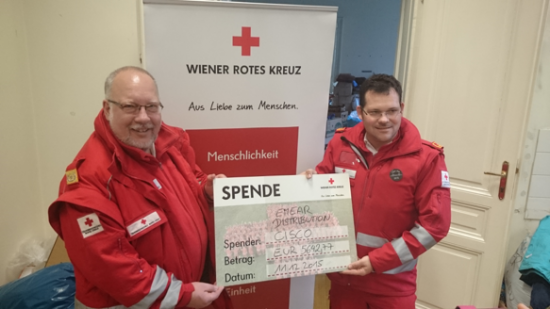
At the Cisco EMEAR Distribution Forum in Vienna in December, 18 bags of clothes were collected and over $6,200 was raised to support two Austrian charities.
In response to employee requests, Cisco’s ‘Be the Bridge’ campaign expanded its scope to include over 40 organizations responding to the refugee crisis. Employees donated nearly $379,000 to organizations helping refugees and, with Cisco Foundation matching contributions, total Cisco giving has come to over $743,000.
Innovating Everywhere
Embracing our culture of innovation, Cisco employees also developed cutting-edge, technology-based solutions for some of the key challenges faced by refugees. A team in Belgium submitted a concept for the Innovate Everywhere challenge to create wearable devices to better connect refugees to emergency response and support services.
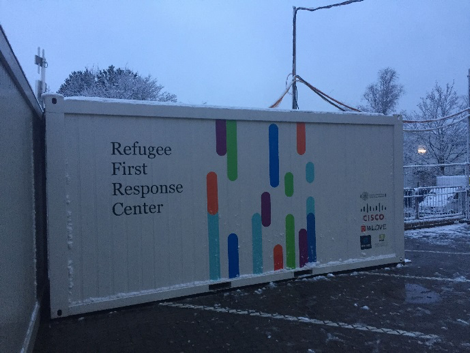
Employees in Hamburg, Germany, produced a white paper on the potential use of telemedicine for refugees. Building on key business relationships with the City of Hamburg, University Hospital Hamburg Eppendorf, and private sector partners (including Avodaq, MLOVE and SAVD Videodolmetschen), the Hamburg team envisioned a shipping container equipped with Cisco technology that can serve as a ‘Refugee First Response Center’ (RFRC).
Staffed by University Hospital doctors, the RFRC provides real-time translation services to refugees during medical consultations through the use of Cisco equipment and on-line translation services. When executive leadership in the Central Theatre saw the concept, they put their opex behind it and encouraged the team to pursue this vision. The team was able to fully realize the concept and finish the RFRC in just six weeks. This feat is especially impressive considering that the RFRC was a volunteer activity for Cisco staff, who contributed their personal time to make this a reality.
Since the RFRC’s launch in November, over 1,500 video medical consultations have been conducted in Farsi, Arabic, Tigrinya, Serbian, Albanian and Urdu. The solution has caught the attention of a family foundation based in Hamburg which has committed to funding the production of ten more units to be deployed in refugee camps across Germany.
Connecting Everything
Cisco’s Tactical Operations (TacOps) team, supported by the volunteer Disaster Response Team (DRT) from the U.K. and Ireland, have also responded to the crisis. Through two separate deployments over the course of four weeks, a group of TacOps and DRT engineers have installed Meraki-based Wi-Fi networks and device charging stations at more than 17 sites along the migration route in Southern and Central Europe.
These free Wi-Fi spots provide the opportunity for refugees to charge their phones, contact loved ones, and access information needed for their onward journey. These 17 sites have served a significant number of refugees since November, and represents the largest TacOps deployment in the team’s history in terms of geographic scale and number of users supported. TacOps is also in the process of providing Cisco equipment and guidance to enable connectivity in a refugee camp in Germany, managed by the Red Cross.
In addition to matching employee contributions, Cisco Foundation has funded all of the equipment needed for the TacOps and NetHope deployments across the migration route in Europe, as well as for the refugee camp in Germany. Building off of the connectivity established by TacOps and NetHope, Corporate Affairs provided $200,000 in grant funding to NGO partners Mercy Corps and NetHope to provide critical information services to refugees and coordination support to responding NGOs. All of the institutional support provided has leveraged the initiative and commitment demonstrated by Cisco employees who have given their time, money and talent to benefit the people impacted by this crisis.
Cisco’s CSR strategy is to enable people to innovate as technologists, think as entrepreneurs, and act as social change agents. Through our programs and partnerships, we strive to create Global Problem Solvers. Cisco employees’ response to the refugee crisis in Europe and the Middle East demonstrates our own capacity to act as global problem solvers, and confirms that our People Deal is bringing tangible benefits to people all around the world.
As RSA Conference 2016 draws near, I’m excited to see that privacy is at last getting its day in the sun. This topic has often seemed like an after-market add-on at the conference in previous years. Last year, in fact, most of the booths at RSAC were touting the fact that they had security AND privacy, but when pressed, privacy usually meant encryption. Fortunately, that has changed.
Why? The huge data breaches of last year, particularly those affecting the healthcare industry and the federal government, exposed more than 100 million records containing private, sensitive information. These events brought home the reality of how vulnerable our data remains and how fragile our cherished privacy has become.
Have you heard? There’s a digital revolution coming, and it’s going to change higher education as we know it. Colleges and universities are facing societal shifts and changing attitudes towards higher education, but modern technology can help improve both the academic and administrative experience. This digital revolution – and the broader digitization of higher education – will leverage technology to improve the learning experience, broaden educational opportunities, and save time and money.
However, leadership is critical to ensure that the right vision and tone for change are set, and that the institution is maximizing the benefits it can receive from digitization. So how can your college or university apply strong leadership principles to take advantage of the digital revolution to transform higher education?











 This post was written by guest blogger Erin Connor, Portfolio Manager for Critical Human Needs, Cisco Corporate Affairs and Cisco Foundation