Innovation has become an imperative for society at large. Whether it be entrepreneurs starting new ventures, large established corporations trying to defend their market position, or countries facing increased global competition, everyone is attempting to innovate. What does this mean? It means they turn new ideas into widely used practice.
The reasons are clear: the benefits from innovation are highly promising.
At a macro-economic level, the capability to innovate fuels countries’ global competitiveness. According to academic research, between 2010 and 2020, roughly a quarter of US productivity will be generated by innovation. And, as the economist William Baumol points out in his book The free market innovation machine “virtually all the economic growth that has occurred since the eighteenth century is ultimately attributable to innovation”.
There is strong consensus among policy makers that innovation is a main driver of economic progress and social well-being. It is a powerful tool to tackle societal challenges from resource scarcity and global warming, to poverty and health. Indeed, innovation has become a central pillar of national and regional economic policies. Horizon 2020 is an example. The European Union settled nearly EUR 80 billion of funding over seven years to boost research and innovation across different industries. This will undoubtedly help strengthen Europe’s global competitiveness.
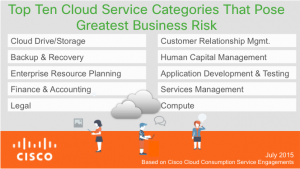
We’ve known for years that employees and lines of business are bypassing IT departments to get the cloud services they want. The good news is we can finally quantify how much shadow IT exists in an organization and identify any risks.
Large customers actually use 730 individual cloud services on average—with some using over 1,000. That’s 15-22 times more than what their IT departments estimate. We can help customers understand what (and how much) they are using, but even then, I get asked (a lot) – which ones are the riskiest?
In my previous blog entry, I answered a user question about how MPI defines its global constants, specifically in the context of interactions with other languages.
I went beyond that answer, and also explained why MPI does not define an ABI.
In this entry, I’ll go into the “how does MPI interact with other languages?” part of the question.
Much has been published in the industry about how automation will result in job loss e.g. the book, The Second Machine Age, as an example.
Further, the question is obvious as to whether or not the skills you have today will be relevant tomorrow?
Such discussions have been occurring for the past several years since the financial crisis of 2008; and the question now pondered by enterprises and governments is :
How do we grow the middle class?
How do we provide skills to under-served communities?
While we most often think of the Internet of Everything (IoE) as transforming public safety forces out in the field, change can actually begin before an officer is even leaves the station. Classroom training for officers is crucial, enabling them to stay safe and perform at the highest level out in the field. Current events highlight just how important good training is, ensuring officers know how to act in all situations and act as good example of public safety in their communities. The problem is that police officers work on shift schedules, which makes it extremely difficult to get everyone in the same room at the same time for training.
How do police departments guarantee their officers are trained at the highest level despite this scheduling issue? Video training. Police departments and training officers can use video to produce high-quality educational training tools that can be viewed online at an officer’s convenience. On-demand video recording tools like Cisco’s WebEx are straightforward and easy to use, and allow educational materials to be accessed anywhere via the cloud. These on-demand video presentations help make sure everyone is receiving the same level of training, improving the way public safety agencies operate before anyone even steps foot in the field.
Here are four more benefits that stem from on-demand videos for classroom training:
1. Reduce the need for trainers to be physically present at all classroom trainings
It’s still extremely important for police departments to conduct live training exercises. But by replacing classroom sessions with video training, training officers’ time is freed up to focus more on live training exercises. This makes certain officers are still receiving the training they need while helping departments operate more efficiently.
2. Eliminate the burden of shift scheduling to accommodate training
Juggling day and night shifts with training schedules is a hassle. Agency leaders have to analyze staffing, pull people off regular shifts, fill those spots with other agents and often have to pay overtime to do so. It also involves paying trainers to be onsite for multiple days. Video training allows officers to stay on their regularly-scheduled shifts, preventing the confusion and difficulty of shifting schedules and allowing officers to access training videos at a time that is convenient for them.
Cisco’s vision for the Intercloud is to create and manage workloads across multiple clouds and to provide a single point of consumption. Nowhere is that single point of consumption stronger than at the data layer, where the diversity of datastores and the rapid progress towards real-time streaming architectures is putting huge demands on enterprises to give business users instant access to interactive queries and visualization techniques that translate quickly to value.
But the diversity of datastores, the location of data assets (on prem vs. cloud), and the volume of data has outgrown the capabilities of analytics platforms that were built for desktop and client-server deployments.
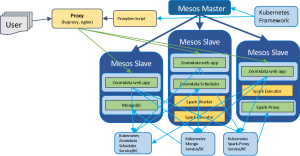
At MesosCon, Cisco is unveiling a set of partner integrations that are addressing the back-end of Internet of Things and Big Data environments from an operations / underlying hardware standpoint. And at the data analytics and visualization layer we’re announcing a joint development agreement with Zoomdata to enhance their visual analytics solution to run as a collection of distributed ultra-scalable microservices running on Mesos on the Cisco Intercloud and other clouds that support Mesos. Zoomdata on Intercloud offers major advantages in workload portability and data fusion between cloud and on-premise, auto-scaling of Zoomdata clusters to support large numbers of concurrent users, and high availability and fault tolerance.
Cisco has also funded the creation of a Zoomdata Smart Connector for Cisco Data Virtualization (CiscoDV), formerly Composite Software. By joining the power of Zoomdata on Mesos, Zoomdata Fusion, Spark on Mesos via Intercloud, and CiscoDV, enterprises can perform near real-time analytics and visualizations across multiple locations by combining disparate data sources. These fused analytics can virtually tie together data sources from a single cloud, across clouds, or between cloud-hosted data and on-premise Zoomdata and CiscoDV deployments.
I’m going to be demonstrating the integrated solution stack during my keynote at MesosCon, and I look forward to having conversations with many of you about our strategic focus on microservices-based architectures and the role they can play in your application architecture and strategy
The landscape of IT has changed. The single-source provider era is quickly coming to an end as more companies embrace the world of multi-sourcing. In a 2014 report by IAOP & Information Services Group (ISG) Annual State of the Industry1, it stated that the number of enterprise IT organizations using multi-sourcing as a strategy increased by 75% in that year and predictions for 2015 shows continued growth.
Companies are moving more rapidly to a multi-sourcing strategy to achieve greater agility and improved customer satisfaction, and it’s paying off. Effective multi-sourcing companies are experiencing improved performance, reduced IT costs, acquiring best-in-class expertise while freeing up time and resources so personnel can focus on the company’s core business.
Automation Is at the Forefront of IT Change
The speed of change in IT is getting faster and innovation via automation is at the forefront of this change. FAST IT is helping enterprises keep up with this accelerated pace.
Fast IT simplifies operations at a time when complexity is mounting — and IT budgets are flat. By offering automated, programmable, and agile infrastructure, Fast IT frees IT organizations from manual configuration, changes, and maintenance.2
In my January blog post, Building Innovation: Achieve Fast IT with Customers, I shared with you that if companies are going to deliver new solutions at a more rapid pace, IT needs to be able to integrate and automate all support interactions that it is responsible for delivering.
There Are Challenges
Just as there are benefits with multi-sourcing, there are some challenges. Multi-sourcing creates new complexities that can stand in the way of business progress. Forward-thinking, proactive companies can address these challenges head-on by answering crucial questions such as:
How do we implement end-to-end delivery methods in a multi-vendor environment?
How do we manage the configuration of our devices when changes are being made by multiple outsource providers?
How do we onboard new providers with minimal effort and impact on the ecosystem?
Changes made within the ecosystem can easily disrupt and fragment service delivery causing your company and other service providers to be out of policy, SLA or regulatory compliance.
Case in Point
We recently saw a situation at a large financial institution where the customer was facing a security audit that they were most likely going to fail. They called us for help. In just two-and-a-half weeks following service activation we had updated nearly 2,000 configurations and the company passed their security audit. They were so pleased with our performance they gave us 23,000 devices to manage for policy, configuration, and change.
But, that’s not the end of the story. The bank wanted to benchmark the effectiveness of their service providers against their established service level agreements (SLAs). Immediately we knew an automated closed loop process was needed. Our Compliance Management and Configuration Service (CMCS) coupled with ServiceGrid fit the bill.
When this project goes live, ServiceGrid, a tool that gets the right data to the right place and person, will be used to connect the customer and their service providers ticketing systems to one another as well as to CMCS. In turn, CMCS will perform a baseline analysis of all connected network devices and elements and automatically stabilize and upgrade them to Corporate Standards. This improves communication among all connected parties. It also gives the bank greater transparency into their vendor management activities and provides real-time compliance monitoring.
Combining ServiceGrid and CMCS enables us to automate multi-vendor network configuration and compliance while giving the customer higher value and a better outcome than if we offered either one of the services alone. The bank’s desire to build a robust, elegant, secure, and seamless multi-party network became an opportunity to let two of our premier services shine, making the future brighter for our customer and Cisco Services.
What about you? How is your organization addressing configuration management in a multi-sourced environment?
I recently became a Ninja. That’s right. A Cisco Security Ninja. You can be a Ninja too!
Satyapriya Sharma has a little fun with her new Security Ninja achievement.
The Cisco Security Ninja Program (http://wwwin-csdl.cisco.com/ninja_dojo/) confirms lessons learned and challenges participants to reach for higher degrees of competence and proficiency in product security. The program offers four distinct “belt” levels, each one increasing your security knowledge and furthering your career at Cisco.
While Belt takes you through the basic security concepts and principles.
Green Belt is where you take the basic concepts and tell how you are use them in your daily work whether you are a developer, tester, manager.
Advanced belts – Blue and Brown, Here’s where you execute on those concepts and think about security for everything you do.
Black Belt Like karate, this belt recognizes you as a security leader who will provide ongoing, significant contributions both internally at Cisco and externally in the industry.
“Get your Security White Belt” – was the first thing teams told me when I joined Security Business Unit more than a year ago. There was a Business Unit initiative to have everyone be White-Belt certified. So I got into the groove of things and earned my While Belt and Green Belt (Mangers) within the first month of joining. At that moment, I challenged my team to be the first whole team under our SVP that would be Green-Belt certified. We all worked hard together and achieved that Milestone! By that time advanced level ninja certifications (Blue, Brown and Black Belts) registration had started and I registered for Blue Belt. It took two months to earn it.
At this time, I started mentoring my team and others to achieve this milestone in their development as well. Then came the Brown Belt and I submitted my work for Black Belt. I had to wait for few weeks before I heard from the Security Ninja Program Submission Committee who set up a call with me to go over my submission. They told me that I am the only manager who has applied for the black belt outside of the team that created the program!
Satyapriya Sharma earned her ninja status, and wants to encourage other women to be ninjas at work.
I didn’t think much of it at that time, but once I got the email that I had earned my Black Belt – it started to sink in – the only manager in the whole of CISCO to earn it. Wait! That also meant the only female manager in whole of CISCO to earn it. YAHOOOOOO !!!!! I couldn’t wait to share the news with everyone 🙂 especially my Women In Science and Engineering (WISE) team.
I got a lot of support from my family and the management team to reach this milestone. Being in Security Business Unit certainly helped me earn the certificates faster since I live and breathe this stuff daily!
I want to use what I learned from this experience to encourage other women, not only at Cisco, but in technology everywhere to push ahead for these expert certifications. Here are four pieces of advice to become a Ninja in your space:
Be patient and don’t give up! Getting these certifications was hard work and takes time.
Don’t put your own development on the back burner. Due to tight timelines and commitments and work-life juggling we put our development on the back burner –make your development plan with your management, talk to your family and give yourself ample time to get to the milestone so it’s not stressful.
Block time on your calendar each week if you have to. For Green Belt, I used to do one module a day after my daughter would go to sleep.
Get a mentor. Seek help from someone from your site/business unit if needed. I am happy to help as well. Please feel free to each out. J
As a long time networking veteran, I’ve watched our industry change and respond to a wide variety of disruptive changes. I remember PictureTel ISDN videoconferences on the IBM PC. Then came IP video conferencing in the early ’90s. Things picked up 1991, when Microsoft launched Windows Media Player 1.0.
Though Windows Media Player and Microsoft Multimedia Extensions arrived without much fanfare, they ushered in the ability to record and playback audio, and display high-performance graphics on the desktop PC — a feature, prior to that time, reserved for high-end graphics workstations such as the Commodore AMIGA.
But these capabilities were the foundation that led to video streaming in 1995. And, as we know, the future of the Internet, and the network, would never be the same. (Obligatory Rick-roll omitted)
Today, I watch younger generations (such as my own children) take for granted the networks that are all around them. Social media as we know it was (and is) clearly fueled by our endless appetite to create and share content with the whole world. Unlike the Internet of the 1990’s, today, you can do it all from the palm of your hand. Continue reading “The Evolution of Networking Software”












 The speed of change in IT is getting faster and innovation via automation is at the forefront of this change. FAST IT is helping enterprises keep up with this accelerated pace.




 es on the IBM PC. Then came IP video conferencing in the early ’90s. Things picked up 1991, when Microsoft launched Windows Media Player 1.0.