The FCC today unanimously adopted new rules that will require improved location data to be delivered to 911 call centers from wireless phones.
This decision is an important step forward in generating a dispatchable address from wireless phones located indoors, helping ensure that first responders can reach victims as quickly as possible. When fully implemented, technologies like these will help save lives. But there is considerable work to be done, and Cisco will work with first responders, service providers, the FCC and enterprises to help reach this goal.
There are many technologies that have a role to play when a consumer dials 911 from his or her mobile phone, and chief among those technologies is Wi-Fi. In fact, because Wi-Fi Access Points are associated with a civic, dispatchable address, Wi-Fi generated location data from residential locations will play an important role in achieving the goals established by the FCC for locating 911 wireless callers.
Various market sources indicate Wi-Fi penetration of US households is almost 60 percent. Households with fixed line broadband use Wi-Fi more heavily, with Wi-Fi penetration at 80 percent. Consistent with historical growth in the market, Cisco expects Wi-Fi household penetration to continue to increase, and believes Wi-Fi can be an important tool toward finding callers.
Enterprises can help, too, because emergencies also happen at work. A recent Cisco survey of enterprises with more than 100 employees shows that 80 percent of companies either have Wi-Fi everywhere or in designated areas.
Technology is available today to connect enterprise Wi-Fi location data to first responders, and Cisco will enthusiastically support industry and first responders in implementing the FCC’s decision.”
There’s an influx of conversation focused on Bring Your Own Device, the consumerization of IT and how organizations can cope in today’s multi-device environment.
IT and business leaders are being asked to securely connect thousands of devices competing for network resources; both wired and wireless while simultaneously supporting greater productivity in the workplace.
With this in mind, how can mobility be addressed at an infrastructure level to tackle challenges and enable opportunities for organizations and employees?
Recently, I participated in a Future of IT podcast episode with Craig Mathias, Principal at the Farpoint Group. We discussed how an IT infrastructure is key to enabling innovation and the role seamless mobility and why organizations should future-proof their mobility strategy through an infrastructure-centric approach.
At the beginning of each year, I try to set a New Year’s resolution that is SMART (specific, measurable, achievable, relevant, and time bound), so that I’ll keep it. I especially like to set goals that are attainable and will drive tremendous growth in our business together.
This year, I want to focus on helping you sell all the incredible collaboration solutions within our completely refreshed portfolio, by providing you with simple tools and programs to sell collaboration differently. I’d like to challenge you to make one of your New Year’s resolutions to utilize the many incentives and programs that we recently announced which are specifically designed to help you grow your business. Continue reading “A New Year, A New Resolution to Selling!”
During my recent business trip throughout Germany, the Hamburg Senate adopted a visionary “Digital City Strategy” to optimize value from the new era of massive digitalization. As part of the initiative, a Digital City Control Center will be established in the Senate Chancellery to analyze data and improve citywide processes and projects with strategic partners.
“If Hamburg wants to shape this policy, now is the time to act,” said Hamburg’s First Mayor Olaf Scholz. And at the World Economic Forum in Davos last week, German Chancellor Angela Merkel also asserted that “a digital offensive would create high-quality jobs and would help boost EU employment.”
Digitalization efforts are gaining momentum throughout Germany, fueled in part by the country’s Industry 4.0 initiative, and Hamburg in particular should be commended for its enterprising actions. Officials and industry leaders here recognize that a citywdide information infrastrcuture is essential to extracting full value from digitalization and the Internet of Everything — the connection of data with people, processes and things
At the bustling Port of Hamburg, Europe’s second largest and only growing port, CEO Jens Meier attributes recent record results and efficiency gains to technology. While here, Jens invited me aboard the, “CSCL Globe (China Shipping Container Line) ”, the world’s largest container ship. Longer than four soccer fields, the ship can transport 19,100 (TEU) containers. Hamburg was the mega ship’s first European port-of-call on its maiden voyage.
IoEis playing a significant role in reducing operating costs, synchronizing the lifting and lowering of bridges with road and water traffic, improving collaboration among employees and citizens in adjacent Hamburg. Without these advances, the port would not have been able to accommodate and attract such a mammoth vessel or prepare for a doubling of container volume over the next several years, said Jens.
The port and city of Hamburg are transforming into a powerful Seatropolis. The digital interconnectedness of port and city is a prime example of the “network multiplier effect”: The more inter-connections among nodes the greater the value of IoE. We’re proud at Cisco to be partnering with the Port of Hamburg, and we’re confident our advances will make a big splash when it showcases IoE projects as Hamburg hosts the World Ports Conference in June.
It is clear being an IT professional today is not easy, there are ever increasing demands on the network and on IT resources. Just look at some of the data out there:
Our latest Cisco Mobility Landscape Study shows that 89% of organizations have company-wide or specific mobility initiative.
Even in conversations with customers here at Cisco Live Milan it is evident that IT is tasked to more with less, “I am told I need to be more agile.” Or, “Everyone is getting new Mobile Devices that are going to increase traffic.” Or “I needs to be more strategic to the business.”
It is clear that IT needs to rethink how they enable applications, secure the network and manage the infrastructure. But there is hope! Cisco is hard at work developing new solutions and products to help in meeting top of mind concerns. In recent January announcements, many being highlighted at Cisco Live Milan, Cisco has shown how new technology can help IT be more agile, support new demands and drive business impact. There have been a number of blogs talking about these announcements and below is where you can find out more about these exciting Cisco innovations.
Increasing IT Agility
Cisco ONE Delivers a More Valuable and Flexible way to Consume Cisco Software.
Cisco Meraki is delivering a global, enterprise-class, comprehensive Cloud-Managed IT solution
Supporting New Demands
Cisco Catalyst Switches for the Access, Backbone and More are enabling next generation Employee Experiences
Driving Business Impact
Cisco Connected Experiences is delivering the ability to pinpoint user devices and deliver timely IT and business insight
Walking through the DevNet Zone at Cisco Live in Milan, I was struck by two things. First, we have an amazing array of platforms for developers who want to write applications that take advantage of the network – platforms that enable software-defined networking, collaboration, security, connected mobile experiences, data analysis at the edge, analysis of data in motion and more.
And second, our team has really focused on getting developers up and running with hands-on experiences as fast as possible. The DevNet Portal is a one-stop-shop for the resources developers need most. It speeds their development time by stepping them through their choice of learning tools, developer kits, APIs, forums to engage with Cisco engineers and lots of supporting documentation.
Then, a sandbox of developer tools provides access to the latest Cisco software and hardware platforms online. Developers can test in a real-world environment and quickly know that their code is verified to work with Cisco production equipment.
In fact, our APIC-EM controller sandbox set a Cisco record for the most users in its first two months of availability. Even now, the only way to get the latest early-field trial (EFT) version of APIC-EM is through either the EFT program or DevNet Sandbox.
The DevNet Zone and the DevNet Portal are innovative catalysts, helping the developer community to create new apps and automation functions on the network-as-a-platform. The personal and virtual interactions are inspiring.
Developers play a pivotal role in the progress of the Internet of Everything. Here this week in Milan, developers can see it, learn it, build it and launch it. I was amazed.
A new problem has arisen in CCNA class: We have a lab that asks the students to enable a debug command; the debug overruns the console buffer to the extent that commands cannot be entered, and this goes on for more than an hour!
In my 15 years of teaching CCNA classes, we have always taught the dangers of using debug commands on production equipment. To demonstrate this, we would have the students run the debug ip packet command, let it run for 30 seconds, and then turn it off. Of course, turning off the debug is challenging, so we would teach the trick of turning the debug off before we would turn it on: adding the undebug all command to our command history buffer.
Running this test on the 2500 series and 2600 series routers would usually cause a crash and a forced reboot. After we changed the lab equipment to the newer ISR 2800 series, the same demonstration no longer resulted in a router crash; however, it introduced a new problem: loss of control of the command line.
The sheer amount of debug messages would cause the command line to be unusable. The debug messages continued to overrun the console buffer for over an hour before we would finally run out of patience and power cycle the router. In a lab scenario, this causes the students to take an excessive amount of time to finish their lab, and for people studying for certifications, it wastes precious study time. A better way to manage debugs is needed. We would like to see the debug messages (they can be very helpful in both troubleshooting and understanding how protocols function), but we would also like to retain control of the command line. Continue reading “Defending Your Console”
On Tuesday January 27, 2015, security researchers from Qualys published information concerning a 0-day vulnerability in the GNU C library. The vulnerability, known as “GHOST” (a.k.a. CVE-2015-0235), is a buffer overflow in the __nss_hostname_digits_dots() function. As a proof-of-concept, Qualys has detailed a remote exploit for the Exim mail server that bypasses all existing protections, and results in arbitrary command execution. Qualys intends to release the exploit as a Metasploit module.
CVE-2015-0235 affects the functions gethostbyname() and gethostbyname2() –functions originally used to resolve a hostname to an IP address. However, these functions have been deprecated for approximately fifteen years, largely because of their lack of support for IPv6. The superseding function is getaddrinfo() which does support IPv6 and is not affected by this buffer overflow. Programs that still utilize the deprecated gethostbyname() and gethostbyname2() functions may potentially be affected by GHOST.
Thousands of customers from around the globe have converged at Cisco Live in Milan to share and discover what is new, interesting and impactful in networking. In the Data Center, several key themes are emerging, one of which involves scalability. As business requirements continue to drive the need for more – more apps, more storage, more compute, more speed, more capacity, more of whatever – Cisco continues to innovate, helping customers scale their environments. There are a lot of new capabilities/products being introduced across the Nexus Data Center switching portfolio, to address scalability, and much more.
One of the key things I’d like to call out is BGP control plane for VXLAN. While there are more details and a link below, I want to highlight this because as VXLAN continues to pickup steam, and more customers deploy it, these networks are getting, and will continue to get, much larger. When VXLAN initially came out, one of the things about it that resonated with people was the fact that it would allow a theoretical max of 16 million tenants, which is quite compelling relative to the 4096 offered by traditional VLANs. However, the fact that the VXLAN header happens to have enough space (24 bits) to allow for a network that large does not mean you can just go out and build it. By default, VXLAN uses a flood and learn mechanism for device discovery because there is no control plane explicitly defined. Think about this for a minute. Flood and learn out to 16 million tenants, umm, may not be the most optimized approach. Is there another tried and true method to perform this type of function, that customers are already familiar with? Yes – BGP. So, this is the background on the rationale for BGP control plane for VXLAN and why I think it’s an exciting new innovation.
There are plenty of other interesting things to check out on the World of Solutions show floor and they are called out below. To those of you that are here, come by and take a look, ask questions and learn how these latest product introductions and technology innovations can help your data center scale. If you’re not here, take some time to go through the many hyperlinks below or watch Cisco Live keynotes and presentations live from Milan!
BGP VXLAN Support on the Nexus 9000 and Nexus 7000 – as cloud computing continues to momentum, enabling the creation of a highly scalable, multi-tenant environment with network segmentation, traffic separation, elasticity, and workload mobility. However, the VXLAN IETF draft does not specify a control plane, and relies on a flood-and-learn mechanism for host and endpoint discovery. The Cisco® Border Gateway Protocol (BGP) Control Plane for VXLAN solution is an open, interoperable standards based approach using the proven features of BGP to provide a more scalable, flexible, alternative.
100G on Nexus 9500 and Nexus 9300 – Keeping up with evolving data center bandwidth demands, Cisco is introducing 100GE modules for both the Nexus 9500 and 9300 (8 port and 4 port respectively) for high performance spine/core connectivity and also for direct router interconnect.
New Nexus 93120TX a 2RU switch supporting 96 x 10GBaseT + 6 x 40GE Uplinks operating in NX-OS Mode and ACI-capable
Nexus 7702 and New Nexus 7000 F3 Series Module -For customers wanting the comprehensive DCI and services features of the Nexus 7700 in a small form factor, the wait is over! The new 3 RU Nexus 7702 is an ideal compact solution for small/medium DCI deployments (OTV, MPLS, VPLS and EVPN) and high performance RISE and ITD services. Cisco is also introducing a new 10GE F3 module for the Nexus 7000 chassis, rounding out the 10, 40 and 100GE F3 portfolio for both 7000/7700 chassis.
QSFP BiDi Monitor – Following up on the huge success of the 40GE Bidi transceiver, Cisco is introducing a BiDi Monitor QSFP. The Monitor QSFP provides passive optical tap capabilities for Bidi links, allowing data monitoring for security and network optimization analysis.
Cisco Nexus 5648Q and new 12 Port 40G Ethernet/FCoE GEM: the Nexus 5648Q features 24 x 40G ports and can scale up to 48 x 40G ports via 2 of the 12 port 40G GEM modules. This new switch also supports FEX, offers VXLAN capabilities, and rich data analytics and FCoE support.
Nexus 3548-X offers lower power consumption (~ 25%), Multicast NAT: Simplifies co-location integration and Latency Monitoring: FIFO Traffic visibility and troubleshooting
Nexus 3132Q-X featuring lower Power consumption (~ 15%), the option for 4 x 10GE SFP ports at a lower price
Nexus 2332TQ Fabric Extender supporting 32 x 10GBaseT + 4 x 40G Uplinks plus all of the feature set that the Nexus 2300 Series offers including larger buffers to absorb traffic bursts, support for Cisco 40G BiDi optics, and additional versatile TCAM Supporting for support of capabilities such as ACL classifications and QOS, and local flow redirect for architectures that require intra-rack traffic to reduce bandwidth.







 part of the initiative, a Digital City Control Center will be established in the Senate Chancellery to analyze data and improve citywide processes and projects with strategic partners.
 IoEis playing a significant role in reducing operating costs, synchronizing the lifting and lowering of bridges with road and water traffic, improving collaboration among employees and citizens in adjacent Hamburg. Without these advances, the port would not have been able to accommodate and attract such a mammoth vessel or prepare for a doubling of container volume over the next several years, said Jens.
 it is evident that IT is tasked to more with less, “I am told I need to be more agile.” Or, “Everyone is getting new Mobile Devices that are going to increase traffic.” Or “I needs to be more strategic to the business.”
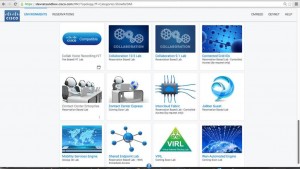 developers need most. It speeds their development time by stepping them through their choice of learning tools, developer kits, APIs, forums to engage with Cisco engineers and lots of supporting documentation.