

The winning Autonomous Networks Moonshot Catalyst Challenge, Game-X* addresses a central industry problem: how to move from fragmented automation toward trusted closed-loop autonomy for network services in the AI era.
AI-native services demand instant provisioning, guaranteed outcomes and zero disruption. This award-winning TM Forum Catalyst introduces a Model-as-a-service control plane powered by agentic orchestration to help service providers monetize AI traffic and deliver measurable experience outcomes using zero-trouble assurance agents.
* Game-X was named winner of the Best Moonshot Catalyst – Autonomous Networks challenge at DTW Ignite 2026, recognizing its contribution to self-optimizing, self-healing and zero-touch network operations. The team included Colt, stc, Telefonica, Turk Telecom, Verizon, Cisco, Etiya and Ni2.
From connectivity to experience-led AI services
AI inference traffic is changing network priorities at a faster pace than expected. AI isn’t just adding traffic. It’s changing the shape of traffic. The Cisco AI Impact on Wide Area Networks report outlines that AI adoption is accelerating at an unprecedented pace. Enterprises are embedding agents into core workflows, consumers are beginning to rely on autonomous AI assistants, and the compounding effect on traffic growth, symmetry, latency expectations, and critical path resiliency cannot be ignored.
AI workloads are also reshaping service expectations. Enterprise customers increasingly define requirements in terms of business outcomes, rather than infrastructure, and expect guaranteed performance for AI inference services and applications.
There is a shift towards intent-driven interaction when ordering network services from providers. Customers want to express the business outcomes for their network workloads in natural language and have provisioning systems automatically configure their network based on their budget, performance, resiliency and geographic data sovereignty requirements.
Network operations teams must optimize traditional transport network key performance indicators (KPIs), while also managing new AI-service KPIs such as time to first token, token latency, and model availability.
An autonomous approach to managing AI traffic
AI traffic introduces service objectives that are not covered by traditional network-only optimization. Inference experience for users depends on transport quality, endpoint behavior, routing policy, model constraints, and sovereignty boundaries.
Traditional rule-based orchestration and cascaded intent models create tightly coupled chains between business support systems (BSS), operations support systems (OSS) and transport controllers. That rigidity slows provisioning, limits service agility and makes it harder for service providers to monetize the growing market for AI traffic.
The TM Forum Catalyst Game-X: Game-changing autonomous network experience aims to address this shift through the model-as-a-service control plane scenario. It focuses on B2B and B2B2B, involving both enterprise IT teams that define available intents, quality of service and budgets, and agent developers and users who build and use agents on top of those network intents.
Agentic orchestration for zero-wait, zero-touch provisioning and zero-trouble assurance
Game-X introduces a Model-as-a-service control plane that allows enterprise customers to express business intent for AI inference traffic using natural language. Rather than cascading intent from business to service to resource layers, the architecture moves toward fully agentic orchestration across domains
For service provider end-customers, Game-X demonstrates zero-wait and zero-touch planning and provisioning. For developers and AI users, it provides a control API, and zero-trouble assurance closed loops. Operational AI agents dynamically interpret business intent, coordinate actions across service, network and resource domains, and support cross-domain planning without predefined ontologies or workflows. This agentic capability is supported by Crosswork Planning, which builds on-the-fly what-if scenarios to de-risk actions in this dynamic world with real network topology and traffic.
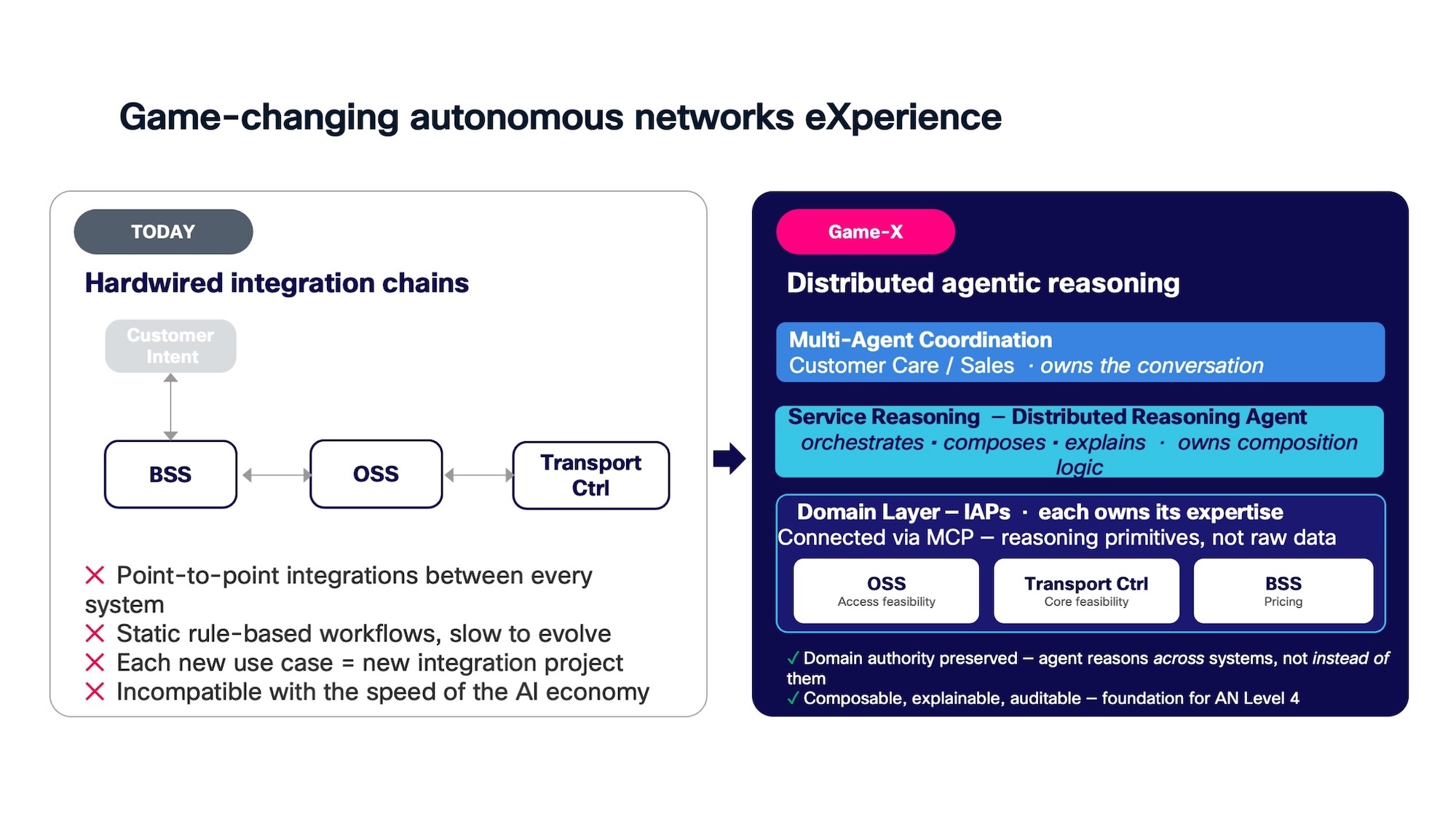
Figure 1: The Game-X architectural answer
Once services are deployed, assurance is maintained through a continuous observe-orient-decide-act loop. The solution combines active probing, telemetry and an assurance graph to measure network and application health, while reactive and prescriptive AI agents support deep network troubleshooting and resource optimization. The solution also demonstrates how OpenTelemetry can improve transparency and observability, helping to build trust in agentic systems.
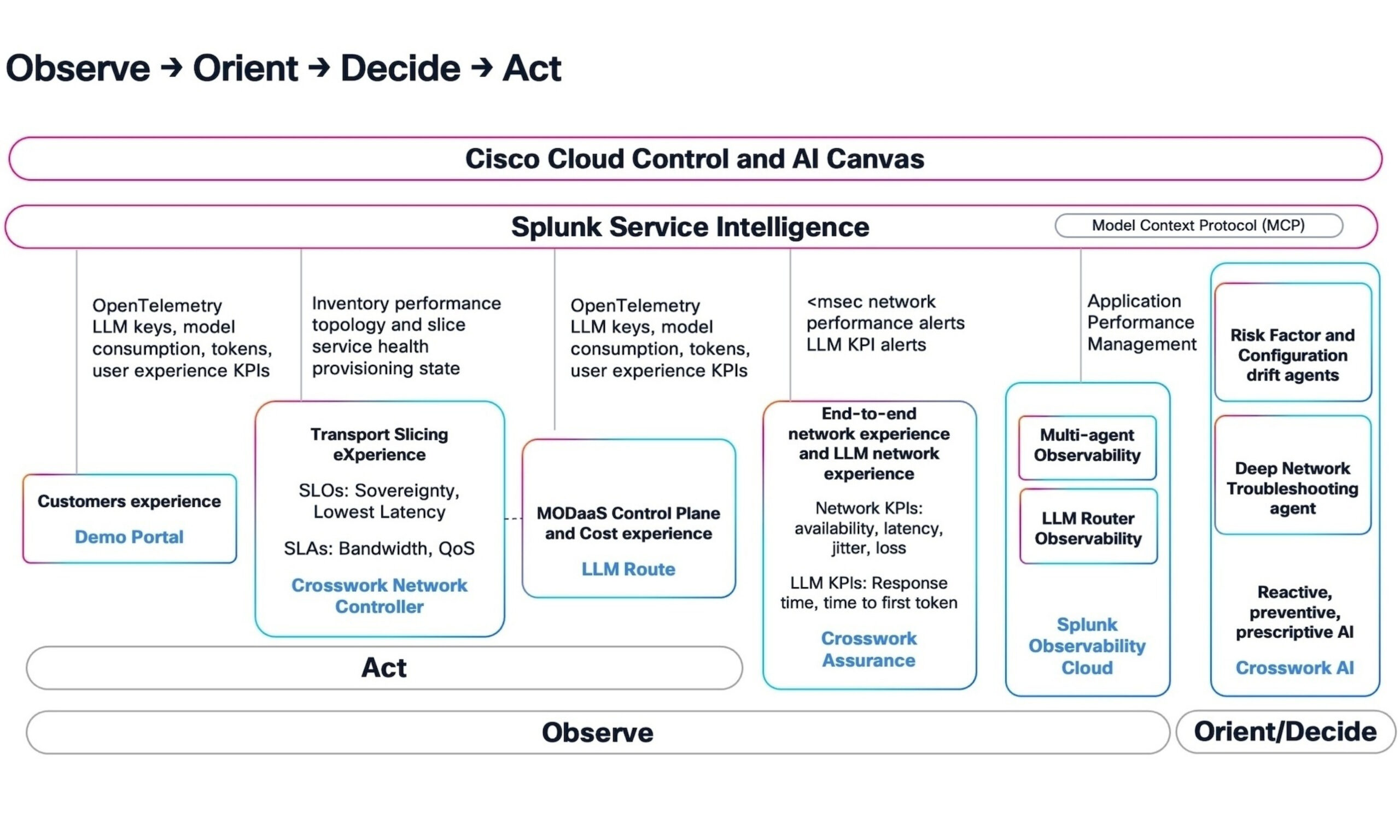
Figure 2: Cisco closed-loop agentic orchestration, observability and assurance
Monetizing AI traffic while improving operational performance
The Model-as-a-service control plane gives service providers a practical way to explore AI traffic monetization.
The expected business impact targets are ‘twice as fast’ time-to-market through agentic orchestration and a 30% improvement in operational efficiency through agentic closed-loop automation. The architecture is designed to be more flexible and resilient than traditional tightly coupled approaches, reducing single points of failure and improving service responsiveness.
For service providers, this helps create a path to new revenue streams based on AI-native services and outcome-based connectivity. For enterprise customers, it advances the promise of faster access to network capabilities aligned with business intent. For the wider industry, it provides a scalable blueprint for autonomous networks where service experience, not connectivity alone, becomes the valuable differentiator.
Award-winning autonomous networking showcase
GameX demonstrates how enterprise network intent can be translated into real-time network actions using agentic orchestration and secure operations via closed-loop AgenticOps. The architecture enables the scalable autonomy that telecom network operations require with preserved domain authority. Co-innovation is the enabler as no single actor owns the complete operational truth. The project provides both an implementation blueprint and a standardization trajectory for trusted agentic operations.
Explore Cisco Crosswork AgenticOps