Wow, one of the best Cisco Live events yet: Cisco has its mojo back (analyst comments!); attendees engaging in great dialogue, and Cisco and Partner Presenters and demonstrations better than ever!
The keynote sessions are always packed, and with the big-name executives on show that’s hardly surprising. I, for one, was also impressed at how well attended the breakout sessions were too. The World of solutions was packed a lot of the time as well, with huge interest in the Internet of Things pavilion.
There was a welcome surprise in store for attendees of the session number BRKIND-1229, on “Cisco Industrial Solutions and Best Practices for Manufacturing”, as Chet Namboodri had arranged for an exclusive live Business Industry over Telepresence demo – piped in from the west coast all the way to Orlando – the world is getting smaller folks! Continue reading “Cisco Live 2013 – Great feedback for Industry Sessions, and it’s not over yet…”
Network Connectivity is a big concern for any size of business, let alone a small, growing business. Picking the right solution to address growth is a key decision.
There are countless options available to small business owners ranging from asking cousin Jimmy, calling a “computer expert” you found on Yelp, or even a quick Google Search. No doubt, this experience can be a daunting one.
All jokes aside, choosing the right solution can save some money now and in the future. That is where right-sizing your network solution comes into play. It does not take long for a successful, single-person business to transform into a growing small business. A consumer wireless router could probably do the job for a single person home office adequately. But if you are looking to use your network for more than just accessing the Internet, then the choice is not so obvious. Now or in the future, you may want to access local network resources remotely and securely, use Voice over IP, or segment your network to securely support guest access. Moreover, as you grow, business applications become more critical. They need to be readily available, dependable and always on-line.
This is where the new Cisco Small Business Wireless Access Points and RV Series Router come into play.
Part of a growing small business portfolio, the all-new Cisco WAP551& 561 are perfect wireless solutions for your small business These access points enables small businesses to deliver high-capacity wireless N connectivity and guest access, securely and reliably. Simple yet powerful, it delivers business-class features such as Gigabit Ethernet connectivity with PoE, a captive portal for customized guest access, multiple SSID, VLAN’s and more…
Makes sense right?
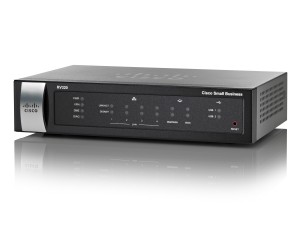
But wait! How does the network connect to the WAP’s? First, you need a router. The business-class RV320 is the new flagship in the Cisco Small Business RV Series portfolio.
The Cisco RV320 is a powerful, yet highly secure business class router, offering strong networking performance throughput. Add in business-class features such as dual WAN’s for fail-over and load balancing, an intelligent user interface, USB 3G/4G Broadband failover, and you have a router that will provide years of reliable service.
The last piece of the puzzle is a Cisco’s business class switch that offers power-over Ethernet (PoE) functionality, allowing Access Points to be flexibly optimized for placement. The Cisco SG300 Series of PoE switches offer PoE functionality, with the Security, Quality of Service, Scalability, and Reliability to deliver the best experience for your users. These switches are available in 10 to 52 port configurations.
The bottom line is this: Cisco Small Business Products are changing the way you connect your business to the world.
Did you post a selfie that was photobombed by John Chambers? What about tweeting more than 170 times a day to be the top of the leaderboard? Cisco Live – referred to as “summer camp for grown-up geeks” – was a hotbed for social media activity. In fact, after day three, on Twitter alone, references to @CiscoLive and #CLUS received more than 35,000 tweets by about 8,000 users. We are poised to nearly double the amount of social media activity around Cisco Live this year versus last year. But how did the Cisco Live team manage all of these incoming and outgoing tweets? The Cisco Live Social Media Hub! Modeled around a social media listening and engagement center, the Hub kept the pulse on social media conversations around the event and was also as a venue for responding to and promoting those conversations in real time.
On-site, the Hub became even more than the incredible social media command center; it also became a meeting place for friends that wanted to connect in person as well as share their experiences in real time over social channels. Between showing live feeds of keynotes and featured sessions to hosting tweetups and social events, we were able to create an experience within Cisco Live for our customers, partners, /colleagues and friends.
New to Twitter? The Hub team helped people sign up for social media sites, use and track hashtags and contribute to Cisco Live conversations. Need help? The Hub team was able to provide guidance, troubleshoot issues and lend a helping hand both over social media channels and in person. Ready to win? The Hub team hosted more than 40 contests for prizes such as an attendee-designed social media t-shirt, mobile device battery chargers and even Nerds candy!
Real-time responses. On-site content creation. Mobile engagement from after-hours events such as the Customer Appreciation Event. The Cisco Live Social Media Hub elevated not only the outgoing conversations about the event, trends such as the Internet of Everything and content from keynote speakers, but also the engagement with incoming content. Our attendees are the best eyes and ears into every session, and they provided incredible insights and feedback that we responded to as well as aggregated and analyzed for future Cisco Live events.
In fact, during the opening keynote featuring John Chambers, Padmasree Warrior and Dave Evans – which you can view on Cisco Live 365 – there was such a high level of tweets and engagement back and forth with attendees that we actually exceeded the number of tweets allowed per hour! We essentially broke Twitter.
Whether you participated in social media at Cisco Live by watching the conversations on one of our six screens featuring social content and trends, stopped by the Hub to chat or engaged with us online, we thank you for helping us elevate the social experience at Cisco Live!
So who were the friendly faces at the Hub and behind @CiscoLive? Our fearless lead, Charlie Treadwell (@CharlieAtCisco) along with our incredible team: Davythe Dicochea (@davythe), Buffy Koscielniak (@BernadetteK), George Metrik (@gosha), Kari Gunderson (@karigundy) as well as our social media agency, GolinHarris. A very special thank you goes to Kathleen Mudge (@KathleenMudge) for being our Cisco Live champion and helping this come to life!
Want an overview of the social conversations? Check out our Storify channel! We look forward to seeing you in San Francisco for Cisco Live 2014!
For more information about the Cisco Live Social Media Hub, check out this BizBash article.
Social Media has been an integral part of my life ever since my Mom allowed me to create a Facebook page my freshman year of high school. Sites like Facebook, Twitter, LinkedIn, and even Webex Social, have completely changed the way I interact with others.
As I make the transition from a collegiate environment to a more professional environment, many interesting points have been brought to mind. I have compiled a list of pointers that I have learned over time and thought I would share them with all of you!
Be Aware of Your Audience:
I like to think of a post on social media as an email to all of your following. Just like an email, a recipient may or may not read your post, and they may or may not be interested in the content of the post.
Generally, whatever someone posts on a social media channel will be available to ALL of their followers unless they specify against this. This means that they either have to only post material that is appropriate for all or monitor their following to ensure that whatever they post is acceptable. This is more applicable to personal accounts as the content on professional accounts will most likely be professional in nature. Sites like Facebook are getting better at giving you tools to provide contents to certain predetermined groups of followers only. For example: they could upload an album of pictures from their family reunion and then share the album only with their “immediate family” Facebook friends group.
Define Your Goals BEFORE Implementing a Social Media Campaign:
This point is something that was heavily stressed in the Cisco Social Media Training and Certification program and I think it is a really good idea.
Whenever someone uses social media, they should have some type of agenda. In high school, one might just be trying to pass the time or stay up to date with who is dating whom. In college, one may be trying to build a network with their peers or discuss plans for Friday night. At a professional level, one may be trying to spread the word about a new service that they are offering or requesting feedback about what the public thinks about certain ideas. Whatever the agenda is, it is quite valuable to identify this agenda prior to the implementation. You see this with most projects. Diving into a project head first without stepping back and looking at what you aim to accomplish first is often a dangerous practice.
The same goes for social media campaigns. By identifying what you aim to accomplish, you are able to for efficiently implement a strategy to accomplish your social media goals.
The Weakest Link Analogy with Professionalism:
A chain is only as strong as the weakest link. I think this common saying applies to how a social media channel is viewed from a professional standpoint.
I believe that a channel is viewed at the level of professionalism as the least professional post. A Facebook page can turn out great weekly content about a company written at a high professional level, but as soon as an inappropriate post is made and someone sees it, that follower will associate the channel with that lower level of professionalism. This just means that, when in charge of a social media account, a professional reputation must be constantly upheld.
Social Media Representing a Something Bigger Than Yourself:
When dealing with social media, there is a huge difference between a personal account and a professional account. With a professional account, the creator is representing a company or a product (in some cases the product being the creator themselves i.e. Linkedin). Where as with a personal account, you have complete freedom over post content. We are seeing more and more incidents today dealing with social media snafus causing major problems.
When watching ESPN, we will often see that a player had impulsively tweeted that he wanted a trade or thought the coach was in violation of some rule which will often set off a chain reaction of events often resulting in disciplinary action all across the board and media backlash. Many companies experience their social media campaigns go horribly wrong due to a misinterpretation on how a specific tactic would be received (see this article for several of these breakdowns http://mashable.com/2012/11/25/social-media-business-disasters-2012/). Social media takes what used to be private interactions and puts them on a pedestal for the entire world to see if they so desire. This can be extremely helpful in some regards but also potentially dangerous.
The bottom line is that, when dealing with a professional social media account that is representative of something bigger than oneself, it is important to be aware of the magnitude and possible ramifications of ones decisions.
Identify a Posting Environment’s Style:
This final point has to deal with posting on an unfamiliar environment on a social media platform.
Not everyone online is interested in holding a professional conversation with you. In modern day internet slang, it is said that there are many trolls out there. A troll is basically someone who posts off topic, offensive, irrelevant, comical, or derogatory comments on a social media post essentially for fun. Some may be surprised that this exists but yes, it is definitely something to look out for. When first encountering an unknown social media environment, evaluating the landscape to see what type of activity is going on there. Say for example that someone searches: “Lawn Care” on Facebook looking to post a serious question about why you are having weeds grow in their lawn. There will probably be some results that consist of pages that are filled with trolls that will not be able to contribute constructive responses to their questions. A good rule of thumb is to look at a few of the past posts and responses and determine if the specific social landscape is appropriate for your needs. Also, if you are engaged by a troll, the best thing to do is just ignore them.
What differences have you noticed between utilizing social media in a professional manor vs. a personal manor? Do you anticipate social media becoming more prevalent in todays society? Do you have any additional observations?
This week at Cisco Live!, the Florida Department of Highway Safety and Motor Vehicles spoke on a government customer roundtable. Rob Fields, the CIO for the Department provided insight into the challenges that he faced with legacy equipment, the organization’s technology vision and plans for the future.
The Florida Department of Highway Safety had purchased lowest bid, low-quality networking equipment prior to Fields’ appointment as CIO. He knew that before he could accomplish any of his technology goals he had to rebuild the network with Cisco from the ground up.
Around this time the State of Florida imposed a travel ban, which was negatively affecting personnel throughout the department. Fields and his team had already been looking at video solutions following the network upgrade, but the travel ban gave them an even greater sense of urgency. “We installed video solutions at 15 locations and began conducting Florida Highway Patrol command staff meetings, remote interviews, and field manager meetings, over video and immediately saw ROI. It was a huge success,” said Fields. Continue reading “Florida Department of Highway Safety at Cisco Live!”
The Software Defined Networking (SDN) market evolution is having a major effect on networking job roles. New careers in IT are being built, focusing more on complex services and architectures rather than systems.
A recent survey by Cisco found that 71 percent of IT professionals intend on using SDN technology this year for a number of reasons, ranging from creating more programmable networks to simply reducing costs.
With these shifts in mind, new talent needs arise for IT professionals to accommodate evolving industry job roles.
Through the years, market transitions and technology disruptions have introduced IT knowledge gaps. Knowledge of networking fundamentals is no longer enough. Now, network professionals must understand networking systems with integrated security, wireless and voice capabilities. Cisco is leading the charge to provide direction and proper learning paths and resources to help address these challenges.
Listening to our community, we’ve determined new skills and job roles require a deeper understanding of deployments and troubleshooting of SDN architectures, as well as familiarity with SDN specific troubleshooting tools.
Just as we have been all along, Learning@Cisco is investing heavily in creating education and certifications programs to help our community evolve skills in order to continue to be the driving force of innovation in networking.
Watch below as I discuss Learning@Cisco’s efforts around SDN further.
With more than 328,000+ patient visits and 300+ clinical trials yearly, Moffitt Cancer Center is one of the busiest cancer centers and institutional leaders in national cancer research. The center delivers all levels of care for people with cancer and related diseases, as well as screening and prevention services.
At this week’s Cisco Live global conference, John Maass, Manager of Moffitt’s Conferencing Technology Systems and Support, participated in an exceptional discussion alongside representatives from Orlando Health and Children’s Hospital Central California. Together, this powerhouse panel conversed about how the healthcare industry is poised to taking advantage of the Internet of Everything bridging together people, process, data, and things to make connectivity more relevant and valuable than ever before.
Within many organisations offering online services to the public, there must be a great temptation to expire redundant user accounts that occupy desirable user IDs but which are never used by their users. Presumably the user IDs have been registered by someone, used on a couple of occasions, and then forgotten about. Expiring and recycling these user IDs and offering them to new users allows the organisation to better manage the quantity of unique User IDs, and also allows new users to potentially own the user ID that they desire.
On 20th June, Yahoo! announced that they will be expiring user IDs that have been unused for over 12 months in order to offer them to users.
“you want a Yahoo! ID that’s short, sweet and memorable, like albert@yahoo.com instead of albert9330399@yahoo.com”, described Jay Rossiter, SVP of Platforms at Yahoo! [1].
Yahoo! is not the only webmail provider that expires inactive users and recycles their email addresses. Recently, researchers at Rutgers University identified that Hotmail also reissues email addresses that have been dormant for some time [2]. Yahoo! should be applauded for publicly raising the issue, describing their criteria for expiring accounts, and calling for users to access their accounts if they wish to prevent this happening. Continue reading “Expiring Albert: Recycling User IDs and the Impact on Privacy”
Welcome to another episode of Engineers Unplugged. This week’s topic is Next-Gen Storage, handled admirably by Cisco’s J Metz (@drjmetz) and Stephen Foskett (@sfoskett). What will the topology of the future look like? What is the tech evolution that will drive adoption? From token ring to SDN, they’ve got it covered. Watch and see:
J Metz and Stephen Foskett take the Uni-Corn and Unicorn Challenge, Respectively.
Welcome to Engineers Unplugged, where technologists talk to each other the way they know best, with a whiteboard. The rules are simple:
Episodes will publish weekly (or as close to it as we can manage)
Submit ideas for episodes or volunteer to appear by Tweeting to @CommsNinja
Practice drawing unicorns
We’re shooting more episodes this week at Cisco Live in Orlando! Bring us your best unicorn, or just stop by the whiteboards at the Social Media Hub to say hi!














 With more than 328,000+ patient visits and 300+ clinical trials yearly,